

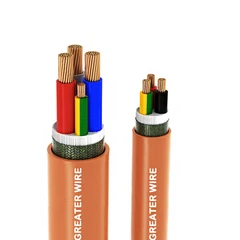
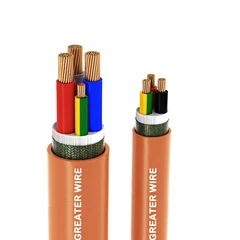

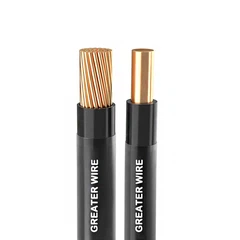
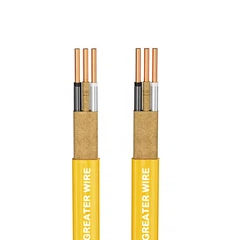
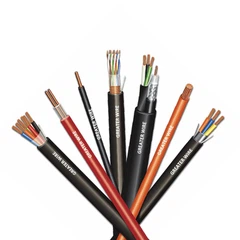
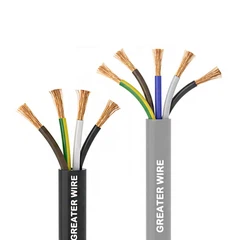
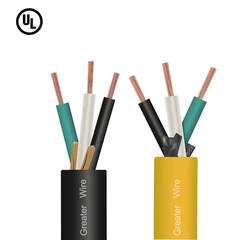
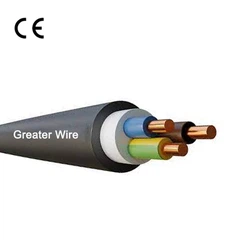
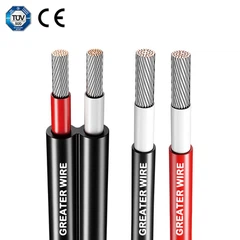

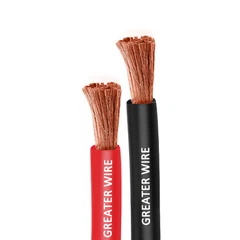
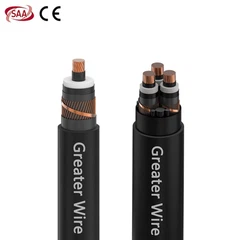
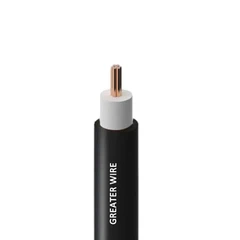
Every industrial plant has two core electrical needs: moving power from transformers to panels, and controlling motors reliably. The cables connecting these systems face heat, vibration, oil, and often cramped trays. Choosing the right cable saves installation time, prevents downtime, and keeps your facility running.
TC-ER cable (Tray Cable with Exposed Run rating) is a top choice for both power distribution and motor control. It carries UL 1277 listing, allows exposed installation without conduit, and comes in configurations ranging from small control circuits to heavy feeders. This article covers the best solutions for common industrial scenarios.
1. What Makes TC-ER Cable Ideal for Power Distribution and Motor Control?
TC-ER stands for Tray Cable, Exposed Run. Under UL 1277, it can be installed in cable trays, on ladders, or along equipment surfaces without conduit – as long as it meets crush and impact resistance. This feature alone cuts labor and material costs dramatically compared to pipe and wire.
For power distribution and motor control, key advantages include:
- Exposed run rating – No conduit needed in most tray installations. Faster installation, easier retrofits.
- Wide temperature range – XHHW-2 insulation (common in premium TC-ER) is rated 90°C wet/dry, suitable for hot and humid areas.
- Multiple conductor counts – From 3/C to 4/C, you can combine power, ground, and control in one cable.
- Shielding options – Overall foil or braid shields reduce EMI, critical when running near VFDs or sensors.
- Sunlight and oil resistance – Black PVC jacket resists UV, oil, and chemicals for outdoor or washdown areas.
Whether you are feeding a motor control center or wiring a conveyor system, TC-ER offers a flexible, code-compliant solution.

2. Three Best TC-ER Cable Solutions for Common Industrial Needs
Here are three specific cable constructions we recommend, based on real-world applications. All are UL 1277 listed and available with XHHW-2 or THHN/THWN-2 insulation.
Solution 1: 8 AWG 4/C Shielded TC-ER Cable – Motor Control with Separate Ground
- Application – Controlling a motor starter with a dedicated ground conductor.
- Why 4 conductors – Three phases plus an insulated ground. The shield protects control signals from nearby power cables or VFDs.
- Shielding – Overall foil + drain wire ensures reliable signal integrity in noisy environments.
- Typical use – From a PLC output to a motor starter in a manufacturing cell.
- Installation – Exposed run in cable tray. No conduit needed.
Solution 2: 4 AWG 3/C Unshielded TC-ER Cable – Motor Feeder (No Control)
- Application – Feeding a motor directly from a starter or contactor, with no separate control wires in the same cable.
- Why 3 conductors – Three phase conductors only. Ground is provided separately or through the tray.
- Unshielded – Acceptable for straight power applications with no VFD or sensitive electronics nearby. Saves cost.
- Typical use – From a motor control center to a fixed-speed pump or fan motor.
- Installation – Tray or exposed run. Use cable ties with proper support spacing.
Solution 3: 1/0 AWG 4/C Shielded TC-ER Cable – Main Feeder with VFD Compatibility
- Application – Main power from MCC to a large VFD-driven motor (50–75 HP).
- Why 4 conductors – Three phase conductors plus an insulated ground. The shield reduces EMI from the VFD output.
- Shielding – Overall foil or copper braid (specify braid for better high-frequency suppression).
- Typical use – VFD to motor in a wastewater blower or large conveyor. The shielded TC-ER performs well for runs up to 100 feet.
- Installation – Exposed run in ladder tray. Ground the shield at the drive end only.
These three configurations cover a wide range of industrial needs. For higher power (over 100 HP), consider 350 kcmil or 500 kcmil; for smaller control circuits, 14 AWG or 12 AWG works well.
3. Customer Pain Point – Voltage Drop and Hard Pulls
A plant engineer once specified 10 AWG THHN in conduit for a 150-foot motor feeder (15 HP, 460V). The voltage drop exceeded 3%, causing the motor to overheat. Worse, pulling the conduit required a full crew and bent several pipes.
He switched to 1/0 AWG TC-ER cable with XHHW-2 insulation, installed exposed in a cable tray. Voltage drop dropped to under 2%, and a two-person crew installed it in half the time. The lesson: exposed run TC-ER not only simplifies installation but also allows larger conductors (lower voltage drop) without the cost of oversized conduit.
Customer pain point: "We used to run everything in conduit because that's how we learned. Now we use TC-ER in trays. It's faster, cooler, and easier to modify later."

4. Product Advantages – Why TC-ER Outperforms Traditional Methods
Compared to conduit and wire (THHN in pipe)
- Labor savings – No pipe bending, no wire pulling. Install TC-ER directly on trays.
- Easier upgrades – Add a new motor control cable alongside existing ones without opening conduit.
- Lower material cost – Tray and cable are often cheaper than EMT or rigid conduit plus individual wires.
Compared to armored cable (MC)
- Lighter weight – TC-ER has no interlocked armor, making it easier to handle in trays.
- More flexible – Bends tighter, fits in crowded trays.
- Lower cost – Less metal = lower price.
Compared to standard tray cable (TC without ER)
- Exposed run – Standard TC requires conduit for any run not inside a covered tray. TC-ER eliminates that.
- Same durability – Same jacket, same insulation, same flame rating – but added installation flexibility.
Specific advantages for motor control
- Shielded versions – Prevent nuisance trips from VFD-induced noise.
- Multiple conductor counts – Choose 3/C for pure power or 4/C for power plus dedicated ground.
- XHHW-2 insulation – Withstands oil, moisture, and heat found near motors.
5. Selection Reminder – Match the Cable to the Circuit
Selection reminder from our sales team: For power distribution, focus on ampacity and voltage drop. Use larger gauges for long runs. For motor control, pay attention to shielding and conductor count. For a simple start/stop circuit without VFD, unshielded 3/C is fine. For circuits requiring a dedicated ground, use 4/C. And always verify the TC-ER marking on the jacket. Without it, you cannot run exposed without conduit.
Quick decision guide
- Main feeders (>100A) – Use 1/0 AWG, 2/0 AWG, 350 kcmil, etc. Unshielded saves cost.
- Motor feeders (with VFD) – Shielded TC-ER, XHHW-2 insulation, 4/C recommended for insulated ground.
- Motor feeders (without VFD, no control) – Unshielded 3/C TC-ER is cost-effective.
- Motor feeders with dedicated ground – Use 4/C (unshielded or shielded as needed).
6. Installation Tips for Industrial Power and Motor Control Cables
Follow these best practices when installing TC-ER cable in your facility.
- Support spacing – For exposed runs, follow local code (typical: 4.5 ft vertical, 6 ft horizontal). Use cable trays, J-hooks, or ladder racks.
- Bending radius – For shielded cables, keep radius at least 6× cable diameter. For unshielded, 4× is acceptable.
- Separation – Keep VFD output cables at least 6 inches away from low-level control signals, even when both are shielded.
- Shield grounding – For shielded TC-ER used on VFD outputs, ground the shield only at the drive end. For control circuits with foil shield, ground the drain wire at one end.
- Ampacity adjustment – When bundling multiple cables in a tray, apply derating factors per code. Leave air space between high-current feeders.
7. UL Certifications – What You Should Know
Our TC-ER cables are manufactured under strict quality controls. Cables with XHHW‑2 conductors comply with UL 44 (Thermoset-Insulated Wires and Cables). Cables with THHN/THWN‑2 conductors comply with UL 83 (Thermoplastic-Insulated Wires and Cables). The complete tray cable assembly is UL 1277 listed for Tray Cable with Exposed Run rating. These certifications ensure compliance with North American safety standards. For specific UL file numbers or to request our certificate, contact our technical team.

FAQ
Q1: Can I use TC-ER cable for both 600V power distribution and low-voltage control in the same tray?
Yes, as long as the cable insulation ratings match the highest voltage present (typically 600V). Keep control cables physically separated from power cables if possible, or use shielded versions to prevent interference.
Q2: What is the maximum recommended length for an unshielded TC-ER motor feeder?
There is no fixed maximum, but voltage drop is the limit. For a 460V motor, keep voltage drop under 3% (about 14V). For a 100-foot run, 8 AWG may be fine; for 300 feet, you may need 1/0 AWG. Calculate or use an online voltage drop tool.
Q3: Does TC-ER cable require special connectors?
No. Standard cable tray fittings, strain relief grips, and terminal lugs work. For outdoor exposed runs, use weatherproof boxes and sealing glands to prevent moisture entry.
Q4: How do I know if my TC-ER cable is sunlight resistant?
Look for "Sunlight Resistant" or "UV Resistant" marked on the jacket. Most TC-ER cables with a black PVC jacket are formulated for UV resistance, but always verify the marking.
Q5: Can I direct bury TC-ER cable?
Only if the cable is additionally marked "DIR BUR" or "Direct Burial". Standard TC-ER is not rated for direct earth contact. Check the jacket or datasheet before burying.
Need a Quote for Your Industrial Power or Motor Control Project?
Tell us your voltage, current, distance, environment (indoor, outdoor, wet, oily), and whether you need shielding. Also specify conductor count (3/C or 4/C) and whether exposed run installation is required. We will recommend the right TC-ER cable – 8 AWG 4/C shielded, 4 AWG 3/C unshielded, 1/0 AWG 4/C shielded, or other gauges – and provide a competitive quote.
Contact us
Dongguan Greater Wire & Cable Co., Ltd.
Tel/WhatsApp/Wechat: +86 136 6257 9592
Tel/WhatsApp/Wechat: +86 135 1078 4550
Email: manager01@greaterwire.com
Website: www.greaterwire.com