























When it comes to modern wiring solutions, few names are as widely recognized in residential and commercial installations as the TPS cable. Known for its durability, ease of installation, and adaptability, the TPS electrical cable has become a preferred choice for contractors, electricians, and homeowners alike. But one common question often arises: Can TPS cables be used underground? To answer that properly, it's important to first understand what TPS cables are, how they work, and the factors that influence their applications.
What Are TPS Cables?
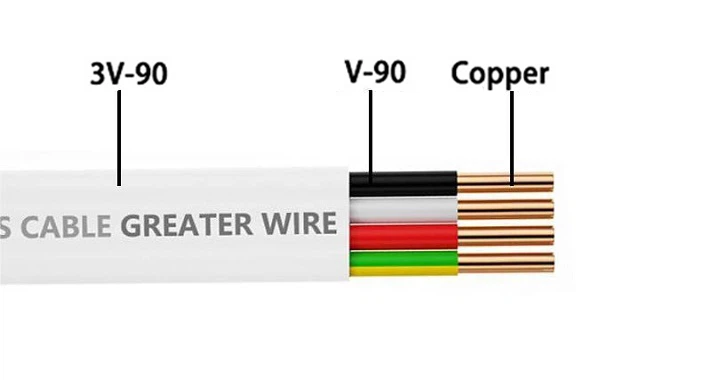
TPS stands for Thermoplastic Sheathed Cable, a type of flat wiring solution that typically contains two or more insulated conductors wrapped in a thermoplastic outer sheath. Variations include the popular Twin and Earth Cable, which features two insulated cores (live and neutral) plus a bare earth wire. These cables are extensively used in lighting circuits, power outlets, and fixed domestic or commercial installations.
The flat, compact structure of a TPS cable makes it easy to install neatly along walls or through conduits, while the thermoplastic sheath provides added mechanical protection and resistance against common household and environmental factors. Unlike some older wiring styles, TPS electrical cables are designed with safety in mind, minimizing risks of overheating or short circuits when installed correctly.
How Do TPS Cables Work?
Like all electrical cables, TPS cables are designed to safely carry current from the power source to the point of use. The insulated copper conductors ensure electricity flows without risk of shorting, while the thermoplastic sheath helps protect against accidental damage. In the case of Twin and Earth Cable, the additional earth conductor provides an essential safety function, channeling fault currents away to prevent electric shock.
For example, in a typical household lighting installation, a 1.5mm² Twin and Earth Cable might be used to connect a switch to a ceiling light. For a kitchen socket circuit, a 2.5mm² TPS cable ensures appliances like kettles and microwaves receive sufficient power safely. These practical applications highlight why TPS has become the go-to solution in both domestic and commercial environments.
Can TPS Cables Be Used Underground?
This is a question that often creates confusion. By design, standard TPS cables are intended for indoor fixed wiring-they perform excellently when run along walls, inside conduits, or within roof and floor cavities. However, when it comes to underground installations, special considerations must be taken.
The short answer is: TPS cables are not directly suitable for underground use unless placed inside appropriate protection, such as conduit or ducting. This is because the thermoplastic sheath, while durable, is not designed to withstand long-term exposure to soil moisture, physical pressure from earth movement, or potential contact with sharp rocks.
That said, electricians often do use TPS electrical cable underground, but always with protective measures in place. For example, when running power to an outdoor shed, the TPS cable may be laid inside heavy-duty PVC conduit, ensuring it is shielded from environmental stress. In some regions, local standards require specific underground-rated cables instead, such as XLPE-sheathed variants. Therefore, whether TPS can be used underground depends largely on installation methods and compliance with regional regulations.
Risks of Directly Burying TPS Cable
TPS Cable (Twin and Earth TPS Cable) is a common wiring option for residential and commercial installations, typically featuring a PVC outer sheath. It is well-suited for indoor applications such as wall cavities, ceilings, or surface mounting. However, it is not designed for direct burial underground. Using TPS Cable underground without protection can lead to several hazards:
1.Mechanical Damage: The underground environment is unpredictable. Stones, soil pressure, or construction tools can easily damage the sheath. Once the insulation is exposed, the risk of short circuits or electric leakage increases significantly.
2.Moisture and Corrosion: Soil naturally contains moisture, and rainwater infiltration accelerates deterioration. The PVC sheath of TPS Cable is not waterproof or corrosion-resistant, which leads to faster insulation breakdown and higher risks of electric shock or fire.
3.Electrical Safety Concerns: Without proper protection, grounding performance may be compromised. In the event of leakage, current may not be safely directed into the ground, creating dangers of electrocution and equipment damage.
4.Non-Compliance with Standards: Many electrical codes and regulations (such as AS/NZS or IEC standards) explicitly prohibit the direct burial of TPS Cable. Installations that fail to comply may not pass inspections, creating long-term safety and legal risks.
Correct Methods for Underground Cable Installation
To ensure safety and durability in underground applications, it is essential to use cables specifically designed for underground installation, such as XLPE-insulated, PE-sheathed armored cables (Steel Wire Armoured Cable, SWA) or underground-grade XLPE/PVC cables. These cables feature reinforced protective layers that resist moisture, corrosion, insect damage, and mechanical stress.
If TPS Cable must be used underground, extra protective measures are required:
- Conduit Protection: Enclose the TPS Cable in waterproof PVC or HDPE conduits, ensuring proper sealing to prevent moisture ingress.
- Burial Depth: Underground cables should generally be buried at a depth of at least 600mm, with a warning tape placed above to prevent accidental excavation.
- Grounding and Protection: Reliable grounding is mandatory, along with standard-compliant safety measures, to ensure that in case of damage, leakage current can be safely discharged into the ground. TPS Cable is not suitable for direct burial. For underground applications, always select specialized underground cables (such as armored cables) or adopt strict conduit protection measures. This ensures safety, stability, and compliance with electrical standards.
Why Choose Dongguan Greater Wire & Cable Co., Ltd.?
At Dongguan Greater Wire & Cable Co., Ltd., we understand the challenges faced by electricians, contractors, and end-users when selecting the right cable for a project. That's why we go beyond simply manufacturing standard products-we deliver solutions tailored to your needs.
All our TPS cables, including Twin and Earth variants, are designed and manufactured according to IEC, AS/NZS, and BS standards. Every product undergoes rigorous testing for voltage resistance, flame retardancy, flexibility, and bending performance, ensuring safety in a wide range of installation environments.
Our advantages include:
A modern production base covering over 50,000 square meters with advanced automation equipment.
More than 50 product certifications, providing global recognition of our quality.
Highly flexible customization options in color, length, and packaging to suit different market preferences.
A 24/7 customer service team ready to provide technical support and cable selection guidance.
Proven export experience to over 80 countries, including Australia, the Middle East, and Europe, with expertise in meeting different national standards.
Whether your project requires standard TPS electrical cables or specialized custom solutions, Greater Wire & Cable is your trusted partner for safe, reliable, and cost-effective wiring.
Dongguan Greater Wire & Cable Co., Ltd.
Tel/WhatsApp/Wechat: +86 135 1078 4550 / +86 136 6257 9592
Email: manager01@greaterwire.com