



1. The Copper vs. Aluminum XHHW-2 Dilemma: Why Most Selections Miss the Mark
For anyone specifying 600V XHHW-2 building wire for large commercial power distribution or industrial facility feeder circuits, the copper versus aluminum decision is one of the most common - and most poorly framed - choices in electrical design. Too many project teams default to one material across an entire project, driven by habit, blanket cost-cutting mandates, or outdated assumptions about reliability. The result is almost always one of two outcomes: overspending on copper where aluminum would have performed perfectly well, or cutting costs with aluminum and creating long-term connection failure and voltage drop risks.
1.1 The Real-World Costs of Getting the Material Decision Wrong
The stakes extend far beyond per-foot material price. Specify copper for every circuit on a large build, and you can blow the electrical material budget by 30–40% unnecessarily. Specify aluminum for high-vibration, low-tolerance branch circuits without proper installation practices, and you face overheating terminals, nuisance tripping, and unplanned downtime years down the line. For engineering teams and contractors, the bigger problem is the absence of a standardized selection framework: most decisions are made by intuition rather than consistent evaluation of load, distance, and lifecycle cost.
1.2 Why "Copper = Safe, Aluminum = Cheap" Is a Flawed Selection Rule
The truth is that both materials are code-compliant and widely used in commercial and industrial construction. The mistake is treating the choice as a universal verdict rather than a circuit-by-circuit decision. A material that is the wrong choice for a 10 AWG control circuit may be the optimal choice for a 750 kcmil main distribution feeder. The goal of this guide is to give you a consistent, code-aligned way to make that call for every circuit.

2. Side-by-Side Performance & Cost Comparison: What the Numbers Mean for Your Project
Any honest building wire material comparison starts with quantifiable tradeoffs, not vague claims about durability or value.
2.1 Conductivity, Ampacity and Voltage Drop: The Engineering Tradeoff
Copper has approximately 1.6 times the conductivity of aluminum for an equivalent cross-sectional area. In practical terms, this means an aluminum conductor requires a larger gauge to match the ampacity and voltage drop performance of a smaller copper conductor. This is the single most important engineering factor in commercial power distribution conductor selection: for short runs with tight voltage drop limits, the size penalty of aluminum often erases its cost advantage. For long, high-amperage feeder runs, the larger aluminum conductor remains significantly less expensive overall, even when upsized for equivalent performance.
2.2 Material Cost, Weight and Installation Efficiency: The Financial Tradeoff
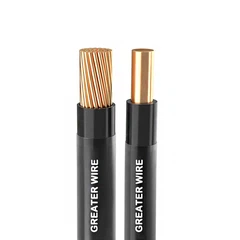
Aluminum XHHW-2 typically costs 40–50% less per pound than copper, and the weight advantage is substantial: aluminum is roughly one-third the weight of copper for the same volume. For large feeders like 4/0 AWG XHHW-2 feeder cable and above, this translates to faster, less labor-intensive installation, fewer personnel required to pull cable, and lower strain on support structures and tray systems. The tradeoff is that aluminum is more sensitive to improper termination: oxidation at connection points is the primary failure mode, and it requires specific installation practices to mitigate.
3. Scenario-Based Selection: Matching Material to Circuit Type
3.1 When Copper XHHW-2 Building Wire Is the Clear Choice
Copper XHHW-2 wire is the preferred choice in three scenarios:
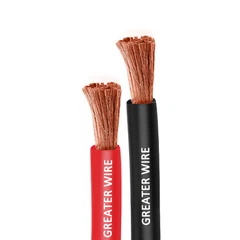
· Branch circuits and short runs with tight voltage drop limits: For circuits like 10 AWG copper XHHW-2 wire used for lighting, receptacles and equipment branches, the conductor size is already small. Upsizing to aluminum to save money would require a much larger gauge, eliminating cost savings while complicating conduit fill and terminal compatibility.
· High-vibration or high-cycle load environments: Copper's superior ductility and stable terminal performance make it the safer choice for circuits serving motors, machinery, or equipment with frequent on-off cycling, where loose connections pose the highest risk.
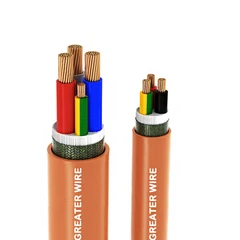
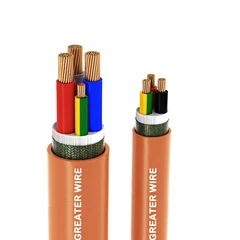
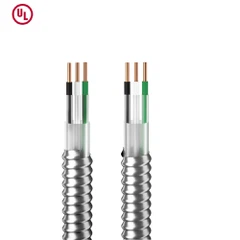
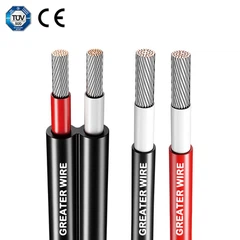
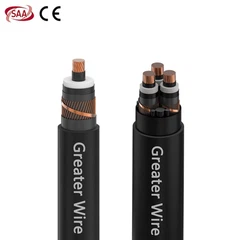
· Circuits where long-term maintenance access is limited: For concealed or hard-to-reach runs, copper's corrosion resistance and connection stability reduce long-term service risk. Available in 3/C and 4/C constructions with insulated green ground or bare ground conductors, copper XHHW-2 works seamlessly in aluminum interlocked armor or galvanized steel armor assemblies for industrial environments.

3.2 When Aluminum XHHW-2 Power Cable Delivers the Best Value
Aluminum XHHW-2 power cable delivers the strongest return on investment for large, long-distance distribution and feeder circuits:
· Main feeders and large distribution runs: For 750 kcmil power distribution XHHW-2 and similar large-gauge feeder circuits running long distances across a commercial building or industrial site, aluminum delivers dramatic upfront cost savings. When properly sized for equivalent ampacity and voltage drop per NEC 310.16, it performs reliably for decades with correct terminations.
· Cable tray and overhead feeder installations: Aluminum's light weight reduces structural load and installation labor, making it highly cost-effective for cable tray runs in industrial facilities and large commercial campuses. When installed with NEC-compliant anti-oxidant paste and approved compression terminals, aluminum XHHW-2 eliminates the connection failure risks that give the material an undeserved reputation for poor reliability.

4. 3-Step NEC-Aligned Selection Process to Avoid Costly Mistakes
Use this repeatable framework for every circuit to make consistent, defensible material choices:
· Calculate ampacity and voltage drop per NEC 310.16: Start with load current, circuit length, and allowable voltage drop to determine the minimum required conductor size for both copper and aluminum. Never compare materials at the same gauge - compare them at equivalent electrical performance.
· Evaluate total lifecycle cost: Compare full installed cost (material + labor) plus estimated annual energy loss from conductor resistance over the project's design life. For long, heavily loaded runs, copper's lower resistance can offset its higher price through reduced energy waste.
· Verify installation requirements: If selecting aluminum, confirm the project will use approved anti-oxidant treated terminals and follow proper torque procedures. If these practices cannot be reliably enforced on site, copper is the lower-risk choice.

5. Frequently Asked Questions
Q1: Is aluminum XHHW-2 code-compliant for commercial building wiring?
A: Yes, aluminum XHHW-2 is recognized by the NEC for 600V building wire applications when installed per applicable code requirements, including proper termination methods.
Q2: Does aluminum wire always cause connection failures?
A: No. Connection failures in aluminum wiring are almost always the result of improper installation, not an inherent material flaw. When installed with anti-oxidant compound and correctly rated compression terminals at the proper torque, aluminum connections are long-lasting and reliable.
Q3: At what wire size does aluminum become cost-effective?
A: As a general rule for commercial and industrial feeder circuits, aluminum typically delivers clear cost savings at 4/0 AWG and larger sizes. For smaller branch circuits, the upsizing required to match copper performance usually eliminates the cost advantage.
Q4: Can I mix copper and aluminum XHHW-2 on the same project?
A: Yes, and this is often the most cost-effective approach: use copper for branch circuits and critical loads, and aluminum for large main feeders and long distribution runs.
6. Get Project-Specific Sizing & Pricing Support
If you're working through copper XHHW-2 wire vs aluminum XHHW-2 wire decisions for an upcoming commercial distribution or industrial feeder project, our team can help. We support electrical contractors, engineering firms, project owners and wholesale distributors with code-aligned sizing recommendations, full specification data, and competitive bulk pricing for both copper and aluminum 600V XHHW-2.
Send us your bill of materials or circuit list, and we'll return a side-by-side cost and performance review tailored to your exact project requirements.
Dongguan Greater Wire & Cable Co., Ltd.
Tel/WhatsApp/Wechat: +86 136 6257 9592
Tel/WhatsApp/Wechat: +86 135 1078 4550
Email: manager01@greaterwire.com
Website: www.greaterwire.com