

1.Structure and Characteristics of MC Cable
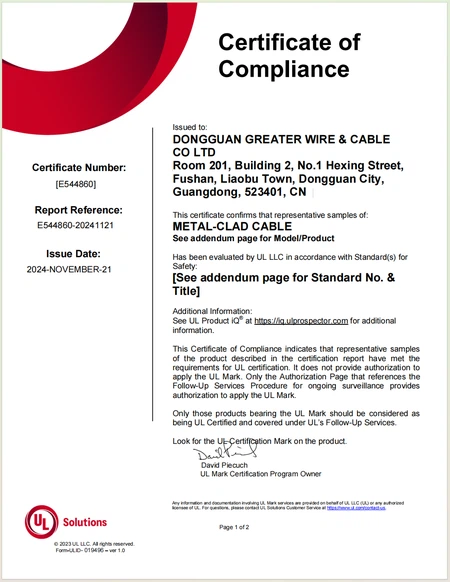
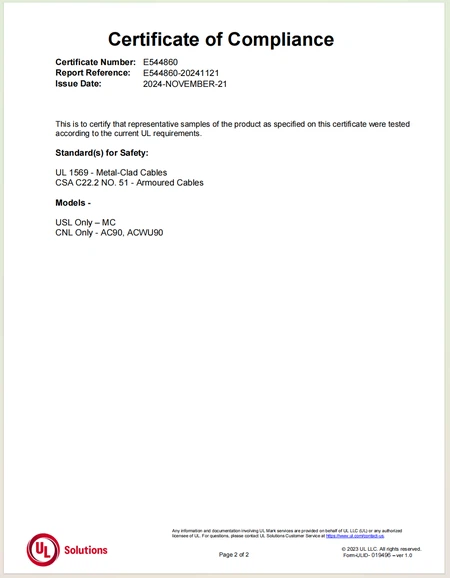
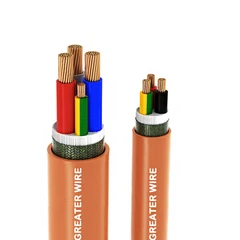
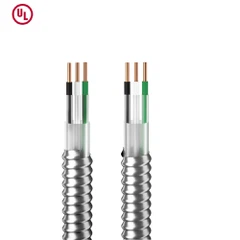
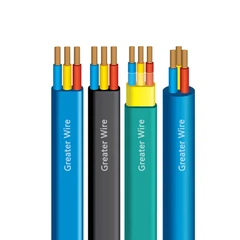
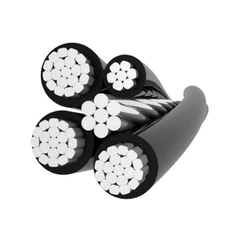
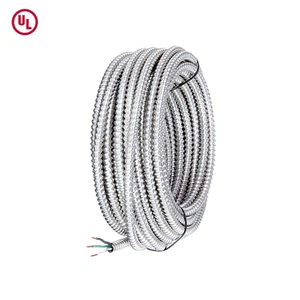
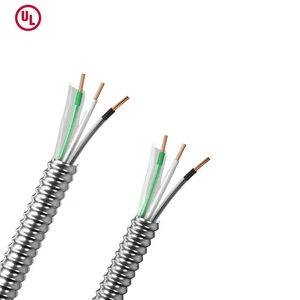
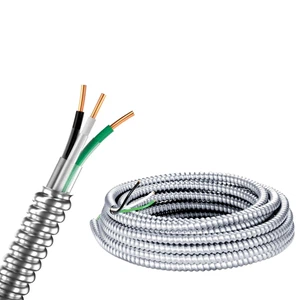
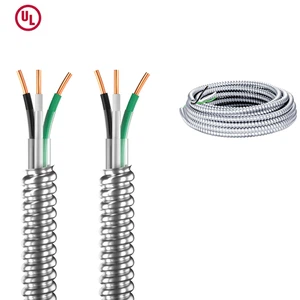
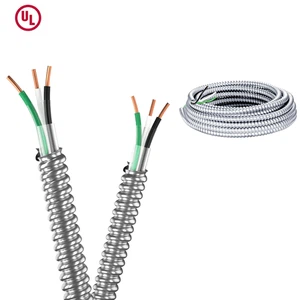
MC cables are composed of multiple strands of copper or aluminum conductors, wrapped in metal armor (usually aluminum or galvanized steel) on the outer layer, and equipped with an internal insulation layer. The original intention of its design is to provide superior mechanical protection capabilities while enhancing electromagnetic shielding effects.
Taking the 10 gauge MC cable as an example, its conductor diameter is relatively thick and can carry a large current. It is commonly used in lighting systems, high-power equipment, and HVAC (Heating, Ventilation, and Air Conditioning) systems. The 10/5 MC cable refers to a 5-core MC cable of 10 gauge wire (AWG), suitable for electrical equipment that requires additional control wires, such as bipolar switches and fan control circuits.
In addition, the 10/2 PVC coated MC cable adds a layer of PVC outer sheath on top of the ordinary MC cable, making it more durable in humid and corrosive environments. 250 MC cable typically refers to MC cable spools, each 250 feet (approximately 76.2 meters) long, suitable for large-scale cabling projects to reduce intermediate joints and improve construction efficiency.

2.Do MC cables require additional protection?
Although MC cables themselves have a sturdy metal sheath, additional protective measures are still required in some cases. This mainly depends on its installation environment and local electrical regulatory requirements.
1. Risk of mechanical damage
Although the metal armor of MC cables can withstand general physical damage, additional protection may still be required in the following scenarios:
Ground or buried installation: In factory workshops or warehouses, if cables are exposed on the ground, they may be crushed by forklifts, carts, or other heavy equipment, causing deformation or even damage to the armor layer. Therefore, in such environments, MC cables require additional protection using conduits or cable trays.
Outdoor exposure environment: Ordinary MC cables do not have waterproof capabilities. Although 10/2 PVC coated MC cables have a PVC outer sheath to enhance waterproof performance, it is still recommended to use additional protective layers such as waterproof sleeves or UV resistant sheaths when exposed to rain, snow, or UV radiation for a long time.
2. Damp and corrosive environment
Some industrial sites, such as chemical plants, food processing plants, or sewage treatment plants, may have a corrosive effect on the metal armor of MC cables due to the presence of large amounts of corrosive gases or liquids in the air. In these environments, 10/2 PVC coated MC cable should be preferred as its additional PVC outer sheath can effectively prevent chemical erosion. However, under extreme conditions, additional anti-corrosion protection may still be required, such as coating with special anti-corrosion coatings or using MC cables made of stainless steel material.
3. Electrical safety considerations
According to NEC (National Electrical Code), MC cables may require additional shielding measures in certain high-risk areas, such as explosive environments, medical equipment areas, or high security data centers, to reduce electromagnetic interference or ensure higher fire safety standards. For example, in medical environments, it is recommended to use MC cables with additional grounding wires to enhance electrical safety.
In addition, in high current load scenarios, such as using a 250 MC cable for large-scale wiring, it should be ensured that the external environment of the cable does not cause overheating. If cables are concentrated in a narrow space, additional heat dissipation measures may be required, such as using ventilated cable trays or maintaining a certain distance to prevent excessive cable temperature from affecting the service life.
3.Recommended solutions for additional protection of MC cables
According to different application scenarios, the following are several common additional protection methods:
Using cable trays or trunking: In factories or commercial buildings, using cable trays or trunking can reduce the risk of mechanical damage and improve wiring cleanliness.
Using waterproof conduit: For 10 gauge MC cables installed in damp or outdoor environments, it is recommended to use PVC or metal waterproof conduit for additional protection to prevent moisture from entering.
Coating anti-corrosion layer: In a chemical environment, anti-corrosion coating treatment can be applied to the metal armor of MC cables to extend their service life.
Maintain reasonable wiring spacing: For large-scale installations of 250 MC cables, excessive stacking of cables should be avoided to reduce heat dissipation issues.
MC cables themselves have strong mechanical protection capabilities, but additional protective measures are still required in certain specific environments, such as high mechanical impact, humid or corrosive environments, and high current loads. For example, the 10/2 PVC coated MC cable comes with a PVC sheath and is suitable for humid environments, while the 10/5 MC cable and 10 gauge MC cable may require additional protection when laid outdoors or on the ground. When conducting large-scale cabling for 250 MC cables, special attention should be paid to heat dissipation and load management.