

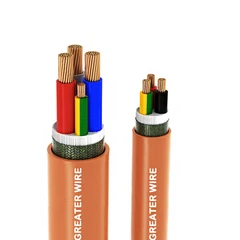
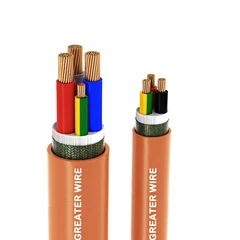

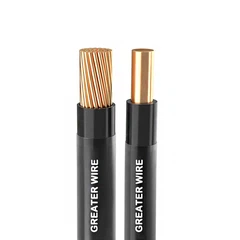
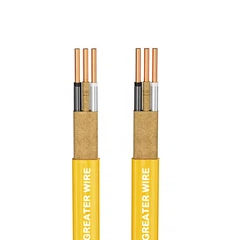
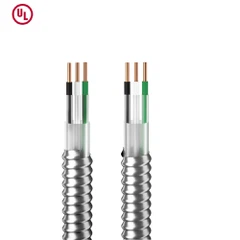
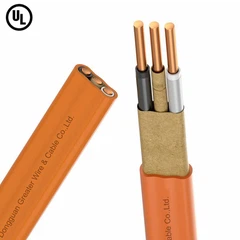
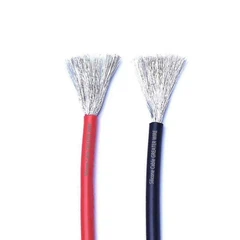
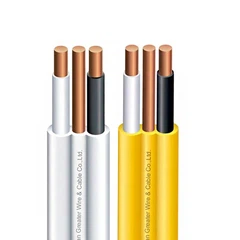
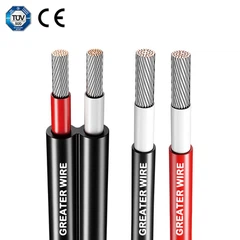

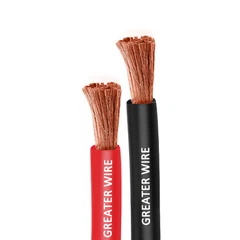
Selecting the correct solar cable size is a crucial aspect of designing an efficient and safe solar power system. An oversized or undersized solar wire can result in power loss, overheating, or even system failure. Properly calculating the solar cable size ensures that the cables can safely carry the current without excessive voltage drop, while minimizing energy losses and maintaining the system's overall efficiency.
In this article, we will guide you through the process of calculating solar cable size, including understanding the relevant factors such as current-carrying capacity, voltage drop, and cable resistance. Additionally, we'll explore how to choose the right solar wire based on these calculations and other important considerations for a reliable solar power system.

Key Factors Affecting Solar Cable Size
When calculating solar cable size, several key factors need to be taken into account:
Current (Amps)
Voltage (Volts)
Cable Length
Cable Material
Voltage Drop
Temperature Rating
Safety Margins
Let's break down each of these factors and their role in determining the correct solar wire size.

Step 1: Determine the Current (Amps)
The current in a solar system is determined by the amount of power being generated by the solar panels and the system's voltage. For instance, if you know the power (in watts) and voltage (in volts) of the solar panel or system, you can calculate the current using Ohm's Law:
Current (A)=Power (W)/Voltage (V)
Example:
Let's assume you have a solar panel generating 300W of power, and the system voltage is 24V. The current can be calculated as:
Current=300W/24V=12.5A
For a 300W, 24V solar system, the current that will flow through the cable is 12.5 amps. This is an important step, as the solar wire must be able to carry this amount of current without excessive heating.

Step 2: Calculate the Voltage Drop
Voltage drop is the reduction in voltage that occurs when the current passes through the cable, mainly due to the resistance of the solar wire. Excessive voltage drop can reduce the performance of your system by lowering the voltage reaching your inverter or battery bank, thus decreasing efficiency and potentially damaging sensitive components.
A common recommendation is to keep the voltage drop below 3% to ensure system performance is not compromised. However, in some high-power systems, a lower voltage drop may be required, so understanding and calculating this is key.
To calculate the voltage drop:
Voltage Drop (V)=2×Current×Cable Length×Resistance per Meter/1000
Current is the current flowing through the cable (in amps).
Cable Length is the one-way length of the wire in meters.
Resistance per Meter depends on the material and gauge of the wire (typically listed in ohms per meter.
Example:
Assume you are using a 10mm² copper cable, with a resistance of 0.0031 ohms per meter. If the cable is 20 meters long (for both the positive and negative runs), and the current is 12.5A, you can calculate the voltage drop as follows:
Voltage Drop=2×12.5×20×0.0031/1000=1.55V
In this case, the voltage drop is 1.55V, and if the system voltage is 24V, the voltage drop represents 6.5% of the total voltage, which is above the desired 3% threshold. In this scenario, you would need to use a larger cable size or reduce the length of the cable to lower the voltage drop.

Step 3: Select the Cable Size
Once you have calculated the required current and estimated the voltage drop, the next step is to choose the correct solar cable size. There are two main considerations for choosing cable size:
Current-Carrying Capacity (Ampacity): The solar wire should be able to handle the maximum expected current without overheating or causing damage to the cable. For safety, choose a cable size that is rated to carry a higher current than your system's maximum load.
Voltage Drop: The size of the solar cable should be chosen to minimize the voltage drop to below 3% (or a level that meets your system requirements). Larger cables have lower resistance, which reduces voltage drop.
A general rule of thumb for solar wire size based on current is as follows:
2.5mm² cable: Suitable for up to 15A (common for small systems).
4mm² cable: Suitable for up to 20A.
6mm² cable: Suitable for up to 25A.
10mm² cable: Suitable for up to 40A.
16mm² cable: Suitable for up to 55A.
25mm² cable: Suitable for up to 70A.
For example, if your system has a current of 12.5A and the cable run is 20 meters, a 4mm² or 6mm² solar cable may be sufficient. However, if you want to minimize voltage drop, you might choose 6mm² instead of 4mm² to reduce the voltage drop below the 3% threshold.

Step 4: Account for Temperature and Safety Margins
Temperature plays a significant role in determining the ampacity of a solar cable. The current-carrying capacity of cables generally decreases as the temperature rises. Most solar cables are rated for use at 90°C or 75°C, but in high-temperature environments, it's important to consider de-rating the cable capacity.
Example:
If your system operates in a location where ambient temperatures are consistently above 30°C, you may need to increase the size of the solar wire to compensate for the lower ampacity at higher temperatures.
Moreover, to ensure safety, it's a good idea to include a safety margin in your solar cable size calculation. Typically, a 10-20% safety margin is recommended. For instance, if your system requires a 12.5A cable, choosing a 6mm² cable rated for 20A would provide a safety buffer, helping the system perform reliably and safely over time.

Step 5: Choose the Right Cable Material
The material of the solar cable will also affect the size calculation. The two most common materials used for solar wires are:
Copper: Copper cables are highly conductive and have lower resistance, which means they can carry higher currents for a given size compared to aluminum cables. Copper cables are more expensive but are preferred for most residential solar installations.
Aluminum: Aluminum cables are less conductive and require larger sizes to handle the same amount of current as copper. They are often used in large commercial solar installations where cost is a major factor.
If you're using aluminum cables, you will need to size up to account for the lower conductivity. For example, an 8mm² aluminum cable might be required for the same current as a 6mm² copper cable.

Step 6: Consider Cable Insulation Type
The insulation type is another critical factor to consider, as it determines the voltage rating and environmental resistance of the solar cable. Most solar cables use XLPE (Cross-Linked Polyethylene) insulation for outdoor use because it offers:
UV resistance
Heat resistance (up to 90°C)
Abrasion resistance
Water resistance
For indoor or low-voltage systems, PVC (Polyvinyl Chloride) insulation may be used, but it is less durable and not suitable for exposure to sunlight or extreme temperatures.
Ensure that the insulation material is suitable for the installation environment, especially if the cables will be exposed to sunlight, moisture, or other harsh conditions.