



1.When Does It Make Sense to Ditch the Conduit and Use PVC Coated MC Cable Instead?
Every electrician knows the drill. You get a job – maybe a short feeder to a rooftop unit, a control circuit in a cramped mechanical room, or a lighting run in a retail build-out. The spec calls for conduit. So you bend, cut, thread, and pull. Hours later, you're done. But was conduit really necessary for that run?
In many commercial and industrial applications, PVC coated metal-clad cable can replace rigid or EMT conduit entirely. Same mechanical protection. Same 600V rating. But no bending, no fishing wires, and a fraction of the installation time.
This isn't about eliminating conduit everywhere. It's about knowing where the trade-off makes sense. We've done both methods for years. Here's the real-world comparison.
2. The Old Way – Conduit + Individual Wires
Let's be honest. Conduit is reliable. It's been the standard for a century. But it's slow.
For a typical 50-foot run from a panel to a piece of equipment:
- Measure and cut EMT or rigid conduit.
- Bend around obstacles (three or four bends minimum).
- Thread ends (if rigid) or use compression fittings.
- Install supports every 10 feet.
- Pull THHN individual conductors – usually three or four wires.
- Terminate.
That process easily takes two to three hours for a simple run. Add a couple of tricky bends or a tight ceiling space, and you're looking at half a day.
And the hidden cost? Wire pulling damage. Every pull risks nicking the insulation on a sharp conduit edge. You don't find it until the megger test – or worse, after the equipment is running.
3.The Alternative – PVC Coated Metal-Clad Cable
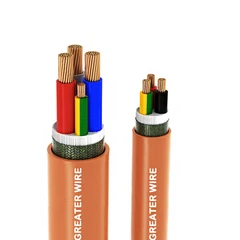
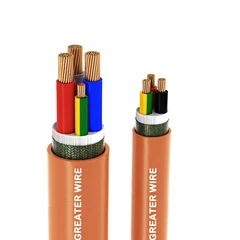
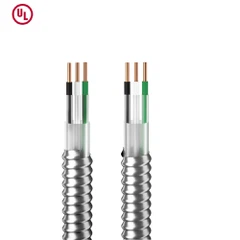
Now take the same 50-foot run with PVC coated metal-clad cable – for example, 10/3 aluminum armor MC cable with PVC jacket.
Here's the workflow:
- Uncoil the cable.
- Lay it along the intended path (supports still required, but spacing is similar or more generous).
- Cut with standard cable cutters.
- Strip the PVC jacket and armor at both ends.
- Install MC cable connectors (no threading, no compression fittings).
- Terminate the pre-installed conductors.
Total time? Often under one hour. No conduit bending. No pulling. No fish tape.
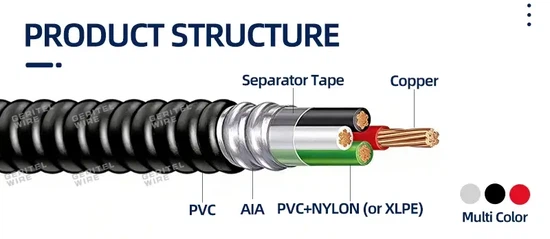
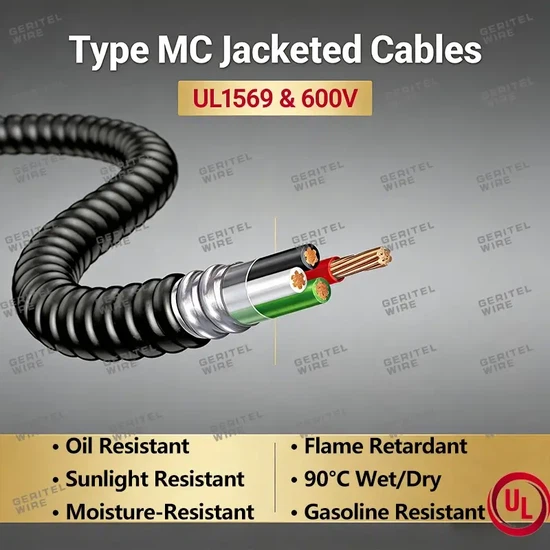
The cable arrives from the factory with the conductors already inside the interlocked aluminum armor, and a PVC jacket over that. The jacket protects the armor from moisture, dust, and incidental chemicals – which is exactly why you might have used conduit in the first place.
4. Where Conduit Replacement Actually Works (And Where It Doesn't)
Not every run is a good candidate. Based on field experience, here's where PVC coated MC cable wins – and where you should stick with conduit.
Good candidates for MC cable instead of conduit:
- Short equipment feeders – From a disconnect to a motor, compressor, or HVAC unit. The run is short, often exposed, and needs mechanical protection. Conduit is overkill. 12/4 aluminum armor MC cable PVC jacket works perfectly for three-phase small equipment.
- Retrofit or renovation projects – Existing buildings have irregular walls, old structure, and limited access. Bending conduit to fit is painful. PVC coated MC cable snakes around obstacles. Use 12/2 THHN/THWN-2 PVC jacketed MC cable with ground for lighting retrofits.
- Cable tray transitions – When power leaves a cable tray and goes to a piece of equipment, you could pipe it. Or you could run a short length of MC cable. Faster, cleaner, and the PVC jacket protects against abrasion where it touches the tray edge.
- Damp or dusty areas – Parking garages, warehouses, equipment rooms. The PVC jacket seals the cable better than individual THHN wires in conduit, because conduit fittings are never truly airtight or watertight. 8/3 XHHW-2 PVC jacketed MC cable is a solid choice for feeder runs in these environments.
Stick with conduit when:
- The run exceeds 100 feet and has multiple bends – pulling MC cable that far can be harder than pulling wires.
- The cable will be direct buried (most MC cable is not rated for that).
- Local code explicitly requires rigid conduit for physical protection (e.g., areas with heavy forklift traffic).
- You need to add or change conductors later – conduit allows re-pulling; MC cable does not.
5.A Side-by-Side Comparison – Installation and Protection
| Factor | Conduit + THHN | PVC Coated MC Cable |
|---|---|---|
| Installation time | 2-4 hours for a typical 50-ft run | 0.5-1 hour |
| Tools required | Conduit bender, threader, cutter, fish tape, pulling lubricant | Cable cutter, MC connector tool |
| Bending capability | Rigid bends, need fittings | Flexible, can curve around obstacles |
| Mechanical protection | Excellent (rigid steel) | Good (aluminum armor + PVC jacket) |
| Moisture protection | Fittings can leak | PVC jacket continuous |
| Future modifications | Easy – pull new wires | Difficult – replace entire cable |
| Material cost | Lower (conduit + wire) | Higher per foot |
| Total installed cost | Often higher (labor) | Often lower |
The trade-off is clear: PVC coated MC cable saves labor but limits future changes. For dedicated circuits that won't need modification (most equipment feeders, lighting, fixed loads), it's a no-brainer.
6. A Real Job Example – Replacing Conduit with MC Cable
We had a retail store build-out last year. The general contractor wanted power to six HVAC rooftop units. Original design: EMT conduit from the panel to each unit, with THHN pulled inside. The problem? The roof was crowded with existing ductwork. Bending conduit around everything would have taken two electricians two full days.
We proposed 10/3 aluminum armor PVC jacketed MC cable for each unit. The crew laid the cable across the roof using supports, cut to length, and terminated into weatherproof boxes. The entire roof – six runs – took six hours. The inspector approved it. The GC saved a day of labor.
That's the kind of application where conduit replacement makes real sense.
7.What About Code? (A Quick Reality Check)
Before you swap conduit for MC cable, check two things:
Local adoption of NEC – The National Electrical Code (NEC) permits MC cable in many locations where conduit is also allowed. But some local amendments require conduit in certain commercial spaces (e.g., exposed runs in parking garages). Know your jurisdiction.
Physical damage risk – If the cable will be subject to severe physical damage, code may require conduit regardless. For moderate risk (foot traffic, carts, ladders), aluminum armor with PVC jacket is usually acceptable.
We don't write code – so always verify. But in our experience, about 70% of short commercial feeder runs that currently use conduit could be done faster and cheaper with PVC coated MC cable.
FAQ – Conduit Replacement with PVC Coated MC Cable
Q: Can I run PVC coated MC cable outdoors without conduit?
In many cases, yes – if the cable is marked "sunlight resistant" and the installation complies with local code. The PVC jacket is designed for damp and wet locations, but direct burial is a separate rating.
Q: What's the maximum length for MC cable runs?
There's no hard limit, but for runs over 200 feet, pulling becomes difficult. For long distances, conduit with individual wires is often easier.
Q: Does the PVC jacket replace the need for grounding?
No. The cable still requires a grounding conductor – either bare or insulated green ground. The PVC jacket is not a grounding path.
Q: Can I use this cable in place of conduit in a hazardous location?
No. Hazardous locations have special requirements. Do not substitute MC cable for conduit in Class I, Division 1 or 2 areas without specific listing.
Need a Quote for Your Next Conduit Replacement Project?
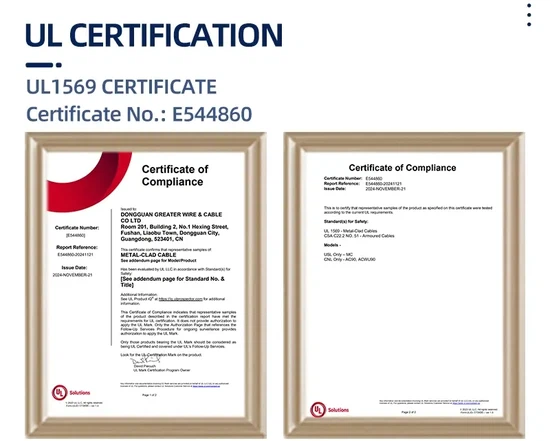
We supply PVC coated metal-clad cable in all common configurations: 12/2, 12/4, 10/3, 8/3, with THHN/THWN-2 or XHHW-2 conductors, aluminum interlocked armor, and sunlight-resistant PVC jacket. Bulk spools or cut lengths.Our cable carries UL1569 certification (Certificate No. E544860) – that's the standard for metal-clad cable construction. We can provide the certificate and file number on request.
Tell us your run lengths and load requirements. We'll help you decide if MC cable is the smarter move – and quote you a fair price.
Contact Us
Dongguan Greater Wire & Cable Co., Ltd.
Tel/WhatsApp/Wechat: +86 136 6257 9592
Tel/WhatsApp/Wechat: +86 135 1078 4550
Email: manager01@greaterwire.com
Website: www.greaterwire.com