







1. Why This Comparison Matters for Under-Hood Wiring
If you've ever pulled apart a starter cable on a 10-year-old work truck and found cracked, brittle insulation falling off the conductor, you already know why SGT vs SGX battery cable is not just a specs-on-paper debate. Engine compartments are brutal environments - heat cycling, oil mist, vibration, and constant flexing eat through cheap insulation faster than most buyers budget for.
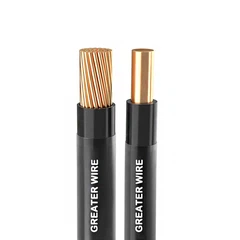
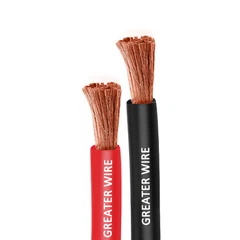
The confusion starts with the names. Both are SAE-spec battery cables built for 60V DC automotive systems, both use Class 5 bare stranded copper conductor for flexibility, and both come in the same standard sizes from 6 AWG up to 4/0 AWG. The difference lives in the insulation jacket - and that 20°C gap in temperature rating translates directly to years of service life (or expensive roadside failures).
This guide cuts through the generic datasheet language and explains exactly when standard SGT (PVC insulated 105℃ 60V) is the right call, and when stepping up to SGX (XLPE insulated 125℃ 60V) is non-negotiable.

2. Core Differences: PVC (SGT) vs XLPE (SGX) Insulation
2.1 Material and Temperature Rating
SGT battery cable uses a standard polyvinyl chloride (PVC) jacket rated for continuous operation at 105°C. It's the same insulation family you'll find in common building wires like THHN/THWN-2, just formulated for automotive flexibility. PVC does the job in normal conditions - it's tough, abrasion-resistant, and handles oil exposure reasonably well.
SGX battery cable upgrades to cross-linked polyethylene (XLPE), the same insulation family used in industrial power cables like XHHW-2. The cross-linking process changes the molecular structure of the plastic, pushing the continuous temperature rating up to 125°C. That extra 20 degrees doesn't sound like much on a spec sheet, but under the hood of a diesel truck idling in summer traffic, it's the difference between insulation that lasts 8+ years and insulation that starts cracking at year 3.
2.2 Flexibility and Installation Feel
Here's where SGT has a real advantage. PVC is naturally softer at room temperature, so SGT cable bends easier during installation - a big deal when you're routing starter cables around engine brackets and firewall grommets. For restoration shops and aftermarket installers working at bench temperature, SGT simply feels nicer to work with.
SGX XLPE is stiffer out of the box. The tradeoff is that it stays flexible at high temperatures where PVC gets soft and sags. In a hot engine bay that cycles between -30°C winter mornings and 120°C afternoons, SGX maintains its shape and doesn't migrate or deform against hot manifolds.
2.3 Aging and Service Life
This is the gap that rarely makes it into the marketing copy. PVC insulation thermally ages - every degree above its rating accelerates brittleness. A cable running near its 105°C limit on a daily basis will get hard and crack-prone in 2-3 years. XLPE degrades much more slowly at the same temperatures. Field experience on heavy-duty fleets puts SGX service life at roughly 2-3x that of SGT in high-temperature under-hood applications.

3. Application Guide: When to Use SGT vs SGX
3.1 SGT Is the Right Choice When:
· You're wiring passenger cars, light trucks, or classic vehicles where under-hood temperatures stay moderate
· The cable runs away from direct exhaust or manifold heat
· You're doing interior or trunk battery bank wiring where ambient temps are low
· Upfront cost is the primary driver and the application doesn't push thermal limits
For most 2 AWG or 1/0 AWG starter cables on everyday gasoline passenger cars, SGT is completely adequate and the better value. The 105°C rating has plenty of headroom for normal driving cycles.
3.2 SGX Is Non-Negotiable When:
· You're working on heavy-duty diesel trucks, buses, or construction equipment
· The cable routing puts it within 6 inches of exhaust components or turbo manifolds
· The vehicle sees sustained high-load operation - towing, hauling, PTO equipment
· You're building for OEM-level durability and want maximum service interval
3/0 AWG and 4/0 AWG cables on Class 7-8 trucks almost always specify SGX. The combination of high starting current (which adds its own conductor heat) and high under-hood ambient temps pushes SGT past its comfort zone.

4. The Price Question: Is SGX Worth Double the Cost?
SGX typically costs 60-100% more per foot than SGT in the same gauge. That's a big jump on a bill of materials, and it's the #1 question aftermarket buyers ask.
The answer depends on failure cost. For a passenger car where a battery cable failure means a jump start and an hour of labor, SGT's value equation works fine. For a delivery truck or construction machine where a single no-start event costs $800+ in downtime, missed routes, and emergency service calls, the math flips - paying 2x for cable that lasts 2-3x longer and fails less often is cheap insurance.
Selection reminder: Don't pick battery cable by gauge alone. Start with your maximum under-hood operating temperature, then match the insulation rating. Passenger cars = SGT works. Heavy-duty trucks, equipment, and anything that runs hard all day = go SGX XLPE.
5. FAQ
Q1: Are SGT and SGX both SAE J1127 compliant?
Yes, both cable types fall under the SAE J1127 specification for automotive battery cables - they're just different insulation classes within the same standard. Always confirm the actual rating marked on the cable jacket rather than assuming by name alone.
Q2: Can I use SGX to replace SGT in an existing application?
Absolutely. SGX is a direct upgrade - same conductor sizes, same voltage rating, same crimp lug compatibility. You can always step up to a higher temperature rating; you just never want to step down if the original spec called for SGX.
Q3: Do I need different lugs or crimp tools for SGX cable?
No. The conductor dimensions are identical for the same AWG size because both use Class 5 bare stranded copper. The difference is only in the insulation jacket thickness and material. Standard copper battery lugs and standard crimp dies work for both.
Q4: How does this compare to building wire like THHN or XHHW?
Don't substitute building wire for automotive battery cable. THHN/THWN-2 and XHHW-2 are built for 600V building installations with different stranding, jacket formulations, and vibration testing. SGT and SGX are purpose-built for the 60V DC, high-vibration, oil-exposed environment under a vehicle hood.
6. Ready to Spec the Right Cable?
Still not sure whether SGT or SGX fits your application? Send us your vehicle type, cable length, routing path, and operating environment - our engineering team will recommend the right gauge and insulation rating with no generic fluff.
Dongguan Greater Wire & Cable Co., Ltd.
Tel/WhatsApp/Wechat: +86 136 6257 9592
Tel/WhatsApp/Wechat: +86 135 1078 4550
Email: manager01@greaterwire.com
Website: www.greaterwire.com