

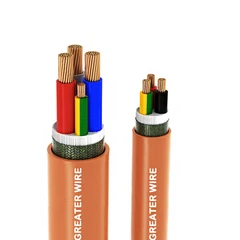
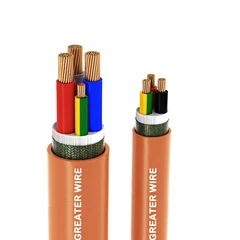

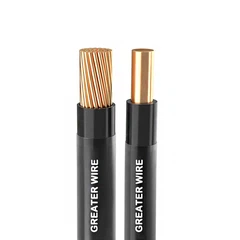
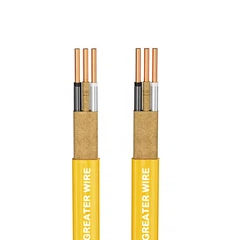
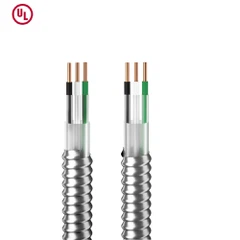
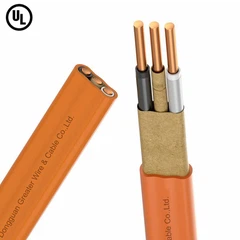
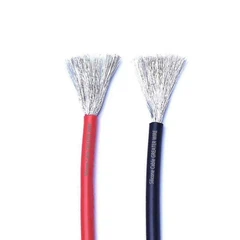
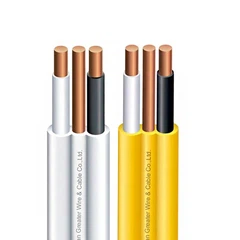
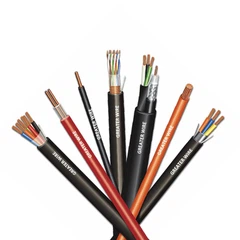
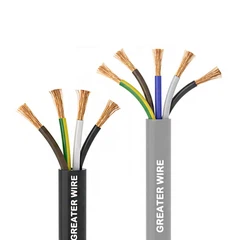
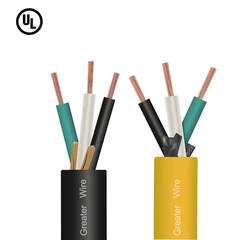
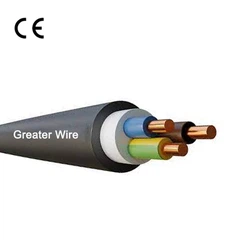
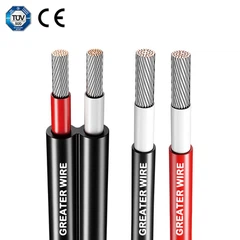

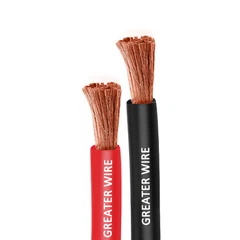
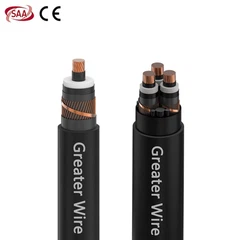
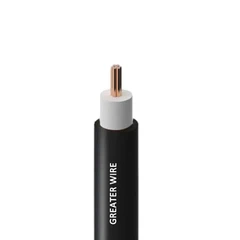
In modern electrical engineering, selecting the appropriate cable directly impacts project safety and long-term operational stability. Underground installations face complex conditions, including soil moisture, chemical corrosion, mechanical stress, and electrical load. Therefore, choosing the right cable for underground use is crucial. Orange Circular Electrical Cable offers high performance, flexibility, and durability, making it widely used in industrial and construction projects. However, its suitability for direct burial must be assessed based on technical analysis and project-specific conditions. This article provides an in-depth review of its structure, materials, installation requirements, and practical engineering applications.
Technical Features of Orange Circular Electrical Cable
Orange Circular Cable is a high-performance, multi-purpose round cable with the following technical characteristics:
- Multi-strand copper conductor: Reduces resistance and improves fatigue resistance under repeated bending
- Insulation materials: PVC, XLPE, or rubber provide high temperature resistance, moisture resistance, and chemical corrosion protection
- Outer sheath: Orange color ensures visibility on-site; some models offer flame retardancy and UV resistance
- Versatile applications: Suitable for indoor, outdoor, industrial equipment, and construction, for low- to medium-voltage power and control signal transmission

Underground Installation Requirements and Challenges
Key technical challenges for underground cables include:
- Moisture resistance: Groundwater and soil moisture can compromise insulation performance
- Chemical corrosion: Soil pH, salts, and other chemicals can accelerate sheath and insulation aging
- Mechanical stress: Excavation, compaction, and surface traffic can damage cables
- Thermal management: Limited underground heat dissipation requires consideration of thermal resistance and temperature rise
- Electrical safety: Maintaining rated voltage and current and preventing leakage or short circuits is essential
Direct burial cables are generally designed specifically for underground use. When using Orange Circular Cable underground, additional protection-such as HDPE conduits, sand bedding, or metal conduits-is necessary to ensure long-term safe operation.
Technical Analysis for Underground Applications
| Parameter | Orange Circular Cable | Direct Burial Suitability | Technical Notes |
|---|---|---|---|
| Insulation Type | PVC, XLPE, Rubber | Not recommended for direct burial | Conduit protection needed to prevent moisture and chemical damage |
| Voltage Rating | 300/500V – 0.6/1kV | Suitable for rated voltage | Select cross-section according to load |
| Temperature Rating | -25℃ to 90℃ | Suitable | Evaluate temperature rise for high underground loads |
| Mechanical Strength | High flexibility | Moderate | Recommend conduit or sand bedding for mechanical protection |
| Standards | SAA, ISO | Compliant | Meets requirements for Oceania installations |
Technical Note:
To ensure stable underground performance, Orange Circular Cable should be installed with conduits, sand bedding, or metal sheaths. XLPE insulation and thicker sheaths are recommended in high-temperature or high-load environments to reduce temperature rise and extend service life.

Cable Sizing and Current Carrying Capacity
Selecting the appropriate cable requires considering load current, installation method, length, bending radius, and environmental conditions. Reference table:
| Load Current (A) | Recommended Cross-section (mm²) | Typical Applications | Installation Method |
|---|---|---|---|
| ≤15 | 1.5 – 2.5 | Indoor lighting, light outlets | Conduit, dry soil |
| 16 – 25 | 4 – 6 | Small distribution, AC circuits | Sand bedding or conduit |
| 26 – 40 | 10 | Medium equipment power lines | Sand bedding + conduit protection |
| 41 – 63 | 16 – 25 | Commercial building distribution | HDPE conduit + waterproof layer |
| 64 – 100 | 35 – 50 | Large industrial equipment | Double sheath or steel conduit |
Technical Considerations:
- Cross-section selection should account for ambient temperature, soil thermal resistance, and correction factors
- Bending radius must exceed minimum requirements to avoid mechanical fatigue
- Parallel cable installation requires consideration of heat dissipation and electromagnetic interference
Practical Engineering Applications
1.Commercial Building Underground Power Distribution
- Environment: Underground parking with high soil moisture
- Solution: Orange Circular Cable + HDPE conduit + sand bedding
- Performance: Controlled temperature rise and long-term stability
2.Railway Signaling and Power Systems
- Environment: Underground tunnels, mechanical stress
- Solution: Rubber-sheathed Orange Circular Cable + metal conduit
- Performance: Enhanced mechanical protection and compliance with SAA standards
3.Mining Underground Power and Control Lines
- Environment: Wet, highly corrosive conditions
- Solution: Fire-rated + Elastomer-sheathed Orange Circular Cable + sand bedding
- Performance: Fire, water, and chemical resistance ensuring safe long-term operation

Comprehensive Cable Supply and Technical Support
Dongguan Greater Wire & Cable Co., Ltd. provides a full range of high-performance cables covering industrial, construction, mining, and fire protection applications, ensuring:
- Complete specifications: From 1.5mm² upwards, customizable in length, color, material, and performance
- Standard compliance: SAA and ISO-certified
- Global project experience: Implemented large-scale projects in Australia, New Zealand, Fiji, Papua New Guinea, Solomon Islands, and other Oceania countries
- Professional support: Technical team offers guidance on installation, current calculations, and on-site consulting
- Fast delivery: Supports both small and bulk orders to meet project schedules
Contact Information:
Dongguan Greater Wire & Cable Co., Ltd.
- Tel/WhatsApp/WeChat: +86 135 1078 4550 / +86 136 6257 9592
- Email: manager01@greaterwire.com
Ensuring Reliability in Underground Installations
By properly selecting the cable size, optimizing installation methods, and using conduits or protective sheaths, Orange Circular Cable can safely operate underground. Key technical measures include:
- Thermal performance assessment: Consider soil thermal resistance, heat dissipation, and correction factors for current carrying capacity
- Mechanical protection: Use conduits, sand bedding, or steel tubes to enhance pressure and impact resistance
- Chemical resistance: Rubber or XLPE-sheathed models improve acid, alkali, and corrosion resistance
- Redundancy design: Critical systems can use dual circuits or backup cables to enhance operational reliability
These measures ensure that Orange Circular Cable not only meets standard power transmission requirements but also delivers long-term safety, reliability, and performance in underground applications.