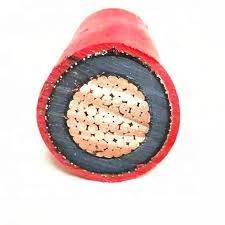
Unshielded medium voltage cable refers to a medium voltage cable without conductor shielding layer and insulation shielding layer. This type of cable typically consists of one or more copper or aluminum conductors, insulation layers, sheaths, and other accessories, and is suitable for transmitting medium voltage electricity. The structure of unshielded medium voltage cables is relatively simple, without additional shielding layers, so their manufacturing process and cost are relatively low.
The characteristics of unshielded medium voltage cable include:
Simple structure: Due to the absence of a shielding layer, the structure of the cable is relatively simple, reducing the complexity of the manufacturing process.
Low cost: The lack of a shielding layer results in lower overall cable manufacturing costs.
Limited applicability: Due to the absence of a shielding layer, this cable is suitable for applications that do not require high electrical performance, such as some low-voltage or specific purpose lines.
The application scenarios of unshielded medium voltage cable mainly include:
Low voltage distribution system: In some low voltage distribution systems, due to the low voltage and current, there is no need for additional shielding layers to improve electric field distribution or enhance electrical performance.
Specific industrial applications: In some industrial applications with strict cost control, unshielded medium voltage cables are adopted due to their lower cost.
Temporary or non critical routes: In some non critical or temporary routes, using unshielded medium voltage cable can reduce initial investment costs.