























In the field of electrical wiring and industrial manufacturing, wire is not only the medium for transmitting electricity but also a critical component for ensuring safety, efficiency, and long-term reliability. Different wire types vary in structure, performance, and applicable environments. Choosing the wrong type of wire can lead to safety hazards, higher maintenance costs, or poor system efficiency.
Among the many UL-certified wires used in the North American market, THHN (Thermoplastic High Heat-resistant Nylon-coated) and MTW (Machine Tool Wire) are two of the most commonly encountered. They are often confused with each other because they share similarities in voltage rating and temperature limits. However, they are designed for very different applications.
This article explores the question: "What Is The Difference Between THHN And MTW Wire?" By comparing their structure, technical performance, advantages, and application scenarios, we will provide a clear understanding of how to select the right wire for your project - whether it is building wiring, machinery installation, or industrial automation.
Basic Knowledge of THHN and MTW Wire
What Is THHN Wire?
THHN (Thermoplastic High Heat-resistant Nylon-coated) wire is widely used in building and electrical installations.
- Conductor: Solid or stranded copper conductor
- Insulation: PVC insulation layer
- Jacket: Nylon outer coating that adds abrasion resistance and chemical resistance
- Voltage Rating: 600V
- Temperature Rating: 90°C (dry), 75°C (wet)
- Applications: Building wiring, feeders, branch circuits, conduit installation, and distribution panels
What Is MTW Wire?
MTW (Machine Tool Wire) is specifically designed for industrial machinery and control wiring.
- Conductor: Fine stranded copper for excellent flexibility
- Insulation: Thick PVC insulation, oil-resistant, abrasion-resistant
- Voltage Rating: 600V
- Temperature Rating: 90°C (dry), 60°C (wet)
- Applications: Control cabinets, machine tools, equipment wiring, and industrial automation

Key Differences Between THHN and MTW
| Feature | THHN Wire | MTW Wire |
|---|---|---|
| Conductor | Solid or stranded, relatively stiff | Fine stranded, highly flexible |
| Insulation/Jacket | PVC insulation + nylon jacket, chemical resistant | Thick PVC insulation, oil & abrasion resistant |
| Temperature | 90°C dry / 75°C wet | 90°C dry / 60°C wet |
| Applications | Building wiring, conduit, distribution | Industrial machinery, control panels |
| Flexibility | Less flexible, best for fixed installation | Highly flexible, ideal for tight spaces |
| Certification | UL, cUL; NEC compliant for building use | UL, cUL; Designed for industrial machinery |
| Environmental | Resistant to chemicals and abrasion | Resistant to oil and mechanical impact |
Advantages of THHN and MTW Wire
Advantages of THHN Wire
- Nylon coating provides strong abrasion and chemical resistance
- Suitable for conduit installation in commercial and residential buildings
- Performs well in high-temperature environments (up to 90°C dry)
Advantages of MTW Wire
- Fine stranded conductor offers excellent flexibility
- Resistant to oils and mechanical stress, ideal for machinery
- Easy to install in tight or complex pathways inside equipment
Common Features Between THHN and MTW
- Both are UL & cUL certified for the U.S. and Canadian markets
- Both have a 600V voltage rating
- Both have 90°C dry temperature rating
- Both are widely used in control circuits and electrical connections

Available Size Ranges
| Wire Type | Common Size Range | Typical Usage |
|---|---|---|
| THHN | 14 AWG – 6 AWG | Branch circuits, feeders, distribution, conduit wiring |
| MTW | 18 AWG – 6 AWG | Control wiring, machine tools, small motors, automation |
Practical Applications by Size
- 18–16 AWG (MTW): PLC wiring, signal cables, small control circuits
- 14 AWG (THHN / MTW): Lighting circuits, receptacle wiring
- 12 AWG (THHN / MTW): Standard branch circuits, small machinery
- 10 AWG (THHN / MTW): Air conditioning, HVAC wiring
- 8–6 AWG (THHN / MTW): Industrial equipment, control cabinet power feeds
Real-World Application Cases
Building Electrical Systems
In a 20-story office tower, THHN wire was installed through EMT conduit to power lighting and receptacle circuits. Its nylon jacket provided long-term protection against wear and chemical exposure.
Industrial Machinery Wiring
In a CNC machine control cabinet, MTW wire was chosen due to its high flexibility and oil resistance. The fine stranding made routing inside tight spaces much easier.
Harsh Environments
- Chemical plants/laboratories: THHN is preferred for its chemical resistance
- Automated production lines: MTW is selected for its flexibility and oil resistance
How to Choose
- Residential & Commercial Buildings: Choose THHN for conduit wiring, feeders, and distribution circuits
- Industrial Machinery & Control Cabinets: Choose MTW for equipment wiring and flexible connections
- Chemical/Corrosive Environments: THHN is better for long-term chemical resistance
- Automation & Robotics: MTW is ideal for frequent bending, vibration, and oil exposure
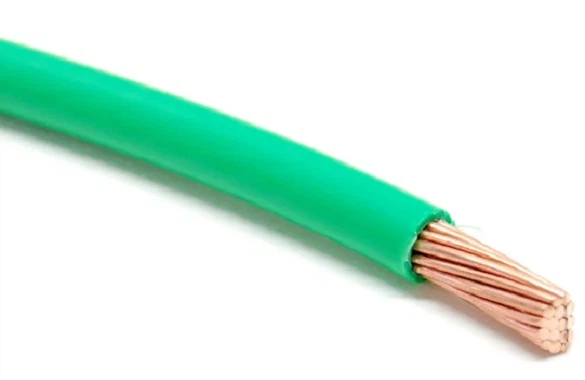
Product and Service Advantages
At Dongguan Greater Wire & Cable Co., Ltd., we supply a wide range of UL-certified wires to meet different customer needs:
- Product Range: NM-B, THHN, UF-B, XHHW and more
- Certification: UL & cUL approved, compliant with U.S. and Canadian standards
- Size Coverage: Complete range from 14 AWG – 6 AWG (and beyond)
- Delivery Capability: Fast shipping, supporting both bulk and small orders
- Service Advantages: Professional technical support, pre-sales and after-sales assistance
- Global Experience: Years of manufacturing and export experience, trusted by worldwide partners
With these strengths, we ensure that no matter the size of your project, you will receive professional support, reliable products, and efficient service.
Conclusion and Contact
Understanding the differences between THHN and MTW wire is essential for making the right selection. While both share similarities in voltage rating and certification, their differences in flexibility, insulation, and application environments make each suitable for different scenarios.
For detailed specifications, bulk inquiries, or technical consultation, feel free to contact us:
Dongguan Greater Wire & Cable Co., Ltd.
- Tel/WhatsApp/WeChat: +86 135 1078 4550 / +86 136 6257 9592
- Email: manager01@greaterwire.com