

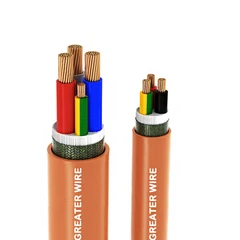
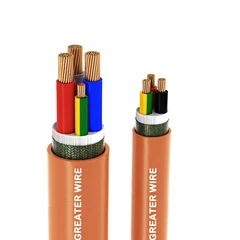


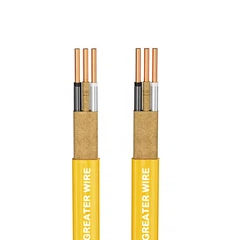
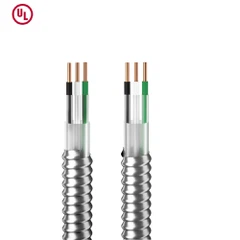



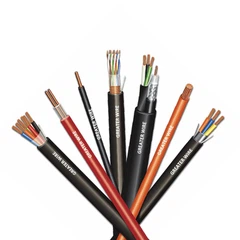
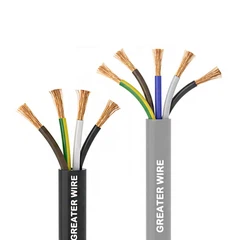
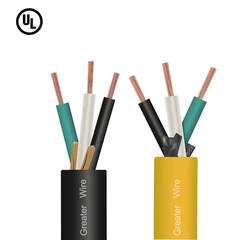
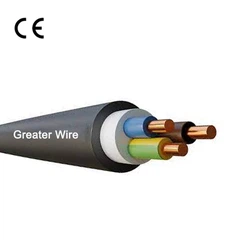


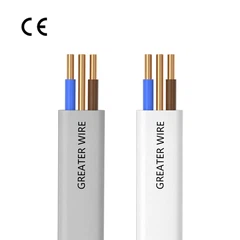
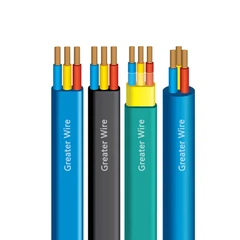
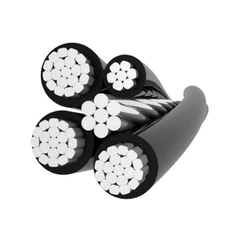
In today's world, electricity has become the backbone of both daily life and industrial production. From home appliances and office lighting to factory machinery, data centers, and renewable energy systems, everything relies on a stable and safe electrical infrastructure. Yet, within this system, there is one component that often goes unnoticed but plays a critical role in protecting lives and property: the earth cable.
Most people are familiar with "live" and "neutral" wires, but tend to overlook the importance of the third wire - the earth cable. In fact, it is the earth cable that steps in at the most crucial moments to ensure safety. Without it, any leakage, insulation failure, or system fault could lead to catastrophic accidents.
What Is an Earth Cable?
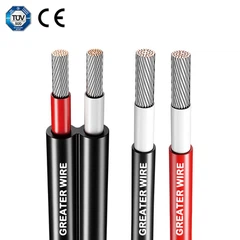
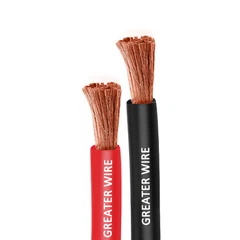
An earth cable, also known as an electrical cable earth, is a conductor that directly connects electrical equipment to the ground. Its primary role is to provide a low-impedance path for stray currents in the event of a fault, allowing electricity to flow safely into the ground instead of passing through the human body or damaging equipment.
Earth cables are typically made of copper or tinned copper, materials chosen for their superior conductivity and durability. For example, in earth cable bonding, copper conductors connect equipment frames, metal housings, and other conductive parts to the earth, ensuring a consistent potential across the system and preventing dangerous voltages from appearing on accessible surfaces.
In simple terms, the earth cable is like a "safety valve." While it does not carry current under normal conditions, it plays the role of a life-saving guardian during faults.

Why Is Electrical Safety Impossible Without Earth Cables?
Let's take a simple household example. Imagine touching your washing machine and suddenly feeling an electric shock due to internal leakage. This can be life-threatening. But if the appliance casing is properly connected with an electrical cable earth, the fault current will immediately flow into the ground instead of passing through your body. At the same time, the circuit breaker detects the anomaly and trips, cutting off the faulty circuit and preventing harm.
In industrial settings, the importance of earth cables becomes even greater. Take data centers for instance: hundreds of servers run simultaneously, and any static buildup or electromagnetic interference could cause equipment failures or data loss. With proper earth cable bonding, racks and systems remain at the same potential, minimizing risks and ensuring stable operation.
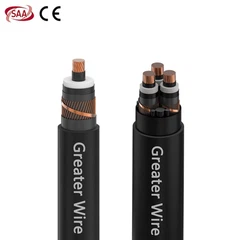
Similarly, in high-voltage systems, lightning strikes or short circuits can generate enormous fault currents. Without effective earthing, this energy would remain trapped in the system, potentially causing fires, explosions, or equipment damage. Earth cables provide a safe discharge route, protecting both equipment and people.
What Are the Risks of Not Using Earth Cables?
The absence of proper earthing or poorly installed earth cables is one of the leading causes of electrical accidents.
In residential buildings, if outlets are not properly earthed, any appliance fault could expose users to electric shocks. Global statistics show that thousands of injuries and fatalities occur annually due to electric shocks, many of which could be avoided with properly installed electrical cable earth.
In factories, lack of grounding can lead to costly damages and downtime. For instance, if a machine leaks current but is not earthed, it may not only destroy motors but also put workers in direct danger, causing accidents and production stoppages.
In telecommunications and IT industries, the absence of earthing often results in electromagnetic interference or static buildup, leading to data corruption or system outages - unacceptable in today's digital world.
Simply put, without earth cables, an electrical system is like a skyscraper without a lightning rod - vulnerable and unsafe.
What Should Be Noticed When Using Earth Cables?
Choosing the right earth cable is only the first step. Proper installation and maintenance are equally important.
First, the earth cable must have sufficient cross-sectional area to safely carry large currents during short circuits or lightning events. The size of the electrical cable earth is usually calculated based on system capacity, environmental conditions, and regulatory standards.
Second, all connections and terminals must be secure and resistant to oxidation. In earth cable bonding systems, multiple devices often share the same grounding path, meaning one faulty connection can undermine the entire system's safety.
Third, cables should be laid in a way that minimizes interference. Avoid running earth cables parallel to strong current sources over long distances. For outdoor installations, corrosion resistance is essential to ensure long-term stability.
Finally, grounding systems should be tested regularly. Measuring earth resistance ensures that the cable remains effective, maintaining safety at all times.
How to Choose the Right Earth Cable?
Different applications demand different types of earth cables. Here's a summary of recommended solutions for various scenarios:
| Application Scenario | Recommended Earth Cable Type | Features & Advantages |
|---|---|---|
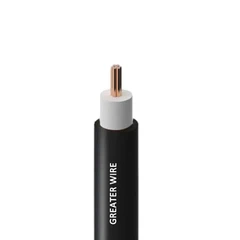
| Residential & Commercial | Single Core Copper Earth Cable | Simple design, easy to install, cost-effective, suitable for everyday home and office use. |
| Industrial Plants & Power Distribution | Multi-Stranded Large Cross-Section Copper Cable | High current-carrying capacity, excellent flexibility, suitable for complex wiring environments. |
| Chemical Plants & Coastal Areas | Tinned Copper Earth Cable | Superior corrosion resistance, ideal for humid, acidic, or salty environments. |
| Data Centers & Telecom | Shielded Earth Cable (Earth Cable Bonding) | Reduces electromagnetic interference and static buildup, ensures stable signal transmission. |
| Renewable Energy (Solar, Wind) | Bare Copper Wire or Flexible Copper Stranded Cable | Excellent conductivity, disperses lightning current quickly, protects renewable energy systems. |
As shown above, selecting the right earth cable requires consideration of conductivity, installation conditions, corrosion resistance, flexibility, and cost-effectiveness.
If you are uncertain about the choice, Dongguan Greater Wire & Cable Co., Ltd. offers expert technical support. We tailor solutions based on your project needs, ensuring cables are both safe and cost-efficient.
Why Choose Dongguan Greater Wire & Cable Co., Ltd.?
When it comes to earth cables, quality and supplier reliability matter just as much as product selection. Dongguan Greater Wire & Cable Co., Ltd. has been a trusted name in the industry for over 30 years, operating out of a modern production facility covering more than 50,000 square meters, with exports to over 80 countries worldwide.
Our earth cable products fully comply with international and regional safety standards, backed by more than 50 product certifications that verify their performance and reliability. With robust inventory and supply chain capacity, we guarantee fast delivery to meet urgent project needs.
We also provide 24/7 sales and technical support, offering professional guidance on cable selection, installation, and system integration. Whether you're working on residential projects, industrial plants, or large-scale energy facilities, we deliver safe and comprehensive solutions.
By choosing Dongguan Greater Wire & Cable Co., Ltd., you gain more than just a cable - you gain a long-term partner dedicated to protecting your safety and powering your success.
Contact Information
Dongguan Greater Wire & Cable Co., Ltd.
Tel/WhatsApp/Wechat: +86 135 1078 4550 / +86 136 6257 9592
Email: manager01@greaterwire.com