























THHN wire (Thermoplastic High Heat Resistance Nylon Coated Wire) is a high-performance wire widely used in buildings, power systems, and industrial scenarios, named after its excellent high temperature resistance and thermoplastic nylon insulation properties. THHN cable have become an important choice in various electrical applications due to their safety, durability, and ability to adapt to multiple environments.
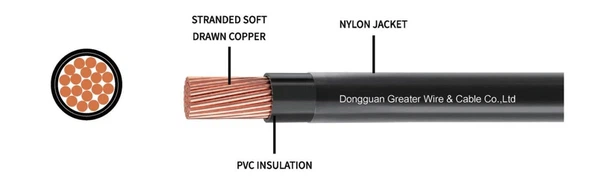
Core Composition and Characteristics of THHN Wire
To understand why THHN wire are called high-temperature thermoplastic nylon coat wires, it is first necessary to understand their core composition and performance characteristics:
1.Conductor material
Copper conductor: The vast majority of THHN cable use soft drawn copper as the conductor, such as: 2 THHN copper wire, 1 THHN copper wire, and 1/0 copper THHN wire, which have excellent conductivity and corrosion resistance.
Aluminum conductor: In some applications, lightweight and economical aluminum conductors such as aluminum THHN wire are used to reduce costs and weight.
2.Insulation material
PVC (polyvinyl chloride) inner insulation layer: provides basic electrical insulation and heat resistance, ensuring safe operation of wires in dry environments up to 90 ° C and humid environments up to 75 ° C.
Nylon outer sheath: .enhances the mechanical strength, wear resistance, and chemical corrosion resistance of the wire, making it more reliable in complex environments.
3.technical standard
THHN wire must comply with UL 83 standards and also meet NEC (National Electrical Code) requirements for high-temperature thermoplastic insulated wires.
Why is THHN Wire named "high-temperature thermoplastic nylon coat wire"?
1. High temperature tolerance
THHN wire are named after their ability to withstand high temperature environments. Here are some specific performance indicators:
Dry environment temperature limit: 90 ° C (e.g. 12 THHN wire and 6 gauge THHN wire).
Temperature limit for humid environments: 75 ° C (e.g. 8 AWG THHN cable and 4 AWG THHN wire).
This high temperature performance is due to the thermal stability of the PVC inner layer and the protective effect of the nylon outer sheath, ensuring that the wire can operate stably in high temperatures or complex environments.
2. Thermoplastic insulation layer
Thermoplasticity "refers to the ability of THHN wire insulation materials to soften and process when heated, and to restore their sturdy form after cooling. The characteristics of this material contribute to the convenience of wire production, processing, and installation, while also ensuring its flexibility in application.
3. Nylon outer sheath
The nylon outer sheath provides the following unique advantages for THHN wire:
Wear resistance: Especially in conduit applications, the low friction of nylon sheaths makes wires easier to install.
Chemical corrosion resistance: Nylon sheaths effectively resist the erosion of grease and acidic substances in chemical and industrial environments.
Enhance tensile strength: Protect wires from being easily damaged under mechanical stress.

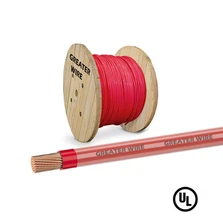
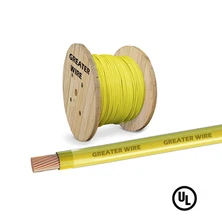
Common THHN cable models, specifications, and application scenarios
1. Aluminum THHN Wire and copper THHN Wire
Aluminum THHN Wire: Widely used in projects that require weight reduction or cost reduction, such as distribution backbone lines in large buildings.
Copper THHN Wire: Models such as 1 THHN copper wire and 1/0 copper THHN wire are the preferred choice for electrical engineering due to their excellent conductivity and corrosion resistance.
2. Small sized wire thhn
14 Gauge THHN Wire and 12 THHN Wire: These smaller sized wires are commonly used for residential branch circuits and lighting wiring, suitable for low current load applications. Wire 10 thhn: thicker than Wire 12 thhn, with stronger load-bearing capacity, commonly used as power cords for air conditioners or other medium-sized equipment.
3. Large specification thhn wires
8 AWG THHN Cable and 6 Gauge THHN Wire: typically used as distribution backbone lines in industrial settings or small and medium-sized commercial buildings.
4 AWG THHN Wire and 2 THHN Copper Wire: Suitable for powering high-power equipment such as large electric motors or high-power HVAC systems.
350 THHN Copper Wire and 500 MCM THHN Wire: In high current demand projects such as industrial transformers or power distribution lines.
600 MCM THHN Cable: This large-sized cable is designed specifically for high load industrial scenarios and is the best choice for power plants and large facilities.
The advantages of THHN Wire
1. High security
The multi-layer insulation design of THHN wire greatly improves safety during use, especially in environments where mechanical damage or chemical corrosion may occur, and the nylon sheath provides additional protection.
2. Strong flexibility
Whether installed in rigid conduits or laid in cable trays, THHN cable can meet various installation requirements with their excellent flexibility, especially large-sized cables such as 350 THHN Copper Wire and 500 MCM THHN Wire, which perform particularly well in complex wiring.
3. Good economic efficiency
Aluminum THHN wire provide an affordable option for projects that require budget control, while copper THHN wire offer long-term reliability and low maintenance costs due to their excellent performance.
4. Strong environmental adaptability
THHN wire are resistant to high temperatures and moisture, as well as UV and chemical corrosion, making them particularly suitable for high temperature and high humidity regions such as Southeast Asia and Africa.
The main application scenarios of THHN Cable
1.Residential power system
THHN wire is a common choice for home wiring due to its safety and economy, such as 14 gauge THHN wire and 12 THHN wire used for ordinary sockets and lighting circuits.
2.Commercial buildings
6 Gauge THHN Wire and 4 AWG THHN Wire are widely used in the power distribution backbone of commercial buildings and the power supply of high-power equipment.
3.Industrial facilities
Industrial scenarios have higher performance requirements for cables, and large-sized 500 MCM THHN Wire and 600 MCM THHN Cable are ideal choices for power plants, substations, and large factories.
4.Infrastructure projects
In infrastructure projects such as airports and subway stations, THHN power lines have become a key cabling solution due to their durability and high load capacity
THHN wire are known as "high-temperature thermoplastic nylon coat wires" due to their excellent high-temperature resistance, thermoplasticity, and protective properties of nylon sheaths. Whether it is the 14 Gauge THHN Wire used in residential wiring or the 500 MCM THHN Wire and 600 MCM THHN Cable deployed in industrial facilities, wire thhn have demonstrated their unique technological advantages and broad application prospects. With the acceleration of global electrification, wire thhn will continue to play an indispensable role in power transmission and wiring, providing safe, reliable, and efficient electrical solutions for various projects.
