























When electrical contractors and project engineers specify TC-ER cable for commercial or industrial projects, the most common costly mistake is choosing the wrong voltage rating. Many default to 1000V dual rated cable for every application "just to be safe," wasting 25-30% of their cable budget unnecessarily. Others cut corners by using 600V TC-ER cable in systems that require higher voltage, leading to safety hazards, code violations, and expensive rework.
Both 600V TC-ER cable and 1000V dual rated TC-ER cable comply with UL44 and UL1277 standards and are approved for exposed runs. The difference lies in their power capacity and application versatility. In this article, we'll break down exactly when to use each voltage rating, help you calculate your actual requirements, and avoid the two most common selection pitfalls.
1. Why Voltage Rating Is The Most Critical Decision For Your TC-ER Cable Project
The voltage rating of your TC-ER cable determines not just its electrical capacity, but also its cost, weight, and installation complexity. A common misconception is that higher voltage is always better. While 1000V dual rated cable can technically be used in 600V systems, it is significantly more expensive, heavier, and harder to pull through cable trays.
Conversely, using 600V TC-ER cable in a system that operates above 600V will cause insulation breakdown, leading to short circuits, equipment damage, and potential fire hazards. Both options have their place, and the right choice depends entirely on your specific project requirements.

2. 600V TC-ER Cable: The Cost-Effective Workhorse For Low-Voltage Systems
600V TC-ER cable is the industry standard for most commercial and light industrial applications. It provides reliable performance at the lowest possible cost, making it the preferred choice for projects with tight budgets.
· Best Applications For 600V TC-ER Cable
Commercial buildings: offices, retail stores, hotels, and hospitals
Light industrial facilities: warehouses, assembly plants, and distribution centers
Branch circuits for lighting, receptacles, and small equipment up to 600V
Indoor and outdoor exposed runs in non-hazardous locations
· Common Configurations
For general commercial branch circuits, 3/C 600V TC-ER cable with bare ground and THHN/THWN-2 insulation is the most widely used specification. For wet locations or outdoor installations, opt for 4/C 600V TC-ER cable with an insulated green ground and XHHW-2 insulation for enhanced moisture and chemical resistance.
All 600V TC-ER cables are available with either aluminum interlocked armor for corrosion resistance or galvanized steel armor for increased impact protection. Both options meet all TC-ER cable exposed run requirements, eliminating the need for expensive metal conduit.

3. 1000V Dual Rated TC-ER Cable: Higher Power And Broader Versatility
1000V dual rated TC-ER cable is designed for applications that require higher power transmission or greater versatility. While it costs more upfront, it can be used in both 600V and 1000V systems, making it ideal for projects that may require future expansion.
· Best Applications For 1000V Dual Rated TC-ER Cable
Heavy industrial facilities: manufacturing plants, refineries, and processing plants
Main power distribution feeders and large motor circuits
Projects with planned future voltage upgrades
Distributors and contractors looking to reduce inventory SKUs
· Common Configurations
For heavy industrial applications, 3/C 1000V TC-ER cable with galvanized steel armor and XHHW-2 insulation is recommended for its superior durability and resistance to oil, chemicals, and abrasion. For general industrial use, aluminum interlocked armor provides excellent corrosion resistance at a lower cost.
Both voltage ratings are available as CSA TC-ER cable for projects in Canada, and cold weather TC-ER cable options with low-temperature rated PVC jackets are suitable for installation in freezing conditions.
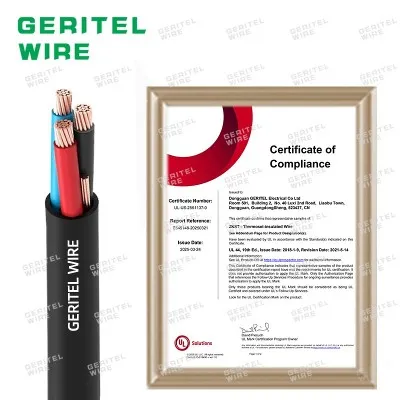
4.Three Key Factors To Make The Right Choice Every Time
To avoid overspending or underspecifying, always verify these three factors before selecting your TC-ER cable voltage rating:
· System Voltage: This is the most basic and non-negotiable factor. If your system operates at 600V or below, 600V TC-ER cable is sufficient. If your system operates between 600V and 1000V, you must use 1000V dual rated TC-ER cable.
· Maximum Load Capacity: Calculate the total current draw of all equipment connected to the circuit. While 600V TC-ER cable can handle most commercial loads, 1000V dual rated cable is required for high-power equipment such as large industrial motors, compressors, and chillers.
· Project Budget And Future Expansion: If your project has a tight budget and no plans for future expansion, 600V TC-ER cable is the most cost-effective choice. If you anticipate upgrading your system to 1000V in the next 5-10 years, investing in 1000V dual rated cable now will save you significant money on rework later.
5.Frequently Asked Questions
Q: Can I use 1000V TC-ER cable in a 600V system?
A: Yes, technically you can. However, 1000V dual rated TC-ER cable is approximately 25-30% more expensive than 600V TC-ER cable, and it is heavier and harder to install. Unless you have plans for future voltage upgrades, this is an unnecessary expense.
Q: When is 1000V dual rated TC-ER cable absolutely required?
A: 1000V dual rated TC-ER cable is required for any system that operates above 600V. It is also recommended for main power distribution feeders, large motor circuits, and projects where future voltage upgrades are planned.
Q: Are there any differences in exposed run requirements between 600V and 1000V TC-ER cable?
A: No. Both 600V and 1000V TC-ER cable meet the same UL44 and UL1277 standards for exposed runs in commercial and industrial buildings. Neither requires additional metal conduit when installed in cable trays.
Q: Which one is better for cold weather applications?
A: Both voltage ratings are available as cold weather TC-ER cable with low-temperature rated PVC jackets and XHHW-2 insulation. The choice between 600V and 1000V should still be based on your system voltage and load requirements.
6. Get Expert Guidance For Your TC-ER Cable Selection
Choosing between 600V and 1000V dual rated TC-ER cable doesn't have to be complicated. Our team of electrical cable specialists has over 20 years of experience helping contractors, distributors, and project engineers specify the correct cables for their commercial and industrial projects.
Contact us today to discuss your specific requirements. We'll provide you with a detailed comparison quote and help you select the most cost-effective TC-ER cable solution that meets all your project needs and safety standards.
Dongguan Greater Wire & Cable Co., Ltd.
Tel/WhatsApp/Wechat: +86 136 6257 9592
Tel/WhatsApp/Wechat: +86 135 1078 4550
Email: manager01@greaterwire.com
Website: www.greaterwire.com