























In home electrical systems, the selection and installation of wires is crucial, especially when used in humid environments such as kitchens and bathrooms, it is necessary to ensure that the wires have sufficient waterproof and moisture resistance. 1.5 mm TPS cable (Thermoplastic Sheathed Cable) is a common type of cable in Australian home electrical wiring. Its safety and applicability have received widespread attention in different environments. This article will explore whether 1.5 mm TPS cable is suitable for humid environments such as kitchens and bathrooms, and analyze the performance of TPS cables of different specifications (such as TPS 2.5 mm and 2.5 mm 2C E TPS cables) in such environments.


1. Overview of TPS Cables
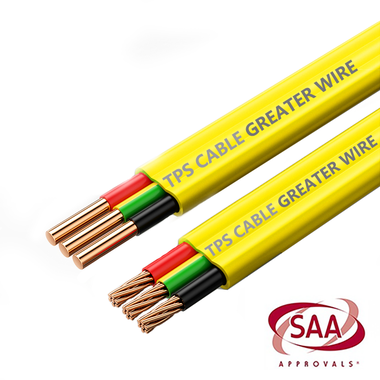
TPS cable is a type of wire with a thermoplastic sheath, which is widely used in home, commercial and industrial electrical systems. It is characterized by certain heat resistance, friction resistance and strong chemical corrosion resistance, and is particularly suitable for the access of daily household electrical equipment. Compared with traditional PVC cables, the sheath of TPS cable has stronger wear resistance and flexibility, making it more stable in various environments.
In Australia, TPS cables are usually classified according to the cross-sectional area of the cable. Common specifications include 1.5 mm TPS cables, 2.5 mm TPS cables, and 2.5 mm 2CE TPS cables. Depending on the specifications, TPS cables can be suitable for different current load requirements and applications.

2. Characteristics of 1.5 mm TPS cables
1.5 mm TPS cables are generally suitable for low-power devices, such as lighting circuits, low-power home appliances (such as fans, table lamps, TVs, etc.), and some small socket circuits. Due to its small conductor cross-sectional area, its current carrying capacity is generally 10-13 amperes, which is suitable for light-load home appliances. 1.5 mm TPS cables have good flexibility and are easy to wire, but their pressure resistance and carrying capacity are slightly weaker than those of large-size cables, so they may not be suitable for some high-power appliances or high-load circuits.
3. Challenges of humid environments
Kitchens and bathrooms are typical humid environments in homes, and the use of wires in these places faces higher challenges. Humid environments will have a certain impact on the performance of cables, especially waterproof performance and corrosion resistance. The following are the main effects of humid environments on wires:
3.1 High humidity causes cable aging
When exposed to humid environments for a long time, the outer sheath and insulation layer of the cable are prone to aging, brittleness or mold, especially if the cable sheath material is of poor quality. The intrusion of moisture can cause corrosion of the internal conductor of the cable, increasing the risk of electrical failure and short circuit.
3.2 Electrical failure caused by moisture
In a humid environment, moisture may penetrate the sheath of the cable, especially if the cable protective layer is cracked or damaged. The intrusion of moisture may cause electrical short circuits, current leakage, and even electric shock accidents. Especially in humid environments such as kitchens and bathrooms, electrical equipment is frequently used, and the safety requirements of wires are higher.
3.3 Temperature fluctuations
Humid environments are often accompanied by temperature fluctuations, especially in kitchens (when cooking) and bathrooms (steam environment), where cables experience alternating hot and cold changes. Hot and cold changes may cause the cable sheath material to expand or contract, thereby compromising the integrity of the cable and increasing safety hazards.
4. Applicability of 1.5 mm TPS Cable in Wet Environments
Based on the characteristics of 1.5 mm TPS cable and the challenges of wet environments, the following is an analysis of its applicability in environments such as kitchens and bathrooms:
4.1 Waterproofness of 1.5 mm TPS Cable
The outer sheath of 1.5 mm TPS cable is made of thermoplastic material, which has a certain degree of waterproofness. However, it does not have complete waterproof capabilities. If the outer sheath of the cable is cracked or damaged when used in a wet environment, moisture may penetrate, causing a short circuit or electrical failure in the cable. Therefore, although 1.5 mm TPS cable has a certain degree of moisture resistance, it is not suitable for direct exposure to water flow or wet environments.
4.2 Influence of installation method
In order to improve the safety of 1.5 mm TPS cable in wet environments, appropriate installation measures need to be taken. For example, the cable should be avoided from direct exposure to water sources, and the cable should be protected from water vapor when it is routed. For cable routing in kitchens and bathrooms, cables with a higher waterproof rating should be used as much as possible, or waterproof cable tubes should be used for protection.
4.3 Necessity of protective measures
When using 1.5 mm TPS cables in humid environments, it is recommended to take additional protective measures, such as waterproof connectors and protective covers, to ensure that the cables do not come into direct contact with moisture. Sockets and switches for electrical equipment should be waterproof and dustproof to prevent the impact of humid environments on electrical equipment.

5. Applicability of other specifications of TPS cables
In addition to 1.5 mm TPS cables, cables with specifications such as TPS 2.5 mm and 2.5 mm 2C E TPS cables are also commonly used in household electrical wiring. How about the waterproof performance of these cables?
5.1 TPS 2.5 mm cable
Compared to 1.5 mm TPS cables, TPS 2.5 mm cables have a larger conductor cross-sectional area and can carry a larger current, making them suitable for the access of high-power devices (such as air conditioners, water heaters, etc.). Although the waterproof performance and moisture resistance of TPS 2.5 mm cables are similar to those of 1.5 mm cables, its greater current carrying capacity makes it suitable for devices that require higher power in kitchens and bathrooms. If used in a humid environment, it is still necessary to ensure that its outer sheath is not damaged and use appropriate cable tubes for protection.
5.2 2.5 mm 2C E TPS cable
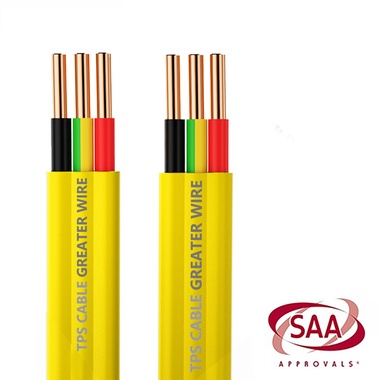
The 2.5 mm 2C E TPS cable is a two-core cable suitable for circuits that require two conductors, such as dual switch circuits or socket circuits. Compared with ordinary single-core cables, 2.5 mm 2C E TPS cables have higher flexibility and adaptability, and are suitable for some special electrical needs in the home. Its waterproof performance is similar to that of TPS 2.5 mm cables, and it is also necessary to avoid moisture penetration and external damage.

6. Cable selection that is more suitable for humid environments
For humid environments such as kitchens and bathrooms, in addition to 1.5 mm TPS cables, you can also consider using cables with higher waterproof ratings, such as XLPE cables (cross-linked polyethylene cables) or silicone sheathed cables. These cables generally have better waterproof and chemical corrosion resistance, and are particularly suitable for use in high humidity environments.