























MC (Metal Clad) cable, also known as metal sheathed cable, is a type of power transmission cable widely used in commercial and industrial environments. Its sturdy metal sheath provides additional mechanical protection while also possessing excellent electromagnetic shielding capabilities. When choosing MC cables, the type of conductor is an important consideration, usually in two forms: solid and stranded. Different specifications of MC cables, such as 10/3 MC Cable, 6/3 MC Cable MC Cable 8/2, During use, different types of conductors may be involved, and selecting the appropriate conductor type is crucial for installation, maintenance, and use.

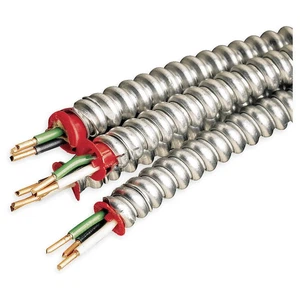
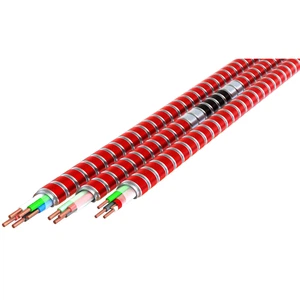
Comparison between Solid Conductor and stranded conductor
1. Solid Conductor
A single stranded conductor is a conductor composed of a single metal wire, and its main characteristics are as follows:
High mechanical strength: The single stranded conductor structure is stable and not easily broken, making it suitable for fixed wiring.
Excellent conductivity: Due to the absence of contact resistance between strands, single stranded conductors have better conductivity.
Low manufacturing cost: The production process of single stranded conductors is simple, so the price is relatively low.
Not easy to bend: Due to its hardness, it is difficult to lay in narrow or complex wiring environments.
2. Stranded Conductor
A multi stranded conductor is made up of multiple thin metal wires twisted together and has the following characteristics:
Strong flexibility: Multi stranded conductors are easy to bend, suitable for scenarios that require flexible installation.
High seismic resistance: Multi strand structures can effectively absorb mechanical vibrations and are suitable for vibration environments or wiring of mobile devices.
Easy installation: Due to its high flexibility, it is easier to thread and lay pipes.
Relatively high cost: The production process is more complex, and the price is slightly higher than that of single stranded conductors.


Factors affecting the selection of MC cable conductors
When selecting the conductor type for MC cables, the following factors need to be considered:
Installation environment:
If it is a straight line wiring or fixed installation, single stranded conductors are more suitable.
If wiring requires multiple bends or passes through narrow spaces, multi strand conductors are more convenient for construction.
Cable specifications:
MC cables with 10 AWG and below are available in both single and multi strand configurations.
MC cables with 6 AWG and above are usually preferred for multi stranded conductors to enhance flexibility.
Seismic resistance:
For environments with high mechanical vibration, such as industrial production workshops and internal connections of equipment, it is recommended to use multi conductor MC cables.
Cost and Budget:
The manufacturing cost of single stranded conductors is relatively low, but the installation difficulty is relatively high.
The price of multi stranded conductors is slightly higher, but installation and maintenance are more convenient.
Safety and durability:
In long-term use environments, multi stranded conductors have good fatigue resistance and are not easily broken, especially suitable for cable systems that move frequently or are subject to vibration.
