


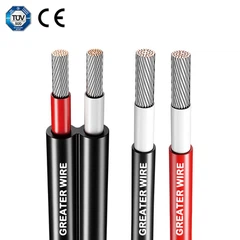

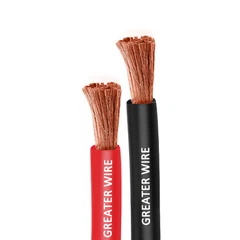
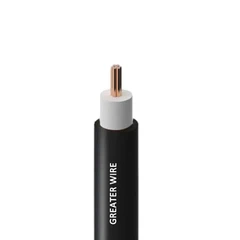
In the modern world of electrical engineering and manufacturing, wires are more than just conductors of electricity; they are the lifelines of technology. From consumer electronics to industrial machinery, choosing the right wire ensures safety, reliability, and efficiency. Among the many options available, Hook Up Wire and MTW (Machine Tool Wire) stand out as two widely used categories. While they share certain similarities, they are designed for different applications and governed by distinct standards. Understanding their differences is key to selecting the right product for your project.
What Is Hook Up Wire?
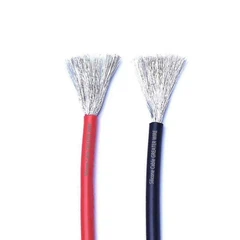
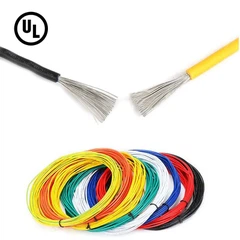
Hook Up Wire is a type of single-conductor insulated wire commonly used for internal connections in devices, appliances, control panels, and electronic assemblies. It is designed to carry relatively low currents within enclosed equipment, where flexibility, compactness, and safety matter most.
Typically, Hook Up Wire is manufactured with stranded or solid copper conductors and insulated with PVC, silicone rubber, PTFE, or XLPE. The insulation not only prevents electrical leakage but also protects the conductor from heat, moisture, chemicals, and abrasion. For example, UL1007 and UL1015 are two classic Hook Up Wire types frequently used in appliances, electronics, and automotive wiring, each with specific voltage and temperature ratings.
One of the reasons Hook Up Wire is so popular is its versatility. Whether it's wiring inside a refrigerator, connecting components on a PCB, or serving as part of the harness in an industrial controller, Hook Up Wire adapts to many scenarios. The wide selection of conductor sizes (from 30 AWG to 10 AWG) and insulation materials makes it suitable for both delicate signal transmission and more robust power delivery.

What Is MTW?
MTW, or Machine Tool Wire, is a specific category of wire designed to meet UL and CSA standards for use in industrial equipment. As the name implies, it is commonly found in the wiring of machine tools, control cabinets, and heavy-duty equipment. Unlike general-purpose Hook Up Wire, MTW must meet additional requirements for mechanical durability, oil resistance, and flame retardancy.
MTW is typically made with finely stranded Class K or Class M copper conductors, which provide high flexibility. The insulation is usually PVC, formulated to resist oil, moisture, and wear, making it ideal for harsh industrial environments. Its temperature ratings often range from 90°C in dry environments to 60°C in wet locations, with a voltage rating of 600V.
A unique aspect of MTW is its dual compliance: many MTW wires also meet standards for Appliance Wiring Material (AWM) and Tray Cable (TC), making them suitable for a wider range of applications. This cross-compliance saves manufacturers time and cost by reducing the number of wire types needed for different certifications.
Hook Up Wire vs MTW: Key Differences
Although Hook Up Wire and MTW both serve as internal wiring solutions, they are not interchangeable. Their key differences can be summarized as follows:
- Application Environment – Hook Up Wire is primarily used inside consumer appliances, electronics, and light equipment, while MTW is tailored for industrial machines, control panels, and environments where oil, vibration, and mechanical stress are present.
- Construction and Flexibility – Hook Up Wire can be solid or stranded, offering good general flexibility, but MTW uses finer strands for enhanced flexibility, crucial for moving machinery or tight bends.
- Temperature and Voltage Ratings – Hook Up Wire comes in a wide range of ratings (from 80°C to 200°C, and from 300V to 600V depending on type), whereas MTW is standardized at 600V and typically limited to 90°C dry/60°C wet service.
- Certifications – Hook Up Wire is categorized under UL AWM styles (such as UL1007, UL1015, UL3135), whereas MTW is explicitly certified as Machine Tool Wire under UL 1063, often with CSA approval as well.
These differences highlight why choosing the correct type is essential: while Hook Up Wire may suffice for appliance wiring, only MTW can withstand the rugged demands of industrial environments.
Common Models and Applications
Hook Up Wire includes a wide variety of UL-certified styles. For instance:
- UL1007: Rated 300V, 80°C, widely used in electronics, computers, and office machines.
- UL1015: Rated 600V, 105°C, suitable for household appliances and industrial controls.
- UL3135 Silicone Wire: High-temperature resistant up to 200°C, often used in lighting, ovens, and electric heating equipment.
MTW, by contrast, is less diverse in model names but highly versatile in use. Common MTW cables are 600V rated with PVC insulation, and they appear in:
- Control cabinets for CNC machinery
- Assembly lines in automotive plants
- Power distribution panels in factories
- Industrial robotics wiring
These real-world scenarios illustrate how each wire has carved out its niche: Hook Up Wire thrives in compact, controlled environments, while MTW excels in industrial, oil-rich, mechanically demanding spaces.
How to Choose the Right Wire?
When deciding between Hook Up Wire and MTW, several practical factors should guide the choice:
1.Application Conditions: Ask whether the wire will be exposed to oil, vibration, or frequent movement. If yes, MTW is the safer option.
2.Temperature Requirements: For high-heat appliances like ovens or heaters, Hook Up Wire with silicone or PTFE insulation is essential.
3.Compliance Standards: Regulatory requirements differ by region and industry. For industrial machinery in North America, MTW compliance may be mandatory.
4.Flexibility Needs: Fine-stranded MTW offers superior flexibility compared to many Hook Up Wire types, which can make installation easier in tight spaces.
By carefully evaluating these aspects, engineers and purchasing managers can ensure they select a wire that guarantees both performance and compliance.
Why Choose Dongguan Greater Wire & Cable Co., Ltd.?
At Dongguan Greater Wire & Cable Co., Ltd., we specialize in manufacturing a wide range of electrical cables, including both Hook Up Wire and MTW, tailored to international standards. With a modern production facility of over 50,000 square meters and fully automated lines covering conductor drawing, stranding, insulation extrusion, cabling, and packaging, we ensure each product meets strict quality benchmarks.
Our products are exported to more than 80 countries and regions worldwide, trusted by clients across North America, Latin America, Oceania, Asia, Europe, Africa, and the Middle East. With 30+ years of experience and over 50 international certifications (UL, CSA, CE, SAA, TUV, IEC, BS, AS/NZS), we provide reliable solutions that meet both performance and compliance requirements.
We also pride ourselves on customization. Whether you need specific conductor materials (bare copper, tinned copper, fine-stranded flexible copper), insulation options (PVC, silicone rubber, PTFE), unique colors, or tailored packaging (coil, spool, or carton sizes), we offer solutions that fit your exact needs. Backed by 24/7 customer service, fast delivery, and professional technical support, we are a trusted partner for businesses worldwide.
Contact Us Today
Dongguan Greater Wire & Cable Co., Ltd.
Tel/WhatsApp/Wechat: +86 135 1078 4550 / +86 136 6257 9592
Email: manager01@greaterwire.com