























In the world of modern electronics, appliances, automotive systems, and industrial control panels, one type of wire appears almost everywhere-Hook-up Wire. From the inside of your household refrigerator to the circuits of your car dashboard, Hook-up Wires ensure that electricity is distributed safely and reliably. But beyond conductivity and insulation, there is another aspect of Hook-up Wire that plays a critical role in safety and efficiency: color coding. The colors of Hook-up Wires are far more than cosmetic choices; they are standardized signals that help technicians, engineers, and manufacturers avoid mistakes, streamline maintenance, and comply with international regulations.This article takes you on a comprehensive journey to understand what Hook-up Wires are, what the common color codes mean, how different colors relate to specific applications, why choosing the correct color is crucial.
What Is Hook-up Wire?
Hook-up Wire, also known as appliance wiring material (AWM), is a single-conductor insulated wire primarily designed for internal wiring of electrical and electronic equipment. Its role is to connect components, carry current, and ensure reliable functioning of devices ranging from consumer electronics and home appliances to automobiles, industrial machinery, and aerospace systems.
Typically manufactured with a copper conductor-either solid or finely stranded-Hook-up Wire is coated with an insulating layer of PVC, silicone rubber, PTFE (Teflon), or XLPE. This insulation not only provides electrical protection but also enhances resistance to heat, chemicals, moisture, and mechanical stress. For instance, a UL1007 Hook-up Wire is commonly rated at 300V, 80°C, making it suitable for office machines or small appliances, while a UL1015 Hook-up Wire rated at 600V, 105°C is often found in industrial control panels and household appliances. Meanwhile, high-temperature versions like UL3135 silicone-insulated wire withstand up to 200°C, ensuring reliability in ovens, lighting systems, and heating equipment.
In essence, Hook-up Wires are the "veins" of modern devices, ensuring seamless and safe transmission of electricity in tightly packed circuits where performance, durability, and compact size matter. Yet, while technical specifications define the wire's physical performance, the color of the wire is what makes it usable and safe in the real world.
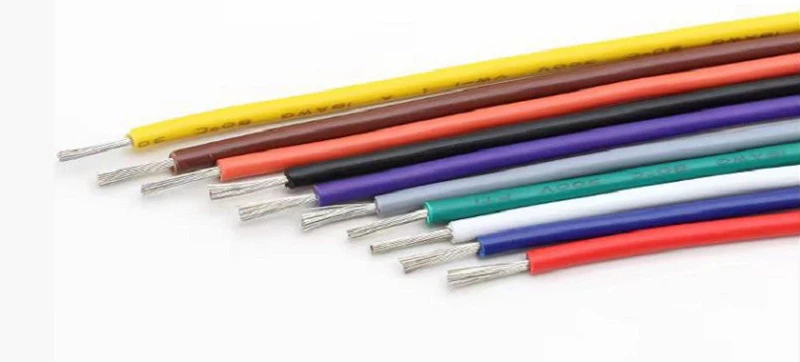
What Are the Common Hook-up Wire Colors and What Do They Represent?
Color coding in wiring is a universal language. It helps electricians and engineers identify the purpose of a wire instantly, minimizing the risk of errors during installation and maintenance. While color codes may differ slightly by region, several conventions are widely accepted:
- Black – Often used for negative connections or as a general power wire. In DC circuits, black commonly indicates the negative (-) terminal.
- Red – Frequently assigned to positive (+) power wires, especially in DC systems such as automotive wiring and battery connections.
- Green or Green/Yellow – Universally recognized as the earth or ground wire. In both IEC and UL systems, green or green/yellow striped wires are dedicated to grounding.
- Blue – Often associated with neutral wires in AC systems (especially under IEC standards) or as signal/control lines in low-voltage circuits.
- White or Gray – Used for neutral conductors in North America (according to NEC/UL standards).
- Yellow and Orange – Sometimes used in industrial control wiring to denote specific voltage levels or interconnections.
For example, when wiring a simple household appliance such as a washing machine, black might be used for the power supply, white for the neutral connection, and green/yellow for the ground. In an automotive harness, red wires carry battery voltage to components, black indicates ground, and blue may serve lighting or auxiliary systems.
Applications of Different Hook-up Wire Colors
While the above codes outline the general meaning of wire colors, their practical significance comes alive when you see how they function in different applications.
- In consumer electronics, red and black wires dominate the internal connections of gadgets such as radios, speakers, and chargers, making it easy to distinguish power flow and prevent reversed polarity. A single error-such as connecting a red positive lead to a black negative terminal-could instantly damage sensitive components.
- In household appliances, green/yellow ground wires ensure safety by channeling stray current away from users. For example, inside a refrigerator, the compressor might be wired with black and white for power while green/yellow secures grounding against electrical faults.
- In automotive wiring, a rainbow of colors ensures that technicians can quickly diagnose and repair complex harnesses. Blue may control headlights, yellow could power ignition systems, and red provides continuous battery supply. Without color coding, even the most experienced mechanic would waste hours tracing wires manually.
- In industrial control panels, colors like orange or purple may designate specific control voltages, ensuring that electricians can immediately identify and isolate circuits. This is critical for worker safety, especially when panels involve multiple voltage levels or connections between machines.
These scenarios illustrate that wire colors are not arbitrary; they are essential markers that keep systems organized, technicians safe, and operations efficient.
Why Is Choosing the Correct Color Hook-up Wire Important?
The importance of choosing the correct color cannot be overstated. At first glance, it may seem convenient to use whichever wire is available, but doing so introduces risks that can compromise both safety and compliance.
- Safety – Incorrect wire colors can mislead technicians, causing wiring mistakes that lead to electrical shocks, short circuits, or even fires. For example, if a ground wire is mistakenly replaced with a black power wire, the result could be catastrophic.
- Efficiency – Standardized colors save time during installation and maintenance. Technicians can instantly recognize which wire performs which role without consulting detailed diagrams, reducing downtime and labor costs.
- Compliance – Many international standards, including UL, IEC, CSA, and BS, mandate specific colors for certain functions, especially grounding and neutral. Using incorrect colors could result in failed inspections, product recalls, or rejection from overseas markets.
- Professionalism – For manufacturers, adhering to color codes signals quality and reliability. End-users trust products that appear well-organized and standardized, which in turn builds brand reputation.
For these reasons, the selection of wire colors is not merely a technical detail; it is a business-critical decision that impacts safety, efficiency, and customer trust.
Why Choose Dongguan Greater Wire & Cable Co., Ltd.?
When it comes to Hook-up Wires and their color coding, choosing the right supplier is just as important as choosing the right wire. At Dongguan Greater Wire & Cable Co., Ltd., we bring decades of expertise, advanced manufacturing capabilities, and global certification to deliver solutions that meet your needs.
Our modern facility spans more than 50,000 square meters and houses fully automated production lines covering conductor drawing, stranding, insulation extrusion, cabling, and packaging. This ensures precision, consistency, and efficiency at every stage of production.
We proudly export our products to over 80 countries and regions worldwide, including North America, Latin America, Oceania, Asia, Europe, Africa, and the Middle East. With more than 50 international certifications-UL, CSA, CE, SAA, TUV, IEC, BS, AS/NZS-we guarantee compliance with regional standards, making our wires suitable for global markets.
Beyond standard offerings, we excel at customization. Whether you need specific conductor materials (bare copper, tinned copper, fine-stranded flexible copper), insulation (PVC, silicone, PTFE), or special colors and striping for unique identification systems, we can deliver. Our packaging options are equally flexible, ranging from compact coils to large cartons, all designed to suit your logistics needs.
What sets us apart is not just our production capacity, but our commitment to service. Our professional team offers 24/7 support, ensuring fast response times, technical guidance, and reliable after-sales care. Combined with rapid delivery schedules, this makes us a trusted partner for manufacturers, distributors, and project contractors worldwide.
Hook-up Wires may look simple, but their color codes carry profound importance for safety, efficiency, and compliance. Black, red, blue, green/yellow, and other colors are not chosen at random; they form a standardized system that keeps everything from household appliances to industrial machinery running smoothly. Selecting the right color is not only about meeting technical standards but also about safeguarding people, protecting equipment, and enhancing brand reputation.
At Dongguan Greater Wire & Cable Co., Ltd., we understand the science, standards, and significance behind Hook-up Wire color codes. With our globally certified products, advanced manufacturing, and customization capabilities, we are ready to help you build wiring systems that are not just functional, but also safe, compliant, and future-ready.
Contact Us Today
Dongguan Greater Wire & Cable Co., Ltd.
Tel/WhatsApp/Wechat: +86 135 1078 4550 / +86 136 6257 9592
Email: manager01@greaterwire.com