























When we think about modern electronics and electrical systems, we often imagine the final devices-smartphones, household appliances, industrial machines, or medical instruments. Yet, behind the sleek exteriors lies an unseen foundation: the intricate network of wires that ensures everything operates smoothly. Among these, Hook-up wire is one of the most versatile and widely used types, quietly powering connections in countless devices we rely on every day.In this article, we will explore what Hook-up wire is, the common types available on the market, their corresponding applications, why choosing the right Hook-up wire matters, and how to make the best choice for your project.
What Is Hook-up Wire?
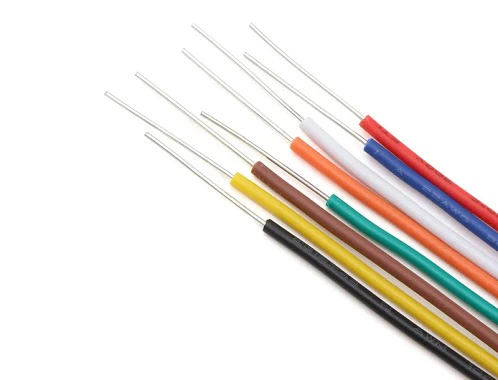
Hook-up wire, sometimes referred to as appliance wire or lead wire, is a single-conductor insulated wire used for internal wiring of equipment, control panels, and electronic devices. Unlike large power cables designed to carry high current across long distances, Hook-up wires are typically smaller in gauge, flexible, and built for reliability in tight spaces or compact systems.
At its core, a Hook-up wire consists of a conductor-usually bare copper or tinned copper-and an insulation layer that protects against electrical leakage, abrasion, and environmental factors. The insulation materials vary depending on the specific requirements of temperature resistance, flame retardancy, or chemical stability. Common insulation options include PVC (Polyvinyl Chloride), Silicone Rubber, PTFE (Teflon), Cross-linked Polyethylene (XLPE), and more.
What makes Hook-up wire so indispensable is its adaptability. Whether in consumer electronics, industrial control equipment, automotive harnesses, or aerospace technology, Hook-up wire ensures stable and safe transmission of electrical signals in environments that often demand precision and durability.
Common Types of Hook-up Wire
The world of Hook-up wire is remarkably diverse, with types distinguished by insulation material, voltage ratings, and performance characteristics. Below are some of the most widely recognized categories.
- PVC Hook-up Wire
This is perhaps the most common type due to its balance of affordability, flexibility, and decent temperature resistance. PVC insulation typically supports operating temperatures from -20°C to +105°C, making it suitable for a broad range of general-purpose applications such as household appliances, office machines, and automotive components.
- Silicone Rubber Hook-up Wire
Known for its exceptional flexibility and high-temperature tolerance, silicone rubber insulation can handle conditions from -60°C to +200°C. These wires are perfect for environments with frequent movement, bending, or exposure to heat-such as in lighting fixtures, ovens, and robotic systems.
- PTFE (Teflon) Hook-up Wire
PTFE insulation provides outstanding chemical resistance, flame retardancy, and the ability to withstand extreme temperatures ranging from -70°C to +200°C. This makes PTFE Hook-up wires ideal for aerospace, defense, and high-performance industrial equipment where failure is not an option.
- XLPE (Cross-linked Polyethylene) Hook-up Wire
Offering higher dielectric strength and thermal stability compared to standard PVC, XLPE insulated wires are often used in automotive and industrial environments. They provide excellent resistance to abrasion and mechanical stress, ensuring long-term durability.
- UL-rated Hook-up Wire
In many international markets, UL (Underwriters Laboratories) approval is critical for ensuring compliance with safety standards. UL-approved wires, such as UL1007 (PVC insulated, 300V) or UL3135 (Silicone insulated, 600V), are commonly used in appliances, lighting systems, and industrial electronics.
Here we can see how different types of Hook-up wire serve different needs. For example, a PVC-insulated UL1007 wire might be chosen for internal connections in a desktop printer, while a PTFE-insulated wire would be used in aerospace instrumentation where extreme reliability is essential.
Applications Across Different Types
Each type of Hook-up wire has unique strengths, and these translate directly into their application scenarios. A few illustrative examples include:
- Consumer Electronics: PVC Hook-up wires are widely used inside televisions, washing machines, and air conditioners due to their cost-effectiveness and adequate temperature resistance.
- Automotive Wiring: XLPE Hook-up wires are preferred in vehicles because of their durability and resistance to vibration and abrasion.
- Medical Devices: PTFE Hook-up wires are commonly used in sensitive equipment like diagnostic machines or surgical tools, where reliability and chemical resistance are paramount.
- Industrial Automation: Silicone rubber wires are frequently chosen for robotic arms and machinery that operate at high speeds and under constant motion.
These examples demonstrate how choosing the right insulation material directly affects both performance and safety. A mismatch between the wire type and its intended use can lead to overheating, mechanical failure, or even safety hazards.
Why Choosing the Right Hook-up Wire Matters
In electrical engineering, wires may appear as small components, but their role is vital. Selecting the wrong Hook-up wire can lead to inefficiencies, frequent replacements, or dangerous malfunctions.
The right wire ensures:
- Safety: Prevents short circuits, overheating, and fire hazards.
- Durability: Withstands environmental stress, temperature fluctuations, and mechanical wear.
- Performance: Maintains stable electrical transmission without interference or signal loss.
Think of a Hook-up wire as the circulatory system of your device. Just as blood vessels must be strong and reliable to carry life-sustaining blood, Hook-up wires must deliver power or signals without interruption. In industries like aerospace or healthcare, where precision and reliability are non-negotiable, the importance of choosing the correct wire cannot be overstated.
How to Choose the Right Hook-up Wire
Selecting the proper Hook-up wire involves considering several key factors:
1.Application Environment: Will the wire be exposed to high temperatures, chemicals, or constant motion? For example, silicone rubber insulation is ideal for high-heat or flexible environments, while PTFE is suited for harsh chemical exposure.
2.Electrical Requirements: Voltage rating, current capacity, and conductor size (AWG) must match the demands of the system.
3.Compliance and Standards: For international markets, choosing UL- or CE-certified wires ensures compliance with local regulations and safety requirements.
4.Cost and Practicality: While PTFE wires may offer excellent performance, they are more expensive. Balancing performance needs with budget is critical.
For instance, a company producing consumer-grade coffee machines may prioritize cost and opt for PVC Hook-up wires, while an aerospace contractor would not compromise and would choose PTFE-insulated Hook-up wires despite higher costs.
Why Choose Dongguan Greater Wire & Cable Co., Ltd.?
At this point, many readers may be wondering where to source Hook-up wires that combine quality, compliance, and customization. This is where Dongguan Greater Wire & Cable Co., Ltd. makes a difference.
With over 30 years of production experience and exports to 80+ countries and regions, we understand the diverse needs of global clients. Our state-of-the-art manufacturing facilities-covering more than 50,000 square meters-are equipped with advanced automated production lines for conductor drawing, stranding, insulation extrusion, cabling, and packaging. Every step is monitored with rigorous quality control to ensure consistency and reliability.
One of our greatest strengths is customization. Whether you require a specific conductor (bare copper, tinned copper, or flexible stranded), insulation material (PVC, silicone, PTFE, XLPE, etc.), or color coding (red, black, green/yellow, blue, white, and more), we tailor solutions to meet your exact specifications. We also provide multiple packaging options-from spools to coils in various carton sizes-so that logistics align with your needs.
Moreover, our products carry more than 50 international certifications, including UL, CE, TUV, SAA, and IEC/EN standards, giving customers confidence that every wire complies with strict international safety requirements.
What sets us apart is not only our production capacity but also our commitment to service. Our professional team is available 24/7 to provide technical support, answer queries, and ensure smooth communication throughout the purchasing process. From initial consultation to after-sales service, we strive to build long-term partnerships rather than one-time transactions.
Hook-up wires may look simple, but they are the lifelines of modern electronics, ensuring that devices from household appliances to aerospace systems operate safely and efficiently. Understanding the common types of Hook-up wires-PVC, silicone, PTFE, XLPE, and UL-rated varieties-helps users select the right product for their specific needs. Choosing wisely not only enhances performance but also safeguards the longevity and reliability of equipment.
For businesses seeking a reliable partner to supply high-quality Hook-up wires, Dongguan Greater Wire & Cable Co., Ltd. offers unmatched expertise, international certifications, and flexible customization options. With decades of manufacturing experience and a proven global export record, we are ready to deliver solutions tailored to your success.
Contact Us Today:
Dongguan Greater Wire & Cable Co., Ltd.
Tel/WhatsApp/WeChat: +86 135 1078 4550 / +86 136 6257 9592
Email: manager01@greaterwire.com