























Industrial power systems operate in some of the harshest environments imaginable, where a single cable failure can lead to catastrophic safety incidents, costly downtime, and regulatory penalties. For electrical contractors, system integrators, and plant managers, choosing the right cable is not just a purchasing decision-it's a critical safety investment. This is where UL1277 cable (specifically TC-ER rated industrial power cable) has become the gold standard for modern industrial facilities, from automated production lines to chemical processing plants.
1. Why Ordinary Cables Fail in Industrial Environments
Most industrial facilities still rely on traditional wiring methods using THHN/THWN-2 or XHHW-2 conductors installed in metal conduit or raceways. While these cables work well in commercial buildings, they were never designed for the unique challenges of industrial environments:
· Poor mechanical protection: Ordinary cables easily suffer abrasion damage from equipment movement, forklift traffic, and falling debris. A single nick in the insulation can cause a short circuit or electrical shock hazard.
· Inadequate flame retardancy: In the event of a fire, standard PVC jackets release toxic fumes and can contribute to flame spread, endangering personnel and equipment.
· High installation costs: Installing aluminum interlocked armor or galvanized steel armor conduit adds 30-50% to material costs and doubles labor time, significantly increasing project budgets.
· Safety risks from misapplication: Many contractors mistakenly believe that all "industrial cables" meet the same standards, leading to wrong selections that violate NEC Article 336 requirements and create hidden safety hazards.
These issues are not theoretical. According to OSHA data, electrical failures are the third leading cause of industrial fires, and 60% of these incidents can be traced back to improper cable selection or installation.

2. The Safety Advantages of UL1277 Certified TC-ER Cable
UL1277 is the American National Standard for Electrical Power and Control Tray Cables, with the latest version updated in 2025 to address emerging industrial safety needs. Unlike generic industrial cables, UL1277 TC-ER cable undergoes rigorous testing to ensure it can withstand the most demanding conditions:
· Superior Mechanical Damage Resistance
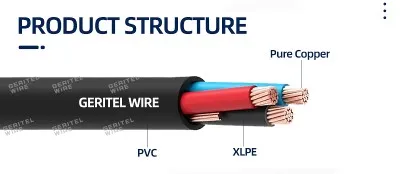
UL1277 cable features a heavy-duty PVC jacket engineered to resist abrasion, impact, and crushing forces. Unlike individual THHN conductors that are easily damaged during installation or operation, the integrated jacket provides continuous protection for all conductors inside. This is especially critical for 350 kcmil TC-ER cable and 500 kcmil TC-ER cable used in main power distribution systems, where a single failure can shut down an entire facility.
· Enhanced Flame Retardant Performance
All UL1277 cables must pass strict flame tests, including the IEEE 1202/FT4 vertical tray flame test. This means the cable will self-extinguish within a specified time and limit flame spread, giving personnel more time to evacuate and minimizing fire damage. For chemical and petrochemical plants, this flame resistance is non-negotiable.
· Oil and Chemical Resistance
Industrial environments are full of oils, solvents, and corrosive chemicals that quickly degrade ordinary cable jackets. UL1277 TC-ER cable is formulated with special additives that provide excellent resistance to these substances, ensuring long-term performance even in the most challenging conditions.
· Integrated Grounding for Improved Safety
Every UL1277 cable includes a dedicated grounding conductor, available as either bare ground or insulated green ground. This integrated grounding eliminates the need for separate grounding wires, reduces installation errors, and ensures a reliable ground connection throughout the system. For three-phase applications, 3/C TC-ER cable includes three power conductors plus a ground, while 4/C TC-ER cable adds a neutral conductor for single-phase loads.
3. Exposed Run Installation: Safer, Faster, and More Cost-Effective
One of the biggest safety and cost advantages of TC-ER cable is its ability to be installed directly in exposed runs without additional conduit or raceway, as permitted by NEC Article 336.10(7). This revolutionary installation method offers three key benefits:
· Reduced installation errors: Eliminating conduit reduces the number of connections and potential failure points, lowering the risk of electrical faults.
· Faster installation: Contractors can install UL1277 cable up to 60% faster than traditional conduit systems, reducing project timelines and minimizing facility downtime.
· Easier maintenance: Exposed runs make it simple to inspect cables for damage and perform repairs or upgrades without tearing out walls or ceilings.
For industrial automation production lines, this means you can quickly reconfigure equipment without major electrical rewiring. For manufacturing plant power distribution, 350 kcmil TC-ER cable and 500 kcmil TC-ER cable can be run directly between switchgear and distribution panels, saving both time and money.
4. How to Select the Right UL1277 Cable for Your Project
Not all UL1277 cables are created equal. To ensure maximum safety and compliance, follow these critical selection guidelines:
· Verify dual certification: The cable must meet both UL1277 and UL44 standards. UL44 covers the individual conductor insulation, while UL1277 covers the overall cable construction.
· Match voltage rating to your application: Most industrial applications use 600V UL1277 cable, but 1000V ratings are available for higher voltage systems. Never use a cable with a lower voltage rating than required.
· Choose the correct core configuration: Select 3/C for three-phase circuits without a neutral, 4/C for three-phase circuits with a neutral, and multi-conductor configurations for control applications.
· Understand temperature ratings: UL1277 TC-ER cable is rated for 75°C in wet locations and 90°C in dry locations when used in exposed runs. Always check the cable markings to confirm the temperature rating.
· Learn how to read TC-ER cable markings: Every UL1277 cable has permanent markings that indicate the standard, voltage rating, conductor size, and temperature rating. For example, "TC-ER 600V UL1277 UL44 3/C 350 kcmil 90°C DRY 75°C WET" tells you everything you need to know about the cable's capabilities.
5. Frequently Asked Questions About UL1277 Industrial Power Cables
Q: Is UL1277 cable the same as TC-ER cable?
A: Not exactly. TC-ER (Tray Cable-Exposed Run) is a rating within the UL1277 standard. All TC-ER cables are UL1277 certified, but not all UL1277 cables have the TC-ER exposed run rating.
Q: Can UL1277 cable be used in hazardous locations?
A: Yes, UL1277 TC-ER cable is approved for use in Class 1 Division 2 hazardous locations when properly installed according to NEC requirements.
Q: What is the difference between UL1277 and UL44?
A: UL44 certifies individual insulated conductors for use in raceways, while UL1277 certifies the complete multi-conductor cable assembly for use in cable trays and exposed runs.

6. Request a Custom Quote
With over 20 years of experience manufacturing UL1277 and UL44 certified industrial power cables, we can provide the exact TC-ER cable you need for your industrial project. Contact us today to get a custom quote for 350 kcmil TC-ER cable, 500 kcmil TC-ER cable, or any other configuration. Our team of electrical engineers will help you select the right cable to ensure maximum safety and compliance for your facility.
Dongguan Greater Wire & Cable Co., Ltd.
Tel/WhatsApp/Wechat: +86 136 6257 9592
Tel/WhatsApp/Wechat: +86 135 1078 4550
Email: manager01@greaterwire.com
Website: www.greaterwire.com