

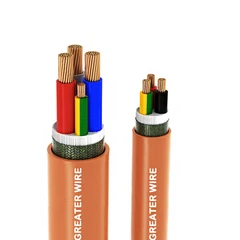
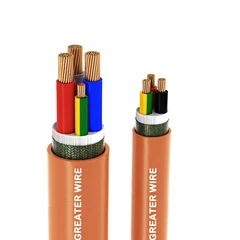

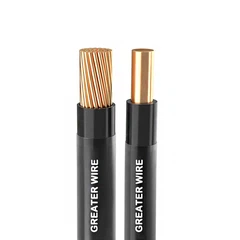
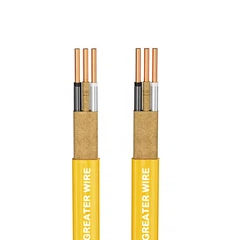
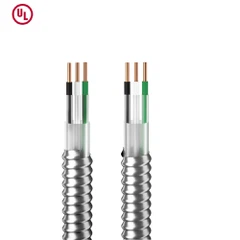
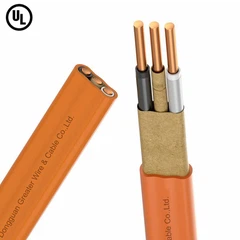
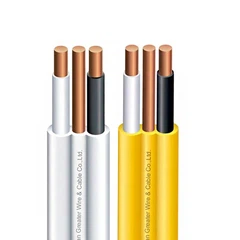
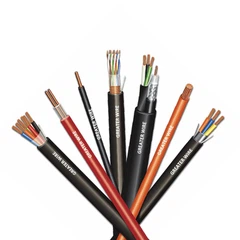
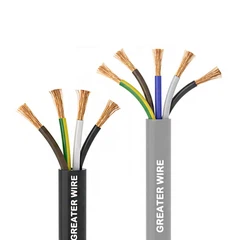
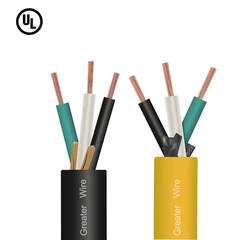
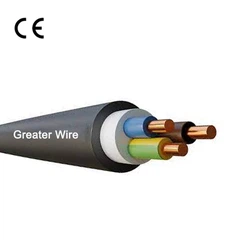
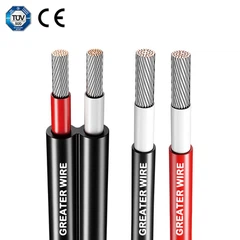

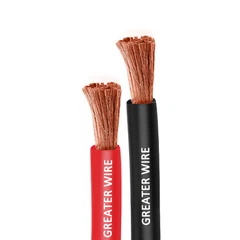
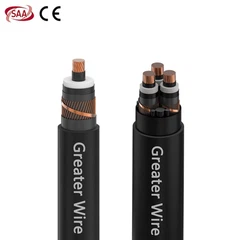
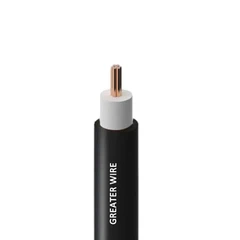
Damp service areas are one of the most challenging wiring environments for commercial and industrial projects. Constant humidity, surface condensation, and lingering moisture in basements, utility rooms, semi-outdoor equipment zones, covered garages, and processing spaces easily damage standard unjacketed cables, causing insulation degradation, corrosion, and premature failure. This is why PVC jacketed MC cable is widely preferred for damp-location wiring, especially across humid coastal regions of North America. Contractors regularly rely on this cable type for reliable, code-aligned performance in high-moisture conditions that quickly compromise ordinary wiring solutions.
When working in damp zones, nothing matters more than compliant material selection, clean field installation, and trouble-free final inspection. Avoiding moisture-related defects, rework, and acceptance delays is key to smooth project delivery. This guide focuses exclusively on damp service area applications, walking through practical selection criteria, proper field installation practices, and critical acceptance checkpoints. It covers MC cable for concealed installations, MC cable for exposed installations, accurate PVC jacketed MC cable ampacity matching, compliant MC cable bending radius control, and overall PVC jacketed MC cable installation best practices tailored for humid job site conditions.

1. How to Select PVC Jacketed MC Cable for Damp Service Areas
In damp service environments, unjacketed MC cable and basic building wire are not dependable options. Without a continuous protective PVC outer jacket, cables cannot block humid air and condensed water, leading to mildew buildup, armor corrosion, and declining insulation performance over time. PVC jacketed MC cable provides a continuous moisture barrier that stabilizes long-term circuit performance in humid settings, making it the go-to option for coastal and high-humidity project sites.
For reliable damp-area results, focus on three practical selection factors:
Moisture and mildew resistant PVC jacket. The outer PVC jacket acts as a primary barrier against condensation and ambient humidity. A consistent, intact jacket prevents moisture from reaching internal conductors and insulation, eliminating most common damp-site cable degradation issues.
Proper PVC jacketed MC cable ampacity. Humid conditions subtly impact cable heat dissipation and sustained load capability. Matching correct ampacity and wire gauge to actual circuit loads prevents overheating, insulation fatigue, and premature cable wear during long-term operation in moist environments.
Scenario-specific specification matching. Different damp spaces present unique challenges. Closed concealed humid cavities, open exposed damp walls, and semi-outdoor equipment areas each require intentional cable specification choices to maintain full compliance and avoid inspection issues.
2. Field Installation Best Practices for Damp-Area PVC Jacketed MC Cable
PVC jacketed MC cable installation in damp service areas requires tighter discipline than dry-location work. Moisture infiltrates through tiny jacket cracks, unsealed joints, and compromised penetrations, creating hidden issues that may not surface until final inspection or future system operation. Proper installation for both concealed and exposed runs eliminates these hidden moisture risks.
2.1 MC cable for concealed installations in damp enclosed spaces
Concealed runs in damp wall cavities, ceiling plenums, and enclosed cable trays trap moisture with limited airflow. Keep PVC jackets fully intact and free of scratches, dents, and persistent friction. Secure cables firmly to avoid long-term abrasion damage. All wall and deck penetrations must be fully sealed with appropriate waterproof fittings to block humid air intrusion. Avoid overcrowded cable layouts, as stacked runs retain moisture and hinder heat dissipation.
2.2 MC cable for exposed installations in open damp areas
Exposed damp-location runs include open wall routing, exterior equipment connections, and semi-outdoor overhead layouts directly exposed to humidity, dew, and incidental water splash. Install cables in elevated positions away from standing water and direct water flow. Use corrosion-resistant, waterproof fasteners, and avoid contact with sharp edges and abrasive building materials. Maintain clean, open routing to preserve jacket integrity and resist mildew and surface aging in consistently moist air.
2.3 Controlled MC cable bending radius
Improper bending is one of the most common field errors that compromise damp-area cable performance. Tight, forced bends crack or crease PVC jackets, creating microscopic entry points for moisture. Always follow standard MC cable bending radius requirements during layout. Avoid sharp right-angle bends and cable torsion. Preserving jacket continuity is critical in damp environments, as even minor damage can lead to ongoing moisture ingress and permanent circuit issues.
2.4 Critical damp-proof installation details
All terminals, splices, and junction box terminations require complete, tight sealing. Unsealed connections are the most frequent moisture entry points on damp-site wiring. Additionally, maintain continuous, reliable grounding throughout all MC cable armor and associated hardware. Humid air increases electrical conductivity, making solid grounding essential for minimizing leakage risks and sustaining safe system operation.

3. Damp-Area Acceptance and Final Inspection Key Points
Final acceptance for PVC jacketed MC cable damp-area installations focuses entirely on verifying moisture resistance, structural integrity, and code-compliant workmanship. Proper final checks ensure smooth sign-off and eliminate post-construction defects.
Full visual verification of all cable runs. Inspect the entire layout for cracked, peeled, deformed, or abraded PVC jackets. Confirm all seals, gaskets, and waterproof fittings are fully installed and secured with no gaps or loose hardware. Verify both MC cable for concealed installations and MC cable for exposed installations are neatly routed, properly supported, and free of vulnerable exposed sections.
Complete electrical performance testing. Perform standard insulation resistance and continuity testing. Insulation integrity is the primary indicator that cables remain free of internal moisture penetration in damp conditions. Confirm all test results meet standard industry requirements, and verify full grounding continuity to eliminate leakage hazards.
Focused inspection of hidden concealed work. Enclosed trays, wall-embedded runs, and ceiling-layer wiring are prone to trapped moisture. Pay close attention to sealing quality and jacket condition in hidden areas, as concealed damp defects are a top source of future project issues.
Resolution of common damp-site defects. Typical inspection issues include compromised jacket protection, non-compliant bending, insufficient sealing at connections, and irregular support spacing. Address these items systematically during final walkthroughs to ensure one-time smooth acceptance.

Conclusion
For high-humidity and coastal project sites, particularly in humid coastal North American regions, PVC jacketed MC cable delivers consistent, moisture-resistant performance for damp service area wiring. Accurate PVC jacketed MC cable ampacity matching, disciplined PVC jacketed MC cable installation, strict adherence to standard MC cable bending radius rules, and compliant execution of both MC cable for concealed installations and MC cable for exposed installations minimize moisture-related failures and rework. Following damp-specific selection, installation, and inspection best practices ensures durable, code-compliant, and fully acceptable wiring results for all damp service area applications.
Professional PVC Jacketed MC Cable Supplier for Damp Service Projects
If you need stable, damp-resistant MC cables for your commercial and industrial humid-area projects, turn to Dongguan Greater Wire & Cable Co., Ltd. We focus on manufacturing high-quality PVC jacketed MC cables tailored for various damp service scenarios, supporting project-standard specifications and customized demands to meet concealed and exposed installation requirements in high-humidity environments. Our products are widely applied in coastal humid region engineering projects, delivering reliable and cost-effective wiring solutions for global contractors.
Phone: +86 136 6257 9592
Email: manager01@greaterwire.com
Website: www.greaterwire.com