























If you've ever had a 10 AWG standard TC cable fail on a conveyor motor after 11 months of gear oil exposure, or paid $18,000 in emergency overtime to replace a cracked 8 AWG cable that shut down your refinery's pump skid, you understand why generic tray cables have no place in industrial facilities. A single insulation breach from oil degradation can stop an automotive stamping line for 4+ hours or trigger a safety shutdown in a Class 1 Division 2 processing area. This is why oil resistant TC-ER cable is no longer an upgrade-it's the minimum standard for reliable plant operations.
1. Why Standard Tray Cables Fail in Industrial Plant Environments
Standard TC cables (not TC-ER rated) are engineered for commercial buildings, not the unique abuse of manufacturing and oil and gas plants. Unlike MC cable which is designed for conduit-only installation, standard TC was never intended for exposed runs or direct burial-two common requirements in plant environments. They fail predictably in three plant-specific ways:
First, non-oil-resistant THHN/THWN-2 insulation and standard PVC jackets dissolve on contact with the gear oils, hydraulic fluids, and cutting fluids that coat every production floor. We've seen 12 AWG standard TC control cables crack and short-circuit in as little as 8 months when run near injection molding machines. This creates a cycle of quarterly replacements that most maintenance teams don't budget for.
Second, standard TC lacks the interlocked armor required for exposed plant runs. Without aluminum or steel armor, cables are easily crushed by forklifts, abraded by pallet jacks, or nicked by maintenance tools. Unlike MC cable which requires full conduit protection even for minor exposed sections, TC-ER's integrated armor allows safe exposed runs without additional material costs.
Third, 90% of standard TC cables do not carry Class 1 Division 2 certification. Using them in refinery tank farms, chemical processing areas, or paint booths violates NEC Article 501, exposes your facility to OSHA fines up to $156,259 per violation, and invalidates your property insurance in the event of a fire.

2. How Oil Resistant TC-ER Cable Solves These Critical Pain Points
· Advanced Oil-Resistant Insulation and Jacket System
Our oil resistant TC-ER cable features a specially formulated cross-linked polyethylene (XLPE) insulation and oil-resistant PVC outer jacket, engineered to withstand prolonged immersion in mineral oils, lubricating oils, and hydraulic fluids. Unlike standard THHN/THWN-2 insulation, which degrades rapidly on contact with hydrocarbons, this proprietary material maintains its flexibility and electrical integrity for years. This extends cable service life by 3–5 times compared to standard TC cables, eliminating frequent replacements and the associated downtime.
· Superior Mechanical Protection and Installation Flexibility
All our oil resistant TC-ER cables are constructed with full aluminum interlocked armor, which provides exceptional resistance to crushing, pulling, and abrasion. Compared to traditional galvanized steel armor, aluminum armor is significantly lighter, easier to install, and more corrosion-resistant-critical advantages in humid or chemical-exposed plant environments.
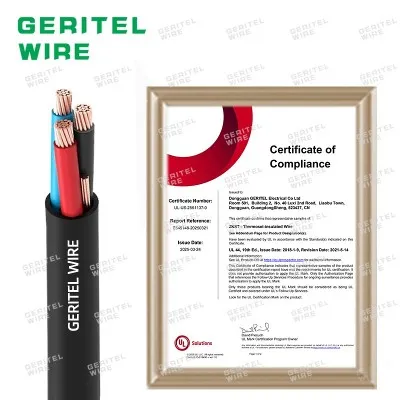
Most importantly, our oil resistant TC-ER cable carries full UL 1277 TC-ER certification-the "ER" (Exposed Run) designation is what makes it fundamentally different from both standard TC and MC cable. This single certification approves it for three plant-critical installation methods:
Tray mounting in cable trays throughout your facility
Exposed runs between equipment without conduit (saving 40% on installation labor compared to MC cable)
Direct burial for underground runs between buildings or to remote pump stations
This means you can stock just one cable type-3/C oil resistant TC-ER with ground, for example-for 90% of your plant's power and control needs, eliminating the inventory bloat of carrying separate standard TC, MC, and direct burial cables.
· Reliable Performance in High-Temperature Environments
Industrial equipment such as motors, pumps, and furnaces generate significant heat, often raising ambient temperatures above 60°C. Standard cables experience rapid insulation degradation at these temperatures, leading to premature failure. Our oil resistant TC-ER cable has a 90°C continuous operating temperature rating and a 600V voltage rating, ensuring stable electrical performance even in the hottest areas of your facility.

3. Practical Selection Guide for Manufacturing and Oil & Gas Plants
· Choose the Right Gauge for Your Application
Based on 15+ years supplying cables to 200+ North American manufacturing and oil and gas plants, these are the exact gauge and configuration recommendations for 95% of plant applications:
· 12 AWG TC-ER cable: The mandatory choice for all control panel wiring, PLC I/O circuits, solenoid valves, and proximity sensors. Its oil-resistant construction prevents the insulation cracking that causes 60% of unplanned control system failures. Always specify 3/C oil resistant TC-ER with insulated green ground for control circuits to meet NEC grounding requirements.
· 10 AWG TC-ER cable: The workhorse gauge for plant power applications. Use it for 1–5 HP motors, conveyor belts, process pumps, and lighting circuits. It is the most commonly stocked gauge because it covers 70% of all medium-power plant equipment.
· 8 AWG TC-ER cable: Reserved for high-load equipment including 10–15 HP air compressors, refrigeration units, and main distribution branch circuits. For three-phase four-wire systems requiring a neutral conductor, upgrade to a 4/C configuration.
· Critical Certification Requirements for Hazardous Locations
This is the single most important factor in cable selection for industrial plants, and the one where mistakes are most common. You must first confirm the hazardous area classification of your facility. Only oil resistant TC-ER cable that is explicitly marked and certified for "Class 1 Division 2" locations may be used in areas where flammable gases or vapors may be present under abnormal operating conditions. Standard oil resistant TC-ER cable does not have this certification and is not safe for use in these zones.
· Verify Installation Compatibility
If your project requires cables to be run underground, ensure you select direct burial TC-ER cable. Our oil resistant TC-ER cable is UL listed for direct burial without the need for additional concrete encasement, as long as it is installed at the depth specified in NEC Article 727.
4. Frequently Asked Questions
Q: Can TC-ER cable be used in oil and gas plants?
A: Yes, but only oil resistant TC-ER cable with the appropriate certifications. Standard TC-ER cable will degrade rapidly in oil-exposed environments. For Class 1 Division 2 hazardous areas, you must use Class 1 Division 2 oil resistant TC-ER cable that meets NEC requirements.
Q: What is the difference between standard TC-ER and Class 1 Division 2 TC-ER cable?
A: Class 1 Division 2 TC-ER cable undergoes additional rigorous testing to ensure it will not ignite flammable gases in the event of an electrical fault. It has stricter construction requirements and must be clearly marked with the Class 1 Division 2 rating on its jacket.
Q: Can I use 12 AWG TC-ER cable for control panels?
A: Absolutely. 12 AWG TC-ER cable is the preferred choice for control panel wiring in industrial plants. Its oil-resistant construction and mechanical durability make it far more reliable than standard THHN wire in these environments.
Q: Is oil resistant TC-ER cable suitable for direct burial?
A: Yes, our oil resistant TC-ER cable is UL 1277 listed for direct burial, tray installation, and conduit installation. This all-in-one capability reduces material and labor costs for projects that require multiple installation methods.
Q: How much longer does oil resistant TC-ER cable last compared to standard TC cable?
A: In typical industrial environments with continuous oil exposure, standard TC cable has a service life of 1–2 years. Our oil resistant TC-ER cable is designed to last 7–10 years under the same conditions, reducing replacement costs and unplanned downtime by up to 80%.
5. Get Expert Guidance for Your Project
Choosing the right cable is an investment in your plant's safety, reliability, and bottom line. If you need assistance selecting the correct gauge, configuration, or certification for your specific manufacturing or oil and gas application, our team of experienced cable engineers is ready to help. Contact us today for a free technical consultation and custom quote tailored to your project requirements.
Dongguan Greater Wire & Cable Co., Ltd.
Tel/WhatsApp/Wechat: +86 136 6257 9592
Tel/WhatsApp/Wechat: +86 135 1078 4550
Email: manager01@greaterwire.com
Website: www.greaterwire.com