

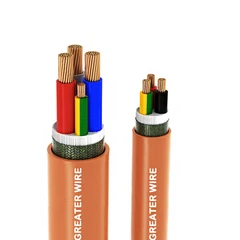
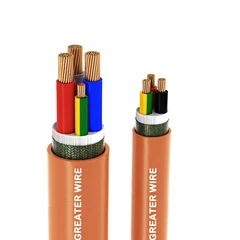

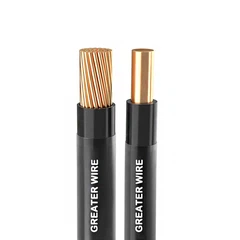
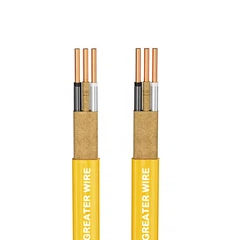
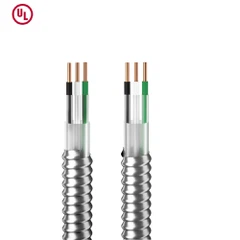



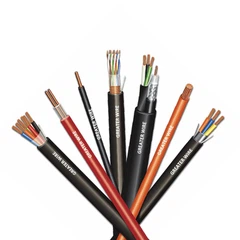
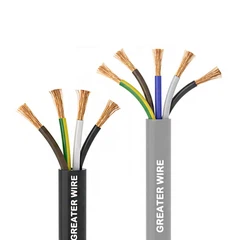
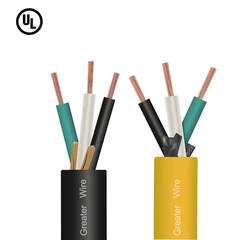

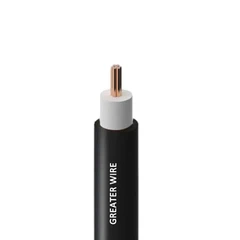

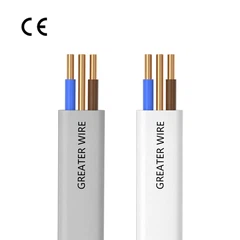
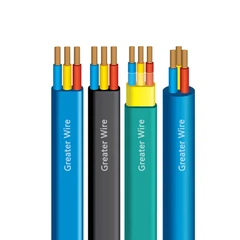
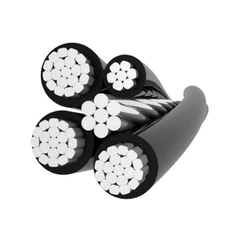
Modern commercial facilities including shopping malls, high-rise offices, hotels and underground parking garages, alongside round-the-clock heavy manufacturing plants, widely adopt certified TC-ER distribution feeder cable as official power distribution cable for overhead cable tray main and branch power runs. Electrical codes issue separate strict mandatory standards for TC-ER distribution wiring across commercial public spaces and heavy industrial sites, covering voltage rating, continuous ampacity, fire resistance, jacket environmental tolerance and exposed tray installation rules. Many electrical designers mistakenly deploy light-duty small-gauge TC-ER control wires for full-building power distribution feeders without distinguishing commercial and industrial operating conditions. This mismatch triggers inspection failure, long-term cable overheating risks, or unnecessary over-spec material waste. This article systematically sorts out all code requirements for TC-ER power distribution systems, with detailed specifications for large-feeder 1 AWG TC-ER cable, partition branch 4 AWG TC-ER cable, shaft-specific commercial riser TC-ER wire, abrasion-resistant industrial heavy load TC-ER cable and emergency-safe fire rated TC-ER power cable.

1. Core Difference: TC-ER Control Branch Cable vs TC-ER Power Distribution Feeder Cable
Most industry professionals only associate TC-ER cable with short-distance automation control wiring, ignoring its official approval as full-capacity power distribution cable for main facility feeders. Light small-core TC-ER products are designed for low-current sensor and signal control loops, unable to sustain continuous heavy power loads from HVAC systems, mall lighting banks, or factory motor clusters. In contrast, dedicated TC-ER distribution feeder cable is engineered as full power distribution cable, built with enlarged conductor cross-sections, upgraded heat-resistant insulation and reinforced outer jackets to handle non-stop peak power loads. It holds full TC-ER exposed run certification, allowing direct open tray installation without rigid conduit enclosures - the key cost and construction advantage for both commercial and industrial distribution layouts. The core code separation rule: any cable carrying whole-facility incoming power or floor/workshop partition supply must use distribution-grade TC-ER, not lightweight control TC-ER variants.

2. Mandatory Voltage & Ampacity Rules: 600V Baseline, 1 AWG & 4 AWG TC-ER Feeder Specs
NEC low-voltage electrical codes establish 600V as the minimum universal voltage rating for all TC-ER power distribution cable used in commercial risers and industrial overhead trays. Every main trunk and branch distribution run must utilize 600V-rated TC-ER distribution feeder cable to avoid insulation breakdown during daily voltage fluctuations. Two standard large gauges dominate TC-ER distribution design for large-scale facilities: 1 AWG TC-ER cable functions as the primary main distribution feeder, transporting total facility load from utility transformers to main switchgear panels. Its oversized copper conductor delivers stable high ampacity to avoid thermal overload under sustained full peak loads. It is the standard TC-ER power distribution cable for high-rise office main risers and full-plant factory overhead tray power trunks. 4 AWG TC-ER cable serves as secondary branch distribution feeders for individual retail floors, hotel zones, or separated manufacturing workshop areas. It balances sufficient current capacity and compact outer dimensions for neat cable tray stacking, making it the universal TC-ER power distribution cable for partitioned power layouts in both commercial buildings and light industrial zones. Designers must apply strict ampacity derating calculations for TC-ER distribution cable: enclosed commercial shaft installations trigger larger capacity reduction factors than open, well-ventilated industrial tray layouts, which often requires upgrading to a larger TC-ER gauge for crowded commercial riser wiring.
3. Specialized Code Rules for Commercial Riser TC-ER Distribution Wiring
Public commercial buildings with high pedestrian density impose unique restrictions on commercial riser TC-ER wire deployed within enclosed vertical cable shafts and ceiling tray runs. First, smoke and heat suppression requirements apply to all commercial TC-ER power distribution cable inside occupied public zones. Low-smoke, heat-stabilized insulation is mandatory to prevent toxic fume release during overheating or minor fires inside sealed riser shafts with limited air circulation. Second, layout separation rules: TC-ER distribution feeders for tenant power must be physically separated from communication wiring on shared ceiling trays, a rule unique to commercial retail and office construction that rarely applies to isolated industrial production workshops. Third, load fluctuation allowance: commercial power loads swing drastically between daytime shopping peak and overnight standby mode. Commercial riser TC-ER wire must withstand repeated load cycling without permanent insulation degradation, a performance standard not required for constant-load industrial TC-ER distribution cable.
4. Heavy-Duty Standards for Industrial Heavy Load TC-ER Distribution Cable
Machining, metallurgy and chemical manufacturing workshops create harsh operating environments that demand upgraded industrial heavy load TC-ER cable for all overhead tray power distribution runs. Ordinary commercial riser TC-ER wire cannot survive long-term factory conditions. Industrial heavy load TC-ER power distribution cable features three critical upgrades: oil-resistant composite outer jackets, elevated continuous temperature ratings, and thickened abrasion shielding. It resists constant machine lubricant splashes, radiant heat from production furnaces, and repeated friction from moving trolley equipment on overhead trays. Unlike commercial TC-ER distribution cable laid inside protected ceilings or shafts, industrial TC-ER power distribution feeders sit fully exposed above production lines, subject to accidental mechanical impact and continuous equipment vibration. Light commercial TC-ER jackets will soften, swell and crack within months if deployed as factory power distribution cable, creating permanent short-circuit hazards under heavy motor loads.

5. Fire Safety Mandates: Fire Rated TC-ER Power Cable for Commercial Emergency Distribution
Fire protection is the highest-priority code requirement for crowded commercial buildings, mandating dedicated fire rated TC-ER power cable for all emergency power distribution tray circuits. These critical loops supply fire pumps, evacuation lighting, smoke exhaust blowers and elevator backup power throughout malls, hotels and underground parking garages. Standard non-fire-resistant TC-ER distribution feeder cable loses insulation integrity rapidly under direct flame exposure, cutting emergency power and endangering building occupants during fires. Qualified fire rated TC-ER power cable integrates layered fire-blocking insulation and mineral barrier structures, maintaining stable power transmission for the code-mandated duration under continuous flame contact. While general industrial production power distribution trays do not require full fire-rated TC-ER cable, all factory fire suppression equipment power circuits must still adopt fire rated TC-ER power cable to align with cross-industry fire safety codes.
6. Complete TC-ER Power Distribution Cable Selection Checklist by Facility Type
Commercial Complexes (Office Towers, Shopping Malls, Hotels, Underground Garages)
Whole-building main incoming power trunk: 1 AWG TC-ER cable, 600V TC-ER distribution feeder cable
Individual floor, retail unit branch distribution runs: 4 AWG TC-ER cable
Vertical shaft overhead tray power layout: dedicated commercial riser TC-ER wire with low-smoke insulation
Emergency fire protection and evacuation power tray circuits: exclusive fire rated TC-ER power cable
Heavy Industrial Manufacturing Plants (Machining, Metallurgy, Chemical Production Lines)
Full-plant overhead main power distribution trays: industrial heavy load TC-ER cable, optional 1 AWG TC-ER cable for ultra-high-load equipment clusters
Separated workshop zone branch power trays: 4 AWG TC-ER cable with reinforced oil-resistant outer jackets
Factory fire suppression equipment power tray loops: compliant fire rated TC-ER power cable
All motor and production machine overhead power runs: full series industrial heavy load TC-ER power distribution cable resistant to heat, oil and vibration
7. FAQs About TC-ER Power Distribution Cable for Commercial & Industrial Facilities
Q1: Is 600V rating compulsory for all TC-ER power distribution cable in commercial risers and industrial trays? A: Yes. NEC low-voltage distribution standards set 600V as the minimum voltage class for all TC-ER distribution feeder cable used as main and branch power distribution runs to prevent insulation breakdown.
Q2: Can standard commercial riser TC-ER wire replace industrial heavy load TC-ER cable for factory overhead power trays? A: Not code-compliant. Light commercial TC-ER jackets cannot withstand long-term oil mist, radiant heat and mechanical abrasion in production workshops, leading to premature insulation failure and safety hazards.
Q3: Which TC-ER power distribution cable must be installed for mall emergency evacuation overhead tray circuits? A: fire rated TC-ER power cable. It maintains stable power supply during building fires to support evacuation lighting and fire suppression equipment operation.
Q4: What functional difference exists between 1 AWG TC-ER cable and 4 AWG TC-ER cable in power distribution layout? A: 1 AWG TC-ER cable acts as the total main incoming power trunk for an entire building or factory, while 4 AWG TC-ER cable serves as partition branch power distribution feeders for single floors, retail spaces or separated workshop zones.
Code-Compliant TC-ER Power Distribution Cable Solutions for Commercial & Industrial Projects
Meeting official power distribution cable code requirements relies on selecting the correct grade of TC-ER distribution feeder cable matched to your facility type, directly determining smooth design review, site electrical inspection and decades of safe power operation. We supply a full line of distribution-specified TC-ER power distribution cable, including high-load main trunk 1 AWG TC-ER cable, partition branch 4 AWG TC-ER cable, low-smoke commercial riser TC-ER wire, abrasion and heat-resistant industrial heavy load TC-ER cable, and fire-safe emergency fire rated TC-ER power cable. All variants fully satisfy NEC exposed tray installation and power distribution standards for both public commercial buildings and heavy manufacturing plants. Contact our engineering team to receive a customized TC-ER distribution cable specification list tailored to your office, retail mall or heavy factory overhead tray power layout project.
Contact us
Dongguan Greater Wire & Cable Co., Ltd.
Tel/WhatsApp/Wechat: +86 136 6257 9592
Tel/WhatsApp/Wechat: +86 135 1078 4550
Email: manager01@greaterwire.com
Website: www.greaterwire.com