

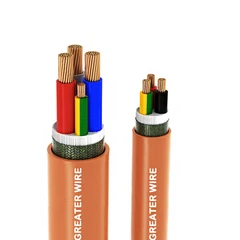
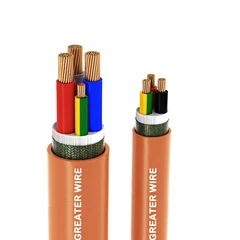

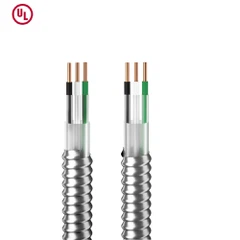
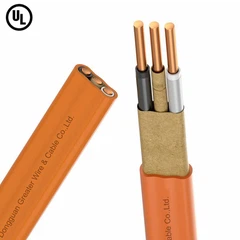
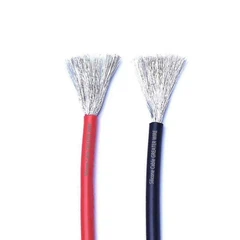
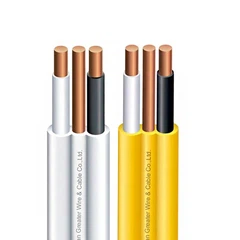
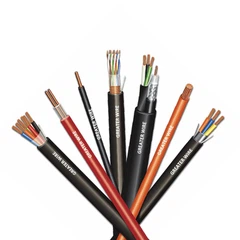
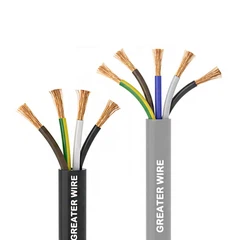
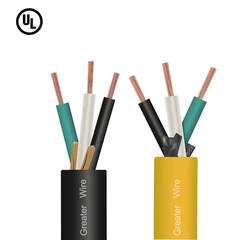
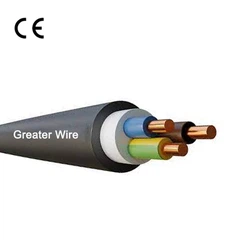
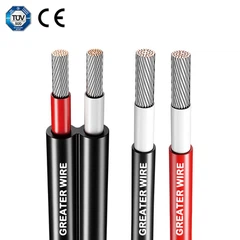

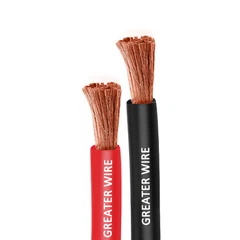
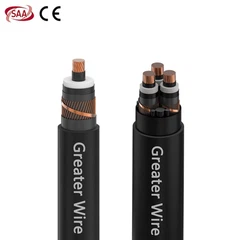
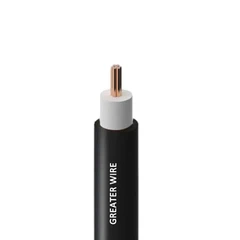
A programmable logic controller (PLC) talks to sensors, actuators, and HMIs through low-voltage signals. These signals are easily corrupted by electromagnetic interference from nearby power cables, VFDs, or welding equipment. The cable you choose must protect those signals while surviving oil, heat, and physical stress.
This article focuses on TC-ER control cable – a UL 1277 listed tray cable with exposed run rating. You will learn why shielding and grounding matter, which cable constructions work best for PLC and monitoring systems, and how to avoid common selection mistakes.
1. Why PLC and Monitoring Systems Need Specialized Control Cable
Industrial control and monitoring systems have three unique requirements that ordinary building wire cannot meet.
Requirement 1 – Signal integrity in noisy environments.
A 24V DC analog signal from a pressure sensor can be drowned out by EMI from a VFD just inches away. Unshielded cables act as antennas. Shielded TC-ER control cable with foil and a drain wire blocks the noise. The shield reflects or absorbs interference, keeping the signal clean.
Requirement 2 – Reliable grounding for common-mode currents.
Control systems often have multiple ground points. Without a dedicated insulated ground, circulating currents can create voltage differences that corrupt communication. A 4/C control cable with an insulated green ground provides a clean, low-impedance return path. This is especially important for analog signals like 4-20 mA or thermocouples.
Requirement 3 – Durability in industrial trays.
PLC cables are often routed through cable trays with power cables, exposed to oil, moisture, and temperature swings. The cable must have a tough, sunlight-resistant PVC jacket and pass crush and impact tests. TC-ER rating ensures the cable can be installed exposed without conduit, saving labor while offering mechanical protection.

2. Key Construction Features of TC-ER Control Cable
Not all TC-ER cables are the same. For PLC and monitoring systems, focus on these features.
Overall foil shield with drain wire.
A 100% foil coverage shield blocks high-frequency EMI. The drain wire (a tinned copper conductor in contact with the foil) makes grounding easy. Ground the drain wire at one end only to avoid ground loops. This simple practice eliminates most noise problems.
Insulated green ground conductor.
A bare ground can corrode in wet or oily environments, raising resistance and creating ground loops. An insulated ground remains protected. In 4/C constructions, the green wire is your signal reference and safety ground. For sensitive analog circuits, an insulated ground is not optional – it is a requirement.
XHHW-2 insulation (or THHN/THWN-2).
XHHW-2 is rated 90°C wet and dry, resists oil and chemicals, and stays flexible in cold temperatures. For dry indoor control rooms, THHN/THWN-2 is acceptable and costs less. For trays near washdowns or outdoors, choose XHHW-2.
TC-ER exposed run marking.
The cable jacket must say "TC-ER" if you plan to run it in open trays without conduit. Without this marking, the inspector will require conduit – adding cost and labor.
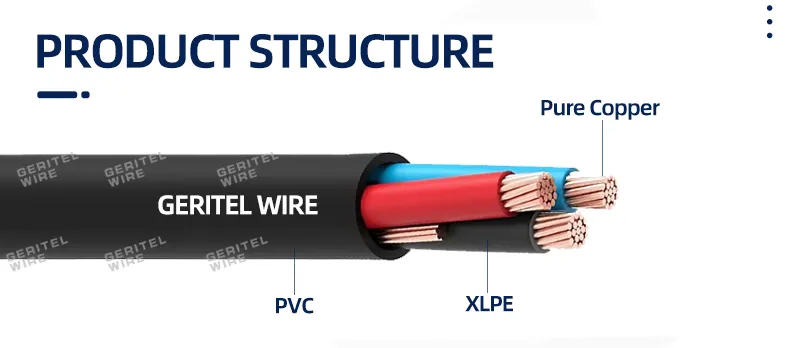
3. Three TC-ER Control Cable Specifications for PLC Systems
These three cables cover common control and monitoring scenarios. All are UL 1277 listed, TC-ER rated.
Specification 1: 16 AWG 4/C Shielded TC-ER Cable – Analog and Digital I/O
- Use for: 4-20 mA loop-powered transmitters, 24V DC discrete inputs, and thermocouple extensions.
- Why 16 AWG: Large enough for runs up to 200 feet with low voltage drop, yet flexible for tight bends in cabinets.
- Why 4/C: Three signal conductors plus an insulated ground. Use one pair for signal and return, the third as a spare.
- Shielding: Overall foil with drain wire. Ground the drain wire at the controller end only.
- Reliability advantage: The insulated ground prevents ground loops that plague analog measurements.
Specification 2: 18 AWG 4/C Unshielded TC-ER Cable – Short-Run Digital Signals
- Use for: Proximity sensors, limit switches, and solenoid feedback within 50 feet of the PLC.
- Why 18 AWG: Smaller and lower cost. Sufficient for digital signals where EMI is minimal.
- Why 4/C: Three wires for power, signal, and common, plus a ground.
- No shield: Acceptable when the cable is routed away from VFDs and power cables. If noise appears, switch to shielded.
- Reliability advantage: Lightweight and easy to terminate in crowded terminal blocks.
Specification 3: 14 AWG 3/C Shielded TC-ER Cable – Remote I/O and Fieldbus
- Use for: Remote I/O racks, device-level fieldbus (e.g., PROFIBUS or Modbus), and low-power actuator control.
- Why 14 AWG: Lower resistance for longer runs (up to 500 feet) to remote panels.
- Why 3/C: Two conductors for signal/power plus a dedicated ground. For fieldbus, use specifically designed cables; this is for general purpose.
- Shielding: Foil shield with drain wire. Ground at the master side only.
- Reliability advantage: The larger gauge reduces voltage drop on long runs, ensuring reliable communication.
Choose the gauge based on distance. For analog signals, always prefer shielded 4/C with insulated ground. For short, clean digital runs, unshielded 4/C saves cost.
4. Shielding and Grounding – The Heart of PLC Cable Reliability
Why shielding matters.
EMI comes from VFDs, welding, radio transmitters, and even adjacent power cables. Unshielded control cable picks up this noise and superimposes it on your signals. A 4-20 mA loop may fluctuate, causing false process readings. A digital input may see phantom on/off states. Shielding creates a Faraday cage around the conductors.
How to ground the shield correctly.
- Ground the drain wire at one end only – typically the PLC or controller end.
- Grounding both ends creates a ground loop, allowing current to flow through the shield and inducing noise.
- Use an EMC cable gland or clamp to connect the shield to a grounded metal backplane or DIN rail.
- For analog signals, keep the shield connection away from high-current ground paths.
What about the insulated ground wire?
The insulated green conductor is your signal reference and safety ground. Connect it to the PLC's common or ground terminal. Never use the shield drain wire as the only ground path – the drain wire is for noise, not for fault current.
5. Selection Reminder – Two Critical Decisions
From our sales team: When selecting TC-ER control cable for industrial control and monitoring systems, ask yourself two questions.
First, do I need shielding?
- Yes if the cable runs near VFDs, motors, power cables, or welding equipment.
- Yes if the run exceeds 100 feet.
- Yes for any analog signal (4-20 mA, 0-10V, thermocouple).
- No for short digital runs in a clean, dry, metal conduit or isolated tray.
Second, do I need an insulated ground (4/C) or is a bare ground (3/C) enough?
- Use 4/C with insulated ground for analog signals, wet or corrosive areas, or when the PLC requires a dedicated reference.
- Use 3/C (with separate tray ground) for dry indoor digital-only circuits where cost is critical.
What about conductor gauge?
- 18 AWG: up to 50 feet.
- 16 AWG: up to 200 feet.
- 14 AWG: up to 500 feet.
For longer distances, calculate voltage drop. For 24V DC, keep drop under 1V (4%).
Do not assume that a larger gauge always solves noise – shielding and grounding are the primary tools for signal integrity.
6. UL Certifications – What the Markings Mean
Our TC-ER control cables meet North American safety standards. Conductors with XHHW-2 insulation comply with UL 44 for thermoset-insulated wires. Conductors with THHN/THWN-2 comply with UL 83 for thermoplastic-insulated wires. The complete tray cable assembly carries UL 1277 listing for Tray Cable with Exposed Run rating. These markings are printed on the jacket. For our UL file numbers, request the certificate from our technical team.

FAQ
Q1: What is the difference between 3/C and 4/C TC-ER control cable for PLCs?
A: 3/C has three phase conductors and no insulated ground. You must provide a separate ground (bare wire or tray). 4/C includes an insulated green ground wire. For analog signals or wet environments, always use 4/C. For dry, short digital runs, 3/C may be acceptable.
Q2: Can I use unshielded TC-ER cable for a 4-20 mA loop?
A: Not recommended. 4-20 mA signals are analog and very sensitive to EMI. Unshielded cable will likely pick up noise, causing erratic readings. Use shielded TC-ER cable with foil and drain wire, and ground the shield at the controller end only.
Q3: How do I terminate the shield on a TC-ER control cable?
A: Strip back the jacket to expose the foil and drain wire. Fold the foil back or remove it carefully. Connect the drain wire to a ground terminal or a grounding clamp. Do not rely on the foil alone. Keep the drain wire as short as possible. Ground at one end only.
Q4: Does Greater Wire offer TC-ER control cable with individual shielded pairs?
A: Yes, for multi-signal applications we offer individually shielded pairs inside an overall jacket. Contact us with your specific requirements – number of pairs, gauge, and environment.
Q5: What is the maximum recommended distance for a 16 AWG TC-ER control cable at 24V DC?
A: For 24V DC digital signals, 16 AWG can run up to approximately 200 feet with acceptable voltage drop (under 1V). For analog signals, keep the run under 150 feet to avoid signal attenuation. Always verify with your device manufacturer.
Need a Quote for Your PLC or Monitoring System Project?
Tell us your signal type (digital, analog, fieldbus), distance, environment (dry, wet, oily, outdoor), and whether the cable will run near VFDs. Also specify conductor count and shielding preference. We will recommend the right TC-ER control cable – 16 AWG 4/C shielded, 18 AWG 4/C unshielded, 14 AWG 3/C shielded, or other gauges – and send a quote within 24 hours.
Contact us
Dongguan Greater Wire & Cable Co., Ltd.
Tel/WhatsApp/Wechat: +86 136 6257 9592
Tel/WhatsApp/Wechat: +86 135 1078 4550
Email: manager01@greaterwire.com
Website: www.greaterwire.com