

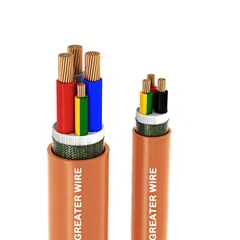
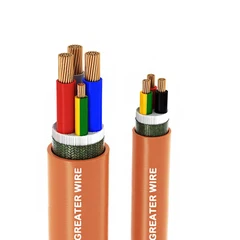

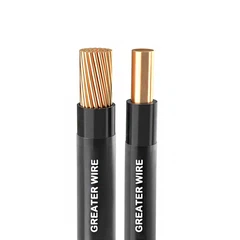
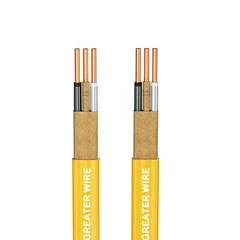
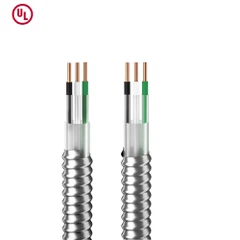
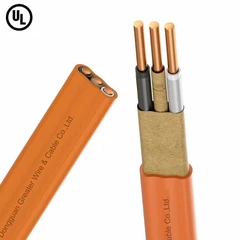
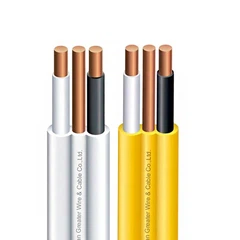

When purchasing AC90 HL cable for a Canadian hazardous-location project, checking the cable marking is only the first step. Electrical distributors, contractors, engineering companies, and procurement teams also need documentary evidence showing that the supplied cable is certified for the intended application and matches the project specification.
A supplier's quotation may state "CSA certified" or "HL rated," but these statements alone are not enough to verify a product's approval. Buyers should be able to identify the certification organization, verify the certificate or product listing, confirm the exact cable model and construction, and check that the certification covers the required hazardous-location application.
This article explains which documents an AC90 HL supplier should provide, how to review them, and what warning signs buyers should look for before approving a cable order.


1. The Most Important Document: A Valid Product Certificate
The first document to request is the Certificate of Compliance or equivalent product certification record issued by the certification organization.
For Canadian AC90 HL cable, the certification evidence should identify the product as an armoured cable approved for the relevant hazardous-location application. It should allow the buyer to establish that the supplier's specific cable construction-not merely a similar cable type-has been evaluated.
The certificate or associated official listing should make it possible to verify:
Certificate holder: The legal name of the certified manufacturer or company.
Certification organization: The body that issued the certification.
Certificate or file number: A unique reference for verification.
Product classification: The applicable product category or certification class.
Applicable standards: The standards covered by the certification.
Product types: Whether AC90 HL is explicitly included.
Scope and limitations: Applicable constructions, ratings, sizes, or other conditions.
Status: Whether the certification remains valid or has been withdrawn, suspended, or revised.
For AC90 HL, buyers will commonly encounter references to CSA C22.2 No. 51, the Canadian armoured-cable standard, and CSA C22.2 No. 174, which addresses cables and cable glands for hazardous locations. The supplier should explain how the specific product is covered by the applicable certification rather than simply listing standard numbers on a quotation.
Important: A reference to a CSA standard is not the same as proof that a product is CSA certified. The certificate or official product listing must support the claim.
2. Verify the Certification Organization and Product Listing
A certificate should not be accepted simply because it contains a familiar logo or the word "certified."
In Canada, electrical product approval can be supported by certification from an appropriately accredited certification body. CSA Group is one recognized organization, but it is not the only organization that can certify electrical products for the Canadian market.
The Standards Council of Canada (SCC) publishes information about recognized certification and inspection bodies. Ontario's Electrical Safety Authority (ESA) also provides a list of recognized approval marks and agencies.
scc-ccn.ca+1
When reviewing a supplier's certification, check the following:
Does the certification organization have the appropriate accreditation for the product category?
Does the certificate number correspond to an authentic certification record?
Does the official listing identify the same manufacturer or certificate holder?
Does the listing explicitly cover AC90 HL or the exact product family being purchased?
Are the relevant standards and product ratings consistent with the supplier's claims?
Is the certification current?
Where possible, verify the certificate directly through the issuing organization's online directory or by contacting the certification body. If a supplier provides only a screenshot or an undated certificate copy, request the complete document and a way to verify its current status.
Does the cable have to carry the CSA logo?
Not necessarily. The important issue is whether the product carries a certification mark recognized for use in the destination jurisdiction and whether the product's certification scope covers the application.
A cable certified by another appropriately accredited organization may be acceptable in Canada. However, if a project specification explicitly requires CSA Group certification, the buyer must follow that additional contractual requirement.
3. Request the AC90 HL Product Datasheet
A product certificate establishes the certification basis, but it may not provide all the technical details needed to select the cable for a particular project.
That is why the supplier should also provide a current, model-specific technical datasheet.
The datasheet should identify the cable construction and its operating limits.
|
Datasheet item |
What the buyer should verify |
|---|---|
|
Cable designation |
The product is specifically identified as AC90 HL |
|
Manufacturer and model |
The legal manufacturer and product series or reference are clear |
|
Conductor material |
Copper or aluminum |
|
Conductor size |
The requested AWG or kcmil size is included |
|
Number of conductors |
The configuration matches the cable schedule |
|
Insulation |
The specified insulation material and rating |
|
Armour |
The specified metallic armour construction |
|
Bonding conductor |
Its presence and relevant construction details |
|
Voltage rating |
The rating matches the project requirement |
|
Temperature rating |
The stated rating and its applicable conditions |
|
Environmental rating |
Dry or wet location, as applicable |
|
Flame classification |
The actual certified flame-performance designation, if required |
|
Dimensions |
Nominal cable outside diameter and other relevant dimensions |
Why construction details matter
Two cables may both be described as AC90 HL but have different conductor sizes, conductor materials, voltage ratings, or other approved construction details.
The buyer must confirm that the ordered configuration falls within the certified product range.
For example, a certificate covering a manufacturer's AC90 HL family does not necessarily mean every possible conductor size, voltage, or construction is included.
The exact datasheet and certification scope should be read together.
Check the environmental rating carefully
Hazardous-location approval does not automatically mean that the cable is suitable for wet locations, outdoor exposure, or direct burial.
The datasheet should state the environmental rating of the exact product. If the project requires a wet-location cable, do not accept an AC90 HL datasheet that only establishes a dry-location rating.

4. Request Evidence of the Actual Cable Marking
A supplier should be able to explain how the certified cable is identified on the finished product.
Useful evidence includes:
A clear photograph of the actual cable surface marking.
A photograph of the cable reel label or product tag.
The manufacturer's identification.
The cable type and relevant ratings.
The recognized certification mark.
Any required hazardous-location designation.
The applicable production or traceability information.
RES Auctions
res.bid
The markings should be consistent with the certificate, datasheet, and purchase order.
For example, if the purchase order specifies AC90 HL, the delivered cable should not be identified only as ordinary AC90. The buyer should also check that the certification mark and product designation are genuine and correspond to the approved construction.
Why a photograph is useful
A certificate proves that a product construction has been certified. A photograph helps the buyer check how the actual supplied product is identified.
However, a photograph is supporting evidence, not a substitute for checking the official certification record.
A supplier should not use a photograph of another manufacturer's cable or a generic cable image as proof of its own certification.
5. Request a Declaration of Conformity or Certificate of Conformity for the Order
A Certificate of Conformity (CoC) or supplier declaration can provide useful order-specific documentation.
Unlike the product certification certificate, which establishes the certified product scope, an order-specific CoC can identify the cable supplied under a particular purchase order.
It should ideally include:
Manufacturer's legal name.
Customer or purchaser name.
Purchase order or sales order number.
Cable designation and model.
Conductor material and size.
Number of conductors.
Voltage and temperature ratings.
Quantity or supplied length.
Applicable product standard.
Certification reference.
Date of issue.
Authorized signatory.
A CoC is useful for supplier qualification, receiving inspection, and project records.
However, buyers should understand the distinction:
A supplier-issued CoC is not the same as independent third-party product certification.
A supplier cannot make an uncertified cable certified simply by issuing a declaration that it complies with a CSA standard.
The CoC should support an existing, verifiable certification rather than replace it.

6. Request Relevant Test Reports and Quality Inspection Records
A buyer may also request test reports and inspection records to understand how the cable's quality is controlled.
These records are particularly useful for industrial projects, large orders, EPC contracts, and applications with detailed quality documentation requirements.
6.1 Routine electrical test records
Depending on the product and purchase specification, relevant production records may include:
Conductor resistance test results.
Insulation resistance test results.
High-voltage or dielectric test results, where applicable.
Conductor continuity checks.
Dimensional inspection records.
Visual inspection results.
The exact tests required depend on the applicable product standard, certification conditions, and purchase specification.
6.2 Mechanical and construction inspection records
For armoured cable, relevant inspection information may include:
Armour construction and dimensions.
Insulation thickness.
Conductor dimensions.
Cable overall diameter.
Bonding conductor construction.
Jacket thickness, if the product has an outer jacket.
These checks help confirm that the delivered cable matches the specified construction.
6.3 Type-test reports versus routine-test reports
Buyers should distinguish between two types of test evidence.
|
Document |
Purpose |
Procurement relevance |
|---|---|---|
|
Type-test report |
Demonstrates performance of a representative product design under specified tests |
Supports product design and certification evaluation |
|
Routine-test report |
Records tests performed on production cable or a defined production batch |
Supports acceptance of supplied goods |
|
Inspection report |
Records measurements or visual checks |
Supports manufacturing and receiving quality control |
|
Third-party certification record |
Establishes independent product certification within a defined scope |
Supports approval and certification verification |
Not every customer needs the complete underlying certification test report. Some certification reports contain confidential technical information and may be available only to the certification holder or under controlled disclosure.
For most procurement decisions, the current certificate, official product listing, datasheet, and relevant order-specific inspection records are the more practical starting point.
7. Is an ISO 9001 Certificate Enough?
No.
An ISO 9001 certificate relates to an organization's quality management system. It does not independently certify AC90 HL cable for hazardous-location use.
A manufacturer may have a well-established quality management system but still need separate product certification for the cable it supplies.
|
Document |
What it demonstrates |
Does it prove AC90 HL hazardous-location certification? |
|---|---|---|
|
CSA product certificate or equivalent recognized certification |
Product certification within a defined scope |
Yes, if the exact cable is included |
|
Official product listing |
Published certification information |
Yes, if the exact cable and application are covered |
|
Technical datasheet |
Product construction and ratings |
No, not by itself |
|
ISO 9001 certificate |
Quality management system certification |
No |
|
Factory inspection record |
Results of a specific factory or production inspection |
No, not by itself |
|
Supplier CoC |
Supplier's declaration for the supplied goods |
No, not by itself |
|
Routine test report |
Results of specified production tests |
No, not by itself |
For hazardous-location cable procurement, the product certificate and its scope are the central evidence. Quality-management and inspection documents provide additional assurance but should not be treated as substitutes.
8. Check Whether the Certification Covers the Exact Cable You Are Buying
One of the most important checks is matching the product on the purchase order to the certification scope.
A supplier may have certification for several armoured cable families, but this does not mean every family has identical construction or application ratings.
For example:
AC90 HL and ACWU90 HL have different outer-jacket constructions.
TECK90 HL has a different cable construction from AC90 HL.
Copper and aluminum conductor options may have different approved size ranges.
Different voltage ratings may apply to different product families.
Wet- and dry-location ratings must be checked against the exact certified construction.
The buyer should request a certification scope or product schedule that clearly identifies the relevant cable family and, where applicable, its approved configurations.
A practical document-matching example
Suppose a purchase order requests:
Cable type: AC90 HL
Conductor: Copper
Size: 3/C 4 AWG
Voltage: 600 V
Temperature rating: 90°C
Application: Canadian hazardous location
The buyer should compare these details across the following documents:
|
Purchase requirement |
Document to check |
|---|---|
|
AC90 HL designation |
Certificate, product listing, datasheet, cable marking |
|
Copper conductor |
Certification scope and datasheet |
|
3/C 4 AWG configuration |
Approved construction schedule and datasheet |
|
600 V rating |
Certificate scope and datasheet |
|
90°C rating |
Datasheet and product marking |
|
Hazardous-location application |
Certification record and applicable HL marking |
|
Supplied quantity and order identity |
Purchase order and supplier CoC |
If one document identifies a different cable type or rating, the discrepancy should be resolved before the order is approved.


9. What Documents Should Be Available Before Shipment?
For larger industrial orders, buyers should agree on the documentation package before production begins.
This reduces the risk of receiving cable that technically differs from the approved submittal.
A practical document schedule can be divided into three stages.
Before purchase approval
Request:
Current product certification certificate.
Official certification listing or verification details.
AC90 HL technical datasheet.
Product construction and rating information.
Sample cable marking or reel-label information.
Before or during production
Where required by the purchase specification, request:
Approved cable specification or technical submittal.
Production inspection and test plan.
Relevant quality-control procedures or inspection arrangements.
Confirmation that the ordered configuration is within the certified product scope.
These documents may be agreed as contractual deliverables; they are not necessarily standard mandatory documents for every cable order.
Before shipment or delivery
Depending on the contract, request:
Order-specific Certificate of Conformity.
Routine test or inspection records.
Reel or drum identification list.
Packing list with cable descriptions and quantities.
Traceability information linking supplied reels to the order.
Any agreed third-party inspection report.
The goal is to maintain a clear connection between the certified product, the manufactured cable, and the material delivered to the project.
10. Warning Signs When Reviewing an AC90 HL Supplier's Documents
Procurement teams should pay attention to inconsistencies and unsupported claims.
Red flags to investigate
The supplier says "CSA compliant" but cannot provide a product certificate or verifiable listing.
The certificate identifies a different legal manufacturer.
The certificate covers ordinary AC90 but does not establish HL certification.
The product type is missing from the certification scope.
The certificate number cannot be verified with the issuing organization.
The certificate is expired, suspended, withdrawn, or inconsistent with the current product.
The datasheet and certificate show different voltage or temperature ratings.
The cable marking does not match the approved product designation.
A supplier presents an ISO 9001 certificate as proof of hazardous-location product certification.
The supplier provides a generic test report with no clear connection to the ordered product.
The manufacturer refuses to identify the actual factory or certification holder.
A particularly important warning sign is a certificate issued to one manufacturer while the quotation names a different company as the manufacturer.
This does not automatically mean the product is invalid. There may be a legitimate brand owner, distributor, or manufacturing arrangement. However, the buyer should confirm that the actual manufacturing site and product are covered by the certification arrangements.
11. Canadian Certification Does Not Automatically Cover Other Markets
AC90 HL is a Canadian cable designation. A Canadian certification package should not be treated as proof of compliance with every international hazardous-location framework.
|
Destination market |
What buyers should verify |
|---|---|
|
Canada |
Recognized Canadian certification mark, product scope, and applicable CSA standards |
|
United States |
Applicable UL or other accepted certification, NEC requirements, and product listing |
|
Europe |
Relevant ATEX requirements and applicable EN standards |
|
IECEx markets |
IECEx certificate and relevant IEC 60079 requirements |
|
Australia and New Zealand |
Applicable AS/NZS requirements and local approval arrangements |
For example, a CSA certificate covering AC90 HL does not automatically establish that the cable is UL listed for a US application or certified under ATEX or IECEx requirements.
If a project is outside Canada, the buyer should provide the supplier with the destination country, hazardous-area classification, and required approval framework before requesting a quotation.
This avoids receiving documents that are genuine but do not satisfy the project's actual approval requirements.
12. AC90 HL Supplier Documentation Checklist
The following checklist can be used during supplier qualification and purchase approval.
Supplier document review
0/15 checked
Current product certificate or equivalent recognized certification record
Official product listing or certificate verification information
Certification organization and certificate number
Confirmation that AC90 HL is within the certified product scope
Applicable product standards and editions
Model-specific technical datasheet
Conductor material, size, and number of conductors
Voltage and temperature ratings
Dry- or wet-location rating, as applicable
Cable construction and bonding conductor details
Sample cable marking and reel-label information
Order-specific Certificate of Conformity, if required
Relevant routine test or inspection records
Reel identification and production traceability
Packing list and agreed shipment documentation
Reset checklist
Not every document above is a mandatory deliverable for every purchase. The final documentation package should be defined by the project specification, applicable regulations, certification conditions, and purchase contract.
Conclusion
When purchasing AC90 HL cable, buyers should look beyond a supplier's claim that the product is "CSA certified." The most important evidence is a valid product certificate or official listing that identifies the manufacturer, certification organization, applicable standards, and exact cable family.
A complete procurement review should also include a technical datasheet, cable marking information, and-where required-order-specific conformity declarations, inspection records, and production traceability documents.
The key is to make sure that the cable described in the quotation, approved in the technical submittal, manufactured under the certification, and delivered to the project is the same product. This helps electrical contractors, distributors, engineers, and procurement professionals reduce certification risks and avoid costly documentation problems during project inspection.
GERITEL WIRE: Certified AC90 HL Cable with Technical Documentation Support
GERITEL WIRE, a brand of Dongguan Greater Wire & Cable Co., Ltd., supplies CSA-certified armoured cable solutions for Canadian industrial and hazardous-location applications. Our product range includes AC90 HL, ACWU90 HL, and TECK90 HL, with certification documentation and technical product information available to support customer evaluation. Whether you are an electrical distributor, engineering contractor, OEM, or project procurement specialist, we understand the importance of matching cable specifications with verified certification scope. Contact GERITEL WIRE to discuss your conductor requirements, request relevant product documents, and evaluate suitable armoured cable solutions for your next project.
Dongguan Greater Wire & Cable Co., Ltd.
Tel/WhatsApp/Wechat: +86 136 6257 9592
Tel/WhatsApp/Wechat: +86 135 1078 4550
Email: manager01@greaterwire.com
Website: www.greaterwire.com