




When planning electrical wiring in a hazardous industrial area, engineers and contractors often face a practical choice: use hazardous-location-rated armoured cable such as AC90 HL, or install conductors inside threaded rigid metal conduit with the required hazardous-location fittings.
Both approaches can provide compliant wiring methods, but they involve different installation requirements, accessories, labour, and maintenance considerations. AC90 HL combines insulated conductors, metallic armour, and a hazardous-location certification within one cable assembly. Rigid metal conduit provides a protective raceway through which individual conductors are installed, with threaded fittings and other components selected to maintain the required protection.
Which approach actually simplifies hazardous-area wiring? The answer depends on the hazardous-area classification, the applicable electrical code, equipment connections, cable routing, and project conditions. This article compares the two approaches from a Canadian installation and procurement perspective, helping electrical contractors, engineers, distributors, and project buyers make a more informed selection.


1. Understanding the Two Wiring Approaches
Before comparing installation effort, it is useful to understand what each method includes.
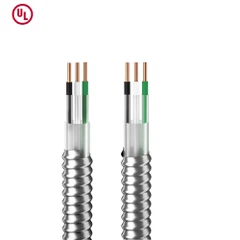
AC90 HL cable: An integrated armoured cable
China CSA AC90 BX Cable Aluminum Conductor PVC Or XLPE/AIA 600V Manufacturers Suppliers Factory
greaterwire.com
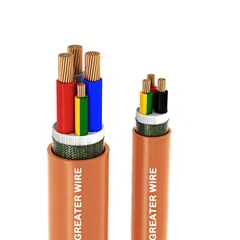
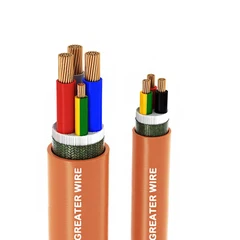
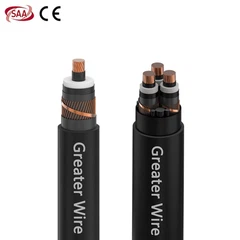
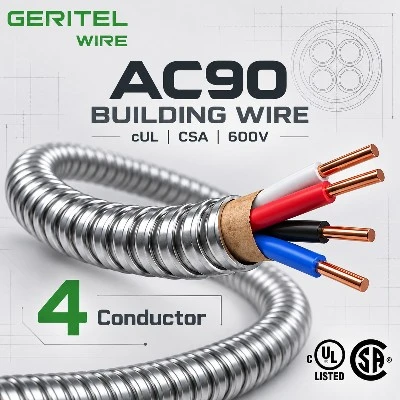
AC90 HL is a Canadian armoured cable designation. A typical construction includes:
Insulated copper or aluminum conductors.
An internal bonding conductor.
Interlocked metallic armour.
Hazardous-location certification within the exact product's approved scope.
The armour provides mechanical protection, while the cable's HL marking indicates that the product meets the applicable Canadian hazardous-location cable requirements. The cable is installed as a complete assembly and connected to equipment through suitable cable glands or connectors.
This can reduce the need to install a separate raceway and pull individual conductors through it. However, the cable still requires correct support, suitable terminations, and compliance with the applicable hazardous-location rules.
Threaded rigid metal conduit: A separate raceway system
Killark® GEJTT-6M | McNaughton-McKay
mc-mc.com
Rigid metal conduit is a protective metal raceway. Individual insulated conductors are pulled through the conduit after the raceway has been installed.
A typical hazardous-area conduit installation may include:
Threaded rigid metal conduit.
Explosion-proof or other suitable hazardous-location fittings.
Approved junction boxes and enclosures.
Conduit seals where required.
Individual insulated conductors.
Bonding and grounding provisions.
The conduit protects the conductors and provides a continuous wiring pathway. However, its suitability depends on the conduit type, fittings, threading, enclosure entries, and installation method-not simply on the fact that the raceway is metal.
Important: In the Canadian hazardous-location rules discussed below, the specified method is threaded rigid metal conduit. Ordinary electrical metallic tubing (EMT), unthreaded conduit, or generic metal tubing should not be assumed to be an acceptable substitute.
2. What Does the Canadian Electrical Code Permit?
The comparison is not merely a choice between two products. The applicable wiring methods are defined by the hazardous-area classification and the Canadian Electrical Code (CEC).
Class I, Division 1
For Class I, Division 1 installations, 2024 CEC Rule J18-106 identifies two principal wiring methods:
Threaded rigid metal conduit with explosion-proof fittings.
Hazardous-location cables with associated cable glands suitable for the application.
The rule also requires explosion-proof boxes, fittings, and joints to be threaded for connection to conduit and cable glands. Cables must be installed and supported so that tensile stress is not imposed on the glands.
philtech.ca
This is the key regulatory basis for comparing AC90 HL with threaded rigid metal conduit: both approaches can be permitted, provided the exact cable, glands, fittings, and installation satisfy the applicable requirements.
The CEC explanatory note further states that cables meeting CSA C22.2 No. 174 and marked HL are acceptable for use in all hazardous locations. This is a statement about the cable's certification status, not permission to ignore the wiring-method and termination requirements.
philtech.ca+1
Zone 1 installations
For Zone 1, CEC Rule 18-102 similarly permits:
Threaded rigid metal conduit with explosion-proof, flameproof "d," or flameproof "db" fittings; or
Hazardous-location cables with associated cable glands suitable for the application.
The rule also addresses entries into increased-safety "e" enclosures and requires the entry to maintain the enclosure's protection and degree of protection.
philtech.ca
Dust hazardous locations
The wiring methods also depend on the dust classification. For example, CEC Rule 18-202 permits threaded rigid metal conduit or hazardous-location cables in Zone 21. Rule 18-192 provides corresponding wiring-method options for Zone 20.
philtech.ca
The Class/Division and Zone systems should not be treated as interchangeable labels. The project must use its approved area-classification documentation to determine the applicable rules.
3. AC90 HL vs. Rigid Conduit: A Practical Comparison
The following table compares the two approaches from an installation and project-planning perspective.
|
Comparison factor |
AC90 HL cable |
Threaded rigid metal conduit |
|---|---|---|
|
Basic wiring method |
Complete armoured cable assembly |
Individual conductors installed inside a metal raceway |
|
Hazardous-location requirement |
Exact cable must have suitable HL certification and compatible glands |
Conduit, fittings, boxes, seals, and conductors must meet the applicable requirements |
|
Raceway installation |
No separate rigid conduit run along the cable route |
Raceway must be measured, cut, threaded, assembled, and supported |
|
Conductor installation |
Conductors are already assembled inside the cable |
Conductors are pulled after the conduit route is completed |
|
Termination |
Requires compatible hazardous-location cable glands |
Requires suitable threaded fittings and enclosure entries |
|
Mechanical protection |
Provided by the cable's armour, within its product rating |
Provided by the conduit system |
|
Route flexibility |
Cable can follow approved routes with suitable supports and bend radii |
Rigid route requires planned bends, fittings, and threaded connections |
|
Future conductor replacement |
Usually involves replacing or rerouting the cable assembly |
Individual conductors may be replaceable if conduit fill, route, and condition permit |
|
Circuit modification |
May require a new cable run or approved junction arrangement |
Additional conductors may be possible if the system has adequate capacity and the modification is permitted |
|
Inspection focus |
Cable marking, certification, glands, support, bonding, and seals |
Conduit type, threads, fittings, seals, conductor installation, and bonding |
|
Typical installation advantage |
Fewer separate raceway components |
A continuous, adaptable raceway for individual conductors |
Neither method is automatically faster or cheaper in every project. The result depends on route length, the number of circuits, the number of equipment entries, site conditions, labour availability, and the required protection method.

4. When Does AC90 HL Make Hazardous-Area Wiring Simpler?
AC90 HL can simplify installation when the project has suitable cable routes and the certified cable construction meets the environmental and electrical requirements.
4.1 Fewer separate raceway installation tasks
With rigid conduit, installers must generally measure and prepare each conduit section, cut and thread the ends, assemble fittings, and secure the raceway before pulling conductors.
With AC90 HL, the conductors and armour arrive as one manufactured cable assembly. The installer can route and support the cable, prepare its ends, and terminate it using suitable hazardous-location glands.
This can reduce the number of separate raceway components and installation operations.
4.2 Useful for equipment connections and defined cable routes
Industrial facilities often contain motors, control panels, junction boxes, and process equipment connected by planned cable routes.
Where the cable can be installed along an approved route with suitable support, AC90 HL may provide a relatively direct wiring method.
It can be especially useful when:
The route is exposed and accessible.
The cable does not need to pass through an extensive network of conduit fittings.
The number of equipment terminations is manageable.
The installation does not require frequent future conductor changes.
The cable's environmental rating matches the location.
However, the cable must not be left hanging from its glands. CEC hazardous-location rules require appropriate support to avoid tensile stress at cable terminations.
4.3 Less conduit threading and fitting work
A long rigid conduit route can involve substantial preparation, particularly where the installation has many bends, changes in direction, and threaded connections.
AC90 HL can reduce this work where a suitable cable route is available and the wiring method is permitted.
That does not mean the cable installation is accessory-free. Correct glands, connectors, supports, bonding arrangements, and any required sealing components remain essential.
4.4 A potentially simpler material schedule
For some projects, AC90 HL can reduce the number of separately specified raceway components because the cable already includes its conductors and metallic armour.
Procurement may therefore involve fewer separate line items for the route itself.
Nevertheless, buyers still need to specify the cable's conductor size, number of conductors, voltage rating, environmental rating, certification, and compatible termination accessories.
5. When Is Rigid Metal Conduit the Better Approach?
Although AC90 HL can simplify certain installations, rigid metal conduit offers advantages that may make it more appropriate for other project conditions.
5.1 When future conductor changes are expected
One advantage of conduit is that individual conductors may be pulled out and replaced without replacing the entire raceway.
This can be useful in facilities where:
Equipment is frequently upgraded.
Control circuits are modified.
Additional conductors may be required.
Maintenance teams need access to individual conductors.
Such changes are still subject to conduit fill, conductor ampacity, pulling conditions, hazardous-location requirements, and the suitability of the existing raceway.
5.2 When the route needs a continuous protective raceway
Rigid conduit can provide a defined mechanical pathway through areas where conductors require additional protection.
For example, a project may require wiring to pass through a specific structural route or around equipment where a raceway system is preferred by the engineering design.
The conduit must be suitable for the location and installed using the required fittings and connections.
5.3 When the project specification requires conduit
Some engineering specifications, owner standards, or equipment manufacturers' instructions may explicitly require threaded rigid metal conduit.
In that situation, AC90 HL should not be substituted simply because the CEC recognizes hazardous-location cable as a permitted wiring method in certain applications.
The project specification, equipment certification conditions, and applicable code requirements must all be reviewed before proposing an alternative.
5.4 When the cable's environmental rating is insufficient
AC90 HL should not be selected solely because it carries an HL marking.
For example, GERITEL WIRE's published product comparison identifies its AC90 HL construction as a 90°C dry-location product, while ACWU90 HL and TECK90 HL are identified as 90°C dry- and wet-location products, subject to the exact certified configuration.
Greater Wire+1
If a cable route is exposed to moisture, outdoor conditions, or other environmental hazards, the engineering team must check the exact product rating and may need to consider a different cable construction or a suitable conduit system.
6. Cable Glands vs. Conduit Fittings: Where Installation Complexity Moves
A common misunderstanding is that AC90 HL eliminates hazardous-location termination work.
It does not. The work is different, not absent.
Buy Hawke EExd 501/453 RAC 20MM - Explosion Proof Brass Cable Gland
unigulfsupply.com
AC90 HL requires suitable cable glands
The gland must match:
The cable's outside diameter.
Its armour construction.
The enclosure entry thread.
The hazardous-area classification.
The enclosure's protection method.
The environmental conditions.
The gland's certification and installation instructions.
A gland that physically fits the cable is not necessarily approved for the hazardous location.
Rigid conduit requires suitable fittings and seals
A conduit system may require:
Threaded explosion-proof or flameproof fittings.
Suitable junction boxes and enclosures.
Approved unions, elbows, and adapters.
Explosion seals where required.
Correct thread engagement.
Suitable bonding and grounding arrangements.
The sealing requirements depend on the enclosure, wiring method, classification, and applicable CEC rules. For example, CEC Rule 18-104 addresses explosion seals for certain Zone 1 entries into explosion-proof or flameproof enclosures, while Appendix J Rule J18-108 addresses Class I, Division 1 sealing arrangements. These requirements include specific conditions and exceptions; they should not be simplified into a rule that every conduit or cable entry always needs the same type of seal.
philtech.ca+1
A practical comparison
|
Installation task |
AC90 HL |
Rigid metal conduit |
|---|---|---|
|
Prepare route |
Plan cable path and supports |
Plan conduit path, bends, and supports |
|
Install main wiring path |
Route and secure cable |
Cut, thread, assemble, and secure conduit |
|
Install conductors |
Already inside cable |
Pull conductors through completed raceway |
|
Terminate at enclosure |
Prepare cable and install compatible gland |
Connect conduit through suitable threaded fitting |
|
Sealing |
Provide required cable-entry sealing arrangement |
Install required conduit or enclosure seals |
|
Bonding |
Terminate bonding conductor and maintain required armour continuity |
Maintain conduit bonding continuity and any required bonding conductors |
|
Inspection |
Verify cable and gland certification, support, and termination |
Verify conduit, fittings, threading, seals, conductors, and bonding |
The practical question is not whether one method has fewer components in every case. It is which method produces the simpler compliant installation for the actual route and equipment layout.
7. Does AC90 HL Reduce Total Installed Cost?
It can, but a lower cable installation cost should not be assumed without comparing the complete system.
A useful project estimate should include the following cost categories:
|
Cost category |
AC90 HL |
Rigid metal conduit |
|---|---|---|
|
Main wiring material |
HL cable |
Conduit and individual conductors |
|
Raceway accessories |
Generally fewer separate raceway components |
Fittings, couplings, boxes, and other raceway accessories |
|
Termination materials |
Hazardous-location cable glands |
Suitable conduit fittings and seals |
|
Installation labour |
Cable routing, support, preparation, and termination |
Conduit fabrication, threading, assembly, conductor pulling, and termination |
|
Inspection and testing |
Cable certification, glands, bonding, and installation checks |
Raceway certification, fittings, seals, conductor installation, and bonding checks |
|
Future modifications |
May require additional cable runs |
Individual conductor changes may be possible within existing capacity |
Example A: A relatively straightforward equipment connection
Suppose a project connects a control enclosure to several nearby pieces of equipment using defined cable routes.
If the cable sizes and configurations are known, and AC90 HL is permitted for the application, the cable approach may reduce separate raceway fabrication and conductor-pulling work.
Example B: A facility with extensive future modifications
Suppose a plant expects frequent equipment changes and additional circuits.
A properly designed conduit system may offer greater flexibility because individual conductors can potentially be replaced or added without installing an entirely new raceway.
These are planning examples, not guaranteed cost outcomes. Actual labour rates, cable prices, route complexity, installation access, and inspection requirements determine the final installed cost.

8. What About Bonding and Electrical Continuity?
Bonding is a critical consideration for both approaches.
AC90 HL bonding
A typical AC90 HL cable includes an internal bonding conductor and metallic armour. The bonding arrangement must be installed in accordance with the product's certified construction and the applicable CEC requirements.
The installer should verify:
Correct termination of the internal bonding conductor.
Appropriate cable connectors and bonding components.
Electrical continuity through the required connections.
Compatibility of metallic components.
Protection against corrosion and mechanical damage.
Do not assume that metallic armour automatically replaces every bonding-conductor requirement.
Rigid conduit bonding
A metallic conduit system also needs reliable electrical continuity and bonding.
Installers must ensure that:
Threaded connections are properly made.
Fittings are suitable for the application.
Corrosion or damaged threads do not compromise continuity.
Required bonding conductors or bonding components are installed.
Enclosure connections comply with the applicable rules.
Both approaches require qualified installation and verification. Neither should be selected on the assumption that bonding is automatically correct once the cable or conduit is mechanically connected.
9. How to Choose Between AC90 HL and Rigid Metal Conduit
The following decision guide can help contractors and engineers make an initial selection.
Step 1: Confirm the hazardous-area classification
Identify whether the installation is Class I, II, or III under the Division system, or Zone 0, 1, 2, 20, 21, or 22 under the Zone system.
Step 2: Check the permitted wiring methods
Review the applicable CEC requirements and project specification. Confirm whether hazardous-location cable, threaded rigid metal conduit, or both are permitted.
Step 3: Evaluate the cable route
A straightforward, accessible cable route may favour AC90 HL.
A route requiring a continuous raceway or extensive future modifications may favour rigid conduit.
Step 4: Verify environmental suitability
Check moisture, temperature, sunlight, chemical exposure, mechanical damage, and other site conditions. Confirm the exact product's environmental rating.
Step 5: Review terminations and accessories
Confirm suitable cable glands or conduit fittings, required seals, enclosure compatibility, and bonding arrangements.
Step 6: Compare total installed cost
Include materials, labour, supports, fittings, termination work, inspection, and future maintenance.
Which approach is more suitable?
|
Project condition |
Approach worth evaluating first |
|---|---|
|
Straightforward cable route with limited equipment entries |
AC90 HL |
|
Installation where reducing separate raceway fabrication is valuable |
AC90 HL |
|
Frequent future conductor changes are anticipated |
Rigid metal conduit |
|
Project specification explicitly requires a conduit system |
Rigid metal conduit |
|
Extensive routing through a defined protective raceway |
Rigid metal conduit |
|
Hazardous-area installation with suitable HL cable and compatible glands permitted by the code |
AC90 HL |
|
Environmental conditions exceed the selected AC90 HL product's ratings |
Evaluate another approved cable or wiring method |
This is a preliminary selection guide, not a substitute for the hazardous-area design or code review.
10. What Should Buyers Check Before Ordering AC90 HL?
For electrical distributors, EPC contractors, OEMs, and procurement teams, the following checklist can help prevent specification and delivery problems.
Confirm the project's hazardous-area classification.
Verify whether the project uses the Class/Division or Zone system.
Confirm that AC90 HL is an accepted wiring method for the application.
Verify the exact cable's CSA certification and HL marking.
Check the applicable cable product standard and hazardous-location certification.
Confirm conductor material, size, and number of conductors.
Check voltage and temperature ratings.
Confirm dry- or wet-location suitability.
Verify the required cable glands and their certification.
Check enclosure entry threads and protection methods.
Confirm required sealing arrangements.
Review armour bonding and support requirements.
Compare the total installed cost against the conduit alternative.
Obtain the datasheets, certification records, and installation instructions.
For projects involving several wiring methods, it may be appropriate to use AC90 HL for some cable routes and rigid conduit for others. A mixed design can be practical when the engineering specification and applicable code permit it.

11. Do Not Assume Canadian Approval Equals International Approval
AC90 HL is a Canadian cable designation. Its certification should not be treated as automatic approval under every international hazardous-area system.
|
Market |
Relevant framework |
Key consideration |
|---|---|---|
|
Canada |
CSA C22.1 and applicable CSA product standards |
Verify HL certification and CEC installation requirements |
|
United States |
NEC and applicable UL standards |
Confirm the permitted wiring method and product listing |
|
Europe |
ATEX and applicable EN standards |
Verify equipment category and cable-entry protection |
|
IECEx markets |
IEC 60079 series |
Check Ex certification and installation requirements |
|
Australia and New Zealand |
Applicable AS/NZS standards |
Confirm local hazardous-area and product approval requirements |
For international projects, engineers should confirm the destination market's requirements before specifying AC90 HL or proposing it as an alternative to conduit.
A Canadian HL marking does not automatically establish UL, ATEX, IECEx, or AS/NZS compliance.
Conclusion
AC90 HL and threaded rigid metal conduit are both recognized wiring approaches for certain Canadian hazardous-area installations, but they simplify different parts of the job.
AC90 HL can reduce separate raceway fabrication and conductor-pulling work because the conductors and metallic armour are supplied as one cable assembly. It may be particularly practical for defined equipment connections and accessible cable routes.
Rigid metal conduit can offer advantages where a continuous protective raceway, individual conductor replacement, or future circuit modifications are important. However, it requires careful attention to threading, fittings, seals, and bonding.
The best choice is not determined by cable price or installation speed alone. Engineers and contractors should evaluate hazardous-area classification, permitted wiring methods, cable certification, environmental conditions, termination requirements, and total installed cost. A properly specified system may also combine both approaches where the project allows it.
GERITEL WIRE: AC90 HL Cable for Canadian Hazardous-Area Projects
GERITEL WIRE, a brand of Dongguan Greater Wire & Cable Co., Ltd., supplies CSA-certified armoured cable solutions for Canadian industrial and hazardous-location applications. Our product range includes AC90 HL, ACWU90 HL, and TECK90 HL, offering different construction and environmental-rating options for project requirements. Whether you are comparing armoured cable with rigid conduit or developing a hazardous-area wiring specification, selecting the correct cable requires careful attention to certification, conductor configuration, installation conditions, and compatible termination accessories. Contact GERITEL WIRE to discuss your project requirements, request technical documentation, and explore suitable cable solutions for your next industrial installation.
Dongguan Greater Wire & Cable Co., Ltd.
Tel/WhatsApp/Wechat: +86 136 6257 9592
Tel/WhatsApp/Wechat: +86 135 1078 4550
Email: manager01@greaterwire.com
Website: www.greaterwire.com