

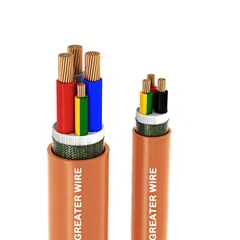
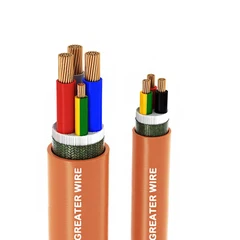

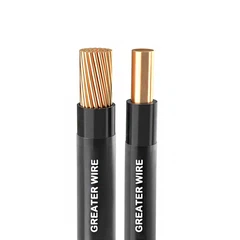
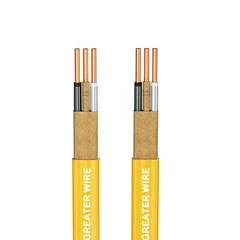
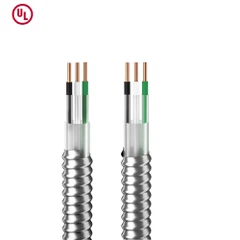
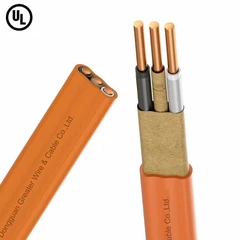
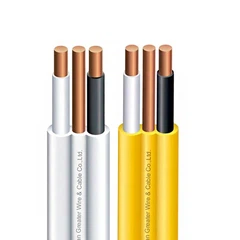

AC90 HL cable may be approved for certain hazardous locations, but that does not automatically make it suitable for installation near process equipment exposed to routine washdowns. In food processing plants, chemical facilities, pharmaceutical production areas, and other industrial environments, cables can be exposed to pressurized water, cleaning chemicals, detergents, elevated temperatures, and repeated wetting.
The key distinction is that hazardous-location approval and washdown suitability address different risks. An HL marking relates to the cable's approved use in specified hazardous locations. It does not, by itself, establish that the finished cable can withstand water exposure, chemical cleaning, or high-pressure washdown.
For contractors and procurement teams, the correct decision depends on the cable's complete construction and environmental ratings, the equipment's location classification, and the applicable electrical installation code. This article explains how to assess these factors before specifying AC90 HL cable near washdown areas.


1. Why Washdown Conditions Matter for Cable Selection
A process-equipment washdown is not simply an ordinary damp environment. Depending on the facility, it may involve:
High-pressure water jets directed at equipment and nearby surfaces.
Hot water or steam cleaning.
Alkaline or acidic detergents.
Disinfectants and sanitizing chemicals.
Repeated wetting and drying cycles.
Water pooling around floors, supports, and cable entries.
These conditions can affect cable jackets, terminations, connectors, and electrical enclosures.
A cable that is suitable for a dry industrial installation may not be suitable where water is regularly sprayed onto the cable. Similarly, a cable with a 90°C conductor insulation rating is not automatically approved for wet locations or washdown exposure.
For this reason, engineers should assess the actual exposure rather than relying on the cable's temperature rating or HL marking.
Hazardous-location approval is not washdown approval
The HL designation addresses the cable's suitability for specified hazardous-location applications under the applicable certification requirements. It does not independently establish resistance to:
Continuous moisture exposure.
Direct water spray.
High-pressure cleaning.
Hot-water washdown.
Chemical detergents or disinfectants.
These are separate product and installation considerations. A cable can have hazardous-location certification while remaining limited to dry-location use.
For GERITEL WIRE's published AC90-HL product information, the stated environmental rating is dry locations. Its published comparison identifies ACWU90-HL and TECK90-HL as alternatives with dry- and wet-location ratings, subject to the exact certified construction.
Greater Wire+1
2. Can AC90 HL Be Installed Near Washdown Equipment?
The answer depends on whether the cable itself is exposed to the washdown.
AC90 HL may be considered where the installation remains within its approved dry-location conditions and is adequately protected from washdown exposure. However, it should not be specified as a directly exposed washdown cable if its certified product documentation only permits dry locations.
Consider these examples:
|
Installation situation |
AC90 HL suitability |
|---|---|
|
Cable routed above equipment, outside the washdown spray area, in a dry environment |
Potentially suitable, subject to code and certification |
|
Cable installed behind a suitable protective barrier that prevents water exposure |
Potentially suitable, if the resulting installation remains within its approved conditions |
|
Cable directly exposed to routine water spray |
Not suitable if the specific product is dry-location rated only |
|
Cable exposed to hot-water or high-pressure washdown |
Do not assume suitability; a wet-location rating alone may not establish resistance to this cleaning method |
|
Cable exposed to chemical detergents or disinfectants |
Requires documented material compatibility and environmental approval |
|
Cable installed in an area that is both hazardous and routinely washed down |
Requires both hazardous-location approval and suitable wet/chemical exposure ratings |
The distinction between near process equipment and exposed to process cleaning is important. A cable routed near a washdown station may remain dry if it is outside the spray envelope. A cable mounted directly on a machine frame may receive repeated water and chemical exposure even if it is not part of the equipment itself.
The design should account for actual cleaning procedures, not just the nominal location of the cable.
3. Why a 90°C Rating Does Not Mean Washdown Suitability
One of the most common specification errors is treating the cable's 90°C rating as proof that it can withstand demanding cleaning conditions.
The 90°C rating generally refers to the maximum permitted operating temperature of the insulated conductors under specified conditions. It does not describe the complete cable's resistance to water, cleaning chemicals, pressure, or repeated thermal cycling.
For example, a cable may use XLPE insulation rated for 90°C, but its overall construction may not have an outer protective jacket designed for wet-location exposure.
The following properties must be considered separately:
|
Cable characteristic |
What it tells you |
What it does not automatically prove |
|---|---|---|
|
90°C conductor rating |
Permitted conductor operating temperature under specified conditions |
Wet-location or washdown suitability |
|
HL marking |
Approval for specified hazardous-location applications |
Resistance to water or cleaning chemicals |
|
XLPE insulation |
Electrical insulation material and its specified performance |
Compatibility of the entire cable assembly with washdown |
|
Interlocked metal armour |
Mechanical protection and cable construction |
Waterproof performance |
|
PVC outer jacket |
An additional protective layer |
Resistance to every detergent, chemical, temperature, or pressure |
|
Wet-location rating |
Suitability for permitted wet-location applications |
Suitability for every high-pressure or chemical washdown process |
A cable's environmental rating must be confirmed from its exact certification and manufacturer's datasheet. Do not infer it from an individual material or component.
4. AC90 HL vs. ACWU90 HL vs. TECK90 HL Near Washdown Areas
When a project requires hazardous-location cable near process equipment, engineers may need to compare different armoured cable constructions.
The following comparison reflects GERITEL WIRE's published product information. Other manufacturers may have different certified constructions and ratings, so the exact model must always be checked.
China CSA AC90 BX Cable Aluminum Conductor PVC Or XLPE/AIA 600V Manufacturers Suppliers Factory
China CSA ACWU90 Cable 4 conductor 600V AIA Flame Retardant Manufacturers Suppliers Factory - Customized CSA ACWU90 Cable 4 conductor 600V AIA Flame Retardant Made in China
TECK-90 Type Interlocked Armor Control Cables 600 Volts OnBasic Wire and Cable
600V 14/2 12/2 14/3 AWG Aluminum Interlocked Armoured AC90 AC 90 Electric Cable Building Wire - AC90 Cable and Aluminum Interlocked Armoured Wire
China ACWU90 Cable XLPE Insulation AIA Flame-Retardant PVC 600V Manufacturers Suppliers Factory
Teck 6/3c 1kv - 1000V #6 AWG 3c Teck90 Armoured Cable, Black - Teck90 Armored Cable and Teck90 Cable
PPT - Conductors, Cables, and Raceways PowerPoint Presentation, free download - ID:1617229
|
Feature |
AC90 HL |
ACWU90 HL |
TECK90 HL |
|---|---|---|---|
|
Basic construction |
Interlocked armour, without overall PVC outer jacket |
Interlocked armour with PVC outer jacket |
Layered industrial construction with inner jacket and optional outer jacket, depending on model |
|
Published environmental rating in GERITEL WIRE product comparison |
Dry |
Dry and wet |
Dry and wet |
|
Hazardous-location certification |
Yes, within certified scope |
Yes, within certified scope |
Yes, within certified scope |
|
General consideration near washdown |
Requires protection from direct wet exposure |
More suitable where wet-location rating is required |
May be suitable where its exact wet-location rating and construction meet project needs |
|
Chemical compatibility |
Must be verified |
Must be verified |
Must be verified |
Greater Wire+1
AC90 HL: For suitable dry-location installations
AC90 HL has an interlocked metallic armour construction without the overall PVC jacket found on ACWU90 HL.
This makes it an option for specified dry hazardous-location installations, but it is not the default choice for cables that will be repeatedly sprayed with water.
If the route passes close to washdown equipment, the engineering team should consider whether the cable can be routed outside the cleaning area or protected by an appropriate installation arrangement.
ACWU90 HL: A potential choice for wet-location requirements
ACWU90 HL includes an overall PVC jacket over its interlocked armour.
GERITEL WIRE's published product information identifies its ACWU90 HL as suitable for dry and wet locations. This makes it a more relevant candidate where a project requires both hazardous-location certification and a wet-location-rated armoured cable.
Greater Wire+1
However, a wet-location rating should not be interpreted as unlimited washdown resistance.
Before selecting ACWU90 HL for a process area, verify:
Whether the cable is exposed to direct water jets.
Whether hot water or steam is used.
Whether cleaning chemicals contact the jacket.
Whether the jacket's chemical compatibility is documented.
Whether the cable glands and enclosures have suitable ratings.
TECK90 HL: Consider the complete construction
TECK90 HL is another armoured cable option for industrial applications.
Its inner-jacket and armour construction, together with any optional outer jacket, may make it suitable for certain demanding installations. However, the product's actual environmental rating, certification, and chemical compatibility must be confirmed for the exact configuration.
Do not assume that every TECK90 HL cable has the same jacket arrangement or washdown performance.

5. What About Cleaning Chemicals and Hot Water?
Water resistance is only one part of the problem. Process-equipment washdowns often involve chemicals that can affect cable materials over time.
For example:
Alkaline cleaners: May attack certain polymers depending on concentration, temperature, and exposure duration.
Acidic cleaners: May cause deterioration or corrosion of exposed materials.
Chlorine-based disinfectants: Can affect some cable jacket compounds and metallic components.
Sanitizers: May contain oxidizing agents or other chemicals requiring specific material compatibility checks.
Hot water: Can accelerate material ageing, especially when combined with chemical exposure.
A PVC jacket should not automatically be assumed resistant to every cleaning agent. Likewise, a cable that passes a wet-location requirement may still be unsuitable for a particular chemical cleaning process.
Before approving a cable, obtain the cleaning chemical's safety data sheet (SDS) and identify:
Chemical name and concentration.
Normal and maximum cleaning temperature.
Contact duration.
Frequency of cleaning.
Whether the cable is directly sprayed or only exposed to airborne moisture.
Whether the cable is rinsed after chemical application.
Then request written compatibility information from the cable manufacturer.
If the manufacturer cannot confirm compatibility, the engineering team should consider an alternative cable construction or reroute the cable outside the chemical exposure area.
6. Cable Glands and Enclosures Must Also Withstand Washdown
Selecting a wet-location cable does not automatically make the complete electrical installation suitable for washdown.
The cable gland, junction box, equipment enclosure, connectors, and entry seals all need to be considered.
The What Why and How of Hygienic Design
blog.rittal.us
Cable gland selection
The gland must be suitable for:
The cable's exact outside diameter.
Its armour construction.
The enclosure entry thread.
The required hazardous-location protection method.
The expected water exposure.
The applicable chemical and temperature conditions.
Where the installation is in a classified hazardous location, the gland must also be compatible with the enclosure's certification and the hazardous-area requirements.
A standard waterproof gland is not automatically an approved hazardous-location gland. Similarly, a hazardous-location gland is not automatically suitable for high-pressure washdown.
Enclosure protection
The enclosure's ingress protection rating should be selected according to the actual exposure.
For example, IP66 and IP69 ratings describe different levels and test conditions of protection against water ingress. They should not be treated as interchangeable or as a blanket guarantee for every cleaning method.
Where equipment is exposed to high-pressure, high-temperature washdown, the project specification should identify the required enclosure protection and confirm that the complete cable-entry arrangement maintains it.
Armour bonding and corrosion
Metallic armour and bonding components also need attention in washdown areas.
Repeated exposure to water and cleaning chemicals may contribute to corrosion, particularly where dissimilar metals or damaged protective surfaces are present.
The installer should verify:
Correct armour termination.
Bonding continuity.
Compatibility of metallic gland and enclosure materials.
Protection of exposed bonding connections.
Manufacturer-recommended installation and maintenance procedures.
The bonding arrangement must satisfy the applicable electrical code even when corrosion-resistant materials are selected.

7. What Canadian Standards and Electrical Codes Should You Check?
For Canadian projects, cable selection should be reviewed against both the applicable product standards and the Canadian Electrical Code.
These documents serve different purposes.
|
Standard or code |
Main purpose |
Relevance to washdown installations |
|---|---|---|
|
CSA C22.2 No. 51 |
Product requirements for armoured cables, including AC90 and ACWU90 |
Defines requirements for the applicable cable construction |
|
CSA C22.2 No. 174 |
Cables and cable glands for hazardous locations |
Relevant to HL cable and associated hazardous-location cable-entry components |
|
CSA C22.1 |
Canadian Electrical Code, Part I |
Governs permitted wiring methods and installation conditions |
|
Manufacturer's datasheet and certification record |
Defines the actual certified product configuration and ratings |
Confirms whether the selected cable is rated for dry or wet locations and any additional conditions |
CSA C22.2 No. 51 covers armoured cable constructions with and without an overall jacket, including AC90 and ACWU90. The standard's product requirements should be considered together with the cable's actual certified construction and application markings.
webstore.ansi.org
The 2024 Canadian Electrical Code includes Table 19, which identifies permitted applications for different cable types. GERITEL WIRE's technical discussion of the table identifies ACWU90 as suitable for dry, damp, and wet locations, subject to the applicable rules and product requirements.
Greater Wire+1
For hazardous locations, the applicable requirements of Section 18 or Annex J must also be considered, depending on whether the project uses the Zone or Class/Division classification system.
An important distinction: Product certification does not replace installation-code compliance. A cable may be certified for a wet location, but the installation still needs suitable connectors, enclosures, support, bonding, and protection.
The applicable CEC edition and local amendments must be confirmed for the project jurisdiction. The authority having jurisdiction (AHJ) has the final role in determining acceptance.
8. Practical Installation Strategies for Washdown Areas
If AC90 HL is specified for a hazardous-location project near process equipment, the design team can consider several practical approaches.
Strategy 1: Route the cable outside the washdown zone
Where possible, install the cable away from direct spray paths, cleaning stations, and areas where water accumulates.
This can reduce exposure and may allow the use of a dry-location-rated cable where the complete installation conditions permit it.
However, cable routing should be based on the actual cleaning procedure and area classification, not simply the distance from the process equipment.
Strategy 2: Use a suitable protective arrangement
Where rerouting is not practical, an appropriately rated protective enclosure, raceway, or other approved wiring arrangement may help prevent direct water exposure.
The protective arrangement must itself be suitable for the hazardous location and environmental conditions. It must not create unapproved modifications to the cable's installation method.
Strategy 3: Select a wet-location-rated HL cable
If the cable will be exposed to regular water contact, a wet-location-rated hazardous-location cable may be more appropriate.
ACWU90 HL or TECK90 HL may be candidates, depending on the certified construction, project requirements, and manufacturer documentation.
Strategy 4: Specify chemical compatibility
Where cleaning agents are used, include the chemical exposure conditions in the cable specification.
A generic requirement such as "PVC jacket" is not sufficient to establish resistance to a particular chemical cleaning process.
Strategy 5: Coordinate cable and equipment suppliers
Cable, gland, enclosure, and process-equipment suppliers should review the installation as a complete system.
This is especially important when hazardous-area certification and hygienic washdown requirements apply to the same location.


9. Procurement Checklist: AC90 HL Near Process Equipment
Before ordering cable for a washdown-area project, contractors and procurement teams should confirm the following:
Is the cable installed inside or outside the direct washdown area?
Is the location classified as hazardous?
Does the cable have the required HL certification for that classification?
Is the exact cable model approved for dry or wet locations?
Is the cable exposed to direct water spray?
Are high-pressure or high-temperature cleaning methods used?
Which detergents, disinfectants, or chemicals contact the cable?
Has the manufacturer confirmed jacket compatibility with those chemicals?
Are cable glands suitable for both the hazardous location and the washdown exposure?
Do enclosures and cable entries provide the required ingress protection?
Are armour bonding and corrosion protection addressed?
Are the installation method and accessories permitted by the applicable electrical code?
Are certification documents and technical datasheets available for review?
For distributors and purchasing professionals, requesting the cable datasheet, certification information, and gland requirements before placing an order can help prevent costly substitutions and installation delays.
Conclusion
AC90 HL cable can be used near process equipment with washdowns only when its actual installation remains within the cable's approved environmental conditions. Hazardous-location certification does not automatically establish wet-location, high-pressure washdown, or chemical-resistance suitability.
For GERITEL WIRE's published product range, AC90 HL is identified for dry locations, while ACWU90 HL and TECK90 HL are identified as dry- and wet-location options within their applicable certified constructions. Even so, a wet-location rating alone does not guarantee compatibility with every cleaning chemical, water temperature, or spray pressure.
The correct specification should consider hazardous-area classification, cable construction, environmental exposure, chemical compatibility, glands, enclosures, and local code requirements together. This approach helps industrial project teams select cable systems that are both compliant and appropriate for real operating conditions.
GERITEL WIRE: Armoured Cable Solutions for Demanding Industrial Environments
GERITEL WIRE, a brand of Dongguan Greater Wire & Cable Co., Ltd., provides CSA-certified armoured cable solutions for Canadian industrial and hazardous-location applications. Our product portfolio includes AC90 HL, ACWU90 HL, and TECK90 HL, giving customers options for different cable construction and environmental requirements. For projects near process equipment, washdown stations, or other demanding operating areas, selecting the correct cable requires careful review of location ratings, jacket construction, chemical exposure, and certification scope. Contact GERITEL WIRE to discuss your cable specifications, request technical documentation, and evaluate suitable products for your industrial project.
Dongguan Greater Wire & Cable Co., Ltd.
Tel/WhatsApp/Wechat: +86 136 6257 9592
Tel/WhatsApp/Wechat: +86 135 1078 4550
Email: manager01@greaterwire.com
Website: www.greaterwire.com