

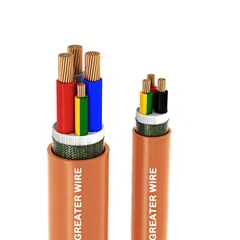
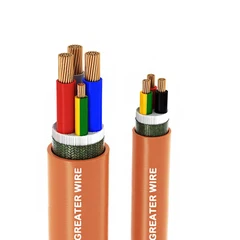

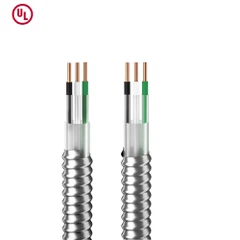
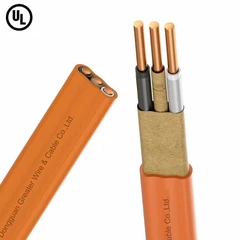
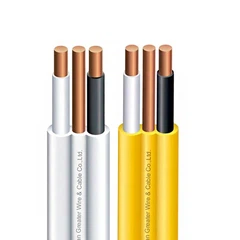

An AC90 HL cable may have the required hazardous-location certification, but that does not automatically make every cable gland suitable for its installation. In a hazardous industrial area, the cable gland is a critical part of the wiring system because it connects the cable to an electrical enclosure while maintaining the required mechanical, environmental, and hazardous-location protection.
What happens if the gland is not listed or certified for the location? The installation may fail inspection, fall outside the equipment's certification conditions, or lose an essential part of its explosion-protection or ingress-protection arrangement. In more serious cases, an unsuitable cable entry can contribute to ignition risks or allow moisture, dust, or corrosive substances to enter electrical equipment.
This guide explains the consequences of using an unsuitable cable gland with AC90 HL cable, how to verify gland suitability, and what electrical contractors, engineers, distributors, and procurement teams should check before installation.


1. What Does "Listed for the Location" Mean?
The phrase "listed for the location" is commonly used in North American procurement, but Canadian electrical codes generally use the term approved.
Under the 2024 Canadian Electrical Code (CEC), approval normally means that electrical equipment is certified to an applicable product standard by an accepted certification organization. Where appropriate, approval may also be established through an accepted field-evaluation process. Therefore, a buyer should not look only for a particular certification logo: the certification scope and the equipment's permitted application must also be verified.
philtech.ca
For an AC90 HL cable installation, the cable and the cable gland have separate approval requirements.
AC90 HL cable: Its HL marking indicates that the cable meets the applicable Canadian hazardous-location cable requirements.
Cable gland: It must be suitable for the hazardous-area classification, the enclosure's protection method, the cable construction, and the installation conditions.
Enclosure: Its certification and protection method determine what type of cable entry is acceptable.
CSA C22.2 No. 174-18 (R2022), Cables and Cable Glands for Use in Hazardous Locations, covers hazardous-location cables and cable glands for Class I, Division 1 and Class II, Division 1 applications. It also clarifies that Division 2 gland requirements are determined by the equipment to which the gland is connected.
Intertek Inform
This last point is particularly important: not every hazardous-location cable entry requires a gland carrying the same classification marking. The required gland depends on the complete installation.
2. What Can Happen If the Cable Gland Is Not Suitable?
An unsuitable gland can create several different problems. Some are immediately visible during inspection; others affect the protection of the electrical installation.
An unseen ignition risk in hazardous areas - Inlex
inlex.au
2.1 The installation may fail inspection
If the gland does not meet the applicable code requirements or falls outside the enclosure's certification conditions, the electrical installation may be rejected by the inspector or authority having jurisdiction (AHJ).
For example, a standard industrial cable gland cannot automatically replace a hazardous-location gland where the installation requires an explosion seal or a specific protection method.
The result may include:
Removal and replacement of the gland.
Re-termination of the AC90 HL cable.
Reinspection of the enclosure entry.
Additional labour and material costs.
Delays to commissioning or project handover.
A cable carrying a valid HL marking does not compensate for an unsuitable termination accessory.
2.2 The enclosure's explosion protection may be compromised
An explosion-protected enclosure is evaluated as a complete assembly, including its permitted cable-entry arrangements.
If the gland is not suitable for the enclosure's protection method, the entry may no longer maintain the required explosion-protection characteristics.
For example, a gland intended for ordinary industrial use should not be substituted for a gland required to maintain an explosion-proof or flameproof enclosure entry.
The CEC's explanatory notes specifically distinguish between explosion-proof, flameproof, and increased-safety enclosures, each of which has different cable-entry requirements.
philtech.ca+1
This does not mean that an unsuitable gland will inevitably cause an explosion. It means that the approved protection arrangement cannot be assumed to remain effective.
2.3 Dust and moisture may enter the enclosure
A gland must also maintain the required degree of ingress protection.
If the gland's sealing range does not match the cable diameter, or if the correct sealing washer or other specified component is missing, the enclosure entry may allow water, dust, or other contaminants to enter.
Potential consequences include:
Corrosion of terminals and electrical connections.
Insulation deterioration.
Electrical tracking or short circuits.
Damage to sensitive control equipment.
Reduced reliability of the installation.
An IP rating alone does not establish hazardous-location suitability. The gland must satisfy both the required environmental protection and the applicable hazardous-area protection method.
philtech.ca+1
2.4 Cable retention and armour bonding may be affected
A cable gland also performs mechanical functions. It secures the cable, provides strain relief, and may form part of the armour bonding arrangement.
An unsuitable gland can result in:
Insufficient cable grip.
Cable movement or pullout.
Excessive mechanical stress at the termination.
Incorrect armour preparation.
Loss of reliable electrical continuity.
The CEC requires cables in relevant hazardous-location wiring methods to be installed and supported so that tensile stress is not imposed on the cable glands.
philtech.ca+1
The gland must therefore be selected for more than its thread size or appearance.
3. Why the Enclosure's Protection Method Determines Gland Selection
A common procurement mistake is to choose a cable gland based only on the hazardous-area classification shown on the drawing.
The enclosure's protection method is equally important.
For example, two enclosures installed in the same classified area may have different protection concepts and therefore require different cable-entry arrangements.
Zone 1 installations
Under CEC Rule 18-102, Zone 1 wiring methods may include hazardous-location cables with associated cable glands suitable for the application.
The rule also specifies how entries into increased-safety "e" enclosures must maintain both the Ex e protection and the enclosure's degree of protection. Acceptable entry arrangements include:
Increased-safety "e" conduit hubs.
Increased-safety "e" cable glands.
Cable glands suitable for use as an explosion seal.
Where a gland enters an increased-safety enclosure through a clearance hole, an O-ring, sealing washer, or sealing locknut is required to maintain the degree of protection.
philtech.ca
Zone 2 installations
Zone 2 does not mean that any ordinary cable gland is acceptable.
CEC Rule 18-152(5) requires cable glands to be compatible with the degree of protection and explosion protection provided by the enclosure they enter, where required by the area classification and environmental conditions.
For example:
A cable entering an enclosure that must be explosion-proof or flameproof still needs an entry arrangement compatible with that protection.
An enclosure that is not required to be explosion-proof or flameproof may permit an ordinary-location gland, subject to the applicable code and environmental requirements.
The enclosure's certification and the actual installation conditions must be checked before making this decision.
philtech.ca+1
Class I, Division 1 installations
For projects using the Class/Division system, CEC Annex J provides additional requirements.
The 2024 CEC explanatory notes state that an explosion-proof enclosure requires a Class I, Division 1 cable gland. A flameproof "d" or "db" enclosure may use either a Class I, Division 1 gland or a suitable flameproof gland.
These are not interchangeable protection methods. The gland must match the enclosure and its certification conditions.

4. Does Every AC90 HL Installation Need a Class I, Division 1 Gland?
No. This is an important distinction for procurement teams.
The required gland depends on the hazardous-area classification, the enclosure's protection method, and the applicable code.
CSA C22.2 No. 174-18 covers glands for Class I, Division 1 and Class II, Division 1 hazardous locations. Its scope does not separately establish a universal Division 2 gland requirement. Instead, the gland requirements for Division 2 depend on the equipment to which the gland is connected.
Intertek Inform
Consider three simplified examples:
|
Installation situation |
Gland selection principle |
|---|---|
|
Class I, Division 1, explosion-proof enclosure |
Use a suitable Class I, Division 1 cable gland and required sealing arrangement |
|
Class I, Division 2, enclosure that must be explosion-proof |
The entry may still require a Class I, Division 1 gland |
|
Class I, Division 2, enclosure not required to be explosion-proof or flameproof |
An ordinary-location gland may be permitted when the applicable code and environmental conditions allow it |
The examples illustrate why the enclosure cannot be ignored. A Division 2 location does not automatically mean that a Division 2-rated gland is the correct choice.
The same principle applies to Zone installations: a Zone 2 location may still contain equipment whose protection method imposes more demanding entry requirements.
5. Common Cable Gland Selection Mistakes
The following mistakes frequently create problems during hazardous-location installation and inspection.
|
Mistake |
Why it is a problem |
|---|---|
|
Choosing an ordinary industrial gland because the cable is HL-marked |
Cable certification does not certify the gland |
|
Matching only the gland thread size |
Thread compatibility does not establish hazardous-location approval |
|
Selecting a gland with an incompatible protection concept |
The enclosure's protection method may not be maintained |
|
Ignoring cable outside diameter |
The cable may fall outside the gland's certified sealing or clamping range |
|
Using an ordinary gland on an explosion-proof enclosure |
The required explosion-protection arrangement may be compromised |
|
Assuming IP66 or IP68 means explosion-proof |
Ingress protection and explosion protection are different |
|
Using an unapproved adapter or reducer |
The entry arrangement may fall outside the enclosure or gland certification |
|
Leaving unused entries inadequately closed |
An unsuitable stopping plug can compromise enclosure protection |
|
Ignoring armour bonding |
The required electrical continuity may not be maintained |
|
Failing to support the cable |
Cable weight and tensile forces may damage the termination |
Thread compatibility deserves particular attention. Metric and NPT threads are not interchangeable simply because they appear to fit. Any adapter must be suitable for the equipment entry and permitted by the applicable certification and installation requirements.
CESP+1
6. How to Verify That an AC90 HL Cable Gland Is Suitable
Before approving a gland for purchase, engineering and procurement teams should verify the complete cable-entry arrangement.
ADE-4F - Armored Metal ex Cable Gland Eaton Capri - Lavitek - LAVITEK CO.,LTD
lavitekco.com
Step 1: Confirm the hazardous-area classification
Obtain the approved area-classification drawings and identify:
Class and Division, or Zone.
Gas or dust group.
Required equipment protection level or protection concept.
Applicable temperature requirements.
Environmental conditions.
Do not select the gland based only on a general description such as "hazardous area."
Step 2: Identify the enclosure's protection method
Check the enclosure nameplate, certificate, and manufacturer's installation instructions.
Determine whether the enclosure uses:
Explosion-proof protection.
Flameproof "d" or "db" protection.
Increased-safety "e" or "eb" protection.
Another approved protection method.
The gland must be compatible with the actual enclosure entry and its protection method.
Step 3: Check the gland certification
Request the gland manufacturer's technical documentation and verify:
Certification organization and certificate number.
Applicable standards.
Hazardous-area markings.
Gas or dust group coverage, where relevant.
Permitted temperature range.
Cable construction and diameter range.
Any special conditions of use.
A certification logo alone is not enough. The product model and the actual installation must fall within the certification scope.
Step 4: Match the gland to the AC90 HL cable construction
Confirm:
Cable outside diameter.
Armour type and dimensions.
Cable bedding or inner sheath dimensions, if relevant to the gland design.
Cable material and construction.
Required armour clamping and bonding arrangement.
Manufacturer's cable preparation instructions.
A gland intended for a different armoured cable construction may not provide the required grip, sealing, or armour termination.
Step 5: Verify the enclosure entry and accessories
Check:
Thread form and size.
Thread engagement.
Approved adapters or reducers, if needed.
Sealing washers or O-rings.
Barrier compounds or other sealing components where required.
Suitable stopping plugs for unused entries.
Do not substitute ordinary bolts, general-purpose sealant, or improvised accessories for approved hazardous-location components.
Step 6: Review the complete installation instructions
The final installation must follow the gland and enclosure manufacturers' instructions, including cable preparation, tightening, sealing, bonding, and support requirements.
The certification of an individual component does not automatically approve every combination of cable, gland, adapter, and enclosure.

7. What Should Contractors Do If an Unsuitable Gland Has Already Been Installed?
If an inspection identifies a gland that is not approved or suitable for the installation, contractors should not simply add sealant or tighten the existing fitting.
A controlled corrective process is more appropriate:
Stop and assess the installation. Have a qualified electrical professional determine whether the gland is suitable for the classification and enclosure.
Check the certification documents. Confirm whether the installed gland is outside its approved application or whether the documentation is incomplete.
Identify the correct replacement. Select a gland compatible with the AC90 HL cable, enclosure, protection method, and environmental conditions.
Inspect the cable end. Check for damaged armour, insulation, or outer surfaces that could affect the replacement termination.
Replace and re-terminate correctly. Follow the manufacturer's cable preparation and installation instructions.
Verify the completed entry. Check sealing, mechanical retention, bonding continuity, enclosure integrity, and required markings.
Document the corrective work. Keep the replacement product details, certification evidence, inspection records, and any required test results.
If the cable has been damaged during the original termination, replacing only the gland may not be sufficient. The affected cable section and termination must also be assessed.
Do not energize an installation that has an unresolved hazardous-location compliance defect. The responsible electrical professional and AHJ should determine the necessary corrective action.
8. What International Buyers Need to Consider
A cable gland approved for a Canadian hazardous-location installation is not automatically approved for every international project.
Different markets use different certification and installation frameworks.
|
Market |
Relevant framework |
What to verify |
|---|---|---|
|
Canada |
CSA C22.1 and CSA C22.2 No. 174 |
Canadian approval, classification, enclosure protection, and gland suitability |
|
United States |
NEC and applicable UL standards |
Required listing or certification for the classified location and equipment |
|
Europe |
ATEX and applicable EN standards |
Equipment category, protection concept, and cable-entry certification |
|
IECEx markets |
IEC 60079 series |
Ex protection method, equipment protection level, and certificate scope |
|
Australia and New Zealand |
Applicable AS/NZS requirements |
Local approval, hazardous-area classification, and installation requirements |
For example, an IECEx-certified Ex d gland should not automatically be assumed to satisfy every Canadian or US installation requirement. Likewise, a Canadian-approved hazardous-location gland does not automatically establish ATEX conformity.
The project specification should clearly identify the destination market and required certification system.
9. AC90 HL Cable Gland Procurement Checklist
Use the following checklist before placing an order or approving a cable-entry assembly.
Confirm the hazardous-area classification from approved project drawings.
Identify the enclosure's protection method and certification.
Verify the gland's approval for the intended location and application.
Check the applicable certification standard and certificate scope.
Confirm the gland matches the AC90 HL cable construction and outside diameter.
Verify thread type, size, and permitted adapters.
Check the required explosion seal or other sealing arrangement.
Confirm the gland maintains the enclosure's required ingress protection.
Verify armour termination and bonding requirements.
Check temperature, corrosion, moisture, and chemical exposure.
Confirm that unused entries have suitable approved stopping plugs.
Obtain the gland datasheet, installation instructions, and certification documents.
Include inspection and documentation requirements in the project specification.
For distributors and purchasing professionals, it is useful to request the cable and gland documentation together. This allows the engineering team to review the compatibility of the complete entry arrangement before materials arrive on site.
Conclusion
Using a cable gland that is not approved or suitable for the hazardous location can create more than an inspection problem. It may compromise the enclosure's explosion-protection method, reduce environmental sealing, affect cable retention, or interrupt the required armour bonding arrangement.
For AC90 HL systems, the cable's HL certification and the gland's approval must be evaluated separately. The correct gland depends on the hazardous-area classification, enclosure protection method, cable construction, and applicable installation code.
The safest procurement approach is to verify the complete cable-entry assembly-not just the cable marking or gland dimensions-before installation. This helps contractors avoid rework, supports inspection approval, and protects the integrity of hazardous-location electrical systems.
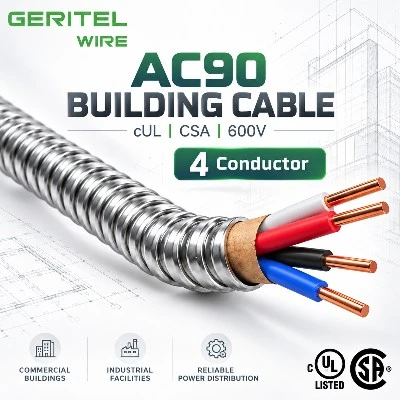

GERITEL WIRE: AC90 HL Cable Solutions for Hazardous-Location Projects
GERITEL WIRE, a brand of Dongguan Greater Wire & Cable Co., Ltd., supplies armoured cable solutions for industrial and hazardous-location electrical applications. Our product portfolio includes AC90 HL, ACWU90 HL, and TECK90 HL cable options for projects requiring Canadian-standard specifications. We understand that reliable installations depend on more than cable selection: certification, cable construction, environmental ratings, and compatible termination accessories all need careful consideration. Whether you are an electrical distributor, engineering contractor, or equipment manufacturer, contact GERITEL WIRE to discuss your project requirements and request relevant product documentation for your next cable procurement project.
Dongguan Greater Wire & Cable Co., Ltd.
Tel/WhatsApp/Wechat: +86 136 6257 9592
Tel/WhatsApp/Wechat: +86 135 1078 4550
Email: manager01@greaterwire.com
Website: www.greaterwire.com