

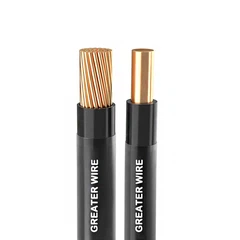

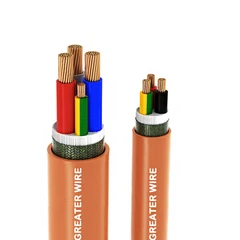
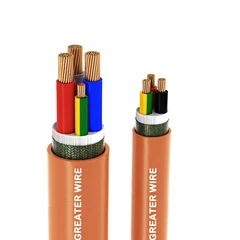
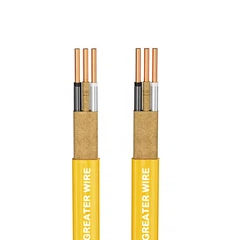
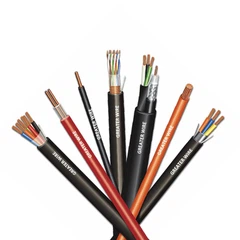
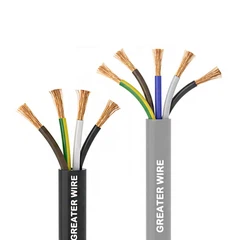
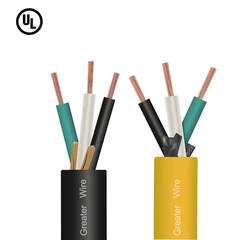
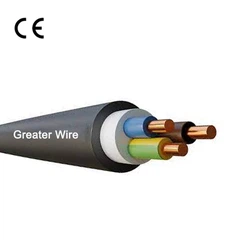
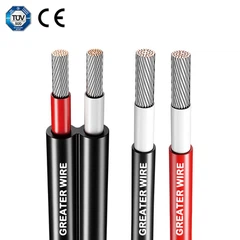

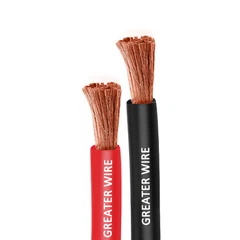
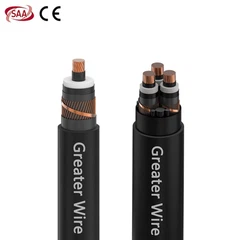
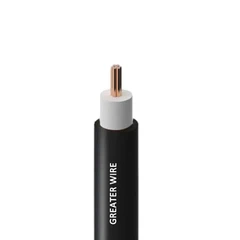
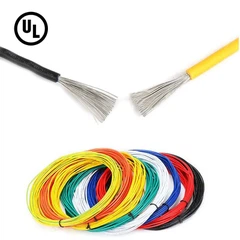
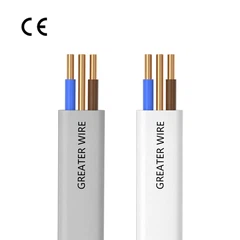
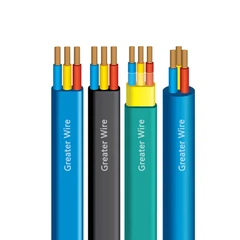
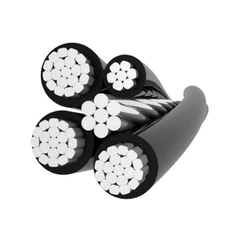
When you switch on the air conditioner in your office, light up your factory, or start a motor, you might never notice that seemingly ordinary cable quietly carrying electricity from the power source to the load, ensuring system stability.
If I ask you today, "What exactly does AC Cable stand for? What makes it different from regular cables?" you might not know the answer right away. That's why this article will take you step by step to explore the true meaning, structure, performance, and future trends of AC Cables-not only helping you understand the technology behind them but also empowering you to make informed purchasing decisions.
At the end of this article, we will also introduce our company's advantages in AC Cable products, showing why we are your ideal choice for your next cable procurement.
Understanding the Meaning of AC Cable
- "AC" stands for Alternating Current.
- "Cable" refers to a wire or system designed to transmit power or signals in electrical engineering.
Together, AC Cable means a cable that transmits alternating current.
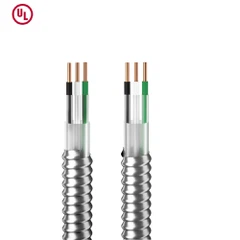
Depending on context, AC Cable may refer to a power distribution cable, a shielded or armored AC cable, or a standard AC power cord.
Difference from DC Cable:
- AC current changes direction periodically, while DC current flows in one direction.
- Differences in insulation design, interference resistance, materials, and loss control.
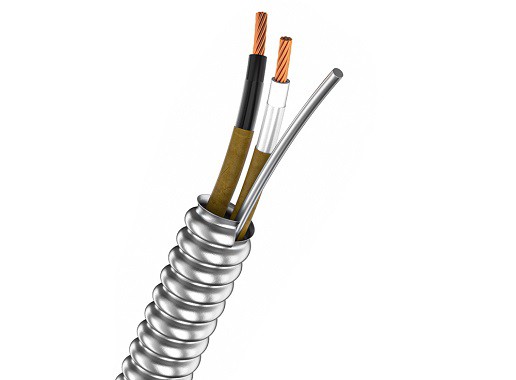
- In some standards, such as the NEC (National Electrical Code) in the U.S., Type AC Cable refers to a metal-armored cable with specific construction requirements.

Main Types of AC Cables
AC Cables can be classified by voltage, structure, or application. Here are the most common types:
By Voltage Level
- Low Voltage AC Cable (≤ 1 kV): Used in homes, offices, and small commercial buildings.
- Medium Voltage AC Cable (1 kV–35 kV): For distribution networks from substations to end-users.
- High Voltage AC Cable (≥ 36 kV): Used in power plants and long-distance transmission.
By Structure or Application
- Bare Conductor Cables: Standard AC distribution cables for fixed installation.
- Armored AC Cable / Type AC Cable: Provides mechanical protection; defined in NEC with flexible metal interlocked armor and grounding.
- Shielded AC Cable: Contains electromagnetic shielding to reduce interference and maintain stable power transmission.
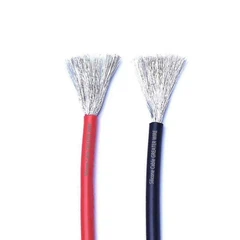
- Flexible AC Cable: For environments requiring frequent bending, such as robotic systems and electrical appliances.
- Special Materials Cables: Heat-resistant, fire-resistant, corrosion-resistant, or low-smoke, halogen-free for harsh conditions.
- AC Power Cord: Used in electronics and household appliances to connect to AC power, often including plug, insulation, and jacket.
Structure of AC Cables
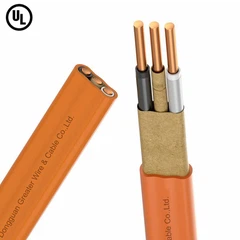
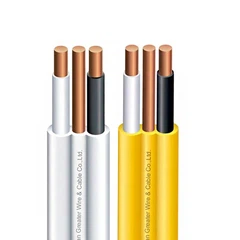
A complete AC cable typically consists of multiple layers:
| Layer | Material / Type | Function |
|---|---|---|
| Conductor | Copper or Aluminum | Core for carrying current. |
| Insulation | PVC, XLPE, EPR | Separates conductor from environment and other conductors, preventing short circuits. |
| Shielding | Metal braid, foil | Reduces electromagnetic interference (EMI). |
| Armor / Sheath | Steel, aluminum, or plastic | Provides mechanical protection and moisture resistance. |
| Outer Jacket | PVC, PE, flame-retardant materials | Protects against environment, UV, chemicals, and abrasion. |
| Ground / Bonding | Ground wire or strip | Provides safe grounding for fault currents. |
For high-voltage or medium-voltage cables, semiconductive layers, stress control layers, and partial discharge control layers may also be included to ensure uniform electric field distribution and prevent insulation stress.

Working Principle and Performance Characteristics
Working Principle
Alternating current (AC) changes direction periodically. An AC cable must carry the alternating current while handling changing electric fields, dielectric polarization, capacitance, and inductive reactance.
When powered:
- Current flows through the conductor.
- The current direction reverses periodically.
- Electric and magnetic fields form around the conductor.
- Insulation must withstand AC voltage without breakdown or partial discharge.
- Shielding, if present, reduces electromagnetic interference to the surroundings.
Performance Characteristics
- Current Carrying Capacity and Temperature Rise: Determined by conductor size, material conductivity, and current density. Overloading leads to insulation aging.
- Voltage Withstand: Insulation thickness and structure differ by voltage class. High-voltage cables use stress control layers.
- Loss Control: Resistance loss, dielectric loss, and eddy current loss are minimized through design.
- EMI Resistance: Shielding, grounding, and symmetric design reduce interference.
- Environmental Resistance: Heat, UV, moisture, chemical, and mechanical resistance ensure long-term reliability.
- Flexibility: Some cables require small bending radii and high durability for complex installation.
Typical Applications of AC Cables
AC cables are widely used in industrial, residential, and infrastructure settings:
Buildings & Residential Power
- Main power distribution in homes, offices, malls.
- Lighting, air conditioning, and socket connections.
- UPS systems, emergency generators, backup power.
Industrial Equipment
- Motors, inverters, control cabinets, production lines.
- Machinery, robotics, automation equipment.
- Harsh industrial environments (steel, mining, petrochemical).
Renewable Energy & Inverter Connections
- Wind and solar power system outputs to inverters.
- Microgrids and distributed energy AC distribution lines.
Infrastructure & Transportation
- Subways, airports, tunnels, and road lighting distribution.
- EV charging stations, port and dock power supply.
Data Centers & Critical Equipment
- Power distribution in data centers and server rooms.
- Precision equipment, monitoring systems, and backup power supplies.
Different applications require cables of specific voltage ratings, structures, and features.
Future Trends of AC Cables
Environmentally Friendly Materials
- Halogen-free, low-smoke materials for insulation and jackets.
- Recyclable and sustainable materials.
Smart & Sensing Capabilities
- Embedded temperature sensors, load monitoring, and fault detection.
- Integration with smart grids and IoT for energy optimization and maintenance alerts.
High Efficiency & Low Loss
- Conductors with lower resistance and optimized structure.
- Improved shielding design to minimize eddy current losses.
Reliability & Durability
- Special designs for extreme environments: high/low temperature, marine, chemical, and mining.
- Anti-aging, UV-resistant, waterproof, and moisture-proof materials.
Modular & Standardized Installation
- Plug-and-play modular cable interfaces reduce on-site installation complexity.
- Standardized models and certification make high-performance cables easier to adopt.
Small Cable, Big Mission
Returning to the initial question: "What Does AC Cable Stand For?" It's more than just a term-it represents the technology, materials, applications, and future of electrical systems. Every AC cable carries power, ensures system stability, and safeguards project safety.
When selecting, purchasing, designing, or installing AC cables, consider Dongguan Greater Wire & Cable Co., Ltd.
Our Advantages & Services
- Extensive experience in AC Cable across low, medium, and specialized voltage products.
- One-stop solutions for large or small projects, including design support, sample approval, bulk production, delivery, and acceptance.
- Professional pre-sales team for technical consultation and product selection.
- Comprehensive after-sales service for fast response to on-site issues.
- Custom solutions for high-temperature, fire-resistant, or smart monitoring cables.
Contact Us:
- Dongguan Greater Wire & Cable Co., Ltd.
- Tel / WhatsApp / WeChat: +86 135 1078 4550 / +86 136 6257 9592
- Email: manager01@greaterwire.com
If you are looking for expert support in AC cable selection, quotations, technical solutions, or supply, contact us today. We are ready to provide professional expertise and reliable quality for your power systems.
We look forward to collaborating with you on your next project!