

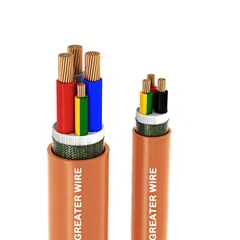
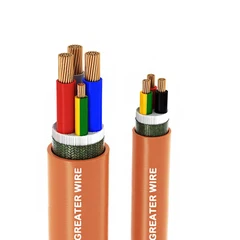

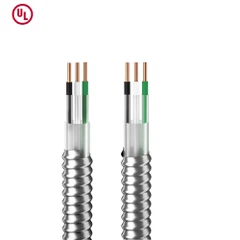
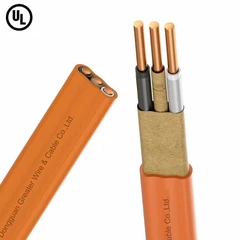

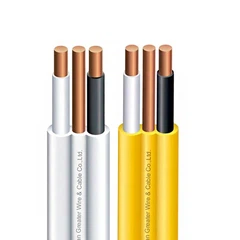
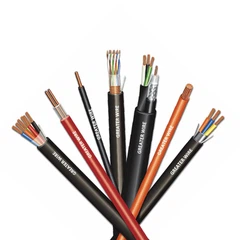

1. Introduction: Why the Difference Matters
When selecting industrial power and control cables, understanding the difference between TC-ER and TC-ER-HL is essential for electrical safety, code compliance, and long-term operating reliability. Although both cable types are associated with tray cable installations and exposed runs, they are not interchangeable in every application.
The main distinction is that TC-ER identifies tray cable approved for certain exposed-run installations, while TC-ER-HL identifies cable specifically listed for use in designated hazardous (classified) locations. The suffix "HL" is particularly important in industrial facilities where flammable gases, vapors, or other hazardous substances may be present.
For engineers, contractors, distributors, and buyers sourcing Heavy Duty Mining Cable or other industrial wiring products, understanding these differences helps match the cable to the actual installation environment instead of relying on its appearance or general description.


2. What Is TC-ER Cable?
Understanding the TC-ER Cable Definition
TC-ER stands for Tray Cable–Exposed Run.
TC (Tray Cable): A cable type intended for applications permitted by the applicable electrical code and its product listing, including installation in cable tray systems.
ER (Exposed Run): Indicates that the cable has been evaluated and marked for certain exposed wiring installations under specified conditions.
A conventional TC cable generally requires an approved wiring method and suitable physical protection according to the installation conditions. A TC-ER cable can provide additional installation flexibility because it may be permitted to leave the cable tray and run directly to utilization equipment without a separate raceway in certain applications.
However, this permission is not unlimited. The cable must have the appropriate marking, and the installation must comply with the applicable edition of the National Electrical Code (NEC), manufacturer instructions, and local requirements.
Common Applications of TC-ER Cable
TC-ER cable is commonly considered for applications such as:
Industrial power distribution and control wiring.
Connections between cable trays and stationary equipment.
Factory automation and machinery wiring.
Electrical connections to motors, control panels, and production equipment.
Industrial facilities where an approved exposed-run wiring method can simplify installation.
TC-ER does not automatically mean that a cable is suitable for every hazardous location, underground installation, or environment with severe mechanical exposure. Its actual suitability depends on the cable's certification, construction, environmental ratings, and installation conditions.
3. What Is TC-ER-HL Cable?
TC-ER-HL is a tray cable type specifically listed for use in certain hazardous (classified) locations.
The "HL" suffix identifies its hazardous-location application. Unlike ordinary TC-ER cable, TC-ER-HL is evaluated against additional requirements relevant to its intended classified-location use.
UL 1277 covers electrical power and control tray cables, while UL 2225 addresses cables and cable fittings for hazardous (classified) locations. A TC-ER-HL product must have the appropriate listing and markings for the intended application; a buyer should not assume that a standard TC-ER cable qualifies simply because it has a rugged outer jacket.
Key Characteristics of TC-ER-HL Cable
Depending on the certified product design, TC-ER-HL cable may provide:
A construction evaluated for its designated hazardous-location application.
An overall jacket suitable for the specified environment.
An equipment grounding conductor meeting applicable requirements.
Mechanical performance and construction features required by the relevant product standards.
Markings that identify the cable type and its approved application.
The exact construction, conductor sizes, voltage rating, temperature rating, and environmental capabilities vary by product. These details must be verified against the manufacturer's documentation and certification rather than inferred from the "HL" designation alone.
Where Is TC-ER-HL Used?
TC-ER-HL cable may be specified for certain industrial hazardous locations, including applicable oil and gas processing facilities, chemical plants, and other installations where the area classification and wiring method permit its use.
Its listing does not make it universally suitable for all hazardous areas. The permitted classification, gas or vapor group, installation method, fittings, grounding arrangement, and other conditions must match the project requirements and the applicable electrical code.

4. TC-ER vs. TC-ER-HL: Key Differences
The following table summarizes the principal differences between the two cable types.
| Comparison | TC-ER | TC-ER-HL |
|---|---|---|
| Main designation | Tray Cable–Exposed Run | Tray Cable–Exposed Run for designated hazardous locations |
| Primary purpose | Approved tray and exposed-run wiring applications | Approved tray and exposed-run applications that also require a hazardous-location listing |
| Hazardous-location approval | Not implied by the TC-ER marking alone | Specifically listed for designated hazardous locations |
| Applicable standards | UL 1277 where applicable to the product listing | UL 1277 and applicable hazardous-location requirements, including UL 2225 |
| Exposed-run installation | Permitted under applicable code conditions | Permitted under applicable code conditions and hazardous-location restrictions |
| Mechanical protection | Depends on product ratings and installation conditions | Depends on product ratings and installation conditions; the HL designation alone does not guarantee suitability for every mechanical hazard |
| Typical selection factor | General industrial wiring requirements | General wiring requirements plus hazardous-area classification |
| Suitable for all mining applications? | No | No; mining-specific requirements must be evaluated separately |
The most important point is that TC-ER-HL adds a specific hazardous-location qualification. It should not be treated as a universal upgrade for every industrial environment, nor should the two cable types be selected solely by comparing price or jacket thickness.
5. Understanding UL 1277 and UL 2225
What Is the UL1277 Cable Standard?
The UL1277 Cable Standard covers electrical power and control tray cables with optional optical-fiber members. It establishes requirements for the covered cable constructions and performance characteristics.
A cable carrying a UL 1277-related marking must still be checked for its actual type designation, voltage and temperature ratings, environmental markings, and listing status. The standard reference alone does not establish approval for every installation method or hazardous location.
For example, a UL1277 TC-ER Cable may be suitable for certain industrial tray and exposed-run installations. That does not automatically mean it is approved for a Class I, Division 1 location or for underground mining service.
Why Does UL 2225 Matter for TC-ER-HL?
UL 2225 addresses cables and cable fittings for use in hazardous (classified) locations. It is relevant to determining whether a product is evaluated for the specific hazardous-location application identified by its listing.
When specifying TC-ER-HL cable, buyers should check both the cable's product identification and its certification documentation. The exact approved classification and installation conditions matter more than simply seeing the letters "HL" in a quotation.
The NEC also sets installation requirements for wiring methods in classified locations. The applicable NEC edition, local amendments, and authority having jurisdiction must be considered for each project.

6. Is TC-ER-HL Cable Suitable for Mining Applications?
Mining environments can involve demanding conditions, including vibration, abrasion, impact, moisture, dust, chemicals, and restricted installation spaces. However, not every mining installation is classified as a hazardous location, and not every hazardous-location cable is suitable for mining service.
When evaluating Mining Electrical Cable, first determine where and how the cable will be installed.
Surface Mining and Processing Facilities
Surface mines and associated processing plants may use industrial tray cables for fixed power distribution, control systems, conveyors, pumps, and machinery. TC-ER or TC-ER-HL may be appropriate in particular applications if the product listing, area classification, environmental ratings, and installation method align with project requirements.
Underground Mining
An Underground Mining Cable may need to meet specific requirements for its operating environment, including mechanical protection, flame performance, moisture resistance, flexibility, and the applicable mining regulations.
TC-ER and TC-ER-HL are not generic designations for underground mining cables. Their markings alone do not establish suitability for mine shafts, mobile mining equipment, trailing applications, direct burial, or other underground uses.
Before approving a cable for underground service, verify the relevant mining regulations, required certifications, voltage and current ratings, mechanical properties, and installation conditions. Depending on the jurisdiction and application, a purpose-designed mining cable may be necessary.
Heavy-Duty Requirements Beyond the HL Marking
For buyers sourcing Heavy Duty Mining Cable, the selection process should go beyond the cable type designation. Consider:
Mechanical resistance: Will the cable face crushing, impact, abrasion, or repeated movement?
Environmental exposure: Is it exposed to water, oil, chemicals, sunlight, or extreme temperatures?
Electrical requirements: What are the operating voltage, load current, conductor size, and grounding requirements?
Flame and safety requirements: Which fire-performance tests and mining approvals are required by the project?
Installation method: Will the cable be installed in a tray, conduit, fixed support system, mobile equipment, or underground route?
Regulatory compliance: Which national, regional, and site-specific rules govern the installation?
The correct cable is the one that meets the complete set of application requirements, not simply the one with the most demanding-sounding designation.
7. How to Choose Between TC-ER and TC-ER-HL
A practical selection process helps reduce specification errors and unnecessary costs.
Step 1: Determine the Area Classification
Ask whether the installation is in an ordinary industrial location or a hazardous (classified) area. If it is classified, confirm the exact classification with the project's electrical documentation and qualified design personnel.
Step 2: Verify the Cable Listing
Check the product marking and certification records. If the application requires TC-ER-HL, an ordinary TC-ER marking is not a substitute.
Step 3: Confirm the Installation Method
Determine whether the cable will remain in a tray, leave the tray for an exposed run, enter equipment, or use another wiring method. Confirm that the selected cable and its fittings are approved for the complete installation.
Step 4: Evaluate Environmental and Mechanical Conditions
Review temperature, moisture, chemical exposure, sunlight, impact, crushing, vibration, and other relevant conditions. Do not assume that HL marking alone confirms suitability for all these hazards.
Step 5: Check Local Codes and Project Specifications
The NEC and UL standards are important references in North American projects, but requirements vary by jurisdiction and application. Mining projects may also be subject to additional regulations and certification requirements.
If the cable will be used outside North America, do not assume that a UL listing alone satisfies local requirements. Verify the applicable national standards and project approvals.
8. Common Mistakes to Avoid
Mistake 1: Assuming TC-ER-HL means suitable for every hazardous location.
The cable is listed for designated applications, not all possible hazardous areas. Confirm the classification and product approval.
Mistake 2: Treating TC-ER and TC-ER-HL as interchangeable.
A standard TC-ER cable does not automatically meet hazardous-location requirements.
Mistake 3: Assuming HL means underground mining approved.
Hazardous-location listing and mining-specific approval address different requirements. Verify the relevant mining regulations and product certifications.
Mistake 4: Selecting a cable based only on jacket thickness.
A robust-looking jacket does not prove compliance with the necessary electrical, mechanical, fire-performance, or hazardous-location requirements.
Mistake 5: Checking the standard but ignoring the exact product marking.
The cable's type designation, listing, voltage rating, temperature rating, and environmental markings all matter. Request current documentation from the manufacturer or supplier before purchase.


9. Frequently Asked Questions
Is TC-ER-HL always more suitable than TC-ER?
No. TC-ER-HL is intended for specified hazardous-location applications. For an ordinary industrial installation, a correctly rated TC-ER cable may be sufficient. The choice should follow the project's requirements and applicable codes.
Does UL 1277 certification automatically qualify a cable for hazardous locations?
No. UL 1277 addresses covered tray cable constructions, but hazardous-location use requires the appropriate listing and compliance with the relevant requirements. Confirm the specific product designation and certification.
Can TC-ER-HL replace an underground mining cable?
Not automatically. Underground mining service may require additional construction features, mining-specific certifications, or regulatory approvals. Evaluate the cable against the exact operating conditions and applicable mining rules.
What information should buyers provide when requesting a quotation?
Provide the application, installation location, area classification if applicable, voltage, conductor size, number of cores, temperature range, environmental exposure, required standards, and any project-specific approvals. This information helps the supplier identify a product that matches the actual requirements.
10. Conclusion
The main difference between TC-ER and TC-ER-HL is their intended approval scope. TC-ER is associated with permitted tray and exposed-run installations, while TC-ER-HL is specifically listed for designated hazardous (classified) locations. Neither designation by itself guarantees suitability for every mining or underground application.
For electrical distributors, contractors, engineers, and procurement teams, the best approach is to verify the complete cable marking, certification, installation conditions, and local code requirements before ordering. In mining projects, particular attention should be given to the distinction between hazardous-location approval and mining-specific suitability.
GERITEL WIRE supports industrial cable sourcing by helping customers evaluate cable requirements, product construction, and applicable standards for their projects. Whether you are comparing TC-ER and TC-ER-HL for factory installations or reviewing specifications for demanding mining and processing environments, our team can work with you to clarify technical requirements and identify suitable cable options. Share your application details, drawings, or project specifications with GERITEL WIRE to discuss your requirements and request a quotation. Careful product selection at the procurement stage helps reduce specification risks and supports a more reliable installation.
Dongguan Greater Wire & Cable Co., Ltd.
Tel/WhatsApp/Wechat: +86 136 6257 9592
Tel/WhatsApp/Wechat: +86 135 1078 4550
Email: manager01@greaterwire.com
Website: www.greaterwire.com