

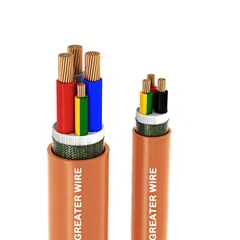
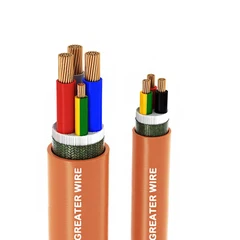

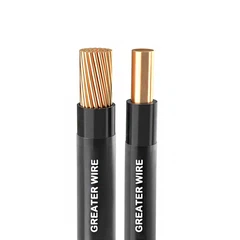
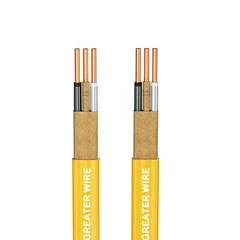
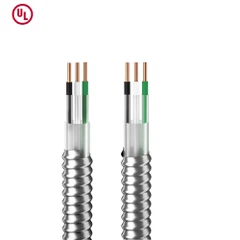
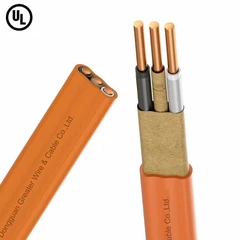
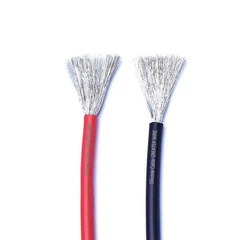
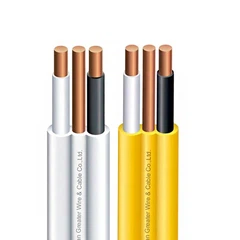
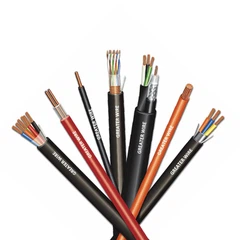
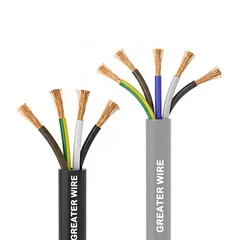
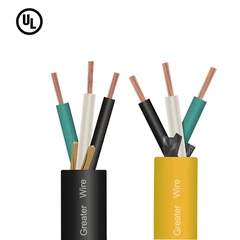
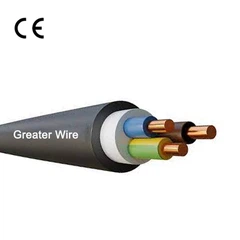
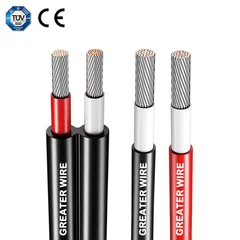

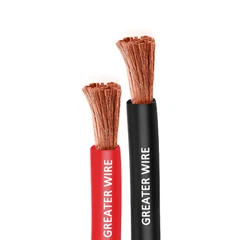
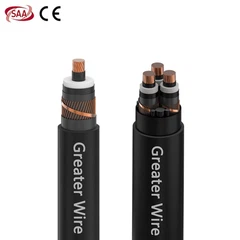
Selecting between TC-ER and ITC cable requires understanding the circuit's purpose, voltage requirements, installation method, and applicable electrical codes. Although both cable types are used in industrial environments, they are designed for different applications and are not automatically interchangeable. This guide explains the key differences in construction, ratings, and permitted uses, with practical insights for engineers planning TC-ER Cable for Industrial Automation, TC-ER Cable for Battery Energy Storage System, or TC-ER Cable for VFD Drives. It also explores how Factory Automation Wiring Cable and Industrial Control Wiring requirements affect cable selection, while clarifying the relevance of XHHW vs THHN Tray Cable when evaluating conductor insulation options.


1. What Are TC-ER and ITC Cables?
What Is TC-ER Cable?
TC-ER stands for Tray Cable–Exposed Run. It is a cable type used in industrial power and control applications where the product listing and installation conditions permit its use. TC-ER cables are commonly evaluated under UL 1277 and associated with NEC Article 336.
The "ER" designation is important because it identifies cable approved for certain exposed-run installations outside a cable tray, subject to applicable code conditions. It does not mean that the cable can be installed without physical protection in every environment.
Typical TC-ER applications include:
Industrial power distribution and equipment connections.
Motor and machine wiring where the cable's ratings are suitable.
Control circuits and auxiliary wiring.
Connections between cable trays and industrial equipment.
Fixed wiring in manufacturing and process facilities.
TC-ER products are often rated 600 V, but the actual voltage, temperature, conductor-size range, and environmental ratings must be verified from the specific cable's markings and datasheet.
What Is ITC Cable?
ITC stands for Instrumentation Tray Cable. It is designed for industrial instrumentation and related control circuits and is covered by UL 2250. In North America, its installation is associated with NEC Article 727.
ITC cables are commonly used to carry measurement signals and control information between field instruments and control systems. Applications may include process transmitters, sensors, monitoring devices, and distributed control systems.
Typical ITC applications include:
Instrumentation and measurement loops.
Analog signals, such as 4–20 mA, when the circuit design permits.
Connections between field instruments and control cabinets.
Process monitoring and automation systems.
Industrial control and instrumentation networks where the cable's characteristics are appropriate.
ITC is commonly associated with a 300 V cable rating, but this does not make it a power-limited cable by definition. The permitted circuit and installation must be determined from the applicable code, product listing, and system design.
An important distinction is ITC versus ITC-ER: the exposed-run designation applies only when the product is marked and listed accordingly. Standard ITC cable should not automatically be assumed suitable for the same exposed-run installations as ITC-ER.
2. TC-ER vs ITC: Key Differences
|
Comparison |
TC-ER Cable |
ITC Cable |
|---|---|---|
|
Full name |
Tray Cable–Exposed Run |
Instrumentation Tray Cable |
|
Main purpose |
Industrial power and control applications permitted by its listing |
Instrumentation and related control circuits |
|
Common UL standard |
UL 1277 |
UL 2250 |
|
Common NEC reference |
Article 336 |
Article 727 |
|
Typical voltage rating |
Often 600 V |
Commonly 300 V |
|
Circuit application |
Power and control, subject to product ratings and code |
Instrumentation and control, subject to product ratings and code |
|
Exposed-run use |
Identified by the TC-ER designation, subject to applicable conditions |
Requires the appropriate ITC-ER marking and listing |
|
Typical installation |
Industrial cable trays and qualifying exposed runs |
Instrumentation cable trays and other permitted wiring methods |
|
Typical environment |
Machinery, factories, and industrial power/control systems |
Process plants, instrumentation systems, and monitoring circuits |
|
Interchangeability |
Not automatically interchangeable with ITC |
Not automatically interchangeable with TC-ER |
The practical difference is that TC-ER is commonly selected for broader industrial power and control wiring, while ITC is intended for instrumentation applications. However, these are general distinctions, not permission to substitute one cable for another. Always confirm the complete cable marking, circuit classification, and installation requirements.
Does the Higher Voltage Rating Make TC-ER Better?
Not necessarily. A higher voltage rating may be necessary for a particular power circuit, but it does not automatically make TC-ER the right choice for an instrumentation loop. The circuit design may require a specific cable type, conductor arrangement, shielding, capacitance characteristics, or other performance properties.
Likewise, an ITC cable's typical 300 V rating does not mean it is suitable for every circuit operating below 300 V. Circuit classification and cable listing remain essential.
3. Which Standard Applies: UL 1277 or UL 2250?
UL 1277: Electrical Power and Control Tray Cables
UL 1277 covers electrical power and control tray cables, including applicable TC cable constructions. For TC-ER products, the product's listing and markings identify the permitted exposed-run application.
When reviewing a TC-ER datasheet, verify:
Cable type and voltage rating.
Conductor material, size, and number of conductors.
Insulation and jacket construction.
Temperature rating and environmental markings.
Any required flame, sunlight, oil-resistance, or other ratings.
Suitability for the intended tray and exposed-run installation.
A reference to UL 1277 alone does not prove that every possible installation is permitted. The product marking and applicable NEC provisions must be considered together.
UL 2250: Instrumentation Tray Cable
UL 2250 covers instrumentation tray cables. It is relevant when specifying ITC for instrumentation and related control applications.
For an ITC cable, confirm that its product listing matches the intended circuit and that the installation method is permitted by the applicable code. If an exposed run is required, verify that the cable is specifically marked and listed as ITC-ER.
Neither UL 1277 nor UL 2250 should be interpreted as a blanket approval for all industrial locations, all environmental conditions, or all types of equipment connections.
Why NEC Requirements Matter
The National Electrical Code (NEC) establishes installation rules for these cable types, but the exact requirements depend on the applicable edition, circuit, installation method, and local amendments. The authority having jurisdiction (AHJ) may also determine whether a proposed installation meets local requirements.
Engineers and contractors should consult the adopted NEC edition and project specifications rather than relying on a cable's marketing description alone.

4. How to Choose the Right Cable for Industrial Automation
TC-ER Cable for Industrial Automation can be suitable when the application requires a listed tray cable for power or control circuits and the installation meets the product's conditions of use. However, industrial automation systems often combine several different circuit types, so one cable designation may not fit every connection.
For example, a machine may have motor power conductors, digital control signals, analog instrumentation loops, and communication wiring. Each circuit should be evaluated according to its function and electrical requirements.
When TC-ER May Be Appropriate
Consider TC-ER when:
The circuit requires an approved cable for industrial power or control.
The voltage, current, conductor size, and temperature rating match the application.
Cable tray installation or a permitted exposed run is required.
The environmental ratings are suitable for the factory or equipment area.
The cable construction meets project requirements for grounding and conductor identification.
When ITC May Be Appropriate
Consider ITC when:
The circuit is intended for industrial instrumentation.
The system transmits measurement or process-control signals.
The cable's electrical characteristics meet the instrument or control-system requirements.
The product listing and installation method are appropriate for the circuit.
Shielding or other construction features are selected according to the system design.
For sensitive instrumentation circuits, shielding may be important, but it should be specified based on the equipment manufacturer's instructions and the project's grounding and noise-control strategy.
5. Special Considerations for Battery Energy Storage Systems
A TC-ER Cable for Battery Energy Storage System application must be assessed according to the actual circuit and installation environment. Battery energy storage systems (BESS) can include battery racks, power conversion equipment, auxiliary power, monitoring circuits, and control systems. These connections may have very different electrical and safety requirements.
Do not assume that a cable suitable for a general factory control circuit is automatically suitable for every BESS connection.
Before selecting a cable, determine:
Whether the circuit carries power, instrumentation signals, or control signals.
The nominal and maximum operating voltage, including whether the circuit is AC or DC.
The expected current and conductor size.
The temperature range and exposure to moisture, chemicals, or other environmental factors.
Whether the cable is installed in a tray, enclosure, conduit, or another wiring method.
Applicable product listings, local electrical codes, and project-specific requirements.
TC-ER may be suitable for certain fixed power or control connections where its ratings and listing permit. ITC may be suitable for qualifying instrumentation circuits. Neither type should be assumed suitable for battery interconnections, high-current DC connections, or every connection inside a battery enclosure without further verification.
6. TC-ER Cable for VFD Drives: What Should Engineers Check?
A TC-ER Cable for VFD Drives requires careful evaluation because variable-frequency drives (VFDs) can produce electrical noise and voltage stress that differ from those in conventional power circuits.
First, distinguish between the input power wiring to a VFD, the output wiring from the VFD to a motor, and the low-level control or feedback circuits associated with the drive. These connections may require different cable constructions.
For motor output circuits, engineers should verify:
Whether the cable is specifically rated for the intended VFD or motor-supply application.
The drive manufacturer's cable recommendations and installation instructions.
Conductor insulation and voltage ratings.
Shielding requirements and the approved grounding or bonding arrangement.
Cable length, routing, and separation from sensitive signal cables.
Whether the installation involves fixed wiring or continuous flexing.
A standard TC-ER marking alone does not establish suitability for every VFD output circuit or continuous-flex application. Some projects require cable specifically approved for flexible motor supply or other designated drive applications.
For control and feedback signals, ITC or another appropriately listed cable may be considered where its circuit rating and electrical characteristics match the system requirements.
7. Understanding XHHW vs THHN Tray Cable
The phrase XHHW vs THHN Tray Cable refers to a comparison of conductor insulation types that may be used within certain cable constructions. It is important to distinguish between the insulation type of an individual conductor and the overall cable type.
TC-ER and ITC identify cable categories and intended applications. THHN and XHHW-2 describe conductor insulation designations. They are not direct substitutes for the TC-ER or ITC cable type marking.
THHN and THWN-2
THHN is a thermoplastic-insulated conductor designation commonly associated with a 90°C dry-location rating. Many conductors are dual-marked THHN/THWN-2, with the THWN-2 designation covering wet-location use at its specified temperature rating.
However, a THHN or THHN/THWN-2 conductor designation alone does not establish that an assembled multiconductor cable is listed as TC-ER or ITC. Check the complete cable construction and product certification.
XHHW-2
XHHW-2 identifies a cross-linked polyethylene (XLPE) insulated conductor type. It is commonly rated 90°C for both wet and dry locations when manufactured and listed to the applicable requirements.
XHHW-2 and THHN/THWN-2 may differ in insulation material, dimensions, and specified performance. The correct choice depends on the approved cable construction, environmental conditions, terminal temperature limits, and project requirements.
What Should Buyers Compare?
|
Factor |
THHN/THWN-2 |
XHHW-2 |
|---|---|---|
|
Insulation material |
Thermoplastic; THWN-2 provides wet-location designation |
Cross-linked polyethylene (XLPE) |
|
Typical temperature rating |
90°C dry for THHN; THWN-2 is commonly rated 90°C wet |
Commonly 90°C wet and dry |
|
Moisture suitability |
Depends on the complete marking; THWN-2 addresses wet-location use |
XHHW-2 is designated for wet and dry locations |
|
Use in an assembled tray cable |
Depends on the cable's overall construction and listing |
Depends on the cable's overall construction and listing |
|
Key selection consideration |
Confirm all conductor markings and the cable's complete rating |
Confirm all conductor markings and the cable's complete rating |
Do not assume that every TC-ER or ITC cable contains THHN or XHHW-2 conductors. The manufacturer's datasheet must identify the actual insulation construction.

8. Factory Automation Wiring: A Practical Selection Process
When specifying Factory Automation Wiring Cable, engineers should start with the circuit diagram and equipment requirements rather than selecting cable by name alone.
Use the following steps to narrow down the options:
Identify the circuit function. Determine whether the circuit carries power, instrumentation signals, or control signals.
Confirm the electrical ratings. Establish voltage, current, conductor size, and temperature requirements.
Select the appropriate cable type. Review TC-ER, ITC, ITC-ER, or other listed options according to the circuit and installation.
Evaluate the environment. Check moisture, oil, sunlight, chemical exposure, vibration, and potential physical damage.
Determine shielding needs. Follow the signal requirements and equipment manufacturer's instructions.
Verify the installation method. Confirm that tray, exposed-run, conduit, and equipment-entry arrangements are permitted.
Check standards and certification. Review the product markings, applicable UL standard, adopted NEC edition, and local requirements.
This process helps avoid a common mistake: selecting a cable that appears mechanically suitable but does not meet the electrical or regulatory requirements of the circuit.
9. Common Mistakes to Avoid
Mistake 1: Treating TC-ER and ITC as Interchangeable
They serve different intended applications and are associated with different product standards. Substitution should be approved only after confirming the circuit requirements, listing, and code provisions.
Mistake 2: Assuming Every ITC Cable Is Approved for Exposed Runs
The ITC-ER designation matters. Verify the exact marking and listing before installing instrumentation cable outside a tray.
Mistake 3: Selecting Cable Based Only on Voltage
Voltage rating is only one selection factor. Circuit classification, conductor size, installation method, shielding, environmental ratings, and certification also matter.
Mistake 4: Assuming Every TC-ER Cable Is Suitable for VFD Motor Output
VFD applications may impose specific electrical and shielding requirements. Check the drive manufacturer's recommendations and confirm that the cable is approved for the intended motor-supply application.
Mistake 5: Confusing Conductor Insulation with Cable Type
THHN and XHHW-2 describe conductor insulation designations; TC-ER and ITC identify cable types. A conductor's insulation marking does not, by itself, establish the listing of an assembled cable.
10. Frequently Asked Questions
Is TC-ER rated for a higher voltage than ITC?
Many TC-ER cables are rated 600 V, while ITC cables are commonly rated 300 V. Always verify the specific product marking and datasheet, and do not use voltage rating alone to determine suitability.
Can ITC cable be used for industrial control wiring?
Yes, ITC may be appropriate for industrial instrumentation and qualifying control applications. The circuit classification, product listing, electrical characteristics, and installation method must match the project requirements.
Does ITC always require shielding?
No. Shielding depends on signal sensitivity, the electromagnetic environment, and system design. Some instrumentation applications benefit from shielding, while others may permit unshielded cable.
Can TC-ER be used in a battery energy storage system?
It may be suitable for certain fixed power or control circuits if the product ratings, listing, installation conditions, and applicable codes permit its use. Battery interconnections and other specialized circuits require separate evaluation.
What information should I provide when requesting a quotation?
Provide the circuit function, operating voltage, current, conductor size, number of conductors, required cable type, shielding needs, installation method, environmental conditions, and applicable certifications. Drawings, datasheets, and project specifications can help the supplier assess the requirements accurately.


11. Conclusion
TC-ER and ITC cables are both important options for industrial electrical installations, but they serve different purposes. TC-ER is commonly used for approved industrial power and control applications, while ITC is intended for instrumentation and related control circuits. Their voltage ratings, product standards, exposed-run designations, and installation conditions must be verified before selection.
For engineers planning industrial automation, battery energy storage, or VFD-related installations, the most reliable approach is to begin with the circuit requirements and then confirm the cable's complete construction, listing, and environmental suitability. Understanding the difference between cable types and conductor insulation designations, such as THHN and XHHW-2, also helps prevent specification errors.
Partner with GERITEL WIRE for Industrial Cable Solutions
GERITEL WIRE supports electrical distributors, contractors, equipment manufacturers, and procurement teams in evaluating cable options for demanding industrial applications. Whether you are sourcing cable for automation systems, battery energy storage projects, VFD installations, or instrumentation circuits, our team can help review your technical requirements and identify suitable products. Share your circuit specifications, conductor sizes, operating conditions, and certification needs to discuss your project and request a quotation. By clarifying application requirements at the beginning of the procurement process, you can make more informed cable selections and support reliable, code-conscious installations.
Dongguan Greater Wire & Cable Co., Ltd.
Tel/WhatsApp/Wechat: +86 136 6257 9592
Tel/WhatsApp/Wechat: +86 135 1078 4550
Email: manager01@greaterwire.com
Website: www.greaterwire.com