

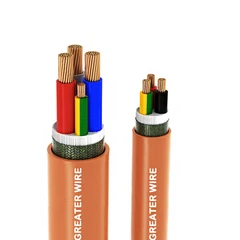
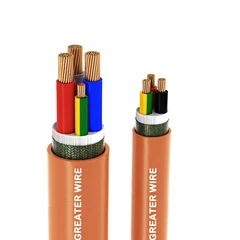

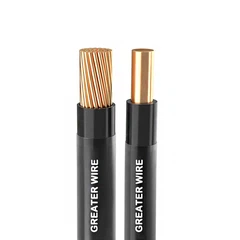
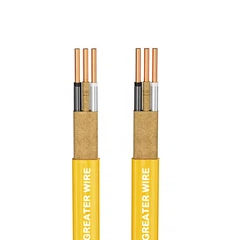
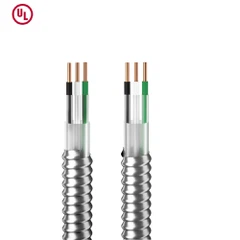
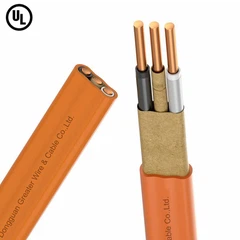
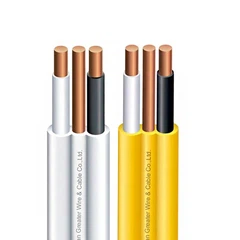
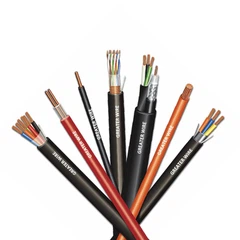
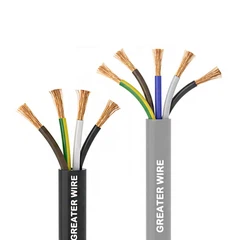
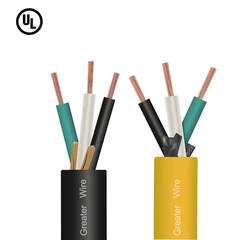
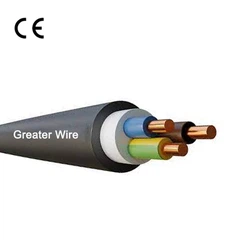

In electrical systems, TPS cable (thermoplastic sheathed cable) is one of the most common and widely used cables. Its outer sheath is made of thermoplastic materials (such as polyvinyl chloride), which makes the cable have excellent abrasion resistance, corrosion resistance and moisture resistance, so it can provide stable power transmission in various environments. Especially for home, commercial and industrial electrical wiring, TPS cable is widely used due to its superior performance. Among them, 2.5 mm 2C E TPS cable is particularly important in a variety of electrical applications because of its dual-conductor structure and large current carrying capacity.
In this article, we will discuss in detail the characteristics, working principle, scope of use of 2.5 mm 2C E TPS cable and its comparison with other cable specifications such as 1.5 mm TPS cable and TPS 2.5 mm cable.


1. What is 2.5 mm 2C E TPS cable?
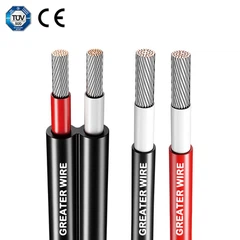
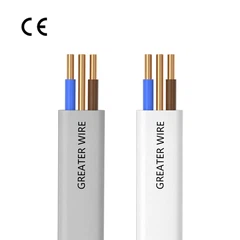
2.5 mm 2C E TPS cable is a cable specification with two conductors, where "2.5 mm" means the cross-sectional area of the wire is 2.5 square millimeters, 2C means there are two conductors (live conductors) in the cable, and E usually means that the cable meets the relevant electrical safety standards and is suitable for ordinary household or commercial electrical wiring. TPS means that the cable uses thermoplastics (such as polyvinyl chloride PVC) as the outer sheath to ensure that it has excellent mechanical strength and protection performance.

2. Structure of 2.5 mm 2C E TPS cable
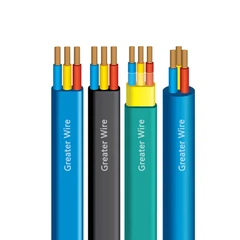
2.5 mm 2C E TPS cable is usually composed of the following main parts:
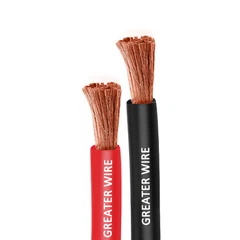
2.1 Conductor
The conductor in the cable is generally made of copper or aluminum wire, and the size of the conductor is 2.5 square millimeters, which means that each conductor can carry a large current, generally suitable for a current load of 16 amps to 20 amps.
2.2 Insulation layer
Each conductor has an insulation layer outside, usually made of PVC or similar materials, to ensure that the current does not leak and avoid short circuits with external objects. This insulating layer has good heat resistance, corrosion resistance and UV resistance.
2.3 Sheath
The outer sheath of the cable is also made of thermoplastic material, usually PVC, which has excellent mechanical strength and can resist physical damage from the outside. It is also waterproof, moisture-proof and UV-resistant, suitable for use in various environments.

3. Features of 2.5 mm 2C E TPS Cable
The 2.5 mm 2C E TPS cable has the following unique features, making it very suitable for a variety of electrical applications:
3.1 Large current carrying capacity
The conductor cross-sectional area of 2.5 mm 2C E TPS cable is 2.5 square millimeters, so it can carry a large current load and is generally suitable for current transmission of 16 amps to 20 amps. It can meet the power needs of many medium-sized and high-power electrical equipment, such as air conditioners, electric water heaters and other household high-power appliances.
3.2 Dual-conductor design
The 2.5 mm 2C E TPS cable has a dual-conductor structure and is generally suitable for applications that require two live circuits. For example, this cable can be used in a dual-control switch circuit, or in some occasions where independent power supply is required, the power supply of the dual circuit can be realized through two independent wires.
3.3 Excellent durability
The cable adopts a thermoplastic sheath, which can withstand a certain degree of mechanical damage, is waterproof and moisture-proof, and is suitable for various harsh environments. It is also resistant to UV radiation, so it is suitable for long-term exposure to outdoor environments.
3.4 Wide adaptability
2.5 mm 2C E TPS cable is suitable for various electrical applications, especially in environments where dual conductors or dual controls are required. Due to its excellent heat resistance and durability, it can be used for a long time in different temperature ranges and environmental conditions.

4. Scope of use of 2.5 mm 2C E TPS cable
2.5 mm 2C E TPS cable is widely used in household electrical, commercial buildings, industrial control and electrical wiring in some special environments. The following are its main use occasions:
4.1 Dual-control switch circuit
In homes and commercial buildings, 2.5 mm 2C E TPS cables can be used in dual-control switch circuits, that is, the same appliance (such as lamps, fans, etc.) is controlled by two different switches. The dual-conductor design of this cable is very suitable for connecting two switches and one electrical device, making circuit control more flexible.
For example, two switches are installed in a room, one controls the lighting in the room, and the other controls the opening and closing of the same lighting. By using 2.5 mm 2C E TPS cables, it is easy to connect the two switches to the lighting circuit to ensure smooth two-way control.
4.2 Multi-circuit power supply system
In some electrical applications, it is necessary to provide independent circuit power supply for different electrical devices. At this time, the dual-conductor design of 2.5 mm 2C E TPS cables can effectively support the independent power supply of multiple circuits and avoid current interference and crossover between different circuits.
For example, in environments such as kitchens or bathrooms, it may be necessary to provide separate power supply to electrical appliances such as electric water heaters, refrigerators, and microwave ovens. These devices often require independent circuits, and 2.5 mm 2C E TPS cables can provide flexible power connections for multiple circuits.
4.3 Power supply for medium and high power devices
Because 2.5 mm 2C E TPS cables can carry large currents, they are widely used in power transmission for medium and high power electrical devices. Especially in homes, office buildings, shopping malls, etc., 2.5 mm 2C E TPS cables are often used to power high power appliances such as air conditioners, electric water heaters, refrigerators, etc. to ensure the stable operation of these devices.
4.4 Electrical wiring in commercial and industrial environments
In commercial buildings and industrial environments, 2.5 mm 2C E TPS cables can be used for power transmission, lighting, control systems, and other electrical facilities. In these environments, electrical systems often require high-load power transmission, so it is particularly important to choose cables that can carry large currents.
4.5 Building electrical systems
In buildings, especially in larger residential or commercial buildings, 2.5 mm 2C E TPS cables are widely used for electrical wiring between floors. This cable can effectively transmit the required power and connect various electrical devices while ensuring electrical safety and efficiency.
4.6 Electrical Control and Automation Systems
In the field of industrial automation, 2.5 mm 2C E TPS cables are used for electrical control systems, sensors, automation equipment and their connection to power supplies. Since these systems usually involve multiple circuit signals, 2.5 mm 2C E TPS cables can transmit different circuit signals to control devices through their dual-conductor characteristics.

5. Comparison with other TPS cables
5.1 Comparison with 1.5 mm TPS cables
Current carrying capacity: 1.5 mm TPS cables have a lower current carrying capacity, usually 10 amps to 13 amps, and are suitable for lighter load appliances and electrical wiring. 2.5 mm 2C E TPS cables are suitable for higher power electrical equipment, and the carrying current is usually 16 amps to 20 amps.
Applications: 1.5 mm TPS cables are mainly used for low-power devices such as home lighting and low-power appliances, while 2.5 mm 2C E TPS cables are suitable for medium and high-power appliances, multi-circuit systems, and dual-control switches.
5.2 Comparison with 2.5 mm TPS cables
Number of conductors: 2.5 mm TPS cables are single-core cables, while 2.5 mm 2C E TPS cables have a dual-conductor design. The latter can support dual-control or multi-circuit power transmission, with higher flexibility and adaptability.
Scope of application: Although 2.5 mm TPS cables are suitable for more basic power transmission, 2.5 mm 2C E TPS cables can adapt to more complex electrical systems, especially those involving multiple circuits.