

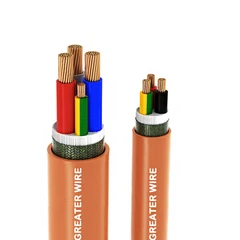
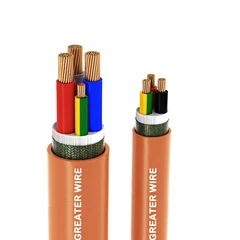

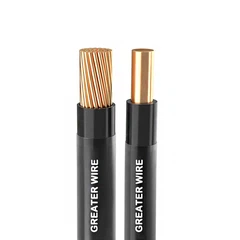
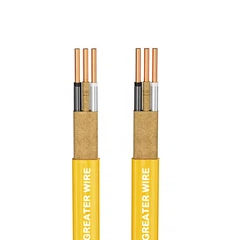
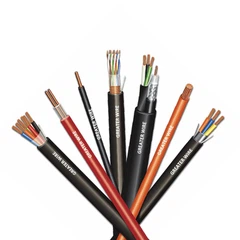
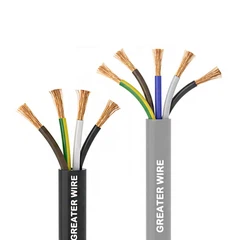
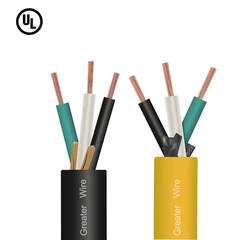
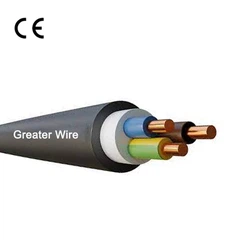
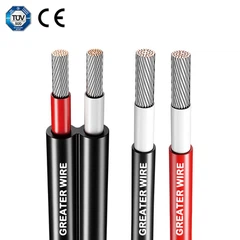

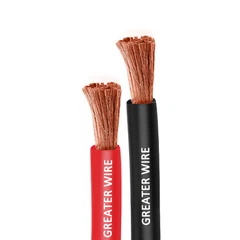
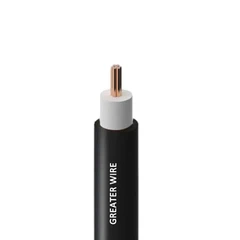
SOOW cable is a high-performance power cable specially designed for industrial environments and harsh conditions. As a durable, flexible and adaptable cable, SOOW cable is widely used in industrial automation, construction, mining, shipbuilding, petrochemical and other fields. Its electrical performance is the key factor that determines its stability, efficiency and safety in various applications.


1. Basic composition and electrical performance requirements of SOOW cables
SOOW cables are composed of several main parts: conductor, insulation layer, and sheath layer. Each component has a crucial impact on the electrical performance of the cable.
Conductor: The conductor of SOOW cables is generally made of highly conductive copper or aluminum materials. Copper conductors are the most commonly used choice because of their good conductivity and anti-oxidation properties. The low resistance of copper conductors enables the cable to efficiently transmit current, reduce power loss, and improve the operating efficiency of electrical systems.
Insulation layer: The main function of the insulation layer is to prevent current leakage, ensure electrical isolation, and protect the conductor from interference from the external environment. The insulation layer of SOOW cables is usually made of high-temperature and corrosion-resistant rubber materials (such as EPR or PVC). These materials have good insulation properties to ensure that the cable will not short-circuit or leak during operation.
Sheath layer: The main function of the sheath layer is to protect the cable from external mechanical damage, chemical corrosion, moisture erosion and environmental factors. The sheath of SOOW cables is usually made of oil-resistant, high-temperature-resistant, and wear-resistant rubber materials with excellent mechanical protection capabilities.
Under this structure, the electrical performance of SOOW cables must consider the requirements of conductivity, insulation and anti-interference to ensure long-term stable operation in complex industrial environments.

2. Conductive performance
The conductive performance of SOOW cables depends on the material and specifications of the conductor. Most SOOW cables use high-purity copper conductors because copper has very low resistance and can provide lower energy loss. The conductors in the cable are designed with a multi-strand structure, which not only increases the flexibility of the conductor, but also improves the current passing capacity.
2.1 Conductor resistance
The resistance of the cable conductor is a key factor in determining the efficiency of power transmission. The copper conductor in SOOW cables usually has very low resistance, which means that the current can pass through the cable more smoothly. Low resistance also means that the thermal effect of the cable is small, so the operating temperature of the cable will not be too high, which can extend the service life of the cable.
2.2 Current carrying capacity
The current carrying capacity of SOOW cables is determined by the specifications of their conductors (such as cross-sectional area, conductor material, etc.). The current carrying capacity will vary for different types and sizes of SOOW cables. Generally, SOOW cables with larger cross-sections are able to carry higher current loads and are suitable for high-power devices.
2.3 Power loss
Power loss is caused by the resistance of the conductor, which generates a certain amount of heat when current passes through the conductor. Since the copper conductor of the SOOW cable has lower resistance, the power loss is also smaller. Smaller power loss means that the cable can transmit power more efficiently, thereby improving the efficiency of the entire power system.

3. Insulation performance
The insulation performance of SOOW cables is one of the core of their electrical performance. The main function of the insulation layer is to prevent current leakage, protect the conductor inside the cable, and avoid the degradation of cable performance due to changes in the external environment. The insulation layer of SOOW cables uses high-quality rubber materials such as EPR (cross-linked ethylene propylene rubber) or PVC (polyvinyl chloride), which have excellent electrical insulation properties and mechanical strength.
3.1 High temperature resistance
The insulation layer of SOOW cables can usually withstand higher temperatures. Different types of SOOW cables have different temperature adaptation ranges, usually withstanding temperature changes from -40°C to 90°C. Some specific types of SOOW cables can even adapt to a wider temperature range. At high temperatures, the insulation material of SOOW cables can maintain stable electrical performance and prevent electrical systems from malfunctioning due to overheating.
3.2 Moisture resistance and waterproofness
The insulation layer of SOOW cables has strong moisture resistance and can effectively prevent moisture from penetrating into the cable. In humid environments or places in direct contact with water, SOOW cables can still work stably to avoid short circuits or electrical failures due to moisture intrusion.
3.3 Chemical resistance
The insulation material of SOOW cables also has strong chemical corrosion resistance and can withstand erosion by chemicals such as oils, solvents, acids and alkalis. This allows SOOW cables to be used in industries such as petrochemicals, mining, and shipping to ensure the safety of electrical systems.

4. Electrical strength and anti-interference ability
Electrical strength and anti-electromagnetic interference (EMI) ability are another important aspect of the electrical performance of SOOW cables. Electrical strength refers to the maximum voltage value that the cable can withstand without breakdown or short circuit. Anti-interference ability determines whether the SOOW cable can work stably in places with complex electromagnetic environments.
4.1 Electrical Strength
The insulation layer design of SOOW cable gives it high electrical strength. Under normal working conditions, SOOW cable can effectively isolate the current between the conductor and the external environment to avoid current leakage. In some special cases, such as voltage mutation or short-term overload, the high electrical strength of SOOW cable can also ensure the safety of the electrical system.
4.2 Anti-electromagnetic interference capability
Electromagnetic interference (EMI) is a common problem in industrial environments, especially in power systems, automation equipment and communication equipment. SOOW cable can effectively isolate external electromagnetic interference by adopting a shielding design. The shielding layer is usually composed of copper wire or aluminum foil, which can prevent external electromagnetic waves from interfering with the signal transmission inside the cable.

5. Operating temperature range and electrical performance
The operating temperature range of SOOW cable has an important impact on its electrical performance. In extremely high or low temperature environments, the electrical performance of the cable may change. At high temperatures, the insulation material of the cable may soften or age, resulting in a decrease in electrical performance; at low temperatures, the flexibility of the cable may decrease, resulting in mechanical damage. Therefore, it is crucial to understand the applicable temperature range of the cable and select the appropriate cable model according to the actual environment.

6. Summary of electrical performance of SOOW cable
The electrical performance of SOOW cable makes it an ideal power transmission solution in industrial environments. It has excellent conductivity, insulation, electrical strength and anti-interference ability, which enables SOOW cable to work stably and long-term in harsh environments. Whether it is high temperature, low temperature, moisture or chemical corrosion, SOOW cable can provide reliable electrical performance to ensure the safe operation of equipment.
In practical applications, users should choose the appropriate SOOW cable model according to the required current carrying capacity, temperature adaptability and anti-interference requirements. By rationally selecting and correctly installing SOOW cables, their electrical performance can be maximized, the service life of the cables can be extended, and the safety and stability of the entire power system can be improved.