























Modern smart manufacturing factories rely heavily on automated robots, VFD drives, precision sensors and continuous conveyor lines. Every piece of automated equipment depends on qualified industrial automation cable to transmit power and control signals stably. Many system integrators and plant managers underestimate the importance of cable specification matching, choosing low-cost generic wires to cut initial project budgets. Poor cable selection will trigger frequent signal malfunctions, premature wire breakage, unplanned production shutdowns and permanent damage to expensive servo and drive devices. This article breaks down the core risks of mismatched wiring and explains how targeted models such as continuous flex industrial cable, VFD control tray cable, shielded signal tray cable, 16 AWG control cable and sensor multiconductor cable stabilize long-term automated production.
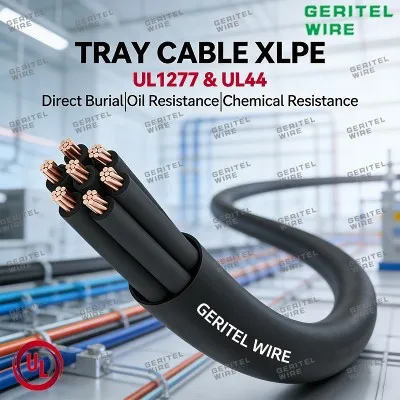
1. Cable Selection Directly Determines Overall Operational Efficiency of Smart Factories
All automated production links, from material handling robots to multi-point detection sensors, operate based on reliable power and signal transmission. Generic civilian wires or non-specified cheap cables cannot withstand the complex operating conditions inside manufacturing workshops, creating bottlenecks that drag down whole-line output.
Well-matched industrial automation cable is engineered to adapt to factory-specific challenges: repeated mechanical bending, high-frequency harmonic interference from VFDs, continuous vibration and long-hour 24/7 operation. When integrators skip targeted cable selection to save minor upfront costs, factories face recurring downtime, frequent wire replacement and inconsistent product processing precision. For mass-production manufacturing plants, even short daily equipment halts caused by faulty cables lead to massive order delivery losses.
2. Improper Cable Choices Cause Severe Signal Interference & Equipment Malfunctions
Electromagnetic interference is the most common failure source for automated sensor and servo systems, almost always stemming from unshielded ordinary control wires. Unstable signal transmission leads to random robot position offset, false sensor triggering and emergency line shutdowns.
shielded signal tray cable is designed with integrated metal shielding layers to isolate external electromagnetic noise, making it mandatory for encoder, proximity sensor and precision detection signal loops. Without this dedicated automation cable, harmonic signals from nearby frequency drives will distort weak sensor data, disrupting automatic sorting, cutting and assembly processes across the plant. This issue is hard to troubleshoot on-site and often confuses maintenance teams unfamiliar with cable specification standards.

3. Continuous Flex Industrial Cable Is Non-Negotiable for Robotic & Moving Machinery
Robotic arms, retractable conveyor trolleys and reciprocating processing equipment require cables to bend thousands of times per day. Ordinary rigid control cables crack inner conductors and split outer jackets after short-term repeated movement.
continuous flex industrial cable features finely stranded flexible conductors and wear-resistant composite jackets that pass strict cyclic bending fatigue tests. Installing non-flexible generic wires on moving automation equipment results in frequent open circuits and emergency stops. Replacing broken cables repeatedly consumes maintenance labor and halts production cycles. Factories with dozens of robotic stations see the clearest operational cost gap between flex-rated dedicated cables and cheap rigid alternatives.
4. VFD Control Tray Cable Eliminates Harmonic Damage to Drive & Servo Hardware
Variable frequency drives generate high-frequency voltage harmonics during speed regulation. Conventional unrated power control cables cannot suppress these harmonics, which backfeed into servo controllers and burn internal circuit boards, creating costly equipment replacement expenses.
VFD control tray cable adopts special symmetrical shielding and cross-linked insulation structures to absorb and isolate drive-generated harmonics. Deploying this specialized industrial automation cable for all VFD-servo connection loops protects high-value automation hardware and extends the service life of drive systems by multiple years. Many factories only realize the necessity of VFD-rated cables after replacing damaged servo boards several times.
5. Standard Control Spec: 16 AWG Control Cable & Sensor Multiconductor Cable for Centralized Layout
Most medium-sized automation control cabinets and multi-sensor stations require compact multi-conductor wiring. Random mixing of different wire gauges creates messy, hard-to-maintain cable trays and unstable current transmission.
16 AWG control cable is the universal standard multi-core wire for factory control signal transmission, balancing appropriate current carrying capacity and small outer diameter for neat cabinet wiring. For production lines with dozens of distributed detection points, sensor multiconductor cable integrates multiple sensor signal cores inside one jacket, simplifying tray layout and reducing the total number of wiring runs across the workshop. Matching standardized gauges and multi-core structures streamlines both initial installation and later equipment expansion.
6. Standardized Automation Cable Selection Cuts Long-Term Factory Maintenance Expenses
The short-term cost difference between generic wires and professional industrial automation cable is negligible compared to long-term hidden losses. Dedicated automation cables resist abrasion, bending fatigue, harmonic interference and industrial ambient aging, drastically lowering replacement frequency and maintenance labor hours.
Factories that adopt full-spec targeted cable layouts avoid unplanned downtime, expensive servo board replacements and repeated wire overhaul work. Over a 3–5 year production cycle, standardized cable selection can slash electrical maintenance costs by more than 40% while maintaining stable full-capacity automated operation.
7. FAQs About Industrial Automation Cable Selection for Manufacturing Plants
Q1: Is shielded signal tray cable required for all factory sensor wiring?
A: Yes, for precision encoders, proximity sensors and optical detection equipment. Its shielding layer blocks electromagnetic noise from VFDs to prevent false signal triggering.
Q2: Can regular control wires replace continuous flex industrial cable on robotic arms?
A: Not recommended. Ordinary rigid cables crack internal conductors after frequent bending, leading to unexpected production line shutdowns.
Q3: What is the common standard gauge for automation cabinet control circuits?
A: 16 AWG control cable is the widely accepted standard for most medium-current control and signal loops in modern manufacturing plants.
Q4: Why do VFD drives need dedicated VFD control tray cable instead of regular power cables?
A: Special symmetrical shielding suppresses high-frequency harmonics generated by frequency converters, preventing permanent damage to connected servo and control hardware.

Custom Industrial Automation Cable Solutions for Smart Manufacturing Lines
Reliable production starts with correct industrial automation cable selection. We supply a full series of application-specified automation wiring, including bending-resistant continuous flex industrial cable, harmonic-shielded VFD control tray cable, noise-blocking shielded signal tray cable, standard 16 AWG control cable and compact sensor multiconductor cable. All cables are tailored for robotic arms, VFD drive systems, multi-sensor detection stations and centralized control cabinet layout. Contact our technical team to receive professional cable matching recommendations customized to your automated manufacturing production line.
Contact us
Dongguan Greater Wire & Cable Co., Ltd.
Tel/WhatsApp/Wechat: +86 136 6257 9592
Tel/WhatsApp/Wechat: +86 135 1078 4550
Email: manager01@greaterwire.com
Website: www.greaterwire.com