

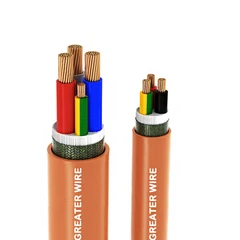
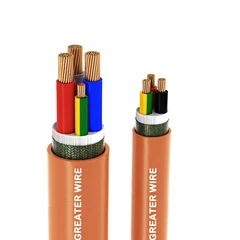

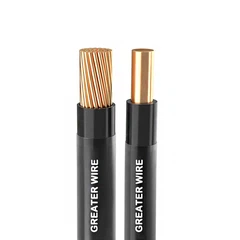
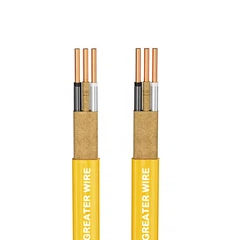
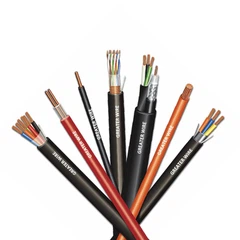
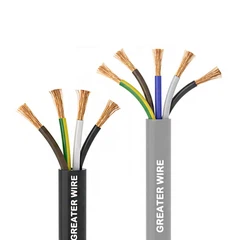
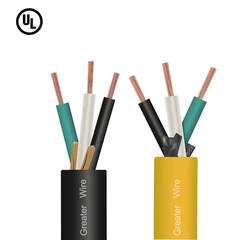
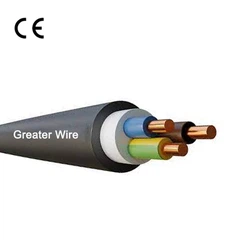

You are looking at a spec sheet for XHHW-2 wire. Everything looks right-the gauge, the insulation type, the UL listing. Then you see it: voltage rating options. 600V. 1000V. 2000V.
Which one do you pick?
The voltage rating is not just a number on a spec sheet. It determines where the wire can be installed, how safe it is, and whether it will pass inspection. Pick the wrong rating and you risk insulation failure, system downtime, or worse.
This article explains the differences between XHHW-2 voltage ratings and helps you decide which one fits your project.
1. What Does Voltage Rating Mean on XHHW-2 Wire?
The voltage rating on a wire indicates the maximum voltage the insulation can withstand continuously without breaking down. It is the design limit.
For XHHW-2 wire, the voltage rating is determined by the thickness and quality of the XLPE insulation. Higher voltage ratings require thicker insulation. This means a 2000V XHHW-2 wire has more insulation than a 600V XHHW-2 wire of the same gauge.
Voltage rating is different from temperature rating. Temperature rating (90°C) tells you how hot the wire can get. Voltage rating tells you how much electrical stress the insulation can handle.
A 600V XHHW-2 wire is the most common. It is used in standard commercial and industrial applications where system voltages are 480V or below. The 600V rating provides a safety margin above the nominal system voltage.

2. 600V XHHW-2 Wire – The Standard Choice
600V is the standard voltage rating for most building wires. It covers the vast majority of commercial and industrial applications.
When to choose 600V:
- System voltage is 480V or lower
- Standard commercial building wiring
- Industrial control panels and equipment
- Branch circuits and feeders in typical installations
Common applications for 600V XHHW-2 wire:
- Lighting circuits in commercial buildings
- Receptacle and power circuits in offices
- Feeders to distribution panels
- Motor circuits at 480V or lower
Why 600V works: The insulation is designed to handle voltage spikes and transient overvoltages that occur in normal operation. The 600V rating provides a standard safety margin. Most equipment terminations are rated for 600V, making it the easiest option to terminate.
For a 2 AWG XHHW-2 wire, 600V is the typical rating. This gauge is used for sub-feeders and equipment circuits in commercial buildings. The 600V rating provides sufficient margin for 480V systems while keeping the insulation thickness manageable for standard lugs and terminations.
3. 1000V XHHW-2 Wire – When System Voltage Exceeds 600V
Not all systems are 480V. Some industrial applications use higher voltages. Solar arrays operate at 600V DC or higher. Some VFD outputs exceed 600V. In these cases, 600V wire is not enough.
When to choose 1000V:
- System voltage is between 600V and 1000V
- Solar photovoltaic systems (up to 1000V DC)
- VFD motor leads on long runs (reflected wave protection)
- Industrial systems with higher voltage distribution
- Applications with frequent voltage transients
Why 1000V matters for VFD applications: Variable Frequency Drives produce voltage spikes from reflected waves. On long cable runs between the drive and motor, these spikes can exceed 600V even on a 480V system. A 1000V rated wire provides extra margin against these spikes, reducing the risk of insulation failure.
For a 1/0 AWG XHHW-2 wire in heavy industrial applications, 1000V is often specified for VFD-driven motors, solar farm DC collection circuits, and industrial feeders where voltage transients are expected. A 1000V XHHW-2 wire provides a significant safety margin over 600V without the extra bulk and cost of 2000V.
4. 2000V XHHW-2 Wire – High Voltage and Critical Protection
For the highest voltage systems and maximum protection against spikes and transients, 2000V XHHW-2 wire is available. This rating is for specialized applications where the extra insulation thickness is justified.
When to choose 2000V:
- System voltage between 1000V and 2000V
- Mining equipment power cables
- Heavy industrial systems with high voltage distribution
- Applications where maximum insulation protection is required
- Long VFD runs with severe reflected wave concerns
Why 2000V insulation matters: The thicker insulation provides better protection against electrical stress, mechanical damage, and environmental factors. While 2000V wire costs more and has a larger diameter, the extra protection can be worth it in critical applications where downtime is not an option.
A 2000V XHHW-2 wire like 3/0 AWG XHHW-2 wire is used in heavy mining equipment, large industrial facilities, and utility-scale installations where the combination of high voltage and demanding conditions requires maximum insulation protection.

5. How to Choose the Right Voltage Rating
Choosing the right voltage rating is straightforward. Here is a practical decision process.
Step 1: Identify your system voltage.
If your system is 480V or below, 600V is the standard choice. If it is above 600V, you need 1000V or 2000V.
Step 2: Check for special conditions.
VFD on long motor leads? Consider 1000V for the extra margin against reflected waves.
Frequent voltage spikes or transients? Consider upsizing voltage rating.
Critical application where failure is not acceptable? Consider 2000V.
Step 3: Verify termination compatibility.
Higher voltage wire has thicker insulation and a larger outside diameter. Confirm that your lugs and terminations can accommodate the larger diameter. Some 2000V wire may not fit standard 600V lugs.
Step 4: Consider the cost.
Higher voltage wire costs more. There is no benefit to choosing 2000V if 600V is sufficient. Size the voltage rating to the application, not to a "better safe than sorry" philosophy-the thicker wire may not physically fit the termination points.
6. What Happens If You Choose the Wrong Voltage Rating?
Choosing a voltage rating that is too low for the application is a serious mistake.
- Insulation stress. The insulation will be subjected to electrical stress beyond its design limit. Over time, this stress causes the insulation to degrade. Partial discharge starts, tracking develops, and eventually the insulation fails.
- Safety risk. An insulation failure is not just an equipment problem. It is a safety hazard. Arcing and flashover can cause fires, equipment damage, and injury to personnel.
- Inspection failure. Inspectors check the voltage rating on the wire against the system voltage. If the wire is not rated for the system voltage, it fails inspection. Rework is expensive and time-consuming.
Choosing a voltage rating that is too high has fewer consequences. The wire will work fine. The only downside is cost and physical size. The wire may not fit in the conduit or lugs. Always check conduit fill and lug compatibility before upsizing voltage rating.
FAQ
Q1: Can I use 600V XHHW-2 wire on a 600V system?
It is not recommended. The 600V rating is the maximum. For a system that operates at 600V, use 1000V wire to provide margin. The code generally requires the wire rating to exceed the system voltage.
Q2: Does higher voltage wire have the same ampacity?
Not exactly. Higher voltage wire has thicker insulation, which affects heat dissipation. Ampacity may be slightly lower for the same gauge. Always check the manufacturer's ampacity tables.
Q3: Can I use 2000V wire on a 480V system?
Yes, but it is overkill. The wire will work, but it costs more and has a larger diameter. Only specify 2000V if the application requires it.
Q4: Does voltage rating affect wire flexibility?
Yes. More insulation means less flexibility. 2000V wire is stiffer than 600V wire of the same gauge. Consider this for installations with tight bends.
Q5: Does Greater provide UL 44 certified XHHW-2 wire in all three voltage ratings?
Yes. Dongguan Greater Wire & Cable Co., Ltd. offers XHHW/XHHW-2 wire in 600V, 1000V, and 2000V ratings with UL 44 certification. We can provide the certificate and file number upon request.

Need XHHW-2 Wire with the Right Voltage Rating?
Tell us about your project-system voltage, application, and special conditions. We will recommend the correct XHHW/XHHW-2 wire voltage rating and send a quick quote.
Contact us
Dongguan Greater Wire & Cable Co., Ltd.
Tel/WhatsApp/Wechat: +86 136 6257 9592
Tel/WhatsApp/Wechat: +86 135 1078 4550
Email: manager01@greaterwire.com
Website: www.greaterwire.com