



Underground electrical installations require more than choosing a cable with the correct voltage and temperature rating. Moisture exposure, mechanical protection, installation conditions, conductor sizing, and compliance with local electrical codes all influence the final wiring method.
In Canadian electrical projects, ACWU90 and RW90 are two commonly specified options for low-voltage power distribution. However, they are fundamentally different products. ACWU90 is a factory-assembled armoured cable with an outer protective jacket, while RW90 is an insulated conductor generally installed inside a suitable raceway or conduit.
This difference becomes particularly important in underground projects. Should contractors install ACWU90 directly in the ground, or use RW90 conductors inside underground conduit? Which option provides better mechanical protection, easier installation, or greater flexibility for future modifications?
This guide compares ACWU90 and RW90 in conduit, explains their underground applications, and identifies the technical and practical factors that electrical contractors, distributors, and project engineers should evaluate before selecting a wiring method.
1. What Are ACWU90 and RW90 Cables?
Before comparing underground installation methods, it is important to understand how these two products are constructed and what their designations mean.
1.1 What Is ACWU90 Cable?
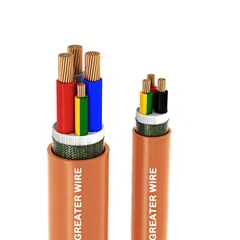
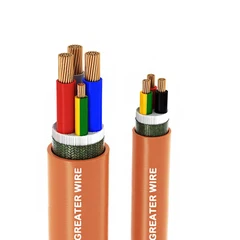
ACWU90 is a Canadian-standard armoured electrical cable designed for applications requiring additional mechanical protection and suitability for wet environments.
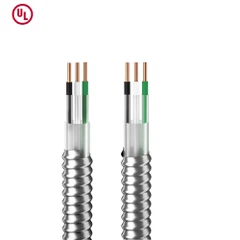
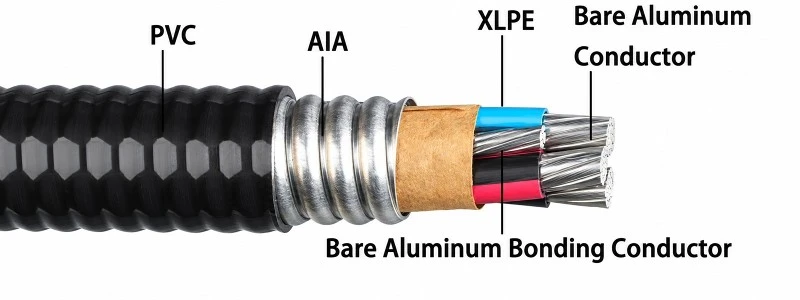
A typical ACWU90 construction consists of:
Conductor: Stranded copper or aluminum, depending on the certified product design.
Insulation: Cross-linked polyethylene (XLPE), generally rated 90°C.
Bonding conductor: A metallic bonding conductor incorporated into the cable assembly, where required by the construction.
Armour: Interlocked aluminum armour (AIA), providing mechanical protection.
Outer jacket: A protective PVC jacket covering the armour.
The combination of metallic armour and an outer jacket makes ACWU90 suitable for a wider range of installation conditions than an ordinary unarmoured building wire.
Depending on its certification and manufacturer's specifications, ACWU90 can be used in applications such as:
Direct underground burial.
Underground raceways and conduits.
Outdoor exposed wiring.
Indoor exposed or concealed wiring.
Cable trays.
Concrete-encased installations.
For example, Southwire and Prysmian specify ACWU90 products for direct burial, wet locations, and outdoor applications. However, the exact approved installation methods must always be verified against the specific product listing and applicable electrical code.
Important: ACWU90 is not simply an ordinary conductor wrapped in metal. Its complete construction, including the insulation, armour, bonding arrangement, and outer jacket, determines its installation suitability.
1.2 What Is RW90 Wire?
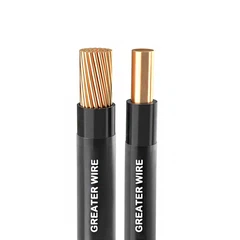
RW90 is a Canadian electrical wire designation for a thermoset-insulated conductor suitable for 90°C operation in wet or dry locations.
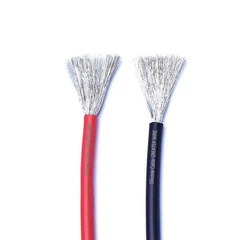
A typical RW90 conductor consists of:
Conductor: Solid or stranded copper, depending on conductor size and manufacturer.
Insulation: Moisture-resistant cross-linked polyethylene (XLPE).
Voltage rating: Commonly 600V for standard Canadian RW90 building wire.
Temperature rating: 90°C in wet and dry locations.
Unlike ACWU90, standard unjacketed RW90 does not have factory-installed metallic armour or an overall protective cable jacket.
It is therefore commonly installed inside an approved raceway or conduit to provide the necessary mechanical protection.
Typical applications include:
Underground duct and conduit systems.
Electrical feeders and branch circuits.
Commercial and industrial distribution.
Indoor and outdoor raceways.
Wet-location wiring systems.
One important distinction is that the 90°C rating describes the maximum conductor operating temperature under the applicable conditions. It does not mean that every installation can automatically use 90°C ampacity values. Terminal temperature limitations, conductor sizing rules, and applicable correction factors must also be considered.
1.3 ACWU90 vs RW90: Basic Construction Comparison
| Technical Parameter | ACWU90 | RW90 |
|---|---|---|
| Product type | Armoured cable | Insulated single conductor |
| Conductor material | Copper or aluminum, depending on product | Commonly copper; aluminum options depend on product |
| Insulation | XLPE | XLPE |
| Temperature rating | Typically 90°C wet/dry | Typically 90°C wet/dry |
| Common voltage rating | 600V | 600V |
| Metallic armour | Yes, typically interlocked aluminum | No |
| Overall PVC jacket | Yes | No, for standard unjacketed RW90 |
| Mechanical protection | Built into cable construction | Normally provided by conduit or raceway |
| Direct burial | Permitted for appropriately certified constructions | Not a general approval for standard unjacketed RW90 |
| Underground conduit | Suitable when permitted by product listing and code | Common application |
| Installation approach | Cable installation | Individual conductors pulled through a raceway |
The most important difference is the source of mechanical protection.
ACWU90 incorporates armour into the cable itself. RW90 relies on the surrounding conduit system when mechanical protection is required.
This distinction determines which wiring method is more practical for a particular underground project.

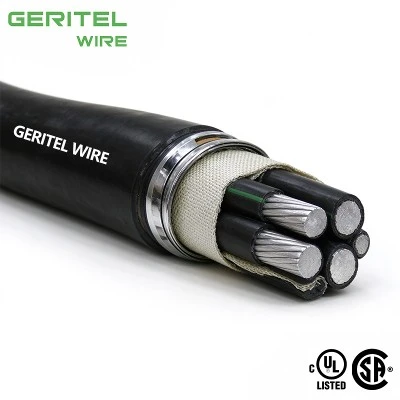
2. Underground Installation: ACWU90 vs RW90 in Conduit
Both products can be considered for underground electrical distribution, but their installation methods are different.
2.1 Installing ACWU90 Underground
One of the main advantages of ACWU90 is that its armoured construction allows it to be used in suitable underground applications without necessarily requiring a separate protective conduit.
For direct-burial installations, the cable is placed directly into an appropriately prepared underground trench, subject to the applicable electrical code and project specifications.
Typical installation considerations include:
Required burial depth.
Soil conditions and potential mechanical damage.
Protection at building entrances and exit points.
Suitable cable connectors and termination fittings.
Grounding and bonding requirements.
Manufacturer-specified bending radius.
Separation from other underground utilities.
The outer PVC jacket helps protect the cable against moisture and environmental exposure, while the aluminum armour provides additional mechanical protection.
However, armoured construction does not eliminate every underground installation risk. Sharp rocks, excavation equipment, excessive pulling tension, and improper termination can still damage the cable.
For this reason, contractors must follow the cable manufacturer's installation instructions and applicable burial requirements.
2.2 Installing RW90 in Underground Conduit
RW90 is frequently used in underground conduit systems because its XLPE insulation is designed for wet and dry locations.
An underground conduit should generally be treated as a wet location because moisture can enter through joints, terminations, condensation, or groundwater infiltration.
Therefore, selecting conductors specifically rated for wet-location operation is essential.
A typical installation involves:
Preparing and installing an approved underground conduit system.
Checking conduit diameter, bends, and conductor fill.
Installing suitable pull boxes or access points where required.
Pulling the correctly sized RW90 conductors through the conduit.
Identifying phase, neutral, and bonding conductors as required.
Completing approved terminations and testing the electrical installation.
The conduit provides a physical barrier against many external hazards and creates a defined pathway for the conductors.
Another advantage is that individual conductors can potentially be replaced or additional conductors installed later, provided the raceway capacity, access arrangements, and electrical code requirements permit it.
However, RW90 itself does not provide the mechanical protection associated with armoured cable. The conduit system must therefore be correctly selected, installed, and maintained.
2.3 Can ACWU90 Also Be Installed in Conduit?
Yes. Underground conduit installation is not exclusive to RW90.
Appropriately certified ACWU90 constructions can also be installed in raceways or conduits where permitted by the applicable code and product instructions.
This means the comparison is not simply:
ACWU90 = direct burial.
RW90 = conduit installation.
A more accurate comparison is:
ACWU90 can provide an integrated armoured cable solution for approved direct-burial, exposed, concealed, and raceway applications.
RW90 provides an insulated conductor solution that normally depends on a separate raceway for mechanical protection.
When ACWU90 is installed inside conduit, contractors must still consider its larger outside diameter, cable pulling tension, bending radius, raceway fill, and termination requirements.
The appropriate method depends on the complete installation design rather than the cable designation alone.
3. Key Technical Differences for Underground Projects
Understanding the construction differences is only the first step. Project engineers and contractors must also evaluate how each wiring method performs under actual underground installation conditions.
3.1 Mechanical Protection
Mechanical protection is one of the most important considerations when selecting an underground wiring method.
ACWU90
ACWU90 incorporates interlocked aluminum armour beneath its outer jacket. This provides additional resistance to crushing and other mechanical stresses compared with an unarmoured conductor.
Its protective construction makes it particularly useful where an approved direct-burial wiring method is preferred or where an armoured cable assembly offers installation advantages.
Nevertheless, the armour should not be treated as completely damage-proof. Severe impacts, incorrect bending, or damage to the outer jacket can compromise the cable.
RW90 in Conduit
RW90 has no integral metallic armour. Its protection comes from the conduit.
The level of mechanical protection therefore depends on:
Conduit material.
Conduit wall thickness and classification.
Burial conditions.
Installation depth.
Protection against external impacts.
Proper joints and fittings.
A correctly specified underground conduit system can provide substantial mechanical protection and may be preferable where the project requires a dedicated underground pathway.
Selection consideration: ACWU90 is attractive when integrated cable protection is desirable. RW90 in conduit is attractive when the project requires a separately engineered protective raceway.
3.2 Moisture Resistance and Wet-Location Suitability
Underground electrical systems frequently encounter moisture, even when installed inside conduit.
This is an important reason why RW90 is commonly selected for underground raceway installations.
| Moisture-Related Factor | ACWU90 | RW90 in Conduit |
|---|---|---|
| XLPE insulation | Yes | Yes |
| Wet-location rating | Typically yes, subject to listing | Yes, for standard RW90 |
| Additional outer protection | PVC jacket | Conduit |
| Underground application | Approved direct burial and raceways, depending on product | Approved wet-location raceways |
| Moisture protection approach | Cable insulation and outer jacket | Insulation and raceway system |
Neither wiring method should be selected on the assumption that underground installations will remain completely dry.
Water infiltration, condensation, and environmental exposure must all be considered during system design.
The cable or conductor must have the appropriate wet-location rating, and all associated connectors, fittings, and enclosures must be suitable for their actual environment.
3.3 Corrosion and Environmental Exposure
Underground environments can expose electrical installations to moisture, chemicals, soil contaminants, and corrosive conditions.
ACWU90 uses aluminum interlocked armour and a PVC outer jacket in common constructions. The jacket provides an additional protective barrier, but damage to it can expose underlying metallic components to the environment.
For RW90 installations, the conduit material and its fittings become important parts of the overall environmental protection system.
For example:
PVC conduit can provide a nonmetallic pathway for underground wiring.
Metallic conduit may require additional corrosion protection depending on the environment.
Underground joints and transitions must be suitable for their installation conditions.
Cable entries and terminations must be protected against moisture ingress.
The correct choice depends on soil chemistry, groundwater conditions, exposure, and local code requirements.
Neither ACWU90 nor RW90 should automatically be considered suitable for every chemically aggressive or highly corrosive environment.
3.4 Electrical Performance and Ampacity
Both ACWU90 and RW90 commonly use XLPE insulation rated for 90°C operation.
However, this does not mean that two installations using the same conductor size will always have identical allowable current-carrying capacity.
Ampacity depends on several factors:
Conductor material.
Conductor cross-sectional area.
Number of current-carrying conductors.
Ambient temperature.
Installation conditions.
Raceway configuration.
Applicable ampacity tables and correction factors.
Terminal temperature limitations.
For RW90 in conduit, conductor grouping and the number of current-carrying conductors can influence ampacity adjustments.
For ACWU90, the cable construction, conductor arrangement, and installation method must also be considered.
Aluminum and copper conductors cannot simply be treated as interchangeable at the same nominal size. Aluminum generally requires a larger conductor size to achieve comparable electrical performance under equivalent design conditions.
Important: Never determine conductor size solely from the 90°C insulation rating. Final ampacity calculations must comply with the applicable electrical code and the equipment terminal ratings.
4. Installation Cost and Labor: Which Option Is More Economical?
The lowest cable purchase price does not necessarily produce the lowest total installation cost.
For underground projects, contractors should compare the complete installed cost of each wiring method.
4.1 ACWU90 Installation Costs
ACWU90 can reduce the need for a separate underground conduit system when direct burial is permitted.
Potential cost advantages include:
Less conduit material.
Fewer conduit installation operations.
Reduced labor associated with assembling a raceway system.
Integrated mechanical protection.
Potentially shorter installation time for suitable cable routes.
However, ACWU90 may have a higher unit purchase price than an equivalent unarmoured conductor.
Its larger diameter and weight can also affect transportation, handling, pulling equipment, and installation labor.
Additional accessories may be required for cable termination and bonding.
4.2 RW90 in Conduit Installation Costs
RW90 may have a lower individual conductor purchase price, but the complete installation requires more than the wire itself.
Potential costs include:
Underground conduit materials.
Excavation and conduit installation.
Bends, couplings, and fittings.
Pull boxes and access points.
Conductor pulling equipment.
Installation labor.
Conduit inspection and testing.
The initial installation can therefore be more expensive than expected if the project requires extensive underground raceways.
However, conduit systems can offer long-term advantages where future modifications or additional circuits are anticipated.
4.3 Total Installed Cost Comparison
| Cost Factor | ACWU90 | RW90 in Conduit |
|---|---|---|
| Cable or wire purchase | Generally higher per comparable conductor configuration | Often lower per individual conductor |
| Conduit material | May not be required for approved direct burial | Required |
| Installation labor | Potentially lower for suitable direct-burial routes | Includes conduit and conductor installation |
| Pulling requirements | Depends on cable route and installation method | Requires pulling individual conductors |
| Termination accessories | Armoured cable fittings and bonding provisions | Conduit fittings and conductor terminations |
| Future circuit modifications | Generally less flexible | Potentially easier if raceway capacity allows |
| Overall cost | Depends on cable price and installation conditions | Depends on raceway design and labor |
There is no universal rule that ACWU90 is always cheaper or that RW90 in conduit is always more economical.
For a straightforward underground feeder, ACWU90 may reduce installation complexity.
For a project requiring a long-term underground raceway network, RW90 may offer better lifecycle flexibility.
The correct comparison should include material, labor, installation equipment, maintenance, and future expansion costs.
5. ACWU90 vs RW90 in Conduit: Which Is Better for Different Underground Applications?
The most suitable wiring method depends on the project environment, installation requirements, and future operational needs.
5.1 Underground Service Feeders
For underground service feeders, ACWU90 may be a practical choice when the cable is approved for the intended installation and direct burial is permitted.
Its integrated armour and protective jacket can reduce the need for a separate protective raceway.
RW90 in conduit may be preferable when the electrical design requires a dedicated underground duct system or when future conductor replacement is an important consideration.
The final selection must also comply with utility requirements and applicable service-entrance regulations.
5.2 Commercial and Industrial Underground Distribution
Commercial and industrial projects frequently require underground distribution between buildings, electrical rooms, transformers, and distribution panels.
Both wiring methods may be appropriate.
ACWU90 can provide an integrated armoured cable solution for feeders and distribution circuits.
RW90 in conduit can be useful where multiple circuits share a raceway system or where the project requires clearly defined underground electrical pathways.
The choice should account for circuit separation, conductor sizing, installation access, and future expansion.
5.3 Outdoor Equipment Connections
Underground connections to pumps, outdoor machinery, lighting systems, and other electrical equipment may involve exposure to moisture, physical damage, and environmental changes.
ACWU90 may be appropriate where its certified construction and termination accessories match the installation conditions.
RW90 in conduit may be preferable where equipment connections are routed through a dedicated raceway system.
In both cases, the transition from underground installation to exposed equipment wiring requires particular attention to mechanical protection, moisture ingress, and termination compatibility.
5.4 Projects Requiring Future Expansion
Where future circuit additions or conductor replacement are expected, underground conduit systems can offer an important advantage.
RW90 conductors can potentially be pulled out and replaced without excavating the entire underground route, provided the conduit remains accessible and suitable for the replacement conductors.
By comparison, replacing directly buried ACWU90 generally requires excavation.
However, this does not mean RW90 in conduit is automatically easier to modify. Raceway fill limitations, pull-box access, bend configurations, and spare capacity must be considered during the original design.
For projects with long-term expansion requirements, the raceway infrastructure may be just as important as the initial conductor selection.
6. ACWU90 vs RW90 in Conduit: Quick Decision Table
The following table summarizes which wiring method may be more suitable under different project conditions.
| Project Requirement | Preferred Option | Reason |
|---|---|---|
| Approved direct-burial installation | ACWU90 | Integrated armour and outer jacket |
| Underground conduit installation | RW90 or ACWU90 | Both may be suitable when approved |
| Need for factory-installed armour | ACWU90 | Integral metallic mechanical protection |
| Dedicated underground raceway network | RW90 | Individual conductors installed in conduit |
| Potential future conductor replacement | RW90 in conduit | Conductors may be replaceable |
| Reduced need for separate conduit | ACWU90 | Direct burial may be permitted |
| Multiple circuits in a planned raceway system | RW90 | Flexible conductor arrangement |
| Underground industrial feeders | Either | Depends on project design and approvals |
The table is a preliminary selection guide, not a substitute for an electrical engineering review.
In particular, the direct-burial suitability of ACWU90 and the permitted use of RW90 in underground raceways must be confirmed using the exact product certification and local installation requirements.
7. What Should Buyers and Contractors Check Before Ordering?
Selecting the correct cable is not only an engineering decision. It also affects procurement, installation scheduling, certification documentation, and long-term project reliability.
Before purchasing ACWU90 or RW90, buyers should confirm the following technical details.
7.1 Conductor Material and Size
Confirm whether copper or aluminum conductors are required.
Aluminum conductors can offer cost and weight advantages in suitable feeder applications, while copper may be preferred where conductor size, termination compatibility, or project specifications make it more appropriate.
The conductor size must be determined from the calculated load, allowable ampacity, voltage drop, fault-current requirements, and applicable electrical code.
7.2 Voltage and Temperature Ratings
Check the required system voltage and conductor temperature rating.
Standard Canadian ACWU90 and RW90 products are commonly available in 600V configurations with 90°C XLPE insulation.
However, product availability and approved ratings vary by manufacturer and certified construction.
Do not assume that all products carrying the same general designation have identical electrical ratings.
7.3 CSA Certification and Applicable Standards
For Canadian projects, certification is particularly important.
Commonly relevant product standards include:
CSA C22.2 No. 38: Thermoset-insulated wires and cables, relevant to RW90 insulation systems.
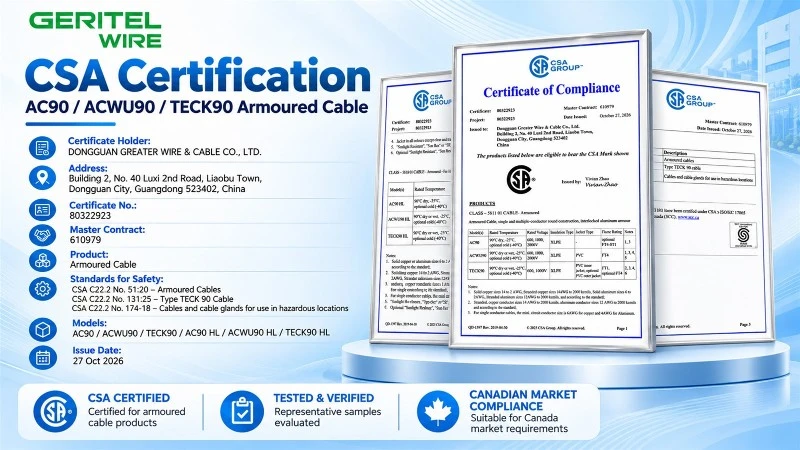
CSA C22.2 No. 51: Armoured cables, relevant to ACWU90.
CSA C22.2 No. 174: Additional requirements for cables and cable glands used in hazardous locations, where applicable.
A key technical distinction is that ACWU90 cable constructions incorporate RW90-type insulated conductors, but the complete armoured cable is evaluated under the applicable armoured cable requirements.
The RW90 insulation designation alone does not establish that an entire ACWU90 assembly has been certified.
Buyers should request the manufacturer's certification information and verify that the ordered construction, conductor material, voltage rating, and intended application are covered.
7.4 Environmental and Installation Requirements
For underground projects, confirm:
Direct-burial or raceway installation requirements.
Wet-location suitability.
Sunlight resistance where exposed.
Low-temperature installation limitations.
Chemical and corrosion exposure.
Mechanical protection requirements.
Grounding and bonding arrangements.
Applicable burial depth and separation requirements.
These details should be established before issuing the purchase order.
7.5 Cable Length, Packaging, and Delivery
Underground feeder projects often require long cable runs.
Buyers should confirm the required cable length, drum size, packaging, delivery schedule, and installation sequence.
For RW90, conductor quantities and lengths must account for all phase, neutral, and bonding requirements.
For ACWU90, the ordered cable configuration must match the required number of conductors and conductor sizes.
Clear technical specifications help reduce ordering mistakes, installation delays, and unnecessary material waste.

8. Common Mistakes When Choosing ACWU90 or RW90 for Underground Projects
Even experienced procurement teams can encounter problems when cable selection is based only on product names or nominal ratings.
The following mistakes should be avoided.
Mistake 1: Assuming RW90 Is Suitable for Direct Burial
Standard unjacketed RW90 is generally used in approved raceways. Its 90°C wet-location rating does not automatically establish direct-burial suitability.
Always check the exact product listing before selecting a direct-burial method.
Mistake 2: Assuming ACWU90 Never Needs Conduit
ACWU90 can be used in approved raceway installations. Its armoured construction does not prevent its use in conduit where permitted.
The decision should be based on the project design and installation requirements.
Mistake 3: Treating 90°C as the Guaranteed Operating Ampacity Basis
The 90°C marking identifies the insulation temperature rating. Actual allowable ampacity can be limited by terminal ratings, conductor grouping, ambient temperature, and other code requirements.
Mistake 4: Ignoring Grounding and Bonding Requirements
ACWU90 and RW90 installations have different bonding arrangements.
The presence of aluminum armour does not mean that every cable construction can automatically use its armour as the sole equipment bonding path.
Contractors must follow the manufacturer's instructions and applicable electrical code requirements.
Mistake 5: Comparing Only Cable Purchase Prices
A lower wire price does not necessarily mean a lower project cost.
Underground conduit materials, excavation, pulling labor, accessories, and future maintenance should all be included in the comparison.
9. Final Verdict: ACWU90 or RW90 in Conduit?
There is no single best wiring method for every underground electrical project.
ACWU90 is often the more practical option when a project requires an armoured cable assembly, integrated mechanical protection, and an approved direct-burial installation. It can also be installed in suitable raceways where permitted.
RW90 in conduit is often a better fit when the project requires a dedicated underground raceway system, individual conductor flexibility, or potential future conductor replacement.
The final decision should consider more than the insulation rating. Mechanical protection, moisture exposure, conductor material, ampacity, installation costs, certification, and future maintenance all contribute to the correct selection.
For electrical contractors, distributors, and project engineers, the most reliable approach is to compare the complete wiring systems rather than treating ACWU90 and RW90 as interchangeable products.
Before ordering, confirm the required conductor size, voltage rating, product certification, and approved installation method against the project specifications and applicable electrical code.
10. Choose the Right Underground Cable with GERITEL WIRE
Selecting between ACWU90 and RW90 is an important step in building a safe, reliable, and cost-effective underground electrical distribution system. GERITEL WIRE, manufactured by Dongguan Greater Wire & Cable Co., Ltd., provides cable solutions for international electrical distributors, contractors, and industrial projects. Whether you require ACWU90 armoured cables for approved underground applications or need customized conductor specifications for your project, our team can help you evaluate product requirements, construction options, and certification needs. Contact GERITEL WIRE with your technical specifications, quantities, and project requirements to discuss suitable cable solutions and request a competitive quotation.
Dongguan Greater Wire & Cable Co., Ltd.
Tel/WhatsApp/Wechat: +86 136 6257 9592
Tel/WhatsApp/Wechat: +86 135 1078 4550
Email: manager01@greaterwire.com
Website: www.greaterwire.com