


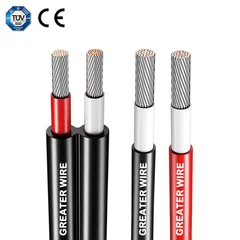

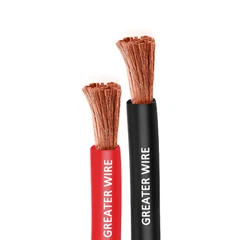
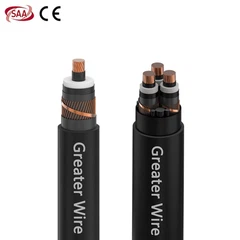
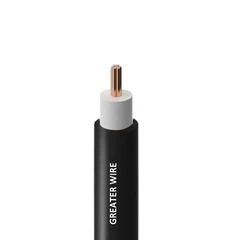
When purchasing or specifying ACWU90 cable for a Canadian electrical project, understanding its construction and electrical ratings is only part of the job. Buyers, electrical contractors, and project engineers must also understand the standards governing the cable itself and the electrical code requirements governing its installation.
Two documents are particularly important: CSA C22.2 No. 51, which establishes product requirements for armoured cables, and CSA C22.1, the Canadian Electrical Code (CEC), Part I, which governs electrical installation methods.
Although these documents work together, they serve different purposes. A cable manufactured to CSA C22.2 No. 51 must still be installed according to the applicable CEC requirements. A product's certification does not automatically authorize its use in every location or installation method.
For ACWU90 buyers and electrical professionals, understanding this distinction helps prevent specification errors, installation problems, and compliance issues.
This guide explains what CSA C22.2 No. 51 means for ACWU90, how important Canadian Electrical Code rules apply, and what purchasers should verify before ordering cable for Canadian projects.
1. What Is CSA C22.2 No. 51?
CSA C22.2 No. 51 is a Canadian product standard titled Armoured Cables. It establishes technical requirements for specific types of insulated cables incorporating metallic interlocked armour.
The standard covers several cable designations, including:
AC90
ACWU90
ACG90
ACGWU90
These cable types share an armoured construction concept, but their insulation systems, outer coverings, and permitted applications are not necessarily identical.
1.1 What Does the Standard Cover?
CSA C22.2 No. 51 addresses the design, construction, and performance requirements of covered armoured cables.
Its scope includes:
Conductor requirements
The standard specifies requirements for insulated cable conductors, including conductor construction, material, dimensions, and electrical characteristics.
Insulation requirements
It establishes requirements for the insulation surrounding the conductors, including relevant physical and electrical performance characteristics.
Armour construction
The standard addresses metallic interlocked armour, which provides mechanical protection and forms part of the cable's overall construction.
Outer jacket requirements
For jacketed cable types such as ACWU90, the standard includes requirements applicable to the outer covering.
Performance testing
The standard includes testing requirements covering electrical, mechanical, and material properties of the finished cable and its components.
Product identification
Cable markings provide information necessary for identifying the product type, manufacturer, electrical ratings, and applicable certification details.
The purpose is to establish consistent product requirements so that armoured cables can be evaluated against a recognized Canadian safety standard.
1.2 Which Edition of CSA C22.2 No. 51 Should Buyers Reference?
Standards are periodically revised to reflect changes in product technology, manufacturing practices, and safety requirements.
The relevant publication history includes:
| Edition | Status |
|---|---|
| CSA C22.2 No. 51-2014 | Previous edition |
| CSA C22.2 No. 51-2014 (R2018) | Reaffirmed edition |
| CSA C22.2 No. 51-2020 | Fourteenth? No - thirteenth edition in the publication sequence |
| CSA C22.2 No. 51-2026 | Fourteenth edition; latest published edition as of November 2026 |
The 2026 edition supersedes the 2020 edition and introduces several technical updates, including:
Changes to cable assembly lay-length requirements.
Additional provisions for PCS construction in Type ACWU90.
Updated electrical resistance test requirements.
Revisions to FT4 and halogen-free marking requirements.
Updated conductor colour identification requirements.
Revised mechanical performance requirements following aging and oil immersion.
These changes demonstrate why buyers should not assume that every ACWU90 product specification based on an older edition automatically reflects the latest requirements.
However, there is an important distinction: the latest published edition of a product standard and the edition referenced by an existing product certification or a project specification are not necessarily the same.
Before ordering, confirm which edition applies to the particular product certification and the requirements of the project.
1.3 Does CSA C22.2 No. 51 Apply to All ACWU90 Cables?
The standard covers ACWU90 as a defined cable type, but not every product marketed as armoured cable automatically qualifies.
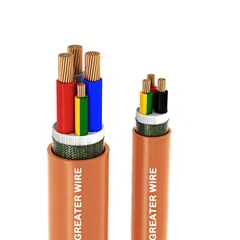
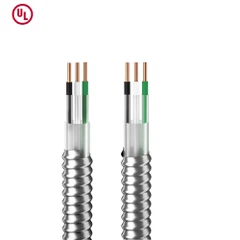
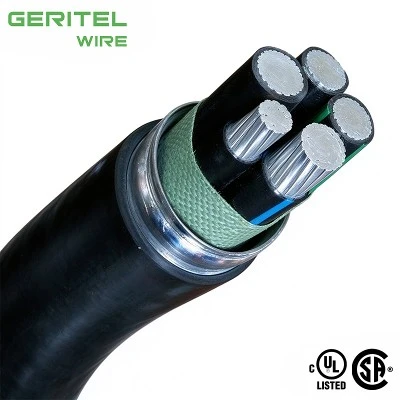
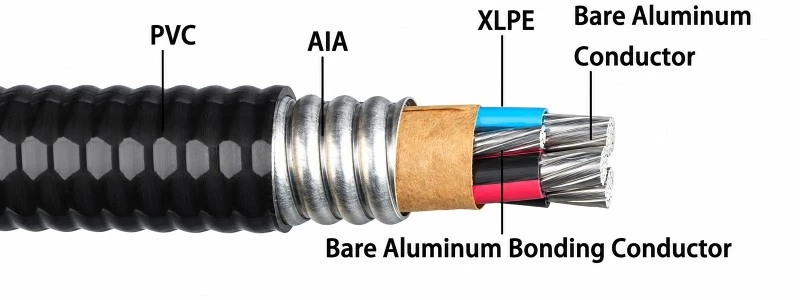
A typical ACWU90 construction includes:
Copper or aluminum conductors, depending on the product.
Cross-linked polyethylene (XLPE) insulation.
Interlocked metallic armour, commonly aluminum.
A thermoplastic outer jacket, commonly PVC.
The complete cable construction must meet the applicable product requirements.
For example, an ordinary insulated conductor placed inside a metal protective covering does not automatically become CSA-certified ACWU90.
The conductor arrangement, insulation, armour, jacket, manufacturing process, and testing must all correspond to the applicable certified construction.
This is particularly important when comparing products from different manufacturers or sourcing cables internationally.
2. What Does CSA Certification Mean for ACWU90?
Understanding a product standard is different from understanding product certification.
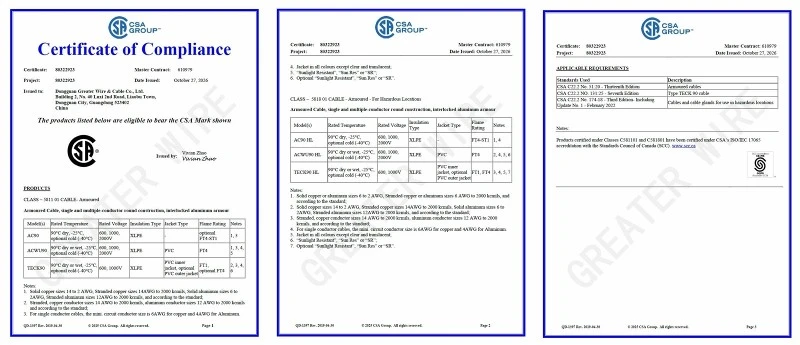
CSA C22.2 No. 51 establishes the requirements. Certification provides evidence that a specific product or product family has been evaluated against the applicable requirements by a recognized certification organization.
2.1 Standard Compliance vs Product Certification
These terms are related, but they should not be used interchangeably.
| Term | Meaning |
|---|---|
| CSA C22.2 No. 51 | Technical product standard for covered armoured cables |
| Designed to meet CSA requirements | Manufacturer's statement about product design |
| Tested to CSA C22.2 No. 51 | Product has undergone specified testing, but this statement alone does not establish certification |
| CSA-certified | Product is covered by an applicable CSA certification |
| CSA certification mark | Identifies a product certified under the relevant certification program |
A manufacturer may state that an ACWU90 cable is designed according to CSA requirements. However, this statement alone does not establish that the product has been independently certified.
For Canadian electrical projects, buyers should verify the actual certification status rather than relying solely on a quotation, catalogue description, or manufacturer's declaration.
2.2 What Should a CSA-Certified ACWU90 Cable Show?
Depending on the applicable certification program and product construction, cable identification may include:
Manufacturer's name or registered identification.
CSA certification mark or another accepted certification mark.
Cable type designation, such as ACWU90.
Conductor size and material.
Number of conductors.
Voltage rating.
Temperature rating.
Additional markings required by the applicable product standard.
Other markings may identify characteristics such as flame performance, sunlight resistance, low-temperature suitability, or hazardous-location approval.
Not every ACWU90 cable carries the same additional ratings.
For example, a product's sunlight resistance or low-temperature rating should never be assumed merely because it is designated ACWU90.
Buyers should verify these characteristics using the actual cable legend, certification documentation, and technical datasheet.
2.3 How Can Buyers Verify ACWU90 Certification?
Before placing an order, procurement teams should request the following documents:
CSA certificate or certification record: Confirms the manufacturer's certification and the applicable product scope.
Technical datasheet: Identifies the cable construction, voltage rating, temperature rating, conductor options, and physical dimensions.
Product marking information: Shows the actual identification printed on the cable.
Test documentation: Provides supporting information where specific project or customer requirements call for it.
Where necessary, buyers should verify the certification number through the relevant certification organization's database.
One important point: certification of one product family does not automatically cover every cable manufactured by the same company.
The actual conductor size, material, voltage rating, cable construction, and product type must fall within the certification scope.

3. What Is the Canadian Electrical Code (CEC)?
CSA C22.1, known as the Canadian Electrical Code, Part I, is the primary Canadian reference for electrical installation safety.
While CSA C22.2 No. 51 focuses on the cable as a manufactured product, the CEC explains how electrical wiring systems should be installed.
The 2024 edition is the 26th edition of the Canadian Electrical Code.
The Code addresses requirements involving:
Wiring methods.
Cable installation.
Electrical grounding and bonding.
Mechanical protection.
Underground installations.
Conductor sizing and ampacity.
Electrical equipment connections.
Environmental suitability.
For ACWU90 applications, Section 12, Wiring Methods, is particularly important.
However, the CEC is a model safety code that must be adopted by the relevant regulatory authority. Provincial and territorial adoption dates, amendments, and local requirements can differ.
Therefore, contractors should confirm which edition and local modifications apply to their project.
3.1 Why Does the CEC Matter for ACWU90?
Consider an underground feeder installation.
A contractor may purchase ACWU90 cable with the correct voltage rating, conductor size, and CSA certification.
However, the installation may still be non-compliant if:
The burial depth is insufficient.
The cable jacket is exposed to prohibited mechanical damage.
The cable is incorrectly terminated.
Armour continuity and bonding requirements are not satisfied.
The installation does not meet applicable environmental or location requirements.
This illustrates an important principle:
Product certification establishes the suitability of the manufactured cable within its certified scope. The electrical code determines whether the selected cable and installation method are acceptable for the actual project.
Both must be considered before installation begins.
4. Important Canadian Electrical Code Rules for ACWU90
Several rules in CEC Section 12 directly influence ACWU90 selection, installation, and inspection.
The following explanations use the 2024 Canadian Electrical Code as their reference edition.
4.1 Rule 12-012: Underground Installations
Rule 12-012 addresses the installation of underground cables and raceways.
It is especially important for ACWU90 because the cable is commonly used in underground power distribution.
Key requirements include:
Minimum burial cover
Direct-buried cables and raceways must meet the minimum cover requirements in Table 53.
The required depth depends on the installation conditions. It is not appropriate to assume that every ACWU90 installation has the same burial-depth requirement.
Mechanical protection
The Code permits certain reductions in minimum cover when specified mechanical protection is installed above the underground wiring.
The protection must meet the applicable material and dimensional requirements.
Backfill requirements
Direct-buried cables must be arranged properly, with screened sand or screened earth at least 75 mm deep above and below the conductors.
The purpose is to reduce the risk of damage from unsuitable backfill materials.
Protection at cable risers
Where underground cables rise for termination, splicing, or access, additional mechanical protection is required.
The Code describes the use of vertical rigid conduit or other acceptable protection, including the relevant installation height and termination arrangements.
Underground identification
Suitable marking tape or other adequate permanent marking must identify the location of the underground installation.
Protection against movement
Where frost or settlement could move underground cables or raceways, the installation must include measures to prevent damage.
For ACWU90 buyers, these requirements mean that direct-burial suitability does not eliminate the need for proper trench preparation, burial depth, backfill, and protection at transition points.
4.2 Rule 12-602: Use of Armoured Cable
Rule 12-602 establishes general conditions for armoured cable installations.
It is particularly relevant to ACWU90 because it distinguishes between armoured cable types according to their approved applications.
Under Subrule 12-602(2), armoured cable used for underground runs must be a type identified in Table 19 as suitable for direct burial.
The same principle applies to certain installations in masonry or concrete and locations exposed to weather, continuous moisture, excessive humidity, or substances that may damage insulation.
This is why identifying the exact CSA cable designation matters.
AC90 and ACWU90 are not interchangeable for every installation. Their outer coverings and permitted locations differ.
Another important provision is Subrule 12-602(4), which permits armoured cable with an overall jacket to be installed in a raceway when the installation meets Rule 12-902(2).
This means ACWU90 is not limited to direct burial. It can also be used in suitable conduit or raceway installations under the applicable conditions.
4.3 Rule 12-606: Use of Thermoplastic-Covered Armoured Cable
Rule 12-606 is especially important when ACWU90 is installed underground.
It states that armoured cable listed in Table 19 as suitable for direct earth burial and having a thermoplastic outer covering must be used only where the outer covering will not be subjected to mechanical damage.
This requirement deserves attention because ACWU90 commonly has a PVC outer jacket.
Although the cable is designed for approved underground applications, its outer jacket must still be protected against damage.
Potential risks include:
Sharp rocks in backfill.
Improper cable handling.
Damage during trench preparation.
Excavation equipment.
Excessive pulling forces.
Contact with unsuitable materials.
The presence of metallic armour does not mean the outer jacket can be ignored.
For contractors, proper trench preparation and backfill selection are essential parts of a compliant installation.
4.4 Rule 12-608: Continuity of Armoured Cable
Rule 12-608 addresses the mechanical and electrical continuity of armoured cable.
The armour must be installed so that its continuity is maintained throughout the cable run.
It must also be mechanically and electrically secured to the equipment to which it is attached, subject to the specific exception in the Code.
The rule also recognizes a particular arrangement at the final termination of a feeder or branch circuit when:
The final enclosure is non-metallic.
An electrical connection between the armour and bonding system has been established at the supply end.
The equipment at the final termination is bonded using the cable's internal bonding conductor.
This is important because metallic armour and an internal bonding conductor have different roles in the cable assembly.
Installers must not assume that the armour automatically replaces every required bonding provision.
The bonding arrangement must follow the certified cable construction and applicable electrical code requirements.
4.5 Rule 12-610: Terminating Armoured Cable
Rule 12-610 addresses conductor protection at the points where conductors emerge from the armour.
Without suitable protection, the sharp edges of metallic armour or fittings may damage conductor insulation.
The Code requires suitable insulating bushings or equivalent protection.
For No. 8 AWG and larger copper or aluminum conductors, additional requirements apply to the type of protection used.
This rule is important during:
Distribution panel connections.
Transformer terminations.
Motor connections.
Junction box installations.
Equipment feeder connections.
Proper cable glands, connectors, bushings, and termination accessories should be selected for the actual cable construction and installation environment.
4.6 Rule 12-614: Bending Radius of Armoured Cable
ACWU90 contains metallic armour, so it cannot be bent as freely as an ordinary insulated conductor.
Rule 12-614 establishes a minimum bending radius for armoured cable.
Under Subrule 12-614(1), the radius of the curve at the inner edge of the bend must be at least six times the external diameter of the armoured cable.
Bends must also be made without undue distortion of the armour or damage to the cable's inner and outer surfaces.
For example, if an ACWU90 cable has an outside diameter of 30 mm, the general minimum inner-edge bend radius calculated under this provision is:
30 mm × 6 = 180 mm.
This is a simple illustration, not a substitute for checking the manufacturer's installation instructions or any more specific applicable requirements.
Correct bending practices help prevent:
Armour deformation.
Outer jacket cracking.
Insulation damage.
Excessive stress on conductors.
Difficulties during cable termination.
For large feeder cables, the required bending space should be considered during electrical room and equipment layout design.
5. What Does CEC Table 19 Say About ACWU90?
CEC Table 19 is one of the most useful references when determining whether a particular cable type is suitable for an intended installation.
It identifies the permitted applications and installation conditions for different CSA cable designations.
For ACWU90, the 2024 Code identifies several important characteristics.
| Application or Condition | ACWU90 Status under CEC Table 19 |
|---|---|
| Dry locations | Permitted |
| Damp locations | Permitted |
| Wet locations | Permitted |
| Consumer's service | Permitted |
| Feeders | Permitted |
| Branch circuits | Permitted |
| Exposed installation | Permitted |
| Concealed installation | Permitted |
| Installation in raceways | Permitted |
| Installation in cable trays | Subject to applicable FT4 and other requirements |
| Direct burial | Permitted under Rule 12-012 |
| Sunlight exposure | Subject to Rule 2-136 |
| Outdoor overhead | Not generally identified as a permitted application in this table |
These permissions must be interpreted together with the applicable rules and product requirements.
For example, the fact that ACWU90 is listed for direct burial does not mean that it can be installed at any depth or in any soil condition without additional precautions.
Similarly, permission for raceway installation does not remove the requirements for conduit fill, cable pulling tension, or bending radius.
5.1 Is ACWU90 Suitable for Wet Locations?
Yes.
CEC Table 19 identifies ACWU90 as suitable for wet locations.
This is important because underground raceways are generally treated as locations where moisture may accumulate.
The cable's XLPE insulation and overall jacket are part of its moisture-resistant construction.
However, wet-location suitability does not mean that every connector, enclosure, or termination method is automatically suitable for wet environments.
All components must be selected according to their own ratings and installation requirements.
5.2 Is ACWU90 Suitable for Direct Burial?
Yes.
CEC Table 19 identifies ACWU90 as suitable for direct burial, subject to Rule 12-012.
The product's interlocked armour and thermoplastic outer jacket provide an integrated construction for approved underground installations.
Nevertheless, contractors must still comply with burial-depth, backfill, marking, mechanical protection, and transition requirements.
5.3 Can ACWU90 Be Installed in Conduit?
Yes.
CEC Table 19 permits ACWU90 in raceways, and Rule 12-602(4) addresses the use of jacketed armoured cable in a raceway.
The relevant requirements of Rule 12-902(2) must also be considered.
These include:
Permitted raceway fill.
Cable pulling tension.
Sidewall bearing pressure.
Conduit length and bend configuration under the applicable alternative conditions.
Because ACWU90 is larger and less flexible than many individual insulated conductors, conduit sizing should be based on the cable's actual outside diameter and manufacturer data.
6. How Do CSA C22.2 No. 51 and CEC Rules Work Together?
For practical project planning, it helps to understand the relationship between product certification and installation compliance.
Consider an underground ACWU90 feeder installation.
The project must satisfy two different sets of requirements.
Stage 1: Product selection and certification
CSA C22.2 No. 51 establishes the applicable technical requirements for the armoured cable.
The buyer should verify:
Cable type.
Conductor material.
Conductor size.
Number of conductors.
Insulation type.
Armour construction.
Outer jacket.
Voltage rating.
Temperature rating.
Certification scope.
Stage 2: Installation planning
The electrical contractor must apply the relevant CEC requirements.
These include:
Rule 12-012 for underground installations.
Rule 12-602 for armoured cable use.
Rule 12-606 for thermoplastic-covered armoured cable.
Rule 12-608 for armour continuity.
Rule 12-610 for termination protection.
Rule 12-614 for bending radius.
Other rules may apply depending on the project, including conductor sizing, ampacity, grounding and bonding, raceway installation, and service requirements.
Stage 3: Inspection and acceptance
The completed installation must satisfy the applicable local electrical regulations and inspection requirements.
A CSA-certified cable does not automatically mean the entire installation will pass inspection.
The electrical authority having jurisdiction evaluates the installation under the rules applicable in that location.
The following table summarizes the relationship.
| Requirement | Governing Reference | Main Purpose |
|---|---|---|
| Cable construction | CSA C22.2 No. 51 | Defines product requirements |
| Cable performance testing | CSA C22.2 No. 51 | Evaluates cable components and performance |
| Product certification | Applicable certification program | Confirms certified product scope |
| Underground burial | CEC Rule 12-012 | Establishes installation requirements |
| Armoured cable applications | CEC Rule 12-602 | Defines permitted uses |
| Jacket protection | CEC Rule 12-606 | Prevents mechanical damage |
| Armour continuity | CEC Rule 12-608 | Addresses electrical and mechanical continuity |
| Cable termination | CEC Rule 12-610 | Protects conductors at armour exits |
| Bending radius | CEC Rule 12-614 | Prevents cable damage during installation |
| Raceway installation | CEC Rules 12-902 and related rules | Establishes raceway installation conditions |
This distinction is essential for electrical contractors, engineering consultants, and cable procurement teams.
7. Common Compliance Mistakes When Purchasing ACWU90
Understanding the standards is useful, but avoiding common procurement mistakes is equally important.
7.1 Assuming Every ACWU90 Cable Has the Same Voltage Rating
ACWU90 products are available in different certified configurations.
Although 600V is common in commercial and industrial distribution, the CSA product standard covers different voltage ratings within its scope.
Buyers must verify the actual rating of the selected product rather than assuming that every ACWU90 cable has identical electrical specifications.
7.2 Assuming a Manufacturer's Declaration Equals CSA Certification
A statement such as "manufactured according to CSA standards" is not necessarily proof of third-party certification.
Request the relevant certificate and verify that the product is included in its scope.
7.3 Ignoring the Cable's Additional Markings
Additional markings can affect whether a cable is suitable for a particular environment.
Examples include:
FT4 flame performance.
Sunlight resistance.
Low-temperature ratings.
Hazardous-location approvals.
Additional environmental properties.
These characteristics must be confirmed separately.
7.4 Assuming Direct Burial Means No Mechanical Protection Is Required
ACWU90 is listed for direct burial, but the CEC still requires suitable installation practices.
Rule 12-606 specifically addresses protection of thermoplastic-covered armoured cable against mechanical damage.
Improper backfill and inadequate protection during installation can compromise the cable.
7.5 Ignoring Armour Bonding and Termination Requirements
Armour continuity, bonding conductors, suitable connectors, and insulating bushings all contribute to installation safety.
These details should be included in the electrical installation plan rather than left until the final termination stage.
7.6 Using an Outdated Code Edition
Canadian electrical requirements may change as new editions are published and adopted.
A project using an older specification may not automatically be governed by the latest published Code.
Contractors should confirm the edition adopted by their provincial or territorial authority and check for applicable amendments and interpretations.

8. ACWU90 Purchasing Checklist for Canadian Projects
Before requesting a quotation or issuing a purchase order, buyers should prepare a clear technical specification.
The following checklist can help reduce procurement and compliance risks.
| Item | Information to Confirm |
|---|---|
| Cable designation | ACWU90 |
| Applicable product standard | CSA C22.2 No. 51 |
| Standard edition | Confirm project and certification requirements |
| Conductor material | Copper or aluminum |
| Conductor size | AWG or kcmil |
| Number of conductors | Required circuit configuration |
| Insulation | XLPE or specified certified construction |
| Armour | Interlocked metallic armour |
| Outer jacket | Required jacket material and properties |
| Voltage rating | As specified by the electrical design |
| Temperature rating | Typically 90°C for ACWU90 |
| Additional markings | FT4, sunlight resistance, low-temperature or other specified ratings |
| Installation method | Direct burial, raceway, cable tray, or other approved method |
| Certification | Verify the actual certificate and product scope |
| Documentation | Datasheet, certification information, and cable marking details |
| Delivery requirements | Length, reel size, packaging, and delivery schedule |
Providing these details to the manufacturer helps ensure that the proposed cable matches the actual project requirements.
For large commercial and industrial orders, it is also advisable to confirm conductor dimensions, overall cable diameter, minimum bending radius, cable weight, and termination compatibility before finalizing the purchase.
9. Final Thoughts: Why Both Product Standards and Installation Rules Matter
CSA C22.2 No. 51 and the Canadian Electrical Code serve complementary but different purposes in ACWU90 applications.
CSA C22.2 No. 51 establishes the technical requirements for the armoured cable itself, including its construction and performance.
The Canadian Electrical Code determines how that cable can be selected and installed in real electrical systems.
For ACWU90, important considerations include direct-burial suitability, wet-location applications, jacket protection, armour continuity, termination methods, and bending radius.
The most reliable approach is to verify the cable's certification first and then evaluate its intended application against the CEC edition and local regulations governing the project.
For distributors, contractors, and engineering buyers, understanding both documents is essential for making technically sound purchasing decisions and avoiding costly installation or inspection problems.
10. Source ACWU90 Cables with GERITEL WIRE
Choosing the right ACWU90 cable requires more than checking its conductor size and voltage rating. Product certification, cable construction, and Canadian Electrical Code requirements must all be considered to ensure suitability for the intended application. GERITEL WIRE, manufactured by Dongguan Greater Wire & Cable Co., Ltd., provides armoured cable solutions for international distributors, electrical contractors, and industrial project buyers. Whether you need ACWU90 cables for underground power distribution, commercial installations, or industrial applications, our team can help you evaluate technical specifications and product requirements. Contact GERITEL WIRE to discuss your project, request product documentation, and obtain a competitive quotation.
Dongguan Greater Wire & Cable Co., Ltd.
Tel/WhatsApp/Wechat: +86 136 6257 9592
Tel/WhatsApp/Wechat: +86 135 1078 4550
Email: manager01@greaterwire.com
Website: www.greaterwire.com