



Introduction
Choosing ACWU90 cable for an underground feeder involves more than selecting a conductor size. The cable must match the electrical load, operating voltage, installation environment, soil conditions, mechanical protection requirements, and applicable electrical codes.
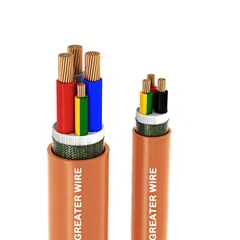
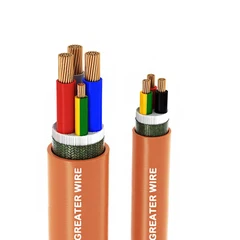
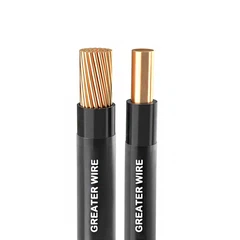
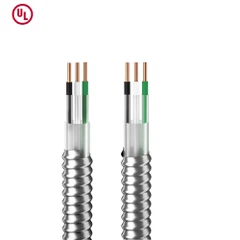
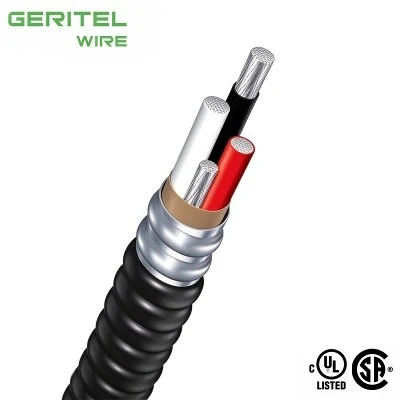
ACWU90 is a Canadian-standard armoured cable commonly used for underground feeders, service entrances, and power distribution in commercial, industrial, and multi-residential buildings. Its combination of aluminum conductors, XLPE insulation, interlocked aluminum armour, and an outer PVC jacket makes it a practical option for installations where moisture resistance and mechanical protection are important.
However, not every ACWU90 cable is automatically suitable for every underground installation. Conductor sizing, bonding arrangements, direct-burial approval, voltage drop, and local inspection requirements must all be considered.
This guide explains how to choose ACWU90 cable for an underground feeder, helping electrical contractors, engineers, distributors, and procurement professionals make informed purchasing decisions.
1. Understand What ACWU90 Cable Is
Before selecting an underground feeder cable, it is important to understand its construction and electrical characteristics.
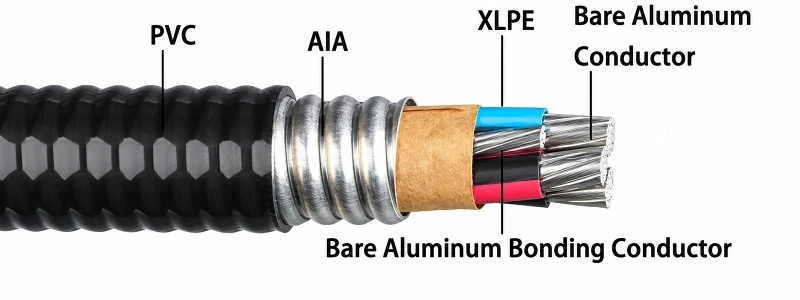
ACWU90 is an armoured cable type used in the Canadian electrical market. A typical aluminum ACWU90 cable consists of the following components:
PPT - Conductors, Cables, and Raceways PowerPoint Presentation, free download - ID:1617229
slideserve.com
1.1 Typical ACWU90 Cable Construction
|
Component |
Material |
Main Function |
|---|---|---|
|
Conductor |
AA-8000 series aluminum alloy |
Carries electrical current |
|
Insulation |
Cross-linked polyethylene (XLPE) |
Provides electrical insulation |
|
Bonding conductor |
Bare aluminum or other specified bonding arrangement |
Provides an electrical bonding path |
|
Armour |
Aluminum interlocked armour (AIA) |
Provides mechanical protection |
|
Outer jacket |
PVC |
Protects against moisture, abrasion, and environmental exposure |
The exact construction may vary depending on the manufacturer, conductor configuration, and product specification. For example, single-conductor and multi-conductor ACWU90 cables may use different bonding arrangements.
1.2 Key Electrical and Environmental Characteristics
Typical aluminum ACWU90 products offer the following characteristics:
|
Characteristic |
Typical Specification |
|---|---|
|
Rated voltage |
600 V |
|
Maximum conductor temperature |
90°C |
|
Insulation |
XLPE, CSA Type RW90 |
|
Armour |
Aluminum interlocked armour |
|
Outer jacket |
PVC |
|
Installation environments |
Wet and dry locations |
|
Underground applications |
Direct burial where specifically approved |
|
Additional applications |
Cable trays, raceways, and service entrances |
These are typical product characteristics, not universal specifications for every ACWU90 cable. Always confirm the manufacturer's datasheet and cable markings before ordering.
1.3 Why Is ACWU90 Used for Underground Feeders?
ACWU90 offers several practical advantages for underground power distribution:
Moisture resistance: XLPE insulation and the PVC outer jacket help protect the cable in wet environments.
Mechanical protection: Interlocked aluminum armour helps protect the conductors against mechanical damage.
Installation flexibility: Approved products can be installed in cable trays, raceways, and direct-burial applications.
Temperature capability: The 90°C conductor insulation rating provides useful thermal capacity when the applicable electrical code permits its use.
Reduced installation complexity: Its integrated construction can eliminate the need for separate conduit and individual conductors in some approved installations.
For underground feeder projects, these characteristics can make ACWU90 a practical alternative to conventional conductor-and-conduit systems.

2. Check Whether ACWU90 Is Suitable for the Underground Installation
Not all underground cable installations have the same environmental and mechanical requirements. Before choosing ACWU90, evaluate the actual installation method and site conditions.
2.1 Direct Burial or Underground Conduit?
ACWU90 is available in product configurations approved for direct earth burial. However, direct-burial suitability must be confirmed through the cable's certification, markings, and manufacturer documentation.
The two common installation methods are:
|
Installation Method |
Description |
Key Considerations |
|---|---|---|
|
Direct burial |
Cable is installed directly in the ground |
Confirm direct-burial approval, burial protection, soil conditions, and local code requirements |
|
Underground conduit |
Cable is installed inside an underground raceway |
Check conduit fill, cable pulling tension, bending radius, and moisture exposure |
For example, Nexans identifies its ACWU90 cable as suitable for direct earth burial, subject to protection required by the inspection authority. Southwire also lists direct earth burial among its intended applications.
Industrial+1
Important: Do not assume that every ACWU90 product from every manufacturer has identical direct-burial approval. Verify the exact product before installation.
2.2 Consider Soil and Ground Conditions
Underground environments can expose cables to conditions that differ significantly from indoor installations.
Consider the following factors:
Moisture: Groundwater, rainwater, and continuously wet soil make wet-location suitability essential.
Soil temperature: Higher soil temperatures can reduce the allowable current-carrying capacity.
Thermal resistivity: Dry, rocky, or poorly conducting soil can restrict heat dissipation.
Chemical exposure: Industrial sites may contain chemicals or contaminants that affect cable jackets.
Mechanical damage: Construction activities, rocks, excavation equipment, and vehicle traffic can create additional risks.
A PVC outer jacket and interlocked aluminum armour provide useful protection, but they do not make the cable immune to every underground hazard.
For projects involving aggressive chemicals, highly corrosive soil, or unusual environmental conditions, request specific material compatibility information from the cable manufacturer.
2.3 Confirm the Required Burial Depth
Burial depth is an important consideration when selecting and installing an underground feeder.
However, there is no single burial-depth value that should automatically be applied to every ACWU90 installation. Requirements depend on the applicable electrical code, installation method, voltage, location, and additional mechanical protection.
For reference, Alberta's April 2025 STANDATA bulletin 24-ECB-004 identifies a 915 mm (36 in) burial depth in its stated assumptions for direct-buried underground ampacity calculations. This is a calculation assumption, not a universal minimum burial-depth requirement.
ebs.safetycodes.ab.ca
Before installation, verify the applicable Canadian Electrical Code requirements and local inspection authority rules.
3. Select the Correct Conductor Size
Conductor sizing is one of the most important decisions when choosing ACWU90 cable for an underground feeder.
An undersized conductor may overheat under operating conditions, while an unnecessarily oversized conductor can increase material and installation costs.
Three major factors should be considered: load current, ampacity, and voltage drop.
3.1 Calculate the Feeder Load Current
Start by determining the electrical load supplied by the feeder.
The required information includes:
Total connected load.
Demand load.
System voltage.
Single-phase or three-phase configuration.
Power factor, where applicable.
Continuous and non-continuous loads.
Motor starting or other special operating conditions.
For a balanced three-phase system, the approximate load current can be calculated using:
\[ I=\frac{P}{\sqrt{3}\times V\times PF} \]
Where:
\(I\) = Line current (A)
\(P\) = Real power (W)
\(V\) = Line-to-line voltage (V)
\(PF\) = Power factor
For example, consider a three-phase feeder supplying a 100 kW load at 600 V with a power factor of 0.90.
\[ I=\frac{100000}{1.732\times600\times0.90} \]
\[ I\approx107.2A \]
The calculated current is approximately 107 A.
This is only a preliminary load calculation. The final feeder design must also account for applicable demand factors, continuous loads, motor requirements, and protective-device coordination.
3.2 Check Cable Ampacity
Ampacity refers to the maximum current a conductor can carry under specified conditions without exceeding its permitted temperature.
ACWU90 typically uses 90°C XLPE insulation, but this does not mean that the full 90°C ampacity can always be used for final circuit sizing.
The actual allowable ampacity depends on:
Conductor material and cross-sectional area.
Installation method.
Ambient or soil temperature.
Number of current-carrying conductors.
Grouping and spacing of cables.
Soil thermal resistivity.
Equipment terminal temperature limitations.
For aluminum ACWU90, use the applicable Canadian Electrical Code ampacity tables and correction factors.
The conductor's 90°C insulation rating is a thermal characteristic, not automatic permission to use the 90°C ampacity in every installation. Equipment termination ratings and other applicable code limitations must also be considered.
For larger underground conductors, soil conditions deserve particular attention. Alberta's 2025 STANDATA bulletin explains that underground ampacity calculations for cable sizes 1/0 AWG and larger, when based on conditions outside the defined assumptions, should be justified by precise calculation using IEEE 835.
ebs.safetycodes.ab.ca
3.3 Evaluate Voltage Drop
Voltage drop becomes increasingly important when underground feeders run over long distances.
Even if a conductor meets the ampacity requirement, excessive voltage drop can affect equipment performance and operating efficiency.
The main factors influencing voltage drop include:
Cable length.
Conductor size.
Load current.
Conductor resistance.
Power factor.
Operating temperature.
System configuration.
For a preliminary three-phase calculation, the following simplified expression may be used:
\[ VD=\sqrt{3}\times I\times L\times R \]
Where:
\(VD\) = Voltage drop (V)
\(I\) = Line current (A)
\(L\) = One-way cable length (km)
\(R\) = Conductor resistance per kilometre (Ω/km)
This simplified expression assumes that reactance is negligible. For accurate design, especially with larger conductors and longer cable runs, use the full impedance-based calculation.
Practical recommendation: Do not select an ACWU90 cable based solely on ampacity. Check both ampacity and voltage drop before confirming the conductor size.
3.4 Consider Aluminum Conductor Properties
Most standard ACWU90 feeder products use AA-8000 series aluminum alloy conductors.
Aluminum offers several purchasing and installation advantages:
Lower material cost than copper in many applications.
Lower conductor weight.
Reduced cable handling weight for large installations.
However, aluminum conductors require compatible termination components and proper installation procedures.
When purchasing ACWU90 cable, confirm that:
Terminals and connectors are approved for aluminum conductors.
The conductor size matches the equipment connection requirements.
Installation follows the manufacturer's stripping, preparation, and tightening instructions.
Bonding and grounding arrangements comply with the applicable electrical code.
Copper and aluminum conductors should not be treated as interchangeable on an equal-size basis.
4. Choose the Correct Number of Conductors and Bonding Configuration
The conductor configuration must match the feeder's electrical system.
Typical ACWU90 products are available in single-conductor and multi-conductor constructions, depending on the manufacturer and product range.
4.1 Determine the Required Conductors
Before ordering, establish whether the feeder requires:
Three-phase conductors.
A neutral conductor.
A bonding conductor.
A particular conductor arrangement for the connected equipment.
For example, a three-phase feeder supplying a load that requires a neutral may need a different cable configuration from a three-phase feeder supplying a three-wire motor.
Do not assume that every three-conductor ACWU90 cable includes a neutral or that every multi-conductor construction uses the same bonding arrangement.
4.2 Understand the Bonding Conductor
The bonding conductor provides an electrical path for fault current and is an important part of the feeder's safety system.
Depending on the cable design, ACWU90 may use a bare aluminum bonding conductor in multi-conductor constructions or a different bonding arrangement in single-conductor products.
The armour must also be correctly terminated and bonded in accordance with the applicable code and manufacturer instructions.
Important purchasing point: Ask the supplier to specify the bonding conductor material, size, and configuration. Do not rely on the general ACWU90 designation alone.
5. Verify the Applicable Standards and Certifications
ACWU90 is primarily associated with the Canadian electrical market. Its product designation should not be confused with a universal international cable standard.
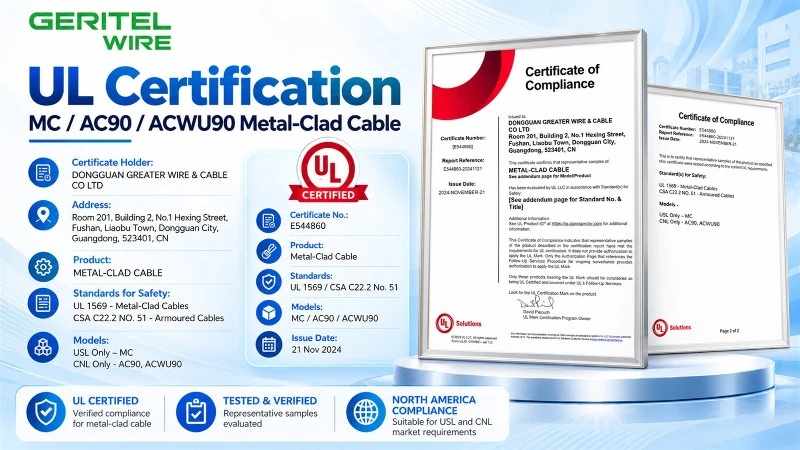
For Canadian underground feeder projects, checking the product's CSA certification is particularly important.
5.1 Relevant CSA Standards
|
Standard |
General Scope |
Relevance to ACWU90 |
|---|---|---|
|
CSA C22.2 No. 51 |
Armoured cables |
Main product standard for ACWU90 |
|
CSA C22.2 No. 38 |
Thermoset-insulated wires and cables |
Relevant to RW90 XLPE-insulated conductor requirements |
|
CSA C22.2 No. 174 |
Cables and cable glands for hazardous locations |
Relevant when the specific cable is certified for hazardous locations |
Nexans identifies CSA C22.2 No. 51 for its ACWU90 product. Southwire also identifies its ACWU90 product as CSA-compliant.
Industrial+1
These standards have different scopes. Compliance with a conductor insulation standard alone does not establish that a complete armoured cable assembly is certified as ACWU90.
5.2 Check Product Markings
Before accepting a cable shipment, review the printed cable legend and certification documentation.
Depending on the product, relevant markings may include:
Manufacturer identification.
ACWU90 designation.
Conductor size and material.
XLPE insulation identification.
Voltage rating.
Temperature rating.
CSA certification information.
Direct-burial suitability, where applicable.
Sunlight resistance and other additional ratings, where applicable.
For hazardous locations, verify the specific hazardous-location certification and approved cable gland requirements. A standard ACWU90 designation alone does not guarantee hazardous-location approval.
5.3 Do Not Assume UL or IEC Equivalence
A CSA ACWU90 cable is not automatically a UL-listed or IEC-compliant cable simply because it has similar construction materials.
If the project is located outside Canada, check the electrical regulations and certification requirements of the destination market.
For example:
Canadian projects generally require compliance with the applicable Canadian Electrical Code and recognized Canadian product certification.
US projects require the applicable NEC requirements and appropriate product listing or certification.
IEC-based projects require compliance with the relevant IEC cable and installation standards.
Australian and New Zealand projects require consideration of applicable AS/NZS requirements.
A cable intended for one market should not be substituted into another market without confirming its certification, permitted application, and acceptance by the relevant authority.
6. Consider Mechanical Protection and Installation Requirements
Underground feeders may encounter mechanical stress during transportation, installation, backfilling, and subsequent site operations.
ACWU90's interlocked aluminum armour provides additional mechanical protection, but proper installation remains essential.
6.1 Evaluate Armour and Outer Jacket Requirements
The two main protective components serve different purposes:
Aluminum interlocked armour: Helps protect the cable assembly against mechanical damage during handling and installation.
PVC outer jacket: Provides an additional protective barrier against moisture, abrasion, and environmental exposure.
For projects with particularly demanding conditions, consider whether additional mechanical protection is necessary.
Examples include:
Areas exposed to heavy construction equipment.
Underground routes crossing roads or vehicle access areas.
Locations with sharp rocks or abrasive backfill.
Areas subject to future excavation.
Industrial environments with chemical exposure.
Additional protection may involve approved raceways, concrete encasement, protective covers, or other measures required by the project specifications and local authority.
6.2 Check Minimum Bending Radius
ACWU90 is an armoured cable, so its bending radius must be considered during installation.
Excessive bending can damage the armour, insulation, or internal conductors.
The minimum bending radius varies according to cable construction, diameter, and manufacturer specifications.
Before installation, obtain the manufacturer's recommended bending radius and pulling instructions.
Also consider:
Available space inside electrical rooms and equipment enclosures.
Cable entry and termination locations.
Underground route changes and directional bends.
Pulling tension and sidewall pressure.
Suitable cable supports and pulling equipment.
Avoid using a generic bending-radius value for all ACWU90 products.
7. Compare ACWU90 with Other Underground Feeder Cable Options
ACWU90 is not the only cable used for underground power distribution. Depending on the project, engineers may also consider TECK90, RWU90, or other approved cable systems.
Understanding their differences helps buyers avoid selecting a cable that does not match the installation requirements.
|
Cable Type |
Typical Construction |
Typical Application |
Key Consideration |
|---|---|---|---|
|
ACWU90 |
XLPE insulation, aluminum interlocked armour, PVC jacket |
Underground feeders, direct burial where approved, wet locations |
Integrated armoured construction |
|
TECK90 |
XLPE insulation, metallic armour, PVC jacket |
Industrial feeders, underground and exposed installations where approved |
Available in different conductor and armour configurations |
|
RWU90 |
XLPE-insulated conductor with no integral metallic armour |
Underground installations, including approved direct-burial applications |
Additional mechanical protection may be required |
When Should You Choose ACWU90?
ACWU90 may be a suitable choice when:
The project requires a 600 V armoured feeder cable.
Aluminum conductors are acceptable for the electrical design.
The cable needs to operate in wet or dry locations.
Direct-burial installation is permitted for the specific product.
Integrated mechanical protection is beneficial.
The cable's certification meets the local electrical requirements.
When Should You Consider Another Cable?
Consider other cable types when:
The project requires a different voltage rating.
A different conductor material or armour construction is specified.
The installation requires a cable certified to another national standard.
The environmental conditions require special jacket materials.
The local electrical authority does not accept the proposed ACWU90 product.
The best cable is not necessarily the one with the most protective features. It is the one that meets the electrical, mechanical, environmental, and regulatory requirements of the actual installation.
8. What Information Should You Provide When Purchasing ACWU90 Cable?
Once the technical requirements have been established, prepare a clear purchasing specification.
This helps manufacturers and distributors recommend the correct cable construction and reduces the risk of ordering an unsuitable product.
The following information is particularly useful:
|
Purchasing Requirement |
Information to Confirm |
|---|---|
|
Cable type |
CSA ACWU90 |
|
Rated voltage |
Typically 600 V |
|
Conductor material |
AA-8000 series aluminum or specified alternative |
|
Conductor size |
AWG or kcmil |
|
Number of conductors |
1C, 2C, 3C, or 4C as required |
|
Insulation |
XLPE, CSA Type RW90 |
|
Bonding configuration |
Material and size |
|
Armour |
Aluminum interlocked armour |
|
Outer jacket |
PVC or specified alternative |
|
Temperature rating |
Typically 90°C |
|
Installation method |
Direct burial or underground conduit |
|
Additional requirements |
Sunlight resistance, low-temperature rating, flame performance, or other project specifications |
|
Certification |
Applicable CSA certification |
|
Cable quantity |
Required total length and delivery arrangement |
8.1 Request the Manufacturer's Technical Datasheet
A technical datasheet should provide the information necessary to verify whether the cable meets the project specification.
Ask for:
Conductor construction and resistance.
Insulation and jacket thickness.
Overall cable diameter.
Cable weight.
Minimum bending radius.
Allowable ampacity data and applicable installation conditions.
Voltage and temperature ratings.
Certification details.
Available conductor sizes and configurations.
8.2 Confirm Delivery and Project Requirements
For B2B purchasing, technical compliance is only part of the decision.
Also confirm:
Production lead time.
Available cable lengths.
Reel dimensions and packaging.
Minimum order quantity.
Inspection and testing documentation.
Shipping arrangements.
Product traceability.
For large underground feeder projects, obtaining the technical documentation before placing the purchase order can help prevent delays and costly material substitutions.


9. Common Mistakes to Avoid When Choosing ACWU90 Cable
Even when ACWU90 appears suitable for an underground feeder, several purchasing and engineering mistakes can affect project performance.
|
Common Mistake |
Potential Problem |
Recommended Approach |
|---|---|---|
|
Selecting cable size based only on load current |
Excessive voltage drop or insufficient ampacity |
Check ampacity and voltage drop |
|
Assuming all ACWU90 cables are direct-burial approved |
Product may not meet installation requirements |
Verify exact product certification |
|
Using 90°C ampacity without checking terminal limitations |
Incorrect conductor sizing |
Apply the relevant code requirements |
|
Ignoring soil thermal conditions |
Reduced current-carrying capacity |
Evaluate soil temperature and thermal resistivity |
|
Overlooking bonding arrangements |
Inadequate fault-current path |
Confirm bonding conductor and armour termination |
|
Assuming CSA certification equals UL certification |
Non-compliance in the destination market |
Verify the required national certification |
|
Ignoring installation bending limits |
Possible damage to cable components |
Follow manufacturer installation instructions |
|
Ordering without checking cable dimensions |
Installation and handling difficulties |
Review the complete technical datasheet |
Avoiding these mistakes helps ensure that the selected ACWU90 cable is suitable not only on paper but also under actual operating and installation conditions.
10. Final Checklist: How to Choose the Right ACWU90 Cable
Before approving an ACWU90 cable for an underground feeder, review the following points:
Confirm that the rated voltage matches the electrical system.
Calculate the feeder load and required conductor ampacity.
Verify conductor size after applying relevant correction factors.
Check voltage drop over the complete feeder length.
Confirm the required number of phase and neutral conductors.
Verify bonding conductor specifications and armour bonding arrangements.
Confirm direct-burial suitability or underground conduit requirements.
Evaluate soil conditions and additional mechanical protection needs.
Check minimum bending radius and installation requirements.
Verify CSA certification and applicable project standards.
Review the manufacturer's datasheet and cable markings.
Confirm cable quantity, packaging, and delivery requirements.
The key principle is to select ACWU90 based on the complete feeder design rather than relying on the cable designation alone. A properly specified cable should satisfy electrical loading, voltage-drop limits, installation conditions, mechanical protection requirements, and applicable certification standards.
Conclusion
Choosing ACWU90 cable for an underground feeder requires a systematic evaluation of electrical performance, cable construction, installation conditions, and regulatory compliance. Its aluminum conductors, XLPE insulation, interlocked aluminum armour, and PVC jacket make it a practical option for many 600 V underground power distribution applications.
However, the correct conductor size, bonding configuration, direct-burial approval, and environmental ratings must be verified for each project. Engineers and purchasing professionals should also review manufacturer datasheets and confirm local electrical code requirements before ordering.
By evaluating these factors together, project teams can select ACWU90 cable that meets their technical specifications while supporting reliable installation and long-term feeder performance.
Looking for ACWU90 Cable for Your Underground Feeder Project?
GERITEL WIRE, from Dongguan Greater Wire & Cable Co., Ltd., provides wire and cable solutions for international B2B customers. Whether you are sourcing ACWU90 cable for underground feeders, commercial power distribution, or industrial electrical installations, our team can help you discuss conductor configurations, insulation materials, armour construction, technical specifications, and project requirements. Contact GERITEL WIRE to discuss your cable requirements, request product information, and obtain a quotation for your next project. We welcome inquiries from electrical distributors, contractors, OEMs, and cable procurement professionals worldwide.
Dongguan Greater Wire & Cable Co., Ltd.
Tel/WhatsApp/Wechat: +86 136 6257 9592
Tel/WhatsApp/Wechat: +86 135 1078 4550
Email: manager01@greaterwire.com
Website: www.greaterwire.com