


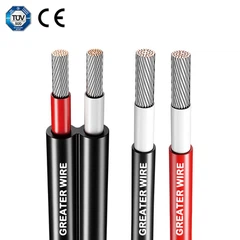

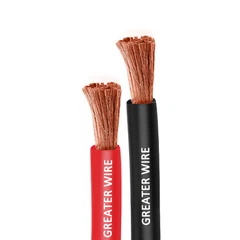
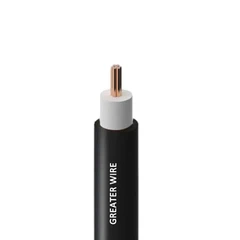

Battery cable selection is one of the most critical steps in DC power system installation for automotive, marine, solar, RV, and industrial equipment. However, global buyers and electrical contractors frequently encounter confusion between AWG (American Wire Gauge) and mm² (square millimeter) conductor sizing standards.
North American markets strictly follow AWG standards for automotive battery cable and SGT battery wire, while European, Asian, Australian, and IEC standard projects adopt mm² metric sizing.
Many wiring failures, overheating issues, and low power efficiency problems are caused simply by incorrect conversion between AWG and mm² battery cable sizes.
In this in-depth guide, we explain the core differences between AWG and mm² standards, provide accurate conversion data, analyze battery cable ampacity, resistance, and voltage drop principles, and teach how to select the perfect Class 5 flexible copper PVC battery cable for different low-voltage DC scenarios.

1. What Are AWG and mM² for Battery Cable?
1)AWG Sizing Standard (US Standard)
AWG is the traditional American wire gauge system used for all automotive battery cable, car battery wire, SGT PVC battery cable, and North American DC power wiring.
Key AWG rules for battery cable:
The smaller the AWG number, the larger the copper conductor
Small AWG = higher ampacity, lower resistance, lower voltage drop
Common heavy-duty sizes: 4 AWG, 2 AWG, 1/0 AWG, 4/0 AWG battery cable
AWG battery cable is mainly used for 12V, 24V, 48V vehicle starter systems, engine compartment power distribution, and American-style inverter wiring.
2) mm² Metric Sizing Standard (IEC Global Standard)
mm² represents the actual cross-sectional area of the copper conductor, defined by IEC 60228 Class 5.
All standard:
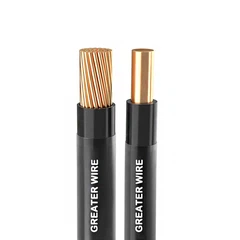
Flexible stranded copper battery cable
Single core PVC battery cable
CU/PVC DC battery cable
strictly follow mm² metric sizes.
Popular metric sizes: 10mm², 16mm², 25mm², 35mm², 50mm², 95mm² battery cable
Metric sizing is mandatory for solar battery banks, marine systems, European vehicles, agricultural machinery, and construction equipment.

2. Accurate AWG to mm² Battery Cable Conversion Chart (Class 5 Copper)
Only valid for fine stranded Class 5 flexible copper battery cable (most common battery cable type):
10 AWG battery cable ≈ 6mm² battery cable
8 AWG battery cable ≈ 10mm² battery cable
6 AWG battery cable ≈ 16mm² battery cable
4 AWG battery cable ≈ 25mm² battery cable
2 AWG battery cable ≈ 35mm² battery cable
1 AWG battery cable ≈ 50mm² battery cable
1/0 AWG battery cable ≈ 50–60mm² battery cable
2/0 AWG battery cable ≈ 70mm² battery cable
4/0 AWG battery cable ≈ 95mm² battery cable
Deep Tip: Solid single-core wire conversion is different. 99% of battery systems require Class 5 flexible stranded battery cable, not rigid solid wire.
3. Why Conversion Accuracy Matters: Ampacity, Resistance & Voltage Drop
1) Battery Cable Ampacity
Ampacity means the maximum safe current a high current battery cable can carry continuously without overheating.
Larger AWG / larger mm² = higher ampacity
Smaller cable cannot support starter motors, inverters, or battery bank loads
PVC insulated battery cable has fixed temperature rating for stable ampacity
2) Low Resistance & Low Voltage Drop
DC low-voltage systems (12V/24V/48V/72V) are extremely sensitive to cable resistance.
Too small cable =
High resistance battery cable
Serious voltage drop
Inverter low-voltage protection
Weak engine starting power
Heat accumulation & safety risks
For long-distance battery wiring, you must upsize one grade from standard AWG/mm² size.

4. Core Advantage of Class 5 Flexible Copper Battery Cable
All professional DC battery wiring uses IEC 60228 Class 5 battery cable:
Fine stranded soft annealed pure copper
100% oxygen free copper battery cable for high conductivity
Ultra flexible for tight bend battery wiring
Vibration resistant for engine compartments, boats, RVs
Anti-fatigue for continuous flex installation
Compared to rigid wire, Class 5 flexible battery cable avoids cracking, loosening, and terminal failure under vehicle vibration.
5. PVC Insulation for Battery Cable
PVC battery cable / CU-PVC battery cable is the universal insulation for DC battery systems:
- Abrasion resistant, oil resistant, fuel resistant
- Moisture and weather resistant for indoor & outdoor use
- Flame retardant PVC jacket improves safety
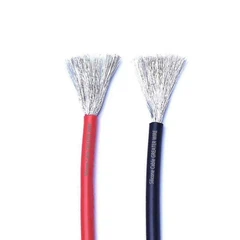
- Red and black color coded for positive / negative battery cable identification
- Suitable for dry and wet locations
6. Size Selection Guide by Application Scenario
1) Automotive & Vehicle Battery Cable
Passenger cars: 10AWG–6AWG / 6mm²–16mm²
Trucks & heavy-duty vehicles: 4AWG–2AWG / 25mm²–35mm²
Heavy starter & alternator circuits: 1/0AWG–4/0AWG / 50mm²–95mm²
2) Solar Battery Bank & Inverter Systems
Inverter and solar DC systems require low voltage drop battery cable:
Medium solar system: 2AWG–1/0AWG
Large battery bank: 4/0 AWG / 95mm² battery cable
3) Marine & RV Battery Cable
Boats, yachts, motorhomes, caravans require vibration-proof flexible battery cable: Standard size: 6AWG–2AWG (16mm²–35mm²) Class 5 PVC battery cable
4) Industrial & Construction Equipment
Forklifts, generators, tractors, agricultural machines: 25mm² ~ 120mm² heavy duty high current battery cable
7. Common Battery Cable Selection Mistakes
1) Using solid wire for battery circuits Solid wire cracks under vibration - only Class 5 stranded battery cable works for DC mobile systems.
2) Ignoring voltage drop for long runs Even if ampacity fits, small cable causes power loss.
3) Mixing AWG and mm² roughly Incorrect conversion leads to overheating and system failure.
4) Using aluminum battery cable for main power Aluminum battery cable has high resistance and oxidation risks - pure copper battery cable is always standard for battery connection.
8. Battery Cable FAQ
What is the difference between Class 5 and Class 6 battery cable?
Class 5 is the standard flexible battery cable for automotive, solar and marine use. Class 6 is ultra-flexible for extreme frequent bending.
Is PVC battery cable good for outdoor use?
Yes. Standard weather-resistant PVC battery cable supports indoor, outdoor, dry and wet location installation.
Which is better, AWG or mm² battery cable?
Depends on region:
North America = AWG
Global / IEC projects = mm²
Conclusion
Understanding accurate AWG vs mm² battery cable conversion is essential for safe, low-loss DC power installation.
Class 5 stranded pure copper PVC battery cable is the most reliable solution for automotive, solar battery banks, inverters, marine boats, RVs, and industrial equipment. Correct gauge conversion, ampacity matching, and voltage drop optimization ensure stable battery system performance and long service life.
If you need bulk flexible copper battery cable, custom colored battery cable, cable assemblies, or precise battery cable quotations, feel free to contact our professional team.
Dongguan GERITEL Electrical Co., Ltd.
Tel/WhatsApp/Wechat: +86 136 6257 9592
Tel/WhatsApp/Wechat: +86 135 1078 4550
Email: manager01@greaterwire.com
Website: www.geritelgroup.com