




Choosing the right battery cable size does not have to involve complicated math. Most people just want to know what size cable they need for their equipment.
The right cable size depends on three practical factors: how much power your equipment draws, how far the cable runs, and where the cable is installed.
This guide cuts through the complexity. Instead of formulas, it matches cable sizes to real-world applications-so you can find the right size by simply identifying what you are building.

1. The Three Questions That Determine Cable Size
Forget the formulas. Ask yourself these three questions:
- What am I powering? A small inverter draws far less current than a large forklift motor. The equipment determines how much current the cable must carry.
- How far is the cable run? A short run from a battery to an adjacent inverter is different from a long run from a battery bank to a distant distribution panel. The longer the run, the more important it is to use a larger cable.
- Where is the cable installed? Is it in a cramped battery cabinet that requires tight bends? Is it in an engine compartment with heat and oil? Is it outdoors exposed to the elements? The installation environment affects both cable size and cable type.
Answer these three questions, and you are most of the way to the right cable size.
2. What Size Cable for Common Applications?
Here is a practical guide to battery cable sizes based on the equipment you are powering.
- Small Inverters and Light Equipment
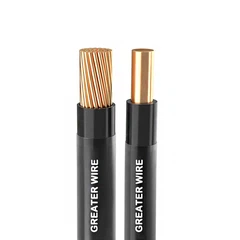
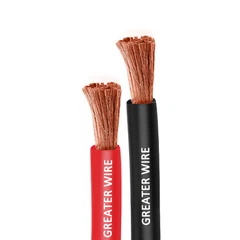
For small solar systems, RV battery connections, and light-duty equipment, a 16mm² flexible copper battery cable is the go-to choice. It provides reliable power delivery for small loads without being bulky or difficult to route. At shorter distances, 16mm² handles the current requirements easily. For longer runs, upsizing to 25mm² or 35mm² helps maintain consistent voltage at the load end.
- Medium Inverters and Heavy Equipment
For 3000W inverter systems, electric winches, and industrial equipment, 70mm² flexible copper battery cable provides the current capacity needed. At shorter distances, 70mm² handles heavy loads with plenty of margin. For longer runs, 95mm² is often recommended to keep voltage stable-especially in demanding applications where equipment performance is critical.
- Large Inverters and High-Current Systems
For large solar storage systems, marine thrusters, and heavy-duty electric motors, 250 kcmil flexible copper battery cable delivers the current capacity needed. At shorter distances, 250 kcmil supports the heaviest loads with ease. For longer distances, stepping up to 300 kcmil or 350 kcmil helps minimize voltage drop.
For a battery cable size for inverter application, the inverter rating and the distance from the batteries are the key inputs. A 3000W inverter on a short run works well with 70mm², while the same inverter on a long run benefits from upsizing.
For battery cable size for solar storage, the main battery bank to inverter connection is the most critical run. A 5000W solar storage system typically uses 70mm² to 95mm², depending on the distance.
For battery cable size for electric vehicle, the battery pack to motor controller connection demands high current delivery. EV applications typically use 35mm² to 95mm² for main power connections, with the exact size depending on the vehicle's power rating and the distance between components.

3. Beyond Size: Flexibility, Insulation, and Voltage Rating
The cable size is only part of the story. Three other factors affect how well the cable performs.
- Flexibility. In tight battery compartments, a stiff cable is a problem. It resists bending, puts stress on terminations, and makes installation difficult. Fine-stranded conductors provide the flexibility needed for battery connections-especially in mobile applications like EVs and forklifts. A 16mm² flexible copper battery cable offers the best balance of ampacity and ease of routing for light to medium applications.
- Insulation type. PVC insulation is standard for most battery cables. It resists oil, acid, heat, and abrasion. For high-temperature environments, heat-resistant PVC provides additional protection.
- Voltage rating. Standard battery cables are rated 600V DC, which covers most applications. For larger energy storage systems operating at higher voltages, cables rated 1000V DC or 1500V DC are available.
4. Common Sizing Mistakes to Avoid
- Ignoring the distance. The same equipment on a short run and a long run needs different cable sizes.
- Forgetting about future expansion. If you plan to add more loads later, choose a larger cable now.
- Choosing a cable that is too stiff. A cable that meets ampacity requirements but is difficult to route will cause installation headaches.
- Using copper-clad aluminum. Copper-clad aluminum has higher resistance and corrosion issues. For battery cables, pure copper is the only reliable choice.
- Overlooking the environment. A cable that works in a climate-controlled room may fail in an engine compartment with heat and oil.
- Guessing instead of matching to application. The simplest way to get the right cable size is to match your equipment and distance to a known recommendation.
5. Three Battery Cable Sizes and Their Typical Applications
| Cable Size | Typical Applications | Why This Size |
|---|---|---|
| 16mm² | Small solar systems, RV battery connections, light-duty equipment | Reliable for small loads. Flexible and easy to route. |
| 70mm² | 3000W inverters, forklifts, electric winches, medium solar storage | Handles medium to heavy loads with good voltage performance. |
| 250 kcmil | Large solar storage, marine thrusters, heavy-duty motors, high-capacity inverters | Maximum current capacity for the heaviest loads. |

FAQ
Q1:How do I know what size battery cable I need?
Identify your equipment type and the distance between the battery and the load. Match these to the application guide above.
Q2:What happens if I use a battery cable that is too small?
The cable will overheat, voltage will drop excessively, and equipment may not operate correctly.
Q3:Can I use a larger cable than needed?
Yes. A larger cable runs cooler and has less voltage drop. The tradeoffs are higher cost and less flexibility.
Q4:How does distance affect cable size?
The longer the cable run, the larger the cable should be. If in doubt, go up one size for runs over 5 meters.
Q5:Is pure copper necessary for battery cables?
Yes. Copper-clad aluminum has higher resistance and corrodes more easily. For battery systems, pure copper is the only acceptable choice.
Need Help Choosing the Right Battery Cable Size?
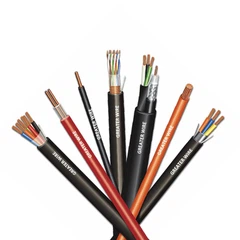
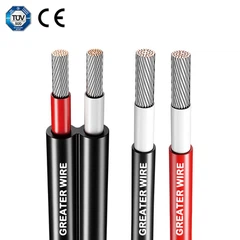
Our flexible copper PVC battery cables are available in sizes from 2.5mm² to 400 kcmil, with red/black color coding and fine stranding for maximum flexibility.
Tell us about your equipment, the distance between battery and load, and your installation conditions. We will recommend the right battery cable size and provide the documentation you need.
Contact us
Dongguan Greater Wire & Cable Co., Ltd.
Tel/WhatsApp/Wechat: +86 136 6257 9592
Tel/WhatsApp/Wechat: +86 135 1078 4550
Email: manager01@greaterwire.com
Website: www.greaterwire.com