























1. Meaning and Identification of RHH
Each letter in RHH denotes:
R: Rubber – Refers to the thermoset rubber insulation that provides excellent electrical and heat resistance.
H: Heat-resistant – Rated for continuous operation at 90°C in dry environments.
H: Reinforces the cable's high-temperature stability.
Related types include RHW (for wet locations) and RHW-2 (for high-temperature wet conditions). RHH is specifically intended for dry locations and is typically used in conduit or enclosed equipment installations.

2. RHH cable structure and materials
RHH wire is composed of the following components:
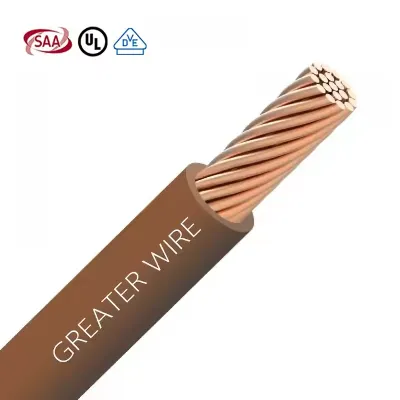
Conductor: Bare or tinned copper, often stranded for flexibility and high conductivity.
Insulation: Made of thermoset Ethylene Propylene Rubber (EPR) or similar, offering excellent thermal stability, chemical resistance, and mechanical durability.
No outer jacket: RHH cables usually lack an additional outer sheath, so they must be run in metal conduit or enclosed raceways for mechanical protection.
This design makes RHH cable both lightweight and efficient, ideal for high-performance electrical insulation systems.
3. Main features and technical advantages of RHH
RHH cable offers the following benefits:
High heat tolerance: Rated for 90°C in dry environments, suitable for use near heat sources.
Flame resistance: Excellent flame-retardant properties meeting UL and NEC safety standards.
Abrasion and chemical resistance: Suitable for industrial use with exposure to acids, alkalis, and other chemicals.
Ease of installation: Flexible stranded copper allows for easy routing in tight spaces.

4. Common Applications of RHH Cables
RHH wire is frequently used in the following:
Indoor power distribution: Connecting main distribution panels to branch circuits.
Switchboards and control cabinets: As interconnecting wire between equipment.
Generators and transformers: For output connections in power systems.
Conduit wiring: Installed in rigid or flexible metallic conduits for environmental and mechanical protection.
5. Comparison of RHH to other wire types
| Wire Type | Wet Location Use | Insulation | Temp Rating | Recommended Use |
|---|---|---|---|---|
| RHH | No | Rubber | 90°C (dry) | Dry indoor only |
| RHW | Yes | Rubber | 75°C–90°C | Indoors/outdoors, damp-proof |
| RHW-2 | Yes | Rubber | 90°C (dry/wet) | High-temp wet areas |
| XHHW | Yes | XLPE | 90°C (dry/wet) | General commercial/industrial |

6. RHH Cable Compliance and Standards
UL Standard: Meets UL 44 specifications for insulation and flame resistance.
NEC Codes: Must be installed in accordance with the National Electrical Code (NEC).
Voltage Rating: Typically rated at 600 volts, suitable for most commercial and residential power distribution.

7. RHH Installation Guide and Precautions
Proper installation of RHH wire involves:
Use only in dry, non-moist environments; install within metal conduit or sealed raceways.
Avoid sharp bends and maintain minimum bend radius to reduce stress.
Keep a safe distance from heat sources to prevent insulation degradation.
Follow national and local electrical codes during installation and inspection.
8.Safety and Maintenance Tips for RHH Cables
Regularly inspect for cracks, hardening, or insulation damage.
Prevent overloading to avoid heat buildup and potential fire hazards.
Confirm current-carrying capacity matches design before operation in hot areas.
Replace aging wires with same or higher-rated products.

9. How to Choose the Right RHH Wire
Determine ampacity: Calculate required wire gauge based on power load, e.g., 1 AWG for loads over 100A.
Assess environmental conditions: Only for dry areas; not for buried or damp installations.
Match system voltage and protection devices: Ensure compatibility with breakers and protective switches.
Choose certified brands: Prefer UL or CUL-certified products from reputable manufacturers.

Dongguan Greater Wire & Cable Co., Ltd. has always adhered to the standardization and internationalization orientation, and has obtained UL, cUL, SAA, VDE, CE, TUV, ISO, IEC and other certification qualifications, which meet the technical specifications of markets around the world. We know that behind each certification is a symbol of market accessibility, which can help customers open up sales paths. If you are looking for a cable supplier with strong compliance and professional technology, please contact us immediately to start a stable and reliable cooperation.