

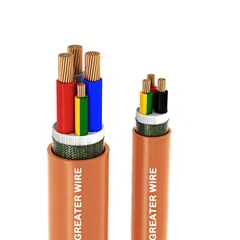
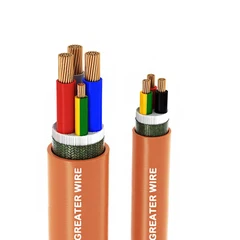

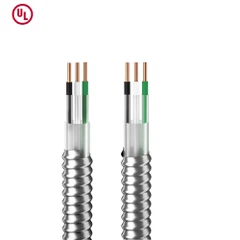
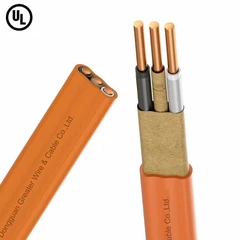
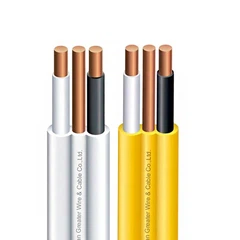

An AC90 HL cable installation can use a correctly certified cable and still have a serious compliance problem if the cable gland is not suitable for the cable construction, hazardous-area classification, or equipment enclosure.
The cable and gland must therefore be checked as a complete cable-entry arrangement-not as two independent products. A proper site audit should verify certification, cable outside diameter, armour compatibility, gland approval, enclosure threads, sealing requirements, bonding continuity, mechanical support, and the actual installation environment.
This is particularly important in Canadian hazardous locations, where the Canadian Electrical Code (CEC) sets installation requirements and product certification establishes the permitted use of the cable and accessories.
This guide provides a practical inspection method for engineers, contractors, commissioning teams, and electrical inspectors. It explains what to check, which documents to request, how to identify common problems, and what evidence to record before accepting an AC90 HL cable installation.


1. Start with the Applicable Standards and Project Documents
Before inspecting the installation, establish which standards, code edition, and project requirements apply.
For Canadian AC90 HL installations, three references are particularly important:
|
Standard or code |
Main role |
|---|---|
|
CSA C22.2 No. 51 |
Product requirements for armoured cables |
|
CSA C22.2 No. 174 |
Additional requirements for cables and cable glands used in hazardous locations |
|
CSA C22.1 |
Canadian Electrical Code, Part I: installation requirements |
These documents have different purposes. CSA C22.2 No. 51 addresses the armoured cable product; CSA C22.2 No. 174 addresses additional hazardous-location requirements; and CSA C22.1 governs how the wiring method is installed.
Under the 2024 CEC, Rule 18-102(1) permits specified wiring methods in Zone 1 locations, including hazardous-location cables with associated cable glands suitable for the application. The rule does not mean that any HL cable can be combined with any hazardous-location gland. The specific cable, gland, enclosure, and installation conditions still have to match.
philtech.ca+1
Before going to site, collect:
Approved hazardous-area classification drawings.
Cable schedules and project specifications.
AC90 HL product datasheet and certification record.
Cable gland certificate and installation instructions.
Enclosure certificate and manufacturer's entry instructions.
Approved cable-entry or termination drawings.
Any project-specific inspection and testing procedures.
Important: Confirm which CEC edition has been adopted by the province or territory where the project is located. Local amendments and the authority having jurisdiction (AHJ) may affect the installation requirements.
2. Confirm the Hazardous-Area Classification
The first site question should be:
Is the installed cable and gland combination suitable for the actual hazardous-area classification?
Do not rely on a general description such as "chemical plant," "oil and gas facility," or "industrial area." The classification must be taken from the approved hazardous-area drawings and project engineering documents.
Canadian installations may use either the Class/Division system or the Zone system.
|
Classification |
Examples |
|---|---|
|
Gas and vapour, Class/Division |
Class I, Division 1 or Division 2 |
|
Combustible dust, Class/Division |
Class II, Division 1 or Division 2 |
|
Ignitable fibres or flyings |
Class III |
|
Gas or vapour, Zone system |
Zone 0, Zone 1 or Zone 2 |
|
Combustible dust, Zone system |
Zone 20, Zone 21 or Zone 22 |
The auditor should also identify the applicable gas or dust group and the protection concept of the equipment receiving the cable.
Questions to ask on site
What is the documented classification at the cable's installed location?
Does the cable route pass through more than one classified area?
Which gas or dust group applies?
What protection concept is required for the connected enclosure?
Does the gland's certification cover the actual classification and application?
Are any special conditions of certification identified?
Class/Division and Zone classifications are different systems and should not be treated as directly interchangeable. A cable or gland approved for one classification is not automatically suitable for another.
3. Verify the Exact Cable's HL Certification
The next question is:
Can the installed cable be traced to a valid hazardous-location certification?
Ordinary AC90 and AC90 HL should not be treated as interchangeable. Metallic armour alone does not establish hazardous-location approval.
For a Canadian installation, the auditor should verify that the cable is certified under the applicable product requirements and carries the required HL identification within its certification scope.
Request the following:
The cable manufacturer's name.
The exact product designation and model.
The certification body's name and certificate or file number.
The applicable product standards.
The certified conductor sizes and configurations.
The cable marking details, including the HL designation.
A datasheet stating "suitable for hazardous locations" is not, by itself, proof of product certification.
Check the certificate against the issuing certification body's official directory wherever possible. Also confirm that the certificate applies to the exact manufacturer and product being inspected, rather than a similar product family.
Check the cable marking
General Cable 4/4C MOR Polyrad XT-125 Type P 600V/1000V Offshore Power Cord/10ft | eBay
ebay.com
Where the cable marking is accessible, compare it with the approved submittal and certification documents.
Look for:
Manufacturer identification.
Cable type or product designation.
Relevant certification marks.
HL marking, where required.
Voltage or other ratings, where specified by the product marking requirements.
Any additional identification required by the project.
If the cable is already installed and the marking is not visible, use traceable reel labels, installation records, and other permitted product-identification evidence. Do not assume that a field cable tag proves the cable's certification.
4. Confirm That the Gland Is Approved for the Actual Cable Type
This is one of the most important compatibility checks.
A gland approved for one armoured cable construction is not automatically approved for every armoured cable.
AC90 HL typically uses interlocked metallic armour, but cable constructions and dimensions can vary between manufacturers and product configurations. The selected gland must be suitable for the actual cable construction and the intended hazardous-location application.
A useful example is the Hubbell/Killark certification documentation for certain cable-gland series. It identifies specific approved cable types, including AC90-HL, and also specifies cable-diameter information. This demonstrates why the exact gland model and certification document matter: the approval belongs to a defined product scope, not to every gland sold under a general product category.
hubbellcdn.com
What should the auditor verify?
|
Inspection item |
What to confirm |
|---|---|
|
Gland manufacturer |
Matches the approved submittal |
|
Gland model |
Exact model and size are identifiable |
|
Certification |
Covers the intended hazardous-location application |
|
Cable type |
AC90 HL or the exact construction is included or otherwise confirmed as suitable |
|
Cable diameter |
Falls within the gland's permitted range |
|
Armour arrangement |
Matches the gland's approved clamping method |
|
Installation instructions |
Available and followed |
|
Enclosure entry |
Suitable for the enclosure and its protection concept |
If the certificate or instructions do not clearly establish compatibility, obtain written confirmation from the gland manufacturer or certification body before accepting the installation.
5. Measure the Cable Outside Diameter
Even if the cable type is approved for a gland, the actual cable diameter must fall within the gland's specified range.
The cable outside diameter is important because the gland's sealing and clamping components are designed for a defined dimensional range. An undersized cable may not be properly retained or sealed. An oversized cable may prevent correct assembly or damage the gland components.
Zuleitung HAK - Außendurchmesser nur ca. 21,5 mm - 5x16 ? | Elektrikforum
elektrikforum.de
How to check the diameter
Identify the exact cable model and conductor configuration.
Obtain the nominal outside diameter from the manufacturer's datasheet.
Locate the permitted cable diameter range in the gland instructions or certification documentation.
Where safely accessible, measure the actual cable diameter with an appropriate measuring instrument.
Compare the measured value with the permitted gland range.
Record the cable identification, measurement, and gland model.
Example of a dimensional check
Suppose the gland documentation specifies a permitted cable diameter range of 20–25 mm.
A measured cable diameter of 22 mm is within that stated range.
A measured diameter of 19 mm is outside that range.
A measured diameter of 26 mm is also outside that range.
These figures are illustrative only. Always use the actual range published for the specific gland model.
Do not select a gland based only on conductor size, nominal trade size, or a general AC90 cable description. Use the actual cable dimensions and the gland manufacturer's approved range.

6. Inspect the Armour Clamping and Cable Preparation
A correct diameter does not guarantee that the gland is compatible with the cable's armour construction.
The gland must be designed for the specific type of armour and assembled according to its instructions.
Complete Guide to Flameproof Cable Glands
shreeelectrical.in
Site inspection points
Is the gland designed for the cable's interlocked armour construction?
Has the armour been prepared according to the gland manufacturer's instructions?
Is the armour correctly captured by the intended clamping components?
Are any armour sections damaged, distorted, or improperly exposed?
Are the specified sealing rings, inserts, and other components present?
Has the gland been assembled in the correct sequence?
Is the cable jacket or insulation damaged near the entry?
Do not assume that a gland designed for steel-wire-armoured cable, braided cable, or another metallic sheath is automatically suitable for AC90 HL.
Also avoid improvised armour preparation or the substitution of components not permitted by the gland manufacturer's instructions. Incorrect preparation can affect cable retention, sealing, and bonding.
7. Check the Gland Thread and Enclosure Entry
The gland must be mechanically compatible with the equipment enclosure.
Common thread systems include NPT and metric threads. They are not interchangeable simply because their nominal sizes appear similar.
Wholesale Cable Glands Leak? Fix Thread Engagement Length
chengshunmetals.com
What to inspect
|
Item |
Audit requirement |
|---|---|
|
Enclosure entry |
Identify the thread type and size |
|
Gland thread |
Confirm it matches the approved entry arrangement |
|
Thread engagement |
Check against the manufacturer's instructions |
|
Adapter or reducer |
Verify that its use is permitted |
|
Locknut and washer |
Confirm correct type and installation |
|
Entry surface |
Check for damage, corrosion, or contamination |
|
Enclosure protection |
Confirm the required protection is maintained |
For example, M25 and 3/4-inch NPT are different thread systems. Do not assume that they can be connected directly.
If an adapter is required, check that it is permitted by the enclosure's certification and the applicable installation requirements. An unapproved thread conversion can compromise the enclosure's protection.
For Zone 1 installations, 2024 CEC Rule 18-102(3) addresses entries into increased-safety Ex e enclosures. The entry must maintain the enclosure's Ex e protection and degree of protection, using the specified suitable entry methods.
philtech.ca
8. Verify the Required Sealing Function
Not every hazardous-location gland provides the same sealing function.
An auditor should distinguish between:
Cable retention and mechanical clamping.
Environmental sealing against moisture or dust.
Armour termination and bonding.
Explosion sealing.
Sealing against flammable-fluid migration.
These functions are not interchangeable. A gland that provides a good environmental seal is not automatically an explosion-sealing gland.
Does every AC90 HL entry require a separate sealing fitting?
No. The required arrangement depends on the hazardous-area classification, enclosure protection concept, wiring method, and applicable code requirements.
For example, the 2024 CEC Rule 18-102(3) identifies suitable entry methods for increased-safety Ex e enclosures in Zone 1. Other provisions address entries into explosion-proof or flameproof enclosures and sealing against flammable-fluid migration. The applicable rule and enclosure certification determine the required arrangement.
philtech.ca+1
Questions for the auditor
What sealing function is required at this entry?
Does the gland's certification cover that function?
Is a separate sealing fitting required by the design or applicable code?
Does the enclosure have specific cable-entry instructions?
Are all required sealing components installed?
Has the manufacturer's assembly procedure been followed?
Is the enclosure's certified protection maintained?
Avoid two common assumptions:
Every hazardous-location cable entry requires a separate compound-filled seal.
Every hazardous-location gland automatically provides explosion sealing.
Both can be incorrect depending on the installation.
9. Inspect Cable Support and Mechanical Strain Relief
A cable gland should not be exposed to cable weight or pulling forces beyond what its approved design permits.
The 2024 CEC includes requirements for supporting hazardous-location cables so that tensile stress is not imposed on the glands. Rule 18-102 addresses Zone 1 wiring methods, while Rule J18-106 addresses specified Class I, Division 1 wiring methods. Confirm the exact applicable provision in the code edition adopted for the project.
philtech.ca
(Leidinggevend) Elektromonteur E&I (40 uur) - Werken bij ABC Techniek Waddinxveen
werkenbij.abc-techniek.com
What should be checked?
Is the cable adequately supported near the enclosure?
Is the cable hanging from the gland?
Is there visible pulling force or bending stress at the entry?
Are cable supports secure and suitable for the environment?
Is the manufacturer's minimum bending radius maintained?
Is the cable exposed to vibration or repeated movement?
Are additional supports required near motors, pumps, or compressors?
Cable movement can gradually loosen or stress an entry arrangement. The audit should consider normal operation, vibration, maintenance access, and any expected movement of connected equipment.
10. Verify Armour Bonding and Electrical Continuity
A gland can appear mechanically secure while the bonding arrangement is incomplete.
For AC90 HL, the auditor should review the relationship between the cable's internal bonding conductor, metallic armour, gland, and equipment enclosure.
The exact construction must be confirmed from the cable datasheet. Do not assume that the armour alone automatically satisfies every bonding requirement.
Using metallic armouring of a cable as a protective conductor | NICEIC - Professional Electrician
professional-electrician.com
Bonding inspection checklist
|
Item |
What to verify |
|---|---|
|
Internal bonding conductor |
Present and consistent with the certified cable construction |
|
Armour termination |
Correctly assembled into the gland |
|
Gland connection |
Suitable for the intended bonding arrangement |
|
Enclosure connection |
Required electrical continuity is maintained |
|
Contact surfaces |
Free from coatings or contamination that compromise continuity |
|
Dissimilar metals |
Connection materials are suitable for the application |
|
Test records |
Required inspection and continuity results are documented |
CEC Section 10 contains bonding requirements, including Rule 10-610, which addresses the use of armour and bonding conductors in specified armoured-cable arrangements. The actual cable construction and installation details must be considered when determining the acceptable bonding path.
Where the project requires bonding-continuity testing, qualified personnel should use the specified test method and acceptance criteria. Record the results as part of the audit report.
A visual inspection alone may not prove electrical continuity.

11. Check the Gland Material and Environmental Suitability
Hazardous-location certification does not remove the need to assess the installation environment.
A gland may be suitable for a particular hazardous-area application but still be unsuitable for the actual exposure if its material, temperature range, or environmental rating does not match the site conditions.
Consider:
Ambient operating temperature.
Moisture, condensation, and washdown.
Corrosive chemicals or process vapours.
Salt-laden atmospheres.
Outdoor sunlight.
Mechanical impact and abrasion.
Vibration and movement.
Glands made from brass, stainless steel, plated steel, or other materials have different properties. Selection should consider corrosion resistance, mechanical strength, enclosure compatibility, and the manufacturer's certified application.
Also verify the required ingress protection. An IP rating is not, by itself, proof of hazardous-location approval or explosion protection.
Audit question: Does the complete cable-entry assembly maintain the protection required by the equipment certification and project specification under the actual site conditions?
12. Identify Common Cable and Gland Compatibility Problems
During the site audit, pay particular attention to these warning signs.
Common audit findings
1. Unverified gland certification
The gland's documentation does not establish suitability for the actual hazardous-location application.
2. Cable diameter outside the approved range
The cable is too small or too large for the gland's permitted range.
3. Incompatible armour construction
The gland is intended for a different armour or sheath arrangement.
4. Incorrect thread connection
The gland and enclosure use different thread systems or an unapproved adapter.
5. Incorrect sealing arrangement
The gland does not provide the sealing function required by the enclosure and installation.
6. Inadequate cable support
Cable weight, pulling force, or movement is transferred to the gland.
7. Incomplete bonding
The required bonding path is not established or cannot be verified.
8. Damaged or modified components
The gland, cable armour, threads, sealing components, or enclosure entry show damage or unauthorized modification.
Record each finding and determine whether it affects certification, installation compliance, mechanical integrity, sealing, or bonding. Do not accept an installation simply because the cable appears firmly attached.
13. Follow a Step-by-Step Site Audit Procedure
A structured inspection helps ensure that important compatibility issues are not overlooked.
AC90 HL cable and gland audit workflow
Prepare the documents
Collect cable and gland certificates, datasheets, enclosure documents, hazardous-area drawings, and project specifications.
Identify the installed products
Record cable tag, manufacturer, model, conductor size, gland model, and enclosure identification.
Confirm the hazardous-area application
Verify the location classification, applicable group, and equipment protection concept.
Verify certification and dimensional compatibility
Check approved cable type, cable diameter range, armour construction, and gland certification.
Inspect the physical entry
Review cable preparation, armour clamping, thread connection, sealing components, and visible condition.
Review support and bonding
Confirm mechanical support and inspect the bonding arrangement. Complete required tests through qualified personnel.
Record findings
Photograph accessible conditions where permitted, record measurements, and document discrepancies.
Decide the inspection outcome
Accept only when the required evidence is available and outstanding nonconformities have been resolved.
Safety note: Do not loosen, remove, or open cable glands or hazardous-area enclosures while energized. Intrusive inspection, cable disconnection, gland reassembly, and electrical testing must be performed by qualified personnel under the site's isolation, permit-to-work, gas-testing, and hazardous-area safety procedures. Check equipment instructions and certification conditions before disturbing any certified enclosure entry.
14. AC90 HL Cable and Gland Site-Audit Checklist
Use this checklist to record the main inspection points during installation, commissioning, or periodic maintenance.
Site inspection progress
0/15 checked
Exact AC90 HL cable model and certification have been verified.
Approved hazardous-area classification and applicable group are confirmed.
Gland certification covers the intended hazardous-location application.
Gland documentation establishes compatibility with the actual cable type.
Installed cable diameter is within the gland's permitted range.
Armour construction matches the gland's approved clamping arrangement.
Gland thread matches the enclosure entry or an approved adapter arrangement.
Required sealing function and components are confirmed.
Gland assembly follows the manufacturer's instructions.
Cable support prevents tensile stress on the gland.
Armour termination and bonding arrangement are acceptable.
Required bonding-continuity checks are completed and recorded.
Gland and enclosure materials suit the site environment.
No visible damage, corrosion, loose parts, or unauthorized modifications are present.
Inspection evidence and corrective actions are documented.
Reset checklist
Checking an item means it has been reviewed; it does not by itself constitute formal acceptance of the installation.


15. What Should the Site Audit Report Include?
A useful audit report should allow another engineer or inspector to understand what was checked, which documents were reviewed, and why the installation was accepted or rejected.
|
Report field |
Information to record |
|---|---|
|
Project identification |
Project name and site location |
|
Inspection date |
Date and time |
|
Cable identification |
Cable tag, manufacturer, model, and conductor size |
|
Cable certification |
Certificate reference and applicable standards |
|
Gland identification |
Manufacturer, model, and certification reference |
|
Enclosure identification |
Equipment tag and protection concept |
|
Hazardous-area classification |
Class/Division or Zone and applicable group |
|
Cable diameter |
Datasheet value and measured value, where applicable |
|
Thread details |
Gland and enclosure thread type |
|
Sealing arrangement |
Gland type and any separate sealing components |
|
Bonding verification |
Inspection and test results |
|
Mechanical support |
Support condition and observed stress |
|
Findings |
Compliant items, observations, and nonconformities |
|
Corrective actions |
Required action, responsible party, and completion status |
|
Final disposition |
Accepted, rejected, or awaiting further evidence |
Where site procedures permit, include photographs of cable markings, gland identification, enclosure entries, and any observed defects.
The report should link the installed cable and gland to their approved documents. This traceability is particularly important when multiple cable sizes, gland models, and enclosure types are used across the same facility.
16. Final Thoughts: How Do You Know the AC90 HL Cable and Gland Are Compatible?
A successful site audit must establish that the cable, gland, and equipment enclosure form a suitable and documented installation system.
The essential checks are:
Verify the exact AC90 HL cable certification and construction.
Confirm the hazardous-area classification and required protection method.
Check that the gland is approved for the actual cable type and diameter.
Verify armour clamping and enclosure thread compatibility.
Confirm the required sealing function and enclosure protection.
Check cable support and mechanical strain relief.
Verify armour bonding and electrical continuity.
Assess environmental suitability and installation condition.
Record inspection evidence and resolve nonconformities.
For Canadian installations, the 2024 CEC Rule 18-102 is particularly relevant to Zone 1 cable and gland arrangements. Other requirements, including bonding provisions and Class/Division rules, must be reviewed according to the actual installation. The locally adopted code edition, amendments, and AHJ requirements also apply.
For international projects, Canadian HL certification should not automatically be treated as proof of compliance with US UL/NEC, European ATEX, IECEx, or AS/NZS requirements. Verify the destination market's product certification and installation rules separately.
The key principle is simple: do not approve a gland just because it physically fits the cable. Approve the complete cable-entry arrangement only after its certification, dimensions, construction, sealing, bonding, and installation conditions have been verified.
GERITEL WIRE: Supporting Reliable AC90 HL Cable Selection
Reliable hazardous-location installations begin with the correct cable specification and compatible accessories. GERITEL WIRE, the cable manufacturing brand of Dongguan Greater Wire & Cable Co., Ltd., supplies armoured cable solutions including AC90 HL, ACWU90 HL, and TECK90 HL for industrial electrical projects. We understand that engineers and contractors need clear product information to evaluate cable construction, conductor configurations, dimensions, and certification requirements. Whether you are preparing a technical submittal, reviewing a cable schedule, or sourcing cable for a hazardous-location project, our team welcomes your inquiry. Contact GERITEL WIRE to discuss your project specifications and request relevant product documentation.
Dongguan Greater Wire & Cable Co., Ltd.
Tel/WhatsApp/Wechat: +86 136 6257 9592
Tel/WhatsApp/Wechat: +86 135 1078 4550
Email: manager01@greaterwire.com
Website: www.greaterwire.com