

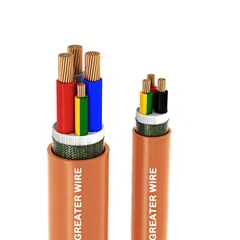
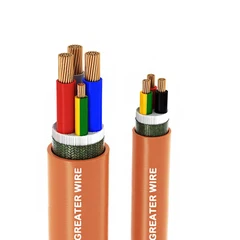

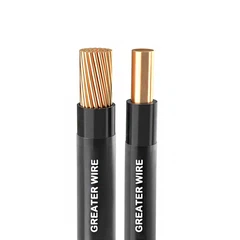
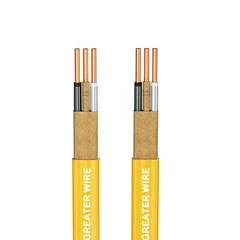
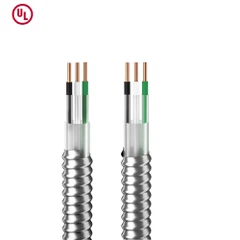
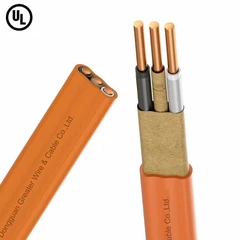
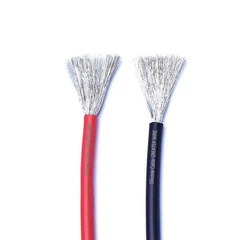
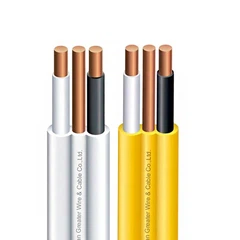
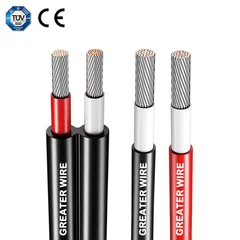

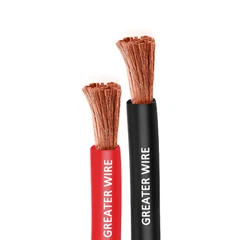
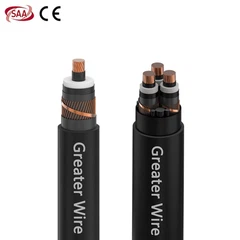
Receiving cable is not simply a matter of checking the reel count and signing the delivery receipt. Once a shipment arrives, the buyer needs to confirm that the supplied cable matches the purchase order, approved drawings, project specifications, and applicable certification requirements.
A receiving inspection can identify problems before the cable is installed, when damaged sections can still be isolated and documentation discrepancies can be resolved with the supplier. This is particularly important for industrial installations where cable replacement may involve significant labor, equipment downtime, and project delays.
For a shipment specified as XHHW-2 Tray Cable, inspection should cover the complete cable assembly, not just the conductor insulation. The XHHW-2 designation describes an insulation type and its temperature rating; it does not, by itself, prove that the finished cable is listed as Type TC or TC-ER.
A practical inspection should address five areas:
Order and product identification
Certification and documentation
Reel, packaging, and cable-end condition
Cable jacket, markings, and construction
Inspection records and nonconformance handling
1. Verify the Shipment Against the Purchase Order
Start by comparing the delivered products with the purchase order, approved technical submittal, and packing list. Do not assume that a cable is correct simply because its general appearance matches the product previously ordered.
Check the key product specifications
| Inspection item | What to verify | Why it matters |
|---|---|---|
| Cable type | Type TC or TC-ER, as specified | Confirms the intended product classification |
| Conductor material | Copper, aluminum, or another specified material | Prevents material substitution |
| Conductor size | AWG or kcmil size | Affects electrical capacity and compatibility |
| Number of conductors | Core count and grounding conductor arrangement | Must match the approved cable schedule |
| Insulation | XHHW-2 or other specified insulation type | Confirms the specified conductor insulation |
| Voltage rating | Printed cable rating and approved datasheet | Must suit the intended electrical system |
| Temperature rating | Applicable conductor and cable ratings | Must meet the project design conditions |
| Outer jacket | PVC, CPE, or another specified material | Affects environmental and mechanical suitability |
| Shielding | Overall or individual shielding, if required | Important for certain control and instrumentation circuits |
| Special ratings | Sunlight resistance, oil resistance, flame performance, or other specified properties | Confirms suitability for the installation environment |
Pay particular attention to differences between similar-looking cable products. For example, a standard Type TC cable and a TC-ER cable are not automatically interchangeable. The exposed-run designation must be supported by the product's applicable listing and markings.
Confirm the delivered quantity and reel lengths
Compare the actual reel count and cable lengths with the packing list and purchase order.
Check:
Number of reels received.
Cable length stated on each reel tag.
Total delivered length.
Reel identification numbers.
Any agreed length tolerances or short-reel arrangements.
Whether the reel schedule matches the supplier's shipping documents.
If the purchase order requires specific continuous lengths, verify that requirement rather than relying only on the total shipment length. Multiple short reels may not satisfy a project that requires long, uninterrupted cable runs.
Record any shortage, excess quantity, or reel-number discrepancy before accepting the shipment.
2. Check Cable Markings and Certification
Cable markings provide an important way to confirm product identity. However, markings should be checked against the approved datasheet and certification records rather than treated as independent proof of every claimed performance characteristic.
Inspect the outer-jacket legend
Where applicable, check whether the printed legend identifies:
Manufacturer or brand.
Cable type, such as TC or TC-ER.
Voltage rating.
Conductor information or other required product identification.
Applicable certification or listing mark.
Optional ratings required by the purchase specification.
The exact marking format varies by product and certification requirements. Not every cable will display every item in the same sequence.
Look for printing that is legible and reasonably consistent along the accessible cable length. Missing, incomplete, or inconsistent markings should be documented and referred to the supplier for clarification.
Verify the certification scope
For North American Type TC products, UL 1277 is an important product standard. Its scope covers electrical power and control tray cables with defined construction requirements. The applicable listing and product markings should be verified for the actual cable supplied.
For a XHHW-2 Tray Cable, two different levels of information need to be checked:
Conductor insulation designation: XHHW-2 identifies the insulation type of an individual conductor. Under the relevant UL 44 designation, XHHW-2 is rated for 90°C in both wet and dry locations.
Finished cable classification: The complete cable assembly must have the appropriate product listing or certification for its intended use, such as Type TC or TC-ER where specified.
A cable containing XHHW-2 insulated conductors is not automatically a listed TC-ER cable. The finished assembly, its construction, and its certification must all match the project requirements.
For projects involving CSA, IEC, or AS/NZS requirements, check the actual certification and applicable product standard for the target market. A UL listing should not be assumed to establish compliance with a different certification system.
Review the supporting documents
Request or verify the documents required by the purchase order and project quality plan. These may include:
| Document | What to check |
|---|---|
| Product datasheet | Construction, conductor size, voltage, temperature, and optional ratings |
| Certificate or listing information | Product type, manufacturer, and applicable certification scope |
| Certificate of Conformity (CoC) | Product description and order or batch identification |
| Factory test report | Tests performed and the associated reel or production references |
| Packing list | Reel numbers, lengths, and quantities |
| Cable drawings | Conductor arrangement, dimensions, and construction details |
| Material or compliance declarations | Only the environmental or regulatory declarations specifically required by the project |
Check that document descriptions and reel identifiers can be linked to the delivered products. A generic certificate that cannot be connected to the actual product or production batch may not provide sufficient traceability.


3. Inspect the Cable Reel and Packaging
The condition of the reel can reveal whether the cable may have been exposed to damage during loading, transportation, or storage.
Examine the reel structure
Inspect the reel flanges, barrel, fasteners, and protective packaging.
Look for:
Broken or cracked reel flanges.
Loose or missing fasteners.
Bent or damaged reel components.
Evidence of impact or crushing.
Water exposure or prolonged moisture accumulation.
Damaged protective lagging or wrapping.
Signs that the reel may have been dropped or handled improperly.
A damaged flange can expose the cable to impact or make safe unwinding difficult. If the reel is unstable or structurally damaged, do not attempt to move or unwind it until the handling risk has been assessed.
Check cable-end protection
Cable ends should be protected against moisture, dirt, and physical damage during transportation and storage.
Check whether:
End caps or seals are present where specified.
Cable ends are securely fastened.
The exposed conductor ends show signs of corrosion or contamination.
The outer jacket near the ends has been cut, crushed, or abraded.
Water or foreign material may have entered the cable.
Damaged end seals deserve particular attention. Moisture entering a cable can create problems that may not be visible from the outside, depending on the cable construction and storage conditions.
If the cable ends are exposed or the seals are missing, photograph the condition and request the supplier's assessment before installation.
Review the reel labels
Each reel should have an identifiable tag or label that can be matched to the shipment documents.
Record the following where available:
Manufacturer.
Product or cable type.
Conductor size and number of cores.
Rated voltage.
Reel number.
Cable length.
Production or batch reference.
Order or purchase reference.
Do not remove or discard reel labels during the inspection. They are useful for traceability if a defect is found later.
4. Examine the Cable's Outer Jacket and Visible Construction
A visual inspection of the accessible cable surface is one of the most practical receiving checks. It should be performed before the cable is installed or transferred to long-term storage.
Look for visible jacket damage
Unwind only the length needed for an agreed inspection, using suitable equipment and safe handling procedures. Inspect the accessible outer jacket for:
| Defect | What it may indicate | Recommended action |
|---|---|---|
| Cuts or deep scratches | Mechanical damage during handling | Record location and assess depth |
| Cracks or splits | Impact, aging, or unsuitable storage conditions | Segregate for technical review |
| Crushing or flattening | Excessive compression or improper handling | Request supplier assessment |
| Blisters or bubbles | Possible material or processing irregularity | Photograph and report |
| Uneven or exposed layers | Possible jacket damage or construction issue | Do not install until evaluated |
| Contamination or chemical staining | Possible contact with incompatible substances | Identify the substance and assess compatibility |
| Severe kinking | Improper handling or bending | Check whether the cable may have been structurally damaged |
Minor surface marks and serious jacket damage should not be treated as the same condition. The acceptance criteria should be based on the product specification, applicable requirements, and an agreed inspection procedure.
Do not cut away a damaged section or repair it without first documenting the condition and obtaining the required technical approval.
Check the cable's overall appearance
Where the cable construction is visible at an approved sample end, compare it with the approved drawing or datasheet.
Depending on the product, this may include:
Number and arrangement of insulated conductors.
Conductor identification.
Presence and position of a grounding conductor.
Overall shield or individual shields, if specified.
Filler and binder arrangement, where visible.
Overall jacket construction.
Do not strip or dismantle a production cable simply to satisfy a routine visual inspection. Destructive examination should be performed only when required by the inspection plan or agreed with the supplier and buyer.
Measure dimensions when required
For projects with dimensional requirements, measure the cable outside diameter using an appropriate method and calibrated measuring equipment.
Compare the result with the approved datasheet or drawing, taking account of the stated tolerances and measurement method.
Outside diameter can affect:
Cable gland selection.
Connector compatibility.
Cable tray fill calculations.
Pulling and installation planning.
Enclosure entry arrangements.
A single measurement should not be used to reject a cable unless the specification defines the applicable limits and inspection method.

5. Decide Whether Electrical Testing Is Necessary
Visual inspection and document verification are not substitutes for electrical testing. However, additional tests should be selected according to the purchase specification, project requirements, applicable standards, and the manufacturer's recommendations.
Review factory test records first
Before arranging additional testing, review the factory test report and determine whether the required tests have already been completed.
Confirm:
The tests correspond to the supplied cable type.
The report identifies the relevant production batch or reel.
Test results are recorded and traceable.
The reported test methods are appropriate for the product.
Any specified acceptance criteria have been met.
A factory test report should not be assumed to cover tests that were never included in the agreed inspection and test plan.
Consider additional testing only when justified
Depending on the cable type and project requirements, additional checks may include:
Conductor continuity.
Conductor resistance, where specified.
Insulation resistance, where an approved procedure defines the method and acceptance criteria.
Other electrical tests specifically required by the contract or applicable standard.
Testing must be performed by qualified personnel using suitable equipment. Before applying an insulation resistance test, isolate the cable from connected equipment, electronic devices, PLC modules, surge protection devices, and other components that could be affected by the test voltage.
Do not apply a high-potential test or an arbitrary test voltage simply because the cable has arrived. Such testing should follow an approved procedure and the relevant product requirements. Unplanned testing can damage equipment or create misleading results.
For PLC Control Cable applications, it is especially important to distinguish the cable itself from the sensitive control equipment connected to it. Receiving tests should be carried out on isolated cable sections, not through PLC inputs, communication interfaces, or other electronic circuits.
6. Consider the Intended Application and Environmental Requirements
A cable can match the purchase order in basic dimensions and conductor construction but still be unsuitable for the actual installation environment. Receiving inspection should therefore include a review of the project's specified application conditions.
Exposed-run installations
For Exposed Run XHHW Cable, verify that the delivered product is actually specified and certified for the intended exposed-run application. The presence of XHHW-2 insulated conductors alone does not establish TC-ER suitability.
Check the finished cable's markings, listing, datasheet, and any required environmental ratings. Also remember that a TC-ER designation does not mean unrestricted installation in every exposed location. Applicable installation-code requirements for support, protection, and the specific installation environment still apply.
Industrial control systems
For PLC Control Cable used in industrial control panels and automation systems, verify the number of cores, conductor identification, shielding arrangement, and electrical characteristics against the approved design.
Where shielding is specified, check that the delivered construction matches the requirement. An overall shield, individually shielded pairs, and an unshielded construction serve different purposes and should not be treated as interchangeable.
Energy storage systems
For an ESS Battery Cable application, do not assume that a general-purpose tray cable is suitable for battery connections simply because its voltage rating appears adequate.
Confirm the required cable type, conductor size, insulation system, temperature range, flexibility, environmental resistance, and applicable system or project approvals. Battery-system connections may involve specific requirements that differ from ordinary industrial power and control wiring.
Oil and gas facilities
For Oil and Gas Cable applications, review the project requirements for exposure to oils, fuels, chemicals, sunlight, moisture, temperature extremes, and mechanical hazards.
Oil resistance should be verified from the actual cable marking and supporting product documentation. It should not be assumed from the presence of a PVC or CPE jacket, or from a general TC-ER designation.
Where the installation is in a hazardous (classified) location, confirm the cable's suitability together with the applicable wiring method, fittings, equipment, and local code requirements. A general industrial cable listing does not automatically authorize use in every classified area.

7. Document Inspection Results and Handle Nonconforming Products
A receiving inspection is useful only when its findings are recorded and acted upon.
Create a receiving inspection record
A practical inspection record should include:
| Record item | Information to document |
|---|---|
| Purchase order | PO number and approved specification |
| Supplier | Manufacturer or distributor name |
| Delivery details | Delivery date and shipping reference |
| Product identification | Cable type, size, core count, and voltage rating |
| Reel details | Reel numbers and delivered lengths |
| Document review | Datasheet, certificates, and test reports |
| Visual inspection | Reel, packaging, cable ends, jacket, and markings |
| Additional tests | Test method, equipment, results, and acceptance criteria |
| Inspection outcome | Accepted, accepted with approved conditions, or rejected/held |
| Inspector | Name, date, and signature |
Photographs are particularly useful for recording damaged packaging, missing labels, jacket defects, and other visible issues. Include the reel number and a clear description so that the evidence can be traced to the correct product.
What should you do if a defect is found?
If the cable does not match the order or shows signs of damage, follow a controlled nonconformance process.
Identify the affected reel. Record the reel number, product description, and delivery reference.
Separate the affected material. Prevent accidental installation or mixing with accepted stock.
Record the evidence. Take photographs and document the defect, location, and inspection conditions.
Notify the supplier. Provide the purchase order, reel identification, inspection findings, and supporting photographs.
Request a technical response. Ask for a documented assessment, proposed corrective action, or replacement arrangement.
Obtain approval before release. Do not return the cable to usable inventory until the authorized party has approved the disposition.
Possible dispositions include acceptance after documented review, additional inspection, repair where technically permitted, replacement, or rejection. The correct decision depends on the defect, product requirements, and contractual responsibilities.


8. A Practical TC-ER Cable Receiving Inspection Checklist
The following checklist can be adapted for warehouse receiving teams, quality inspectors, electrical contractors, and project procurement departments.
| Checkpoint | Inspection question | Result |
|---|---|---|
| Purchase order | Does the product match the approved order? | Pass / Fail / N/A |
| Cable type | Is the TC or TC-ER designation correct? | Pass / Fail / N/A |
| Conductor | Are material, size, and core count correct? | Pass / Fail / N/A |
| Insulation | Does the insulation designation match the specification? | Pass / Fail / N/A |
| Voltage and temperature | Do the ratings meet project requirements? | Pass / Fail / N/A |
| Certification | Can the product listing or certification be verified? | Pass / Fail / N/A |
| Markings | Are the jacket markings legible and consistent? | Pass / Fail / N/A |
| Reel condition | Are the reel and packaging intact? | Pass / Fail / N/A |
| Cable ends | Are the ends protected and free from visible damage? | Pass / Fail / N/A |
| Outer jacket | Is the accessible jacket free from unacceptable defects? | Pass / Fail / N/A |
| Dimensions | Are required measurements within specified tolerances? | Pass / Fail / N/A |
| Documentation | Are the required datasheets and test records available? | Pass / Fail / N/A |
| Quantity | Do reel lengths and total quantities match the order? | Pass / Fail / N/A |
| Traceability | Can each reel be linked to the shipment documents? | Pass / Fail / N/A |
The inspection result should be recorded for every reel or for the agreed sampling scope. If the inspection plan specifies sampling, follow its sample size and acceptance criteria rather than making assumptions about how many reels need to be checked.
9. Common Mistakes to Avoid During Cable Receiving Inspection
Even experienced purchasing and warehouse teams can overlook important details when shipments arrive under time pressure.
Mistake 1: Checking only the reel quantity.
The correct number of reels does not prove that the cable type, conductor size, or construction is correct.
Mistake 2: Treating XHHW-2 as proof of TC-ER certification.
XHHW-2 identifies conductor insulation. The complete cable assembly needs its own applicable listing or certification.
Mistake 3: Ignoring reel and cable-end damage.
Damaged flanges, missing end protection, and exposed cable ends may indicate handling or storage problems.
Mistake 4: Accepting generic certificates without traceability.
Certification and test documents should be relevant to the supplied product and, where applicable, identifiable by production batch or reel.
Mistake 5: Performing unapproved electrical tests.
Test voltage, test method, and acceptance criteria should come from the applicable requirements and approved procedure, not guesswork.
Mistake 6: Assuming all industrial applications have the same cable requirements.
Control panels, energy storage systems, and oil and gas facilities can have very different environmental and electrical requirements.
Conclusion
Inspecting TC-ER cable after delivery is an important part of project quality control. A reliable receiving process verifies the purchase order, cable markings, certification, reel condition, cable jacket, supporting documents, and any additional tests required by the project.
For XHHW-2 Tray Cable, the most important distinction is between the insulation designation of individual conductors and the certification of the complete cable assembly. Buyers should also confirm that optional ratings and construction details match the intended installation environment.
By using a documented inspection checklist and placing questionable reels on hold before installation, distributors, contractors, OEMs, and procurement teams can reduce the risk of receiving unsuitable products and avoid preventable project delays.
Choose a Cable Supplier That Supports Quality from Production to Delivery
Reliable cable quality should be supported by more than a product description. GERITEL WIRE understands that industrial buyers need clear specifications, consistent manufacturing, identifiable reel information, and documentation that supports receiving inspection and project traceability. Whether your project requires XHHW-2 insulated tray cable, TC-ER exposed-run constructions, or customized power and control cable configurations, our team can help clarify product requirements before production and shipment. Contact GERITEL WIRE to discuss your cable specifications, documentation needs, and project requirements, and let us help you select a dependable cable solution for your application.
Dongguan Greater Wire & Cable Co., Ltd.
Tel/WhatsApp/Wechat: +86 136 6257 9592
Tel/WhatsApp/Wechat: +86 135 1078 4550
Email: manager01@greaterwire.com
Website: www.greaterwire.com