











Why Does Reel Length Matter in Bulk TC-ER Cable Orders?
When purchasing industrial tray cable in bulk, buyers often focus on conductor size, insulation, voltage rating, certification, and unit price. However, reel length is another important factor that can affect the total cost and efficiency of a cable project.
Choosing the right reel length influences how many reels need to be shipped, how easily cable can be handled on site, how much material may be left over, and whether the supplied lengths match the planned cable routes. A low price per foot does not necessarily mean a lower overall project cost if the reel configuration creates unnecessary waste or installation difficulties.
For XHHW Tray Cable, reel length should be considered alongside cable construction, outside diameter, weight, project route lengths, and installation conditions. A well-planned reel schedule can help distributors, electrical contractors, OEMs, and procurement teams reduce material waste and improve project logistics.
This guide explains how reel length affects bulk TC-ER cable orders and what buyers should specify before requesting a quotation.
1. What Does Reel Length Mean in a TC-ER Cable Order?
Reel length is the amount of cable wound onto an individual shipping reel or drum. It is usually expressed in feet or meters.
A bulk cable order may contain several reels, each with the same length, or a combination of different reel lengths based on project requirements.
For example, a buyer may order 10,000 ft of cable in one of the following configurations:
| Reel configuration | Number of reels | Length per reel | Total cable |
|---|---|---|---|
| Long-reel configuration | 2 | 5,000 ft | 10,000 ft |
| Medium-reel configuration | 4 | 2,500 ft | 10,000 ft |
| Short-reel configuration | 10 | 1,000 ft | 10,000 ft |
All three configurations provide the same total cable quantity, but they do not necessarily offer the same purchasing, shipping, handling, or installation advantages.
A longer reel may reduce the number of reel changes and simplify transportation planning. Shorter reels may be easier to handle, store, and allocate to separate work areas.
The best configuration depends on the cable dimensions, reel capacity, project layout, and available handling equipment.
Reel length is not the same as continuous cable length required for one circuit
This distinction is important.
A purchase order may specify 10,000 ft in total, but the project may require several individual cable runs of 500 ft, 800 ft, or 1,200 ft. The buyer must determine whether the supplied reels can provide those lengths without introducing unwanted joints.
A supplier should therefore understand both:
The total quantity required for the project.
The required continuous length for each individual run.
Providing only the total order quantity may not be enough to determine the most suitable reel configuration.
2. How Does Reel Length Affect Material Waste?
One of the most direct effects of reel length is the amount of unused cable remaining after installation.
If the reel length is significantly greater than the required cable run, the remaining cable may be stored for future use. However, if the remaining length is too short for another planned run, it may become difficult-to-use inventory or waste.
Example: Four cable runs of 220 ft each
Assume a project requires four independent cable runs, each measuring 220 ft.
The total installed cable requirement is:
[4 \times 220 = 880\text{ ft}]
Compare two possible reel configurations:
| Configuration | Cable supplied | Installed length | Remaining cable |
|---|---|---|---|
| One 1,000-ft reel | 1,000 ft | 880 ft | 120 ft |
| Four 250-ft reels | 1,000 ft | 880 ft | 120 ft |
Both configurations supply the same quantity and leave the same total unused length. However, the remaining cable is distributed differently.
With one 1,000-ft reel, the installer must measure and cut four separate 220-ft lengths. The remaining 120 ft is concentrated on one reel.
With four 250-ft reels, each reel can supply one 220-ft run, leaving 30 ft on each reel.
Neither option is automatically better. The first may reduce the number of reels delivered and simplify bulk storage, while the second may make allocation and installation more convenient.
The buyer should consider whether the remaining cable can be reused on other circuits or projects.
Why is a cutting plan important?
Before ordering, prepare a cable cutting schedule that lists the required length of each run.
For example:
| Cable run | Required length |
|---|---|
| Run A | 220 ft |
| Run B | 220 ft |
| Run C | 220 ft |
| Run D | 220 ft |
| Total | 880 ft |
The schedule should also include any additional allowance required by the installation design, such as routing around equipment, termination preparation, and approved installation slack.
Do not add an arbitrary percentage to every cable run without reviewing the actual route and installation requirements. Excessive allowances can increase purchasing costs and create unnecessary leftover material.

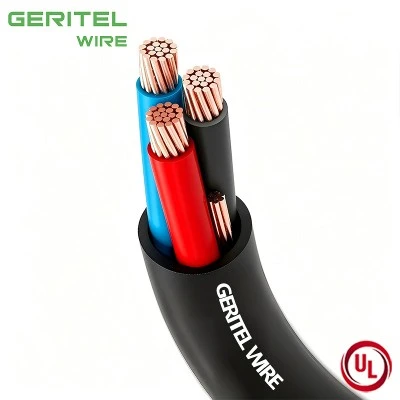
3. How Does Reel Length Affect Cable Purchasing Costs?
Reel length can influence the total landed cost of a bulk cable order, even when the price per foot is unchanged.
The purchase price is only one part of the cost. Buyers should also consider reel manufacturing, packaging, transportation, unloading, storage, and handling.
Fewer reels can simplify logistics
Longer reels may reduce the number of individual packages in a shipment.
Potential advantages include:
Fewer reel labels and handling units.
Less time spent receiving and counting reels.
Potentially more efficient loading and unloading.
Fewer reel changes during long cable installations.
Simplified inventory tracking.
However, larger reels may require heavier lifting equipment, more storage space, and vehicles capable of carrying their dimensions and weight.
More reels can improve handling flexibility
Shorter reels may be more practical when:
Different installation teams work in separate areas.
Cable is allocated to multiple buildings or equipment sections.
The site has limited storage space.
Available lifting equipment has a restricted load capacity.
Individual cable runs are relatively short.
More reels can also increase packaging, labeling, handling, and receiving work.
Compare total landed cost, not only cable price
A useful purchasing comparison should include:
| Cost factor | Longer reels | Shorter reels |
|---|---|---|
| Number of reels | Usually lower | Usually higher |
| Packaging and labeling | Potentially simpler | More individual units |
| Loading and unloading | May require heavier equipment | Often easier for smaller reels |
| Transportation | Depends on reel dimensions and weight | Depends on total package count |
| On-site handling | May be more difficult | May be more flexible |
| Cable allocation | May require cutting and redistribution | Can be allocated by reel |
| Leftover material | May be concentrated on fewer reels | May be distributed across more reels |
The actual cost advantage depends on the supplier's packaging options, shipping method, destination, and site handling arrangements.
A longer reel should not be selected simply because it reduces the number of packages. It must also be compatible with the buyer's transportation and installation capabilities.
4. What Determines the Maximum Length per Reel?
There is no single universal reel length for every TC-ER cable. The maximum practical length depends on the cable's physical characteristics and the reel itself.
Cable outside diameter
Cable outside diameter is one of the most important factors affecting reel capacity.
A larger cable requires more space on the reel. For the same reel dimensions, a cable with a larger outside diameter will generally have a lower length capacity than a smaller cable.
For example, a compact control cable and a large power cable may have very different reel capacities even when the reel size is identical.
This is especially relevant for Multi Conductor Tray Cable, where the number and size of conductors, fillers, shielding, insulation, and outer jacket all contribute to the finished cable diameter.
Cable weight per unit length
The weight of the cable determines how heavy a loaded reel will be.
A longer reel may physically fit on a drum but exceed the reel's rated load or create handling problems.
The supplier should consider:
Cable weight per foot or meter.
Reel tare weight.
Maximum permitted reel load.
Flange and drum strength.
Lifting and transportation restrictions.
A reel's maximum cable capacity should therefore be evaluated by both volume and weight.
Reel dimensions
The main dimensions of a cable reel include:
Flange diameter.
Drum or barrel diameter.
Traverse width.
Available winding space.
Flange clearance.
The available winding space and cable diameter determine how much cable can be stored on the reel.
The reel must also provide sufficient clearance between the wound cable and the flange edge to protect the cable during handling and transportation.
A supplier can calculate an estimated reel capacity using the cable outside diameter and reel dimensions. However, the final capacity should also account for winding arrangement, cable protection, weight limits, and applicable packaging requirements.
Minimum bending radius
Cable must not be bent more tightly than its specified minimum bending radius.
The reel drum diameter must be suitable for the cable construction and the manufacturer's winding recommendations. A reel that holds a large quantity of cable but forces it into an excessively tight bend is not an acceptable solution.
The relevant bending-radius requirement depends on the cable design and may differ between installation under pulling tension and final cable positioning.
Buyers should request the manufacturer's recommended minimum bending radius rather than assuming that all tray cables have the same requirement.
5. How Does Reel Length Affect Cable Installation?
The reel configuration can influence the installation sequence, pulling arrangement, and number of cable joints.
Longer reels can reduce reel changes
For a long cable route, a reel containing sufficient continuous cable may allow the installer to complete the run without changing reels.
This can reduce:
Reel-change interruptions.
Additional cable-end preparation.
Unnecessary handling.
The risk of introducing joints.
Coordination between installation teams.
For large industrial projects, reducing interruptions can improve installation efficiency.
However, the reel must be positioned safely, and the cable must be paid off using suitable equipment. A heavy reel should not be handled manually or placed on an unsuitable support.
Shorter reels may require additional planning
If a cable run exceeds the available reel length, the installation may require another reel and an approved connection arrangement.
For example, if a route requires 1,200 ft of continuous cable but the supplier can only provide 1,000-ft reels, the buyer needs to determine how the remaining length will be supplied and whether the proposed installation arrangement is acceptable.
Do not assume that any convenient field splice is permitted. The splice method, location, enclosure, accessibility, and applicable electrical code requirements must be evaluated for the specific installation.
For many industrial applications, minimizing unnecessary splices is a sensible project objective.
Consider cable pulling limits
A longer reel does not mean that the cable can be pulled through an unlimited route in one operation.
Installation conditions may limit the practical pulling length, including:
Total pulling tension.
Number and angle of bends.
Sidewall bearing pressure.
Cable weight.
Cable minimum bending radius.
Friction and pulling equipment.
The manufacturer's installation instructions.
For example, cable pulled around a bend experiences sidewall pressure. Excessive pressure can damage the cable even if the total pulling tension appears acceptable.
Before selecting a very long reel, the installation team should evaluate the actual route and confirm that the cable can be installed within the manufacturer's mechanical limits.

6. Does Reel Length Affect XHHW Insulation or Cable Ampacity?
No. Reel length does not change the electrical rating of the cable.
A 500-ft reel and a 2,000-ft reel made from the same approved cable construction have the same specified conductor size, insulation type, voltage rating, and applicable ampacity conditions.
However, buyers should not confuse the insulation temperature rating with the allowable ampacity of the installed circuit.
Understanding 90°C insulation ratings
A 90°C XHHW Cable specification should be checked carefully because XHHW and XHHW-2 are different insulation designations.
Under the applicable UL 44 designation:
XHHW is generally rated 90°C in dry locations and 75°C in wet locations.
XHHW-2 is rated 90°C in both wet and dry locations.
The exact marking and certification of the supplied conductor should be verified.
Even when the conductor insulation is rated 90°C, the final allowable ampacity is not automatically determined by using the 90°C column in every installation.
Under NEC requirements, conductor ampacity must account for applicable conditions, including:
Conductor size and material.
Ambient temperature.
Number of current-carrying conductors.
Installation conditions.
Equipment terminal temperature ratings.
Applicable correction and adjustment factors.
For many equipment terminations, the allowable ampacity is limited by the applicable terminal rating under NEC 110.14(C).
Does reel length change TC-ER Cable Ampacity?
No. TC-ER Cable Ampacity is determined by the conductor and installation characteristics, not by how many feet are wound onto a reel.
The cable's ampacity must be evaluated according to its applicable product and installation requirements. The length of the cable run can affect voltage drop, but it does not change the cable's rated ampacity simply because the cable is supplied in a longer reel.
This distinction is important when a buyer compares different reel configurations. A longer reel should not be assumed to provide a higher or lower ampacity than a shorter reel of the same cable construction.
7. Should Buyers Order One Long Reel or Multiple Short Reels?
The best choice depends on the project layout, installation plan, reel capacity, and logistics.
| Project condition | Recommended approach | Reason |
|---|---|---|
| Long, uninterrupted cable routes | Consider longer reels | Reduces reel changes and potential joints |
| Many short individual runs | Consider shorter or cut-to-length reels | Simplifies allocation and reduces unnecessary cutting |
| Multiple installation areas | Consider separate reels by area | Improves material distribution |
| Limited site lifting capacity | Consider smaller reels | Easier handling within equipment limits |
| Large cable outside diameter | Confirm reel capacity first | Physical and weight limits may restrict length |
| Strict continuous-length requirements | Specify minimum continuous length | Prevents unsuitable reel splits |
| Projects with uncertain cable schedules | Consider a flexible reel plan | Helps manage changes and leftover material |
When should you request cut-to-length cable?
Cut-to-length supply can be useful when the buyer has a confirmed cable schedule and wants each reel to correspond to a specific installation run.
Potential benefits include:
Less on-site measuring and cutting.
Easier cable allocation.
Better control of individual run lengths.
Reduced risk of ordering unnecessary excess material.
However, cut-to-length orders should specify acceptable length tolerances, labeling, reel identification, and the treatment of any short or excess lengths.
The buyer should also confirm whether the supplier can manufacture and package the requested lengths while maintaining the required product certification and traceability.

8. What Should Buyers Specify About Reel Length in a Bulk TC-ER RFQ?
A clear request for quotation (RFQ) should include more than the total cable quantity.
If reel requirements are missing, suppliers may quote different packaging configurations, making price and delivery comparisons less meaningful.
The following information helps suppliers prepare a more accurate quotation.
1. Total order quantity
Specify the required total cable quantity in feet or meters.
For example:
20,000 ft total.
6,000 m total.
12 reels, if the reel count is fixed.
2. Preferred length per reel
State the desired length for each reel, if known.
Examples:
1,000 ft per reel.
500 m per reel.
2,000 ft maximum per reel.
Mixed reel lengths according to the cable schedule.
If the length is flexible, ask the supplier to recommend a practical configuration based on cable dimensions and reel capacity.
3. Minimum continuous length
If the project requires uninterrupted cable runs, state the minimum continuous length required on each reel.
For example:
"Each reel must contain at least 1,500 ft of continuous cable, with no intermediate joints."
This requirement is different from simply specifying a 1,500-ft total reel quantity. It makes the buyer's installation requirement clear.
4. Reel dimensions and weight limits
Where necessary, specify:
Maximum reel flange diameter.
Maximum reel width.
Maximum gross reel weight.
Required lifting arrangement.
Transportation or container-loading restrictions.
These requirements are particularly important for large power cables and long-reel orders.
5. Reel material and packaging
Confirm whether the reels should be wooden, steel, or another approved material.
Also specify:
Returnable or non-returnable reels.
Weather protection.
Cable-end protection.
Reel labeling.
Export packaging requirements.
Any applicable wood-packaging compliance requirements.
For international shipments using solid wood packaging, buyers should confirm whether ISPM 15 requirements apply.
6. Length tolerance and measurement method
Specify the acceptable cable-length tolerance and how the length should be measured or recorded.
Do not assume that every supplier uses the same length tolerance or measurement practice.
For high-value or project-critical orders, request the actual measured length to be recorded on each reel label or packing list.
7. Reel identification and documentation
Each reel should have a unique identification number that can be matched to the packing list and relevant production records.
A useful reel label may include:
Manufacturer name.
Product type.
Conductor size and core count.
Voltage rating.
Reel number.
Actual cable length.
Production or batch reference.
Purchase order number.
This information makes receiving inspection, inventory management, and installation allocation easier.


9. Common Mistakes When Ordering Bulk TC-ER Cable
Even experienced procurement teams can overlook reel requirements when preparing large cable orders.
Mistake 1: Specifying only the total cable quantity
A request for 20,000 ft does not tell the supplier whether the buyer needs 20 reels of 1,000 ft, 10 reels of 2,000 ft, or custom lengths.
Better approach: Include the preferred reel configuration or ask the supplier to propose one.
Mistake 2: Choosing the longest possible reel
A longer reel may reduce the number of packages, but it can exceed site handling capacity or create installation difficulties.
Better approach: Consider reel weight, dimensions, lifting equipment, transportation limits, and cable pulling conditions.
Mistake 3: Ignoring individual cable run lengths
A bulk order can contain sufficient total cable but still fail to provide the required continuous lengths.
Better approach: Prepare a cable schedule showing each route's required length and any minimum continuous-length requirement.
Mistake 4: Assuming all cable constructions have the same reel capacity
A large Multi Conductor Tray Cable may have a much greater outside diameter and weight than a smaller control cable.
Better approach: Ask the manufacturer to calculate reel capacity using the actual cable construction and reel dimensions.
Mistake 5: Ignoring leftover cable
Short offcuts may accumulate across multiple reels and become difficult to reuse.
Better approach: Review the cutting schedule and plan how leftover cable will be stored or allocated to future work.
Mistake 6: Confusing reel length with electrical performance
Longer cable does not automatically have a different temperature rating or ampacity.
Better approach: Evaluate cable electrical characteristics separately from packaging and length requirements.
10. Reel Length and the Difference Between TC-ER and Standard Tray Cable
When comparing products, buyers should understand that reel length is a packaging and supply consideration, while the cable designation describes the product's construction and permitted use.
The distinction in TC-ER Cable vs Tray Cable is not determined by the length of cable on the reel.
Type TC identifies a tray cable product. TC-ER indicates that the cable also meets the applicable exposed-run requirements. A longer reel does not provide exposed-run qualification to a standard TC cable.
| Comparison item | Type TC Cable | Type TC-ER Cable |
|---|---|---|
| Product category | Tray cable | Tray cable with exposed-run qualification |
| Product requirements | Applicable Type TC requirements | Applicable Type TC requirements plus ER qualification |
| Reel length | Determined by cable and packaging limits | Determined by cable and packaging limits |
| Reel capacity | Depends on cable OD, weight, and reel dimensions | Depends on cable OD, weight, and reel dimensions |
| Exposed-run use | Subject to applicable installation requirements | Permitted only within the applicable ER conditions and installation rules |
For buyers, the important point is to specify the correct cable type first and determine the reel configuration separately.
A supplier should not substitute a standard TC product for a specified TC-ER product simply because the cable is available in a more convenient reel length.
Conclusion
Reel length plays an important role in bulk TC-ER cable purchasing because it affects material utilization, transportation, storage, installation efficiency, and leftover cable management.
Longer reels can reduce reel changes and simplify some large installations, while shorter reels may be easier to handle and allocate across multiple work areas. Neither option is universally better. The correct configuration depends on the cable's outside diameter, weight, reel capacity, route lengths, pulling conditions, and site logistics.
When purchasing XHHW Tray Cable, buyers should specify both the total order quantity and the required continuous length for individual runs. They should also confirm reel dimensions, weight limits, packaging, length tolerance, and traceability before production begins.
A well-planned reel schedule helps prevent avoidable material waste, reduces installation interruptions, and makes bulk cable procurement more predictable.
Plan Your Bulk TC-ER Cable Order with GERITEL WIRE
The right reel configuration can make a meaningful difference to project cost, transportation, and installation efficiency. GERITEL WIRE works with international distributors, contractors, and OEMs to supply industrial tray cable configurations that match project specifications and practical delivery requirements. Whether you need standard XHHW-insulated tray cable, multi-conductor TC-ER constructions, or customized reel lengths, our team can help review cable dimensions, required continuous lengths, packaging, and order quantities before production. Contact GERITEL WIRE with your cable schedule and project requirements to discuss a suitable supply solution for your next bulk cable order.
Dongguan Greater Wire & Cable Co., Ltd.
Tel/WhatsApp/Wechat: +86 136 6257 9592
Tel/WhatsApp/Wechat: +86 135 1078 4550
Email: manager01@greaterwire.com
Website: www.greaterwire.com