


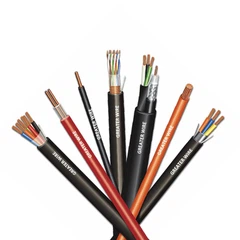
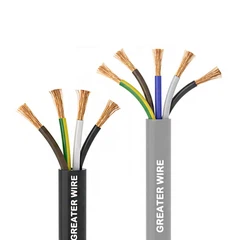
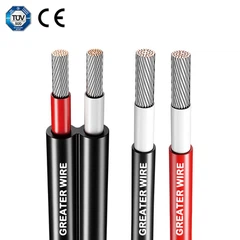

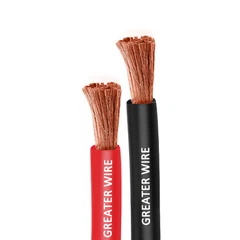
When designing a solar photovoltaic (PV) system, the choice of cable size is a critical factor. A 1.5 mm² solar cable is commonly used in small-scale applications, but its capacity depends on several factors such as current, voltage, installation conditions, and the type of cable standard it adheres to, such as H1Z2Z2-K or PV1-F.
This article explores how much power a 1.5 mm² solar cable can handle in terms of kilowatts (kW) and provides guidance on when to use it in PV systems.

Key Characteristics of a 1.5 mm² Solar Cable
A 1.5 mm² cable has a cross-sectional area of 1.5 square millimeters. This relatively small size makes it lightweight, flexible, and suitable for low-power solar applications.
Current-Carrying Capacity
The capacity of a 1.5 mm² cable varies depending on installation conditions:
In Free Air: The cable can carry currents of up to 15A to 20A under ideal conditions.
In Conduits or Underground: Heat dissipation is reduced, lowering the current capacity to around 12A to 15A.
Voltage Ratings
H1Z2Z2-K: Rated for up to 1.5 kV DC, ensuring safety and efficiency in modern PV systems.
PV1-F: Rated for up to 1.0 kV DC, suitable for older systems and low-voltage applications.
Environmental Resistance
UV and Ozone Resistance: Enables outdoor use without degradation.
Wide Temperature Range: Typically operates between -40°C to +120°C, ensuring performance in extreme climates.

Calculating the Power Capacity of a 1.5 mm² Solar Cable
To determine how much power (in kW) a 1.5 mm² cable can handle, use the formula:
P=V×I
Where:
P = Power (W)
V = Voltage (V)
I = Current (A)
Example Calculation
For a solar system operating at 12V and a cable capable of carrying 15A:
P=12 V×15 A=180 W
If the system operates at 48V:
P=48 V×15 A=720 W
For higher voltages such as 600V, common in commercial PV systems:
P=600 V×15 A=9,000 W=9 kWP
Note: The actual power capacity depends on the specific installation conditions, cable length, and allowable voltage drop.

When Can You Use a 1.5 mm² Solar Cable?
1. Low-Power Systems
A 1.5 mm² solar cable is suitable for small-scale installations, such as:
Residential setups with power outputs below 1 kW.
Off-grid applications like solar-powered lighting or small water pumps.
2. Short Cable Runs
Due to its limited capacity, a 1.5 mm² cable is ideal for short distances, typically less than 10 meters. Longer runs can result in significant voltage drops, reducing efficiency.
3. Compliant with Standards
Ensure the cable meets H1Z2Z2-K or PV1-F standards, which guarantee:
High resistance to UV and weather exposure.
Halogen-free and flame-retardant properties for enhanced safety.

Factors to Consider Before Using a 1.5 mm² Solar Cable
1. Voltage Drop
Voltage drop increases with cable length and resistance. It is recommended to keep the voltage drop below 3% for optimal system performance.
The voltage drop can be calculated as:
Vdrop=I×R×L
Where:
R = Cable resistance per meter (Ω/m).
L = Total length of the cable run (meters).
2. System Power Requirements
The total power output of the solar panels must not exceed the cable's capacity. For example, a 1.5 mm² cable carrying 15A at 48V can handle up to 720W. For larger systems, consider upgrading to a 2.5 mm² or 4 mm² cable.
3. Environmental Conditions
If the cable is exposed to harsh conditions, such as high temperatures or direct sunlight, its current-carrying capacity may decrease. Cables meeting H1Z2Z2-K and PV1-F standards are designed to withstand such challenges.
4. Future Expansion
If you plan to expand your solar system in the future, consider using a larger cable size to accommodate increased power requirements.

Comparison: 1.5 mm² vs. Other Solar Cable Sizes
| Cable Size | Current Capacity (A) | Typical Power Range (kW) | Best Applications |
|---|---|---|---|
| 1.5 mm² | 12A–15A | 0.1–9 kW | Small-scale solar setups, short runs |
| 2.5 mm² | 20A–30A | 0.2–18 kW | Residential PV systems, medium runs |
| 4 mm² | 30A–40A | 0.5–24 kW | Larger systems, long cable runs |
Common Applications of 1.5 mm² Solar Cables
Residential Systems
For small rooftop solar installations with a total output below 1 kW, a 1.5 mm² cable can be used to connect solar panels to junction boxes or inverters.
Off-Grid Lighting
Solar-powered streetlights or garden lights often use 1.5 mm² cables due to their low power requirements and short cable runs.
Auxiliary Wiring
In larger systems, 1.5 mm² cables may be used for auxiliary connections, such as wiring for monitoring systems or small DC loads.

Limitations of 1.5 mm² Solar Cables
Limited Current Capacity:
Unsuitable for high-power applications or long cable runs.
Increased Voltage Drop:
Significant over longer distances, leading to energy losses.
Future Upgrades:
May require replacement if the system's power output increases.