

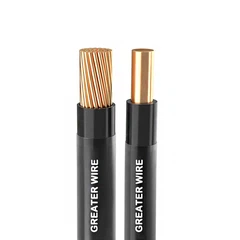

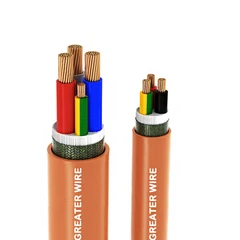
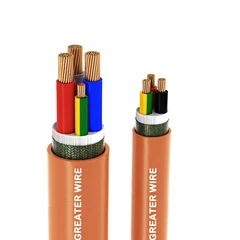
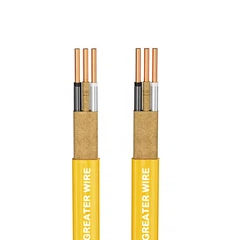
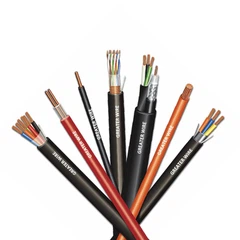
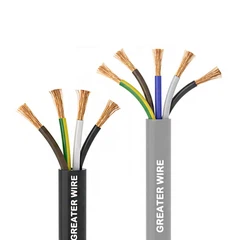

Flexible cables usually used in applications where repeated movement, bending, torsion, or vibration is unavoidable, such as industrial automation, robotics, drag chain systems, cranes, elevators, medical equipment, and renewable energy installations. Among the many design factors that determine the performance and service life of a flexible cable, conductor stranding structure plays a decisive role in its bending life, which is commonly defined as the number of bending cycles a cable can withstand before electrical or mechanical failure occurs.
Unlike fixed installation cables, flexible cables are subjected to cyclic mechanical stresses that cause repeated deformation of the conductor. Over time, these stresses can lead to metal fatigue, strand breakage, increased electrical resistance, and ultimately conductor failure. The way in which individual copper strands are arranged, twisted, and compacted within the conductor directly influences how stress is distributed during bending and how effectively the conductor can accommodate repeated motion.

Fundamentals of Bending Stress in Conductors
Bending Mechanics and Metal Fatigue
When a cable bends, the conductor experiences tensile stress on the outer radius and compressive stress on the inner radius. Repeated bending causes alternating tensile and compressive loading, which is the primary driver of metal fatigue. Fatigue failure occurs even when the applied stress is below the ultimate tensile strength of copper, as microscopic cracks initiate and propagate over time.
The magnitude of bending stress depends on:
Bending radius
Conductor diameter
Elastic modulus of copper
Strand geometry and freedom of movement
A conductor design that reduces stress concentration and allows relative movement between strands will significantly extend bending life.
Role of Strand Interaction
In a solid conductor, all material is forced to deform uniformly during bending, resulting in high stress concentration. In stranded conductors, individual wires can slide slightly relative to each other, redistributing stress and reducing peak strain in any single strand. Therefore, the finer and more flexible the stranding, the longer the bending life, all else being equal.
Overview of Conductor Stranding Structures
Conductor stranding structures can be broadly classified into several categories, each with distinct mechanical behavior under bending:
Solid conductor
Coarse stranded conductor
Class 2 / Class 5 stranded conductor
Fine-stranded conductor
Extra-fine / ultra-fine stranded conductor
Rope-lay (bunch or concentric rope) conductor
Each structure is analyzed below with respect to bending life performance.
Solid Conductors and Their Bending Limitations
Solid conductors consist of a single copper rod. While they offer low electrical resistance and dimensional stability, they perform poorly in dynamic bending applications.
Stress Concentration
In solid conductors, bending stress is fully absorbed by a continuous metal cross-section. There is no internal stress redistribution mechanism, leading to:
High peak strain at the outer fiber
Rapid crack initiation
Very low fatigue life
Typical Applications
Solid conductors are suitable only for:
Fixed installations
No or minimal movement
Permanent wiring inside walls or conduits
They are not suitable for flexible cable applications, as even a small number of bending cycles can cause failure.
Coarse Stranded Conductors (Low Strand Count)
Coarse stranded conductors are composed of a small number of relatively large copper wires twisted together.
Mechanical Behavior
Compared to solid conductors, coarse stranded designs offer:
Slightly improved flexibility
Limited stress redistribution
However, each strand still has a relatively large diameter, which means:
Individual strands experience high bending strain
Fatigue cracks develop relatively quickly
Bending Life Performance
Coarse stranded conductors may tolerate occasional bending but are not designed for continuous motion. Their bending life is limited, especially in applications with small bending radii or high cycle counts.

Class 2 and Class 5 Stranded Conductors
Class 2 Stranding
Class 2 conductors are commonly used in building and power cables. They consist of multiple strands but are primarily designed for ease of installation rather than dynamic flexibility.
Moderate strand diameter
Limited strand mobility
Suitable for static or semi-static applications
Class 5 Stranding (IEC)
Class 5 conductors represent a significant improvement in flexibility. They use a higher number of smaller-diameter strands.
Effect on bending life:
Lower strain per strand
Improved fatigue resistance
Suitable for occasional movement and moderate flexibility requirements
However, Class 5 conductors are still not optimized for high-cycle dynamic bending, such as in drag chains or robotics.
Fine-Stranded Conductors and Their Advantages
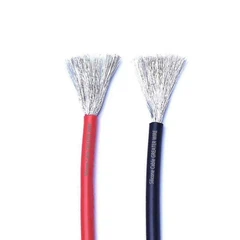
Fine-stranded conductors are specifically designed for flexible cables. They consist of a large number of very small-diameter copper wires.
Stress Distribution Mechanism
The key advantages of fine stranding include:
Each strand experiences minimal bending strain
Stress is distributed across many strands
Individual strand failure does not immediately cause conductor failure
Strand Mobility
Fine strands can move slightly relative to one another, allowing the conductor to adapt to bending without accumulating excessive localized stress. This significantly delays crack initiation and propagation.
Bending Life Improvement
Compared to coarse stranded designs, fine-stranded conductors can achieve:
Several orders of magnitude longer bending life
Reliable performance under millions of bending cycles
Consistent electrical resistance over time
Extra-Fine and Ultra-Fine Stranded Conductors
Structural Characteristics
Extra-fine stranded conductors use extremely thin copper wires, often arranged in multiple layers. These designs are common in:
Drag chain cables
Robotics cables
Continuous motion systems
Fatigue Resistance
The smaller the strand diameter:
The lower the bending strain per strand
The higher the fatigue endurance limit
Ultra-fine stranding allows the conductor to withstand extremely tight bending radii and very high cycle counts.
Trade-Offs
While ultra-fine stranding offers exceptional bending life, it comes with considerations:
Higher manufacturing cost
Slightly higher electrical resistance due to increased contact interfaces
Greater sensitivity to improper termination
Despite these trade-offs, ultra-fine stranding is essential for high-performance flexible cables.

Rope-Lay and Bunch-Stranded Conductors
Rope-Lay Structure
In rope-lay conductors, small bundles of fine strands are twisted together in multiple stages, similar to a rope.
This structure provides:
Excellent flexibility
Uniform stress distribution
High resistance to cyclic bending and torsion
Effect on Bending Life
Rope-lay designs are among the best-performing conductor structures for dynamic applications. The multi-stage twist allows bending stress to be absorbed gradually rather than concentrated at a single point.
These conductors are commonly used in:
Robotic arms
Continuous flexing cable carriers
High-speed automation systems
Interaction Between Stranding and Insulation
While conductor stranding is critical, its effect on bending life is closely linked to insulation design.
Insulation must allow strand movement without excessive constraint
Adhesion between insulation and conductor must be optimized
Excessive bonding can negate the benefits of fine stranding
High-performance flexible cables are designed as integrated systems, where conductor stranding, insulation elasticity, and sheath materials work together to maximize bending life.
Failure Modes Related to Stranding Structure
Different stranding structures exhibit different failure patterns:
Solid conductors: sudden fracture after few cycles
Coarse stranded conductors: strand-by-strand breakage leading to resistance increase
Fine-stranded conductors: gradual degradation with long warning period
Rope-lay conductors: exceptional fatigue resistance with predictable aging behavior
Understanding these failure modes is essential for selecting the correct conductor structure for a given application.
Practical Selection Guidelines
When selecting a flexible cable conductor structure, engineers should consider:
Bending radius: Smaller radii require finer stranding
Cycle count: Higher cycles demand ultra-fine or rope-lay designs
Motion type: Continuous motion requires optimized stranding
Electrical requirements: Balance flexibility with resistance
Termination method: Fine strands require proper ferrules or crimping
Selecting an inappropriate stranding structure often results in premature cable failure, even if insulation and sheath materials are high quality.


The bending life of flexible cables is fundamentally governed by conductor stranding structure. As strand count increases and strand diameter decreases, bending strain is reduced, stress distribution improves, and fatigue life increases dramatically. From solid conductors with minimal flexibility to ultra-fine rope-lay designs capable of millions of cycles, each stranding structure serves a distinct purpose.
In dynamic applications, conductor stranding is not merely a design detail-it is a primary determinant of reliability, safety, and total cost of ownership. Proper understanding and selection of stranding structures enable engineers to design cable systems that withstand demanding mechanical conditions while maintaining stable electrical performance over long service lifetimes.
At Dongguan Greater Wire & Cable Co., Ltd., we understand that choosing the right wire and cable solutions is critical to the success and safety of your projects.
Our experienced pre-sales and after-sales teams provide:
Professional technical consultation
Accurate product selection and application guidance
Fast and responsive support throughout the entire project lifecycle
Whether you are working on small-scale installations or large industrial projects, we are committed to delivering reliable solutions and practical support tailored to your specific requirements.
Contact Us
Dongguan Greater Wire & Cable Co., Ltd.
📞 Tel / WhatsApp / WeChat
+86 135 1078 4550
+86 136 6257 9592
📧 Email
manager01@greaterwire.com
We look forward to supporting your next project with quality products, technical expertise, and dependable service.