


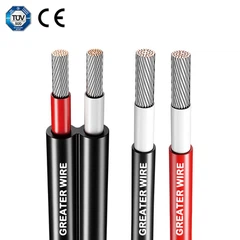

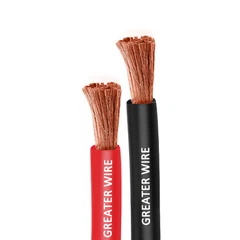
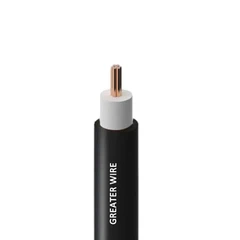
In solar photovoltaic (PV) systems, the choice of cable size is crucial for efficiency and safety. A 4mm² solar cable is a popular choice for medium to large-scale installations due to its ability to handle higher currents and maintain minimal voltage drop over longer distances. This article explores the current-carrying capacity of a 4mm² solar cable and its suitability in PV systems, focusing on H1Z2Z2-K, PV1-F, and general photovoltaic cable standards.

Key Characteristics of a 4mm² Solar Cable
Cross-Sectional Area
A 4mm² cable has a conductor cross-sectional area of 4 square millimeters, providing a larger surface for current flow and reducing resistance compared to smaller cables.
Standards and Certifications
H1Z2Z2-K:
Rated for up to 1.5 kV DC.
Designed for modern solar PV systems with enhanced safety features like flame retardance, halogen-free insulation, and high flexibility.
PV1-F:
Rated for up to 1.0 kV DC.
Common in older systems and widely used in standard PV installations.
Environmental Durability
Both H1Z2Z2-K and PV1-F cables are designed for outdoor use, offering:
UV and Weather Resistance: Ensures long-term performance in harsh environments.
Temperature Range: Operates efficiently between -40°C and +120°C, suitable for extreme climates.

Current-Carrying Capacity of a 4mm² Solar Cable
The current-carrying capacity of a 4mm² solar cable depends on factors such as the installation method, ambient temperature, and the cable's insulation material.
General Guidelines
In Free Air:
A 4mm² cable can typically carry currents of 30A to 40A under optimal conditions.
In Conduits or Underground:
Reduced heat dissipation limits the current capacity to around 25A to 35A.
Influence of Temperature
Higher ambient temperatures reduce the cable's current-carrying capacity due to increased resistance and thermal buildup. For example:
At 30°C, the capacity might be 35A.
At 50°C, it could drop to around 30A.
Voltage Drop Considerations
Voltage drop occurs over long distances and is proportional to the current, cable length, and resistance. A lower voltage drop ensures higher efficiency, especially in large solar installations.

Applications of a 4mm² Solar Cable
A 4mm² solar cable is versatile and widely used in solar PV systems for various applications:
1. Medium to Large Solar Systems
Suitable for residential and commercial systems with moderate to high power outputs.
Often used to connect solar panels to inverters or combiner boxes.
2. Long Cable Runs
Ideal for installations where the distance between components (e.g., panels and inverters) exceeds 10 meters, as the larger size minimizes voltage drop.
3. High-Current Systems
With a capacity of up to 40A, a 4mm² cable can handle high-current outputs from multiple solar panels in series or parallel configurations.

Calculating Current Capacity in PV Systems
To determine the maximum current a 4mm² cable can handle in a specific application, use the formula:
I=P/V
Where:
I = Current (A)
P = Power (W)
V = Voltage (V)
Example Calculation
For a system with a power output of 3 kW and a voltage of 48V:
I=3000/48=62.5
Since this exceeds the capacity of a 4mm² cable, you would need a larger cable size, such as 6mm² or 10mm².

Comparing 4mm² with Other Solar Cable Sizes
| Cable Size | Current Capacity (A) | Voltage Range (kV) | Best Applications |
|---|---|---|---|
| 1.5 mm² | 12–15A | Up to 1.5 kV | Small-scale setups, short cable runs |
| 2.5 mm² | 20–30A | Up to 1.5 kV | Residential PV systems, medium distances |
| 4 mm² | 30–40A | Up to 1.5 kV | Medium to large systems, long cable runs |
| 6 mm² | 40–55A | Up to 1.5 kV | Commercial and industrial installations |
Key Considerations for Using 4mm² Solar Cables
1. System Voltage and Current
Ensure the cable's current capacity matches the system's requirements. For high-current applications, a larger cable may be necessary.
2. Voltage Drop Limits
Keep voltage drop within 3% for optimal efficiency. Calculate the drop using:
Vdrop=I×R×L
R = Resistance per meter (Ω/m).
L = Total cable length (meters).
3. Compliance with Standards
Verify that the cable meets H1Z2Z2-K or PV1-F standards, ensuring durability and safety in harsh conditions.
4. Environmental Conditions
Consider temperature, UV exposure, and installation environment. A 4mm² cable designed to these standards performs well in outdoor installations.
5. Future Scalability
If the system is likely to expand, consider using a larger cable size to accommodate increased power output.

Advantages of Using a 4mm² Solar Cable
Higher Current Capacity:
Handles up to 40A, making it suitable for medium to large installations.
Reduced Voltage Drop:
Larger cross-sectional area minimizes losses over long distances.
Durability:
Standards like H1Z2Z2-K and PV1-F ensure long-term performance and resistance to environmental factors.

Limitations of a 4mm² Solar Cable
Cost:
More expensive than smaller cables such as 2.5mm².
Installation Difficulty:
Slightly less flexible, requiring more effort to route in tight spaces.
Not Suitable for Very High Currents:
For applications requiring currents above 40A, larger cables are necessary.