



Compare Construction, CSA C22.2 No. 131 and No. 174 Certification, Applications, Cable Glands, Installation Requirements and Project Selection
In Canadian industrial electrical engineering, TECK90 is one of the most recognized armoured cable designations for fixed power and control distribution.
It is widely associated with industrial facilities, manufacturing plants, mining operations, electrical infrastructure, and energy projects.
For more demanding classified environments, customers may encounter another designation: TECK90-HL.
Although the two names are closely related, they must not be treated as automatically interchangeable.
Their differences are especially important in projects involving hazardous-area classifications, certified wiring methods, electrical equipment connections, and industrial safety requirements.
GERITEL WIRE, the manufacturing brand of Dongguan Greater Wire & Cable Co.,Ltd., holds CSA certification covering both TECK90 and TECK90-HL under Certificate of Compliance No. 80322923.
Our certification also includes AC90, ACWU90, AC90-HL, and ACWU90-HL, providing a broad portfolio of Canadian-standard armoured cable products.
This guide examines the technical relationship between TECK90 and TECK90-HL, explains where their requirements differ, and provides a practical framework for project engineers and procurement teams.
1. What Is TECK90 Cable?
TECK90 is a Canadian armoured electrical cable type covered by CSA C22.2 No. 131 - Type TECK90 Cable.
It is commonly used for fixed industrial power and control wiring.
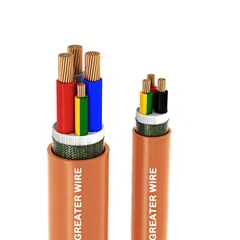
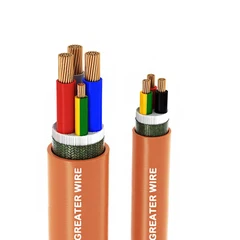
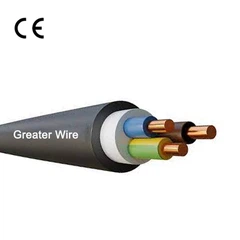
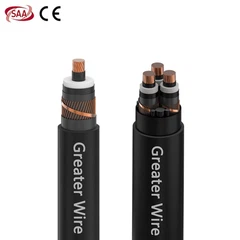
A typical jacketed TECK90 construction includes:
Copper or aluminum conductor
XLPE insulation
Cable assembly materials and fillers where required
PVC inner jacket
Interlocked metallic armour
Overall PVC outer jacket
The inner jacket is a particularly important feature.
Unlike AC90 and ACWU90, conventional TECK90 incorporates a jacket surrounding the assembled conductors beneath the metallic armour.
This creates a layered cable construction suited to a wide range of industrial electrical applications.
GERITEL WIRE's certified TECK90 uses interlocked aluminum armour, with a PVC inner jacket and an optional PVC outer jacket.
Its certified ratings include 600V and 1000V, with a maximum conductor operating temperature of 90°C in dry or wet locations.
TECK90 is therefore a practical candidate for industrial distribution systems requiring an appropriately approved armoured wiring method.
2. What Is TECK90-HL Cable?
TECK90-HL is a hazardous-location-certified version of the TECK90 cable family.
The suffix HL identifies certification for hazardous-location applications.
TECK90-HL must satisfy the relevant requirements of its underlying TECK90 product standard as well as the additional hazardous-location requirements.
GERITEL WIRE's certification includes:
CSA C22.2 No. 131 - Type TECK90 Cable
CSA C22.2 No. 174 - Cables and Cable Glands for Use in Hazardous Locations
TECK90-HL is listed under CSA Certification Class 5818 01, while ordinary TECK90 is listed under Class 5811 01.
This means TECK90-HL has been evaluated under an additional certification framework relevant to the increased requirements of hazardous-location electrical installations.
For project engineers, this certification provides an important basis for evaluating the product where an HL-rated cable is specified.
However, the approval does not eliminate the need to consider hazardous-area classification, equipment protection methods, and approved cable termination systems.
3. TECK90 vs. TECK90-HL: Complete Technical Comparison
The table below reflects GERITEL WIRE's CSA Certificate No. 80322923.
| Technical Feature | TECK90 | TECK90-HL |
|---|---|---|
| CSA C22.2 No. 131 | Yes | Yes |
| Additional CSA C22.2 No. 174 certification | No | Yes |
| Certification class | 5811 01 | 5818 01 |
| Certified voltage | 600/1000V | 600/1000V |
| Maximum conductor temperature | 90°C | 90°C |
| Dry locations | Rated | Rated |
| Wet locations | Rated | Rated |
| Standard cold classification | -25°C | -25°C |
| Optional cold classification | -40°C | -40°C |
| Copper conductors | Yes | Yes |
| Aluminum conductors | Yes | Yes |
| XLPE insulation | Yes | Yes |
| PVC inner jacket | Yes | Yes |
| Interlocked aluminum armour | Yes | Yes |
| PVC outer jacket | Optional | Optional |
| Flame rating | FT1; optional FT4 | FT1, FT4 listed |
| Sunlight-resistant marking | Optional | Optional |
| Single/multiconductor construction | Yes | Yes |
| Additional HL evaluation | No | Yes |
| Principal application | Industrial fixed wiring | Industrial fixed wiring requiring HL certification |
The fundamental electrical ratings are similar.
Both have a certified maximum conductor temperature of 90°C in dry and wet locations.
Both cover 600V and 1000V.
Both include copper and aluminum conductor constructions.
Both incorporate XLPE insulation, PVC inner jackets, and interlocked aluminum armour.
The most important distinction is the additional hazardous-location certification carried by TECK90-HL.
The certificate also presents the flame-rating entries differently. These must be interpreted according to the precise delivered construction and its markings.
4. Is TECK90-HL Physically Different from TECK90?
Customers often assume that TECK90-HL must have a significantly different external appearance from ordinary TECK90.
That is not necessarily true.
The two product families can share the same principal construction layers.
An HL-certified cable does not automatically require a higher voltage rating, a thicker conductor, or a larger cable diameter.
The additional hazardous-location requirements concern certified performance and construction integrity under the relevant standards.
It is therefore possible for two cables to appear very similar while having different certification coverage.
For industrial procurement, visual inspection alone is insufficient to determine whether a cable has the required HL certification.
Customers should examine the actual product markings, manufacturer certification records, and technical datasheets.
5. Why Does TECK90 Have an Inner PVC Jacket?
One of TECK90's defining features is its inner jacket beneath the metallic armour.
The cable assembly typically includes multiple insulated conductors and any required bonding conductors, fillers, or other assembly materials.
The inner jacket encloses this assembly before the metallic armour is applied.
This contributes to the overall structural arrangement of the cable.
The inner jacket may help maintain the assembled cable core and separate the insulated conductors from the metallic armour.
The outer jacket, where included, provides a separate covering over the armour.
This construction distinguishes TECK90 from ACWU90, which has an outer PVC jacket but no equivalent TECK90-style inner PVC jacket.
Does an Additional Jacket Automatically Mean Higher Performance?
Not in every respect.
A layered construction may be advantageous for particular industrial applications, but a definitive comparison of crush resistance, bending performance, chemical resistance, or service life requires product-specific test data.
TECK90 should not automatically be described as superior to ACWU90 in every application.
The appropriate cable depends on the required electrical, mechanical, environmental, and certification characteristics.
6. Why Is CSA C22.2 No. 174 Important for TECK90-HL?
Hazardous-location installations can involve environments where ignition risks require additional electrical safety measures.
An electrical cable used in such an installation may be subject to more demanding certification requirements than a comparable cable intended only for ordinary locations.
CSA C22.2 No. 174 provides additional requirements for cables and certain cable glands used in hazardous locations.
These requirements supplement the ordinary product requirements.
Technical discussions of hazardous-location cable certification identify additional evaluations involving low-temperature impact, crushing, flame-related performance, and mechanical integrity.
For interlocked-armour constructions, maintaining cable integrity under specified mechanical conditions is particularly relevant.
These requirements address risks associated with cable damage and the potential consequences of electrical faults in classified environments.
The standard does not transform the cable into a standalone explosion-proof device.
Instead, the cable remains part of a complete electrical installation that must satisfy the relevant hazardous-location rules.
7. Understanding Class/Division and Zone Classifications
Canadian industrial facilities may use hazardous-area classification systems to identify locations requiring special electrical precautions.
These classifications can involve explosive gas atmospheres, combustible dust, or other hazardous conditions.
Different classifications require different electrical equipment and wiring methods.
Why Is This Important for Cable Selection?
A cable suitable for an ordinary industrial building is not automatically suitable for every classified processing area.
Similarly, a cable approved under a hazardous-location standard must still be selected and installed in a manner permitted for the particular area.
The engineering team should establish:
Hazardous-area classification
Applicable provincial electrical code
Equipment protection requirements
Wiring method permitted for the location
Cable certification and markings
Required fittings, glands, and seals
Environmental exposure
Inspection and acceptance requirements
For projects requiring HL-certified TECK90, GERITEL WIRE can provide cable constructions within our certified product range.
However, customers should not assume that the words "TECK90-HL" alone confirm suitability for every hazardous-location classification.
8. Where Is Ordinary TECK90 Commonly Used?
TECK90 is associated with a wide variety of industrial electrical applications.
Industrial Manufacturing Plants
Fixed wiring for production machinery, distribution systems, motors, and industrial equipment.
Mining and Mineral Processing
Electrical distribution for suitable fixed installations within processing facilities and related infrastructure.
Commercial and Industrial Infrastructure
Power feeders and control circuits in systems where the TECK90 construction is specified.
Energy Facilities
Electrical distribution for suitable industrial power systems and equipment.
Water and Wastewater Facilities
Fixed electrical wiring in appropriate dry or wet environments, subject to environmental and project requirements.
Industrial Cable Tray Systems
Cable routing through appropriately designed cable trays, where the cable construction and applicable code permit the installation.
Not all industrial facilities contain classified hazardous locations.
Ordinary TECK90 may be appropriate where the installation method is permitted and additional HL certification is not required.
9. When Should TECK90-HL Be Considered?
TECK90-HL is particularly relevant to industrial projects requiring a hazardous-location-certified armoured cable.
Potential project sectors include:
Oil and Gas Processing Facilities
Fixed power and equipment circuits in properly assessed classified areas.
Refineries and Petrochemical Plants
Industrial electrical distribution associated with hazardous-area equipment.
Chemical Production Facilities
Power and control wiring in classified process environments.
Industrial Fuel Handling Systems
Selected fixed electrical installations requiring approved hazardous-location wiring methods.
Specialized Industrial Energy Projects
Electrical infrastructure within appropriately classified equipment or processing areas.
Industrial Plant Modernization
Replacement or expansion projects where the approved design requires TECK90-HL.
A project should not specify TECK90-HL solely because it belongs to one of these industries.
Area classification, engineering requirements, and the applicable installation rules determine when the HL designation is necessary.
10. Can Ordinary TECK90 Be Used in Hazardous Locations?
This is one of the most important technical questions.
It is incorrect to assume that ordinary TECK90 is automatically acceptable in every hazardous location.
It is also too broad to claim that ordinary TECK90 is prohibited in every classified installation.
The Canadian Electrical Code permits different wiring methods under different classification and installation conditions.
Some installations may allow ordinary TECK90 under particular provisions.
Other applications require a cable approved for hazardous locations, making TECK90-HL the relevant choice.
Therefore, TECK90 and TECK90-HL cannot be treated as universally interchangeable.
The electrical engineer should verify the specific code rule and approved wiring method before authorizing any substitution.
Where TECK90-HL is expressly required, the supplier should provide the appropriate certified product and documentation.
11. Cable Glands: A Critical Difference in Industrial Installation
TECK90 and TECK90-HL installations often require particular attention to cable terminations.
The correct gland must be compatible with:
The cable outside diameter
The actual inner and outer jacket arrangement
The metallic armour construction
The enclosure protection method
Environmental exposure
Grounding and bonding requirements
Hazardous-location requirements where applicable
Ordinary TECK90 Installations
An appropriately approved armoured cable fitting may be used according to the installation requirements.
The fitting must secure the cable, protect the conductors, and provide the necessary bonding arrangements.
TECK90-HL Installations
A hazardous-location installation may require glands or fittings with additional approvals or particular sealing characteristics.
These requirements depend on the location classification and the protection method of the connected equipment.
A gland appropriate for an ordinary industrial enclosure should not automatically be used for an enclosure requiring explosion-proof or other hazardous-location protection.
Where sealing is required, the appropriate sealing method must be designed and installed according to applicable code requirements.
Cable Diameter Matters
Cable glands are generally selected for specific cable diameter ranges.
Therefore, a project requiring TECK90-HL should not purchase cable glands solely on the nominal conductor size.
The actual finished cable outside diameter and jacket configuration must be confirmed.
12. Gas Migration and Cable Sealing
Gas migration is an important consideration in certain hazardous-location electrical installations.
Under some conditions, gases or vapours may migrate through conduit systems or cable pathways.
This issue becomes particularly significant where wiring passes between classified and non-classified areas or enters equipment requiring specific protection methods.
The necessary sealing arrangements depend on the electrical code, area classification, cable construction, and equipment connections.
An HL-certified cable does not automatically eliminate all sealing requirements or prevent every possible form of gas migration.
The complete cable-and-gland arrangement must be evaluated.
Engineering documents should clearly identify any required cable sealing system, approved fittings, and installation details.
13. Wet Locations, Outdoor Exposure and Direct Burial
GERITEL WIRE's TECK90 and TECK90-HL are rated for 90°C dry and wet locations.
This makes them candidates for a broad range of industrial installations.
However, the current certificate lists the PVC outer jacket as optional.
That detail is important.
For outdoor exposure, underground installation, or other demanding environmental conditions, the project team must confirm the suitability of the actual selected construction.
Outdoor Exposure
Where sunlight resistance is required, specify a construction carrying the appropriate sunlight-resistant marking.
This is an optional feature under GERITEL WIRE's TECK90 and TECK90-HL listings.
Direct Burial
Appropriately approved jacketed TECK90 cables are commonly used for direct-burial power distribution in Canada.
Actual suitability depends on the certified construction, code requirements, burial conditions, and necessary mechanical protection.
Wet Industrial Cable Trays
TECK90 can be considered for suitable wet-location cable tray installations.
The cable type, tray design, support, bonding, and installation methods must meet the applicable code.
Chemical Exposure
Neither TECK90 nor TECK90-HL should be assumed resistant to every industrial chemical.
Oil resistance, hydrocarbon resistance, solvent resistance, and other special material properties must be verified separately.
HL certification is not equivalent to universal chemical resistance.
14. Voltage Ratings: A Critical Procurement Detail
GERITEL WIRE's TECK90 and TECK90-HL certification includes:
600V and 1000V
Both families are listed with a 90°C dry/wet operating temperature rating.
Customers should understand that other manufacturers may offer TECK90 cable families at higher voltage ratings.
The existence of a higher-voltage TECK90 product in the market does not mean every TECK90 manufacturer is certified for that voltage.
Under GERITEL WIRE's current CSA Certificate No. 80322923, the TECK90 and TECK90-HL listings cover 600V and 1000V.
For higher-voltage applications, the appropriate cable standard and certification must be separately verified.
Never substitute a 1000V-certified TECK90 cable for a project requiring a higher cable voltage rating without an approved engineering review.
15. Copper and Aluminum TECK90 Options
GERITEL WIRE's certified TECK90 and TECK90-HL constructions include:
| Conductor | Certified Range |
|---|---|
| Stranded copper | 14 AWG–2000 kcmil |
| Stranded aluminum | 12 AWG–2000 kcmil |
The certificate also covers single-conductor and multiconductor round constructions.
For single-conductor cables, the minimum circuit conductor size is 6 AWG copper and 4 AWG aluminum.
Copper TECK90
Copper conductors may be preferred where electrical conductivity, conductor size, termination requirements, and existing installation practices favour copper.
Aluminum TECK90
Aluminum may offer material cost and weight advantages in some larger feeder applications.
The final choice requires electrical sizing calculations and confirmation of equipment termination compatibility.
Why Bonding Conductors Matter
Armoured cable construction does not eliminate the need for proper grounding and bonding.
The required bonding conductor configuration and installation arrangement must be established in accordance with the applicable electrical code.
For large single-conductor cables, the engineering team may also need to consider armour-related electrical effects, cable grouping, and termination design.
16. Flame Performance and Low-Temperature Ratings
GERITEL WIRE's TECK90 certification lists FT1 with optional FT4.
Its TECK90-HL listing includes FT1 and FT4 in the certificate's flame-rating entry.
FT1 and FT4 are not identical tests.
FT4 addresses flame propagation under a different and more extensive test arrangement.
Customers should confirm the specific markings on the delivered cable and the exact project flame-performance requirements.
Neither FT1 nor FT4 establishes zero-halogen composition, circuit integrity during fire, or universal fire resistance.
Low-Temperature Classification
Both TECK90 and TECK90-HL have:
Standard -25°C classification
Optional -40°C classification
For cold-weather Canadian projects, the required low-temperature performance should be specified explicitly.
A low-temperature classification does not necessarily establish the minimum cable installation temperature without additional handling requirements.
The manufacturer should provide suitable installation guidance for the exact construction.
17. TECK90 vs. TECK90-HL: Real Project Selection Cases
Case A: Ordinary Manufacturing Facility
Requirement: Fixed power distribution inside an industrial building without hazardous-area classification.
Starting choice: TECK90.
Reason: The basic cable certification may be sufficient if the installation conditions and specifications permit.
Case B: Classified Petrochemical Processing Area
Requirement: A fixed electrical circuit in a classified area with an engineering specification requiring HL-rated cable.
Starting choice: TECK90-HL.
Reason: Additional hazardous-location certification is required.
Case C: Outdoor Industrial Feeder
Requirement: Fixed feeder exposed to rain and sunlight, outside any classified area.
Starting choice: Appropriately jacketed and sunlight-resistant TECK90.
Reason: Environmental suitability is the priority; HL certification may not be necessary.
Case D: Classified Outdoor Equipment Area
Requirement: Electrical feeder in a classified industrial environment with wet exposure.
Starting choice: Suitably configured TECK90-HL.
Reason: Both hazardous-location requirements and environmental requirements must be satisfied.
Case E: Large Industrial Expansion
Requirement: Several thousand metres of industrial power cable, with ordinary and classified areas.
Starting choice: Evaluate TECK90 and TECK90-HL separately according to the cable schedule.
Reason: Different cable routes may require different certifications. A single cable type should not be selected for the entire project without reviewing each installation.
Case F: Mobile Mining Equipment
Requirement: A cable exposed to repeated movement, winding, twisting, or continuous flexing.
Starting choice: Review specialized flexible or trailing cable types.
Reason: Neither ordinary TECK90 nor TECK90-HL is automatically suitable for continuously moving equipment.
18. TECK90 or TECK90-HL: Quick Selection Matrix
| Engineering Requirement | Recommended Starting Point |
|---|---|
| Ordinary industrial power distribution | TECK90 |
| Fixed equipment feeder in non-classified area | TECK90 |
| Classified area requiring HL cable | TECK90-HL |
| Industrial building with separate hazardous areas | Select per individual circuit |
| Outdoor non-classified feeder | Suitable jacketed TECK90 |
| Outdoor classified feeder requiring HL | Suitable jacketed TECK90-HL |
| 600V/1000V industrial system | Both within certified range |
| Project requires 2000V TECK90 | Not covered by current GERITEL WIRE TECK90 certificate |
| Project requires FT4 | Confirm exact listed construction and marking |
| Project requires -40°C classification | Specify optional rated construction |
| Severe chemical exposure | Obtain specific jacket compatibility evidence |
| Continuous motion | Consider a dedicated flexible cable |
This matrix is intended as a procurement and engineering starting point.
Final approval requires a review of the actual installation conditions and applicable codes.
19. Common Procurement Mistakes
Mistake 1: Assuming All TECK90 Is HL Rated
A TECK90 product designation alone does not establish additional hazardous-location approval.
Mistake 2: Assuming HL Means Higher Voltage
GERITEL WIRE's TECK90 and TECK90-HL are both certified at 600V and 1000V.
Mistake 3: Assuming TECK90-HL Is Automatically Oil-Proof
Hazardous-location certification does not establish universal chemical or oil resistance.
Mistake 4: Ignoring Cable Gland Requirements
The correct certified cable must be paired with suitable installation accessories.
Mistake 5: Treating Wet-Location Ratings as Direct-Burial Approval
Underground use must be evaluated against the actual approved construction and installation requirements.
Mistake 6: Assuming Every TECK90 Has Sunlight Resistance
GERITEL WIRE's TECK90 sunlight-resistant marking is optional.
Mistake 7: Selecting the Cable Before Confirming the Hazardous-Area Classification
The correct engineering sequence begins with the applicable electrical requirements.
Mistake 8: Comparing Prices Without Comparing Certifications
Ordinary TECK90 and TECK90-HL quotations should clearly identify their certification and construction differences.
20. Why GERITEL WIRE's TECK90 and TECK90-HL Certification Matters
For Canadian industrial customers, manufacturer qualification is an important part of procurement risk management.
Purchasing the correct cable involves more than accepting a technical description from a quotation.
Customers may require proof of the manufacturer's certification, relevant product standards, construction details, quality-control capability, and production consistency.
GERITEL WIRE's CSA certification covers both ordinary and hazardous-location TECK90 families.
In addition, our certificate includes AC90, ACWU90, AC90-HL and ACWU90-HL.
This provides customers with access to several certified Canadian armoured cable families from a single manufacturing source.
Manufacturing Strength
GERITEL WIRE operates approximately 30,000 square metres of manufacturing facilities in Dongguan, China.
Our production infrastructure includes around 30 cable production lines, supported by engineers, quality-control personnel, and in-house testing resources.
Our capabilities cover a broad selection of electrical cables for international markets.
Engineering Support
Our team can review conductor material, size, voltage class, cable construction, environmental requirements, and applicable certification before preparing a quotation.
Quality Control
Cable manufacturing quality depends on conductor consistency, insulation integrity, jacket processing, armour construction, electrical testing, marking, and production traceability.
These are important areas of manufacturing control for industrial cable production.
Project Supply Capability
We support customers requiring regular distribution orders, project-specific cable schedules, and larger industrial procurement programs.
Production planning, packaging arrangements, and staged delivery options can be evaluated according to actual order requirements.
Broader Canadian Cable Portfolio
Alongside our CSA armoured cable certification, GERITEL WIRE maintains a wider Canadian-standard cable product portfolio supported by relevant cUL and other certifications.
Each product's approval should be verified against the corresponding certification listing.
Our objective is to provide a professional manufacturing relationship for customers seeking long-term Canadian electrical cable supply.
21. How to Request the Correct TECK90 or TECK90-HL Quotation
For an accurate technical and commercial evaluation, customers should provide:
Electrical Requirements
TECK90 or TECK90-HL
Rated voltage
Copper or aluminum conductor
Conductor size
Number of cores
Bonding conductor requirements
Circuit configuration and application
Environmental Requirements
Dry or wet location
Indoor or outdoor installation
Direct burial or cable tray
Sunlight exposure
Minimum temperature
Chemical or oil exposure, if applicable
Certification Requirements
Relevant CSA standard
HL certification requirement
Hazardous-area classification
Flame rating
Additional customer specifications
Commercial Requirements
Total quantity
Reel lengths
Delivery destination
Shipping terms
Project schedule
Documentation requirements
For classified installations, engineering drawings and hazardous-area classification documents are especially useful.
This information allows the manufacturer to assess the proposed cable construction rather than simply quoting a generic product name.
22. Frequently Asked Questions
Q1: What is the main difference between TECK90 and TECK90-HL?
TECK90-HL carries additional hazardous-location certification under CSA C22.2 No. 174. The principal voltage, insulation, temperature, and armour characteristics can remain similar.
Q2: Is TECK90-HL rated for 2000V?
GERITEL WIRE's current CSA certificate covers TECK90-HL at 600V and 1000V.
Q3: Does TECK90-HL have a PVC inner jacket?
Yes. The certified TECK90-HL construction includes a PVC inner jacket.
Q4: Does TECK90-HL always have an outer PVC jacket?
No. GERITEL WIRE's certificate lists the outer PVC jacket as optional. The exact construction must be confirmed for the intended installation.
Q5: Can TECK90-HL be used outdoors?
A suitable certified construction may be considered for outdoor use. Sunlight resistance, jacket configuration, moisture exposure, and applicable installation requirements must be checked.
Q6: Is TECK90-HL explosion-proof?
HL certification should not be interpreted as making the cable a standalone explosion-proof electrical system. The wiring method, fittings, seals, and connected equipment must comply with the requirements applicable to the classified location.
Q7: Can ordinary TECK90 replace TECK90-HL?
Not automatically. Substitution depends on whether the applicable electrical code and approved engineering specification permit the proposed cable.
Q8: Does GERITEL WIRE manufacture aluminum TECK90-HL?
Yes. Aluminum conductor constructions are included in the certified range, subject to size and construction limitations.
Q9: Can GERITEL WIRE supply large industrial projects?
GERITEL WIRE welcomes inquiries for industrial and infrastructure projects of different sizes. Production quantities, technical requirements, and delivery arrangements are evaluated on a project-specific basis.
23. GERITEL WIRE: A Professional Partner for Canadian Industrial Cable Procurement
In demanding industrial projects, the true value of a cable manufacturer lies in its ability to deliver the correct certified product consistently.
GERITEL WIRE understands the importance of engineering specifications, third-party certification, product quality, and dependable project coordination.
Our certification for TECK90 and TECK90-HL demonstrates our capability to manufacture both ordinary and hazardous-location-certified versions within the approved product scope.
Together with our AC90, ACWU90 and corresponding HL-certified families, this forms an important part of our broader Canadian-standard cable manufacturing capabilities.
We aim to support Canadian distributors, engineering companies, electrical contractors, and industrial project owners with technical expertise, certified products, and reliable manufacturing solutions.
Whether your next project requires ordinary TECK90 for industrial distribution or TECK90-HL for a classified application, GERITEL WIRE is ready to review your requirements.
Contact our team with your technical specification, cable schedule, quantity, and delivery requirements.
GERITEL WIRE - CSA-Certified Industrial Cable Manufacturing. Engineered for Demanding Projects.
Manufacturer: Dongguan Greater Wire & Cable Co.,Ltd.
Brand: GERITEL WIRE
CSA Certificate: 80322923
Products: TECK90 / TECK90-HL
Standards: CSA C22.2 No. 131 / CSA C22.2 No. 174
Engineering notice: All cable selection and installation decisions must follow the relevant certified construction, applicable Canadian Electrical Code requirements, local regulatory provisions, and project-specific engineering approval.