


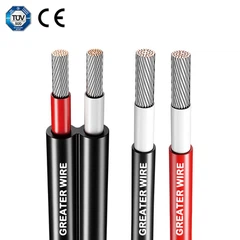

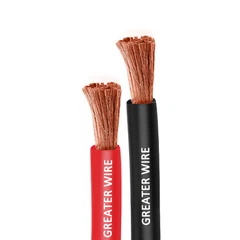
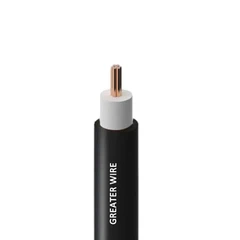
In the North American market, industrial wires play an essential role in machinery, control panels, and automation systems. With the rise of industrial automation and smart manufacturing, choosing the right wire is critical-not only for reliable operation but also for installation efficiency and maintenance costs.
Among the many wire types, MTW (Machine Tool Wire) and TEW (Thermoplastic Equipment Wire) are widely used in industrial applications. Engineers and procurement specialists often face a common question: what is the difference between MTW and TEW, and which one is suitable for my project?
This article will provide a comprehensive analysis of MTW and TEW wires, covering their technical characteristics, differences, real-world applications, and selection guidelines. We will also highlight the professional technical support and global supply capabilities offered by our company to help customers make informed decisions.
Basic Knowledge of MTW and TEW Wires
MTW Wire Overview
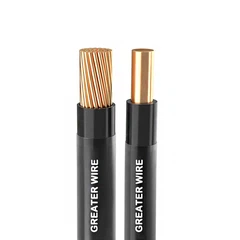
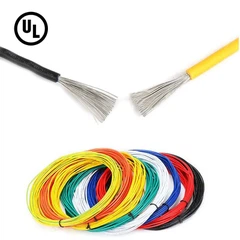
MTW (Machine Tool Wire) is primarily used in industrial control and machinery internal wiring. Key characteristics include:
- Conductor Material: Copper, ensuring excellent conductivity and reliability
- Insulation Material: PVC or polyolefin, offering good abrasion and heat resistance
- Temperature Rating: Typically 90°C, suitable for high-temperature environments
- Certification: UL & cUL certified, meeting U.S. and Canadian standards
- Application Scenarios: Machine tools, automated production lines, internal control panels
MTW wires are highly flexible, making them ideal for dense wiring environments and vibrating or moving machinery.

TEW Wire Overview
TEW (Thermoplastic Equipment Wire) is used mainly for fixed wiring and control panels. Its characteristics include:
- Conductor Material: Copper
- Insulation Material: Thermoplastic PVC
- Temperature Rating: Typically 75°C or 90°C
- Certification: UL & cUL certified
- Application Scenarios: Control panels, machinery internal fixed wiring, auxiliary power connections
TEW wires perform well in static wiring environments but are less flexible than MTW, making them less suitable for applications with frequent bending or vibration.
Similarities Between MTW and TEW
- Both are UL & cUL certified, compliant with North American standards
- Both use copper conductors, providing stable conductivity
- Both cover a similar gauge range: 14 AWG – 6 AWG
- Both can be installed in conduits or free-hanging, offering flexible installation options
Technical Differences Between MTW and TEW
| Feature | MTW | TEW | Technical Implication |
|---|---|---|---|
| Temperature Rating | 90°C | 75°C / 90°C | MTW is better for high-temperature environments |
| Flexibility | High | Moderate | MTW is easier to route and maintain in dense or moving setups |
| Insulation Material | PVC / Polyolefin | Thermoplastic PVC | Different insulation affects abrasion and chemical resistance |
| Application Scenarios | Industrial control, machine tools, automation | Control panels, fixed machine wiring | Choose based on equipment needs |
| Conduit Installation | Suitable | Suitable | Installation flexibility is similar |
| Certification | UL & cUL | UL & cUL | Ensures compliance in North American markets |
As the table shows, MTW and TEW wires are similar in certification and conduit installation, but MTW offers superior flexibility and temperature tolerance, making it ideal for high-vibration or high-temperature environments, while TEW is suitable for static, fixed wiring scenarios.

Real-World Applications of MTW and TEW
Control Panel Wiring
- MTW: Ideal for dense and complex control panel wiring, easy to install and maintain
- TEW: Suitable for fixed wiring in spacious panels
Motor Connections
- MTW: Recommended for vibrating or moving motors, ensuring stable operation
- TEW: Suitable for static or low-vibration motor connections
Industrial Automation Equipment
- MTW: Machine tools, robots, and automated production lines requiring flexible wiring
- TEW: Auxiliary equipment, power distribution wiring, and fixed control panels
Wire Selection Guide Table
| Scenario | Recommended Type | Conductor Material | Temperature Rating | Installation Requirement |
|---|---|---|---|---|
| Dense control panel wiring | MTW 14~8 AWG | Copper | 90°C | Conduit or free-hanging |
| Motor connections | MTW 12~6 AWG | Copper | 90°C | High flexibility, vibration-resistant |
| Fixed panel wiring | TEW 14~8 AWG | Copper | 75°C / 90°C | Fixed wiring, spacious layout |
| Auxiliary machinery | TEW 12~6 AWG | Copper | 75°C / 90°C | Standard wiring, low flexibility |
This table allows engineers to visually compare different wiring scenarios and select the appropriate type quickly.
How to Choose the Right Wire
1.Based on Application Environment
- High temperature, vibration, or complex routing → MTW
- Static, fixed wiring → TEW
2.Based on Wire Gauge
- Low-power equipment → 14~12 AWG
- High-power or long-distance wiring → 10~6 AWG
3.Based on Certification Needs
- Ensure UL & cUL certification to comply with North American standards
By considering temperature, flexibility, installation environment, and certification, you can ensure safe, stable, and cost-effective wiring for your project.

Product Advantages and Service Benefits
- Comprehensive UL Wire Range: NM-B, THHN, UF-B, XHHW, and other mainstream types
- Certification Guarantee: UL & cUL certified, meeting U.S. and Canadian standards
- Complete Gauge Range: 14 AWG – 6 AWG, covering standard industrial needs
- Fast Delivery: Supports both small and large batch orders
- Professional Support: Expert technical assistance, pre-sale and post-sale service
- Global Experience: Years of manufacturing and export experience, global partnerships
- Commitment to Customers: Regardless of project size, we provide professional technical guidance and enthusiastic support to ensure successful wiring projects
Whether you are a large industrial integrator or a small automation enterprise, we provide complete solutions and personalized technical advice to make every installation efficient and reliable.
Conclusion and Contact Information
When selecting MTW or TEW wires, consider temperature, flexibility, installation environment, and certification requirements. Proper selection not only ensures safe and stable operation but also reduces installation and maintenance costs.
For professional technical support, wire selection advice, or bulk purchase solutions, please contact us:
Company Information:
Dongguan Greater Wire & Cable Co., Ltd.
- Tel/WhatsApp/WeChat: +86 135 1078 4550 / +86 136 6257 9592
- Email: manager01@greaterwire.com
We are committed to providing high-quality industrial wire solutions to customers worldwide and helping your projects achieve smooth and reliable wiring.