

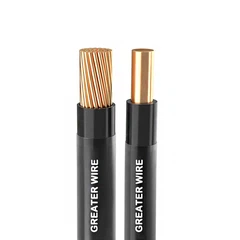

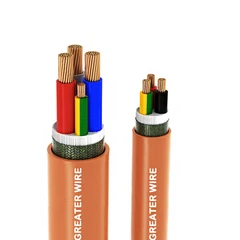
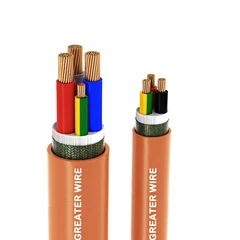
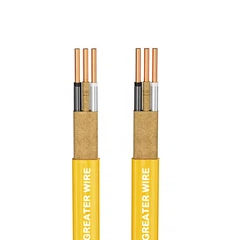

Understanding the Basics: What Do X-90 and V-90 Actually Mean?
Before comparing performance, it is essential to clarify definitions.
V-90 Insulation
V = PVC (Polyvinyl Chloride)
90 = Maximum continuous conductor operating temperature of 90°C
V-90 refers to a PVC-insulated wire designed to operate safely at conductor temperatures up to 90°C under defined conditions.
PVC is a thermoplastic material, meaning it softens when heated and hardens again when cooled.
X-90 Insulation
X = Cross-linked polyethylene (XLPE)
90 = Maximum continuous conductor operating temperature of 90°C
X-90 refers to a cross-linked polyethylene insulated wire, also rated to 90°C.
XLPE is a thermoset material, meaning once cross-linked, its molecular structure does not melt or flow when reheated.
Key Clarification
Although both are "90°C insulation":
The number (90) is the same
The material behavior is fundamentally different
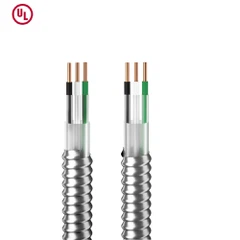
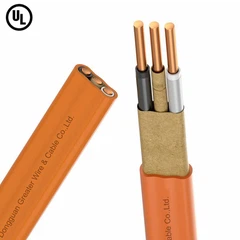
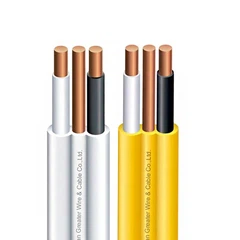
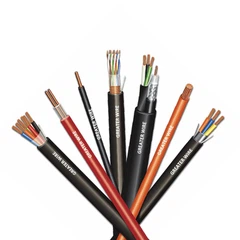
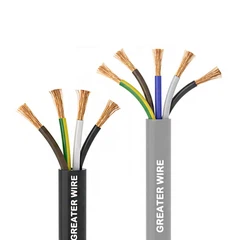
This distinction is critical when these wires are assembled into a multi-core orange circular cable.
Material Structure: The Root of All Differences
PVC (V-90) Molecular Behavior:A linear molecular structure
PVC insulation relies on:Plasticizers to maintain flexibility
As temperature increases:The material softens,mechanical strength decreases,long-term heat accelerates aging.
PVC does not chemically lock its structure; it depends heavily on additives, which can migrate or degrade over time.
XLPE (X-90) Molecular Behavior
XLPE undergoes a cross-linking process, where molecular chains are chemically bonded,as a result:The material retains shape under heat.
Mechanical strength remains higher at elevated temperatures and aging is significantly slower under thermal stress
This difference in structure explains nearly every performance advantage of X-90 over V-90.
Temperature Performance Beyond the "90°C" Rating
Continuous Operation Near Maximum Temperature
Although both are rated at 90°C:
Begins softening noticeably as it approaches 90°C,loses mechanical integrity,is more sensitive to sustained high temperatures
X-90 wire
Maintains structural stability close to and at 90°C.Tolerates thermal cycling better and experiences less insulation deformation
In an orange circular cable, where multiple conductors are bundled together, this difference becomes more pronounced due to internal heat buildup.
Thermal Aging
Thermal aging is one of the most overlooked aspects of cable performance.
V-90 insulation
Ages faster under long-term heat exposure,becomes brittle earlier in its service life
X-90 insulation
Resists thermal oxidation,retains flexibility and dielectric strength longer,this directly impacts service life and reliability.

Mechanical Strength and Deformation
Under Compression and Bending
On construction sites, cables are:Stepped on/Run over/Bent sharply/Tied and untied repeatedly
Under these conditions:
V-90 wire
Is more prone to insulation deformation when warm.Can suffer from insulation creep under pressure
Retains shape under load.Offers higher resistance to compression damage
Impact on the Entire Cable
In an orange circular cable:
Deformation of individual wires affects the overall cable geometry,this can lead to uneven stress, conductor displacement, and long-term failure,X-90-based cable systems generally maintain internal integrity better over time.
Electrical Performance and Dielectric Stability
Insulation Resistance
V-90
Insulation resistance decreases faster with temperature and age
X-90
Maintains higher insulation resistance over time.This difference is particularly important in:
Industrial environments
Damp or dirty conditions
High-reliability systems
Short-Circuit and Overload Tolerance
During short-term overloads:
X-90 wire
Better tolerates temperature spikes,less risk of insulation collapse
V-90 wire
More sensitive to rapid heating,greater risk of softening and damage
Fire Performance and Safety Considerations
Smoke and Toxicity
PVC insulation (V-90):
Produces dense smoke,releases corrosive gases when burned.
XLPE insulation (X-90):
Produces less toxic smoke,often used where fire safety is prioritized
While the orange outer sheath may dominate visual safety perception, internal wire insulation plays a critical role in fire scenarios.

Key Differences Between X-90 and V-90 in Orange Circular Cable
| Aspect | V-90 (PVC) | X-90 (XLPE) |
|---|---|---|
| Material type | Thermoplastic | Thermoset |
| Heat stability | Moderate | High |
| Thermal aging | Faster | Slower |
| Mechanical strength | Lower at high temp | Higher |
| Overload tolerance | Limited | Better |
| Fire behavior | More toxic smoke | Improved safety |
| Cost | Lower | Higher |
| Long-term reliability | Condition-dependent |
More robust |
Although both are rated at 90°C:
V-90 relies on correct, controlled usage
X-90 offers greater tolerance for real-world variability
In terms of wire performance, X-90 provides superior thermal, mechanical, and aging characteristics.
In terms of overall cable behavior, X-90 offers greater reliability under demanding conditions.


At Dongguan Greater Wire & Cable Co., Ltd., we understand that choosing the right wire and cable solutions is critical to the success and safety of your projects.
Our experienced pre-sales and after-sales teams provide:
Professional technical consultation
Accurate product selection and application guidance
Fast and responsive support throughout the entire project lifecycle
Whether you are working on small-scale installations or large industrial projects, we are committed to delivering reliable solutions and practical support tailored to your specific requirements.
Contact Us
Dongguan Greater Wire & Cable Co., Ltd.
📞 Tel / WhatsApp / WeChat
+86 135 1078 4550
+86 136 6257 9592
📧 Email
manager01@greaterwire.com