























1: Definition and Characteristics of UF-B wire
UF-B wire is a power transmission cable specially designed for underground burial. Its unique feature is that it can be buried directly in the soil without the need for additional protective pipes. This cable is usually made of copper or aluminum conductors, and the outer sheath is made of water-resistant and corrosion-resistant materials, which can effectively prevent the cable from being damaged in the underground environment.
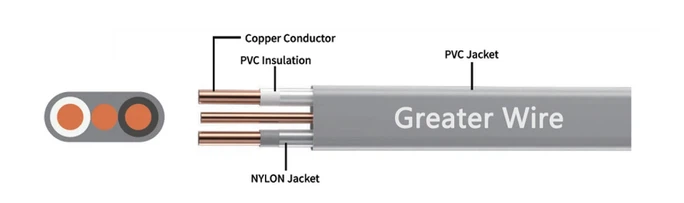
1.1 Structure of UF-B Cable
The basic structure of UF-B cable usually consists of three parts: conductor, insulation layer and sheath layer.
Conductor: The conductor of UF-B cable is usually made of copper or aluminum. The material selection of the conductor affects the conductivity and cost of the cable. Copper conductor cables have better conductivity, while aluminum conductor cables are relatively light and have lower costs.
Insulation layer: There is a layer of insulating material outside the conductor, which can effectively prevent short circuits between conductors. The quality of the insulation layer directly affects the safety and durability of the cable.
Sheath layer: The outer sheath of the UF-B cable is made of water-resistant, wear-resistant and corrosion-resistant materials, such as polyvinyl chloride (PVC) or cross-linked polyethylene (XLPE). The sheath layer can effectively protect the cable from moisture, chemicals and physical damage in the environment.
1.2 Advantages of UF-B Cable
The main advantage of UF-B cable is its ability to adapt to underground burial. Its special design gives it the following advantages:
Direct underground installation: Unlike other cables that require protection pipes, uf-b underground cable can be buried directly underground without the need for additional cable ducts.
Water resistance: Due to its special sheath material, u-fb direct burial cable can work for a long time in humid or watery environments and are suitable for underground burial.
Corrosion resistance: The outer sheath of u-fb direct burial cable has strong corrosion resistance and can effectively prevent chemicals or salt in the soil from damaging the cable.
High strength: The outer sheath of the uf-b cable can effectively withstand the heavy pressure of the soil and other external mechanical shocks, ensuring long-term stable operation.
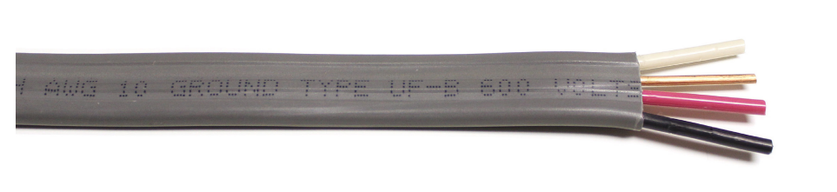
2: UL493 Standard and Compliance of UF-B Cable
The UL493 standard is a cable safety standard developed by Underwriters Laboratories (UL), which mainly regulates the design, performance, installation and use safety of cables. As an underground installation cable, UF-B cable must comply with the requirements of the UL493 standard.
2.1 Overview of the UL493 standard
The UL493 standard mainly involves the following aspects:
Insulating material requirements: The standard specifies the performance of insulating materials, including high temperature resistance, water resistance, and chemical corrosion resistance. The quality of insulating materials determines the safety of uf-b electrical wire in long-term use.
Conductor requirements: The standard requires that conductors must meet certain conductivity requirements to ensure that the cable can stably transmit power.
Cable durability: The UL493 standard requires that the uf-b electrical cable can maintain its normal working performance under different environmental conditions, especially in wet or chemically corrosive environments.
Mechanical strength: The standard stipulates that the cable must have sufficient mechanical strength to withstand external pressure and friction, especially during underground burial, when the cable will be subject to greater soil pressure.
2.2 How UF-B wire Meets UL493 Standard
The design and manufacture of UF-B wire fully meet the requirements of UL493 standard. The specific performance is:
High-quality insulation material: UF-B cable wire usually uses high temperature and corrosion resistant materials such as cross-linked polyethylene (XLPE) as the insulation layer, which can withstand the influence of high temperature and humid environment.
Stretch and compressive strength: In order to meet the mechanical strength requirements of UL493 standard, the outer sheath material of UF-B cable wire usually has high tensile and compressive strength, which can withstand the pressure of underground soil.
Long-term reliability: The requirements of UL493 standard ensure that uf b wire direct burial can operate stably for a long time in underground environment, avoiding power interruption caused by material aging or damage.

3: Direct Buried Application of UF-B Cable
The biggest feature of uf-b wire direct burial is that it can be directly buried, which makes it have significant advantages in many occasions. The following are several common application scenarios of UF-B cable:
3.1 Home and Commercial Building Power Supply
uf-b outdoor wire is widely used for underground power supply in homes and commercial buildings. Whether it is outdoor lighting, garden irrigation systems, or the layout of underground power lines, uf-b outdoor wire can provide reliable power transmission.
3.2 Agricultural and horticultural power systems
In agriculture and horticulture, UF-B wire can be used to power irrigation systems, power tools, and other equipment. Because it is waterproof and corrosion-resistant, it is particularly suitable for use in humid and watery environments.
3.3 Street lights and traffic signals
UF-B cable are also widely used in the power supply of road lighting and traffic signal systems. Due to its strong durability and easy installation, it is particularly suitable for long-term underground use.
3.4 Temporary power supply
UF-B cable are often used for temporary power supply at construction sites or event sites. Because its installation process is relatively simple and can meet temporary power needs.
3.5 Application in high-risk environments
UF-B cable are also used in high-risk environments, such as underground power supply in mining areas, chemical plants, etc. Its corrosion resistance and high temperature resistance enable it to maintain a long service life in these special environments

4: Installation requirements and considerations for UF-B cable
Although uf-b wire cable have high pressure resistance and corrosion resistance, certain specifications and requirements still need to be followed during the actual installation process to ensure the long-term safe and stable operation of the cables.
4.1 Installation depth requirements
According to the electrical installation specifications, UF-B cable usually need to be buried at a certain depth. The standard stipulates that the burial depth of uf b wire cable should be at least 24 inches (about 61 cm) to ensure that the cables are not subjected to external mechanical compression and damage.
4.2 Protective layer
During the underground installation process, the cable needs to be laid with a layer of gravel or sand to prevent the cable from being punctured or compressed by sharp objects. In addition, a warning tape can be installed above the cable to remind the cable position during later construction.
4.3 Avoid direct exposure to chemicals
Although UF-B wire have strong corrosion resistance, it is still recommended to avoid burying them in extremely corrosive soils, such as chemical waste sites. For these special environments, additional protective layers should be considered.
4.4 Regular inspection and maintenance
Even though the UF-B cable itself has strong durability, regular inspection and maintenance are still essential. Especially for cables running in harsh environments, they should be regularly inspected for damage, aging or other problems.